
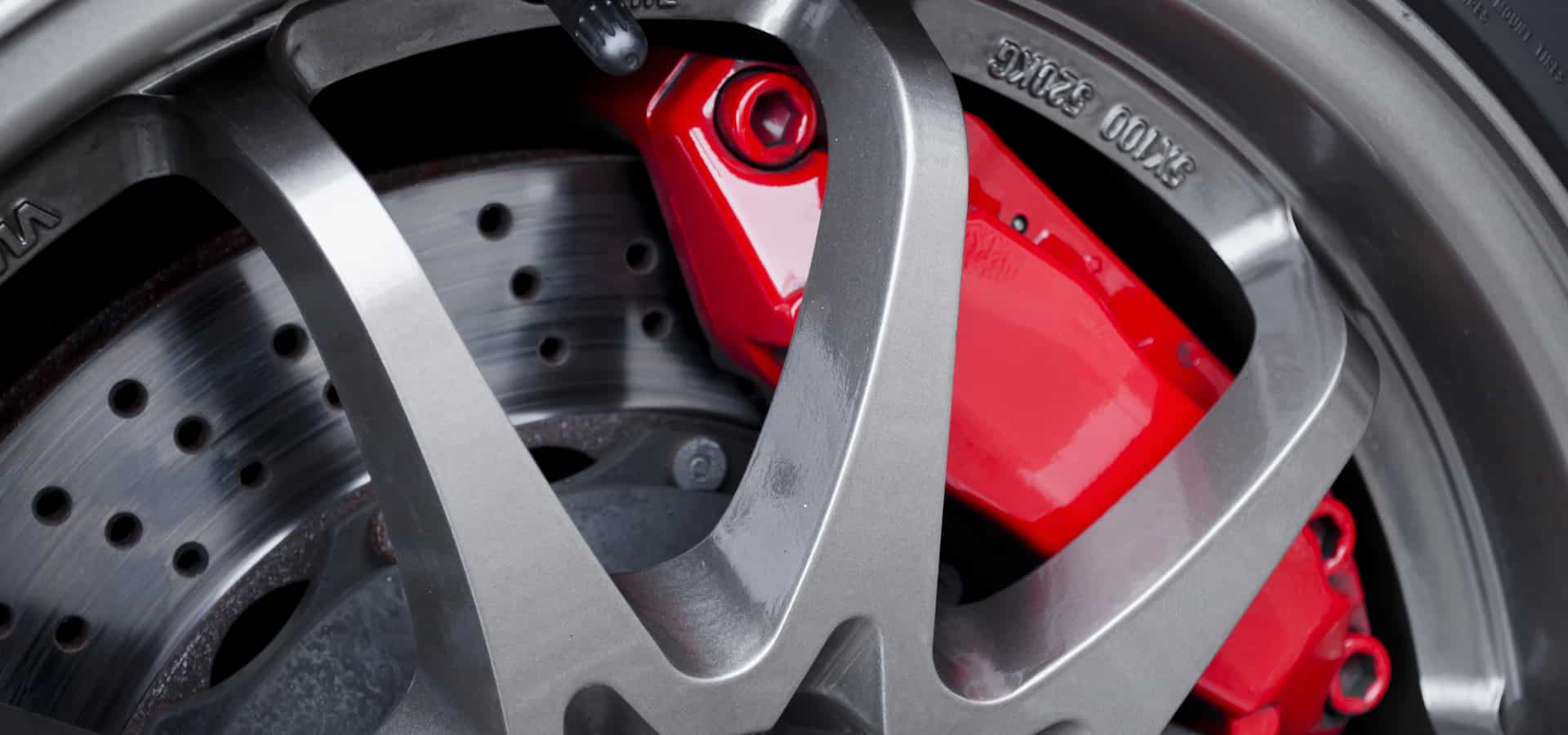
Lexus Brake Repair & Brake Fluid Change at Elevation Auto Repair
Lexus builds brake systems that reward precise service and punish shortcuts. Many models carry brake fluid moisture warnings tied to the maintenance reminder system, and the brake actuator assemblies on hybrid platforms like the RX 450h and GS 450h use a regenerative braking setup that most corner shops never touch.
Doing this right on a Lexus means bleeding in the correct sequence and honoring Toyota/Lexus fluid specs – SAE J1703/J1704 grade DOT 3 for most models, with strict attention to moisture content that degrades stopping performance. On hybrids, the accumulator and skid control ECU must be handled with Techstream to avoid trapping air in the actuator.
Our technicians know where Denver's altitude and stop-and-go mountain descents cook rotors and fluid faster than flatland driving. We match pads and rotors to how you actually drive.
- Fast diagnosis using Lexus-appropriate scan tools and pressure testing, not guesswork
- Fluid changed to OEM spec with moisture verification and proper bleed sequence
- Straight answers on what needs replacing now versus what can wait
- Quick turnaround that keeps you moving without cutting corners on safety
Symptoms – How to Know You Need This Service
Lexus brake systems tend to warn you early if you know what to listen and feel for. Here's what usually brings owners in.
- A high-pitched squeal when braking – the wear indicators on your pads are contacting the rotor. Schedule soon.
- Grinding or metal-on-metal noise – pads are gone and rotors are being damaged. Stop driving and get it inspected immediately.
- A soft, spongy, or sinking brake pedal – often air or moisture-laden fluid. This is a safety issue; address it right away.
- Steering wheel or pedal vibration when slowing from highway speed – warped or unevenly worn rotors.
- The brake warning light or ABS/VSC light on the dash – common on GS, IS, and RX platforms when fluid is low or a sensor faults.
- A burning smell after mountain descents – overheated fluid or a dragging caliper.
- Longer stopping distances or the pedal needing extra push – fluid past its moisture limit.
- On hybrids, an inconsistent or grabby brake feel – regenerative-to-friction blending needs attention.
Any grinding noise or a pedal that drops to the floor means you should stop driving and call us. Squeals, vibration, and warning lights mean schedule soon before they escalate.
Common Brake Repair & Brake Fluid Change Issues on Lexus Vehicles
Lexus builds a reliable brake system, but the shared Toyota-Lexus hydraulic architecture has predictable wear patterns once mileage climbs. The brake fluid on most models is glycol-based and hygroscopic, so it absorbs moisture and quietly loses effectiveness long before a pedal feels soft. Here are the patterns we see most often on Denver Lexus vehicles:
- Warped or grooved front rotors on RX 350 (2007-2015, GSU35/GGL15) – heavier crossover braking loads plus daily stop-and-go traffic produce steering-wheel shudder under moderate braking.
- Rear brake actuator and accumulator faults on RX 400h/450h hybrids – the regenerative braking system uses a high-pressure accumulator, and a failing pump triggers brake and VSC warning lights.
- Sticky caliper slide pins on IS 250/350 (2006-2013, GSE20) – dried grease causes uneven pad wear, with the inboard pad wearing to metal first.
- Moisture-saturated fluid on ES 350 (2007-2018) – owners often skip the interval, and dark, boiling-prone fluid shows up during flush.
- Electronic parking brake actuator issues on newer NX and RX (2016+) – the motor-on-caliper design must be retracted with a scan tool before rear pad service.
- Premature pad dust and squeal on LS 460 (USF40) – soft OEM pad compound wears fast under city driving.
We match diagnosis to the specific chassis so the fix addresses the real cause, not just the symptom.
Which Lexus Models We See for Brake Repair & Brake Fluid Change
We service brake systems across the full Lexus lineup, from daily-driver sedans to hybrids and performance variants. Find your car below.
- IS (XE20, XE30) – 2006–present IS 250, IS 350, and IS 300; F Sport and IS F variants use larger brake hardware that we handle with model-specific torque and pad specs.
- ES (XV40, XV60, XV70) – 2007–present, including the ES 300h hybrid with regenerative braking.
- GS (GRS190, GRL10) – 2006–2020 GS 350, GS 450h, and GS F; the 450h requires Techstream for proper actuator service.
- RX (GYL/AGL platforms) – 2010–present RX 350 and RX 450h; hybrid regen braking and heavier curb weight wear rotors quickly on mountain routes.
- NX and UX – 2015–present, including NX 300h and UX 250h hybrids.
- GX (URJ150) and LX (URJ200/300) – body-on-frame SUVs that see heavy pad and rotor wear from towing and load.
- LS (XF40, XF50) – 2007–present flagship sedans with larger multi-piston calipers.
- RC and LC – including RC F and LC 500 performance variants with high-spec brake hardware.
F and F Sport models often run different pad compounds and rotor sizes, so we spec those accordingly. We're happy to handle any year Lexus – if yours is an older or rare variant, call and we'll confirm parts availability before you come in.
Causes & Risks – What Happens if Ignored
Colorado's elevation changes and long downhill grades work brake systems harder than flatland driving, and that heat accelerates fluid breakdown. Age, road salt from mountain trips, and skipped service intervals do the rest.
Waiting turns cheap maintenance into major repair. Old fluid boils under repeated hard braking on I-70, and worn pads chew into rotors within a few thousand miles.
- Ignoring pad wear lets rivets and backing plates score rotors, turning a pad job into rotor replacement.
- Skipping fluid flush allows moisture to corrode ABS actuator internals and brake lines from the inside – an expensive repair on RX hybrid units.
- Delaying caliper service on IS and ES models leads to seized pistons, dragging brakes, and heat-cracked rotors.
- Neglected shudder spreads uneven wear to the opposite corner, doubling parts needed.
- Worn hybrid brake components shift stopping load to friction brakes, wearing pads faster and reducing regeneration.
The safety window matters too. Once the pedal travels farther or feels spongy on a downhill, stopping distance grows exactly when you need it shortest. We catch these early and get you back on the road quickly.
Safety Impact – Why Brake Repair & Brake Fluid Change Matters
Brakes on a Lexus don't work alone. The hydraulic system feeds the ABS, Vehicle Stability Control (VSC), traction control, and on many models the pre-collision braking assist. Degraded fluid or worn friction parts compromise every one of those systems.
Boiling fluid creates vapor that compresses instead of transmitting pressure, and a seized caliper can pull the car sideways under braking – dangerous when stability control is trying to correct at the same time.
- Stop driving now: pedal sinks to the floor, grinding metal-on-metal, brake warning light with VSC light, or fluid leaking at a wheel.
- Schedule soon: squealing, mild shudder, longer stopping distance, or fluid that looks dark on the dipstick check.
There's a liability angle as well. If a known worn brake condition goes unaddressed and contributes to a collision, that documentation can complicate an insurance claim. Keeping brakes serviced protects you legally as much as physically. We give you honest findings and only recommend what the vehicle actually needs.
How Lexus Brake Repair & Brake Fluid Change Actually Works
Your Lexus brake system converts pedal pressure into hydraulic force through the master cylinder, then to each caliper. On hybrids like the RX 450h, a regenerative system captures braking energy first and only blends in friction braking when needed, managed by a high-pressure accumulator and electronic brake control module.
That integration means the work has to follow OEM steps, not shortcuts. A fluid flush on a hybrid requires activating the brake actuator through Techstream so trapped air and old fluid clear from the accumulator circuit – a generic bleed leaves contaminated fluid behind.
- Electronic parking brake on 2016+ NX/RX must be put in maintenance mode with a scan tool before pads come off.
- Fluid specification follows Toyota's SAE J1703/J1704 requirement – we use the correct spec, not a random DOT bottle.
- Torque and sequence for caliper bracket bolts and bleeder order are set per model to avoid warping and air pockets.
- ABS actuator bleeding on hybrid systems needs factory-level tooling to cycle the pump.
We use OEM procedures and proper diagnostic equipment so your Lexus brakes come back with factory feel and full system function, and we get it done fast.
Lexus brake systems are engineered for smooth, quiet stops, which means owners often notice trouble the moment something changes. Many models – from the ES and RX to the GS and IS F – use dual-piston or opposed-piston calipers paired with sensitive electronic braking systems like VSC, TRAC, and Pre-Collision braking. When those systems interact with worn pads or aging fluid, a fast, accurate diagnosis matters.
How We Diagnose Brake Repair & Brake Fluid Change Issues on Lexus
Speed and accuracy drive our process. We start with the data, then confirm with hands-on checks.
- Interview and symptom review – pulsation, squeal, soft pedal, or a lit VSC/brake warning light narrows the search immediately.
- Factory-level scan – using Techstream-compatible tooling, we read ABS/VSC module codes, check brake fluid deterioration data, and verify wheel-speed sensor and brake actuator function on systems like the RX and GS.
- Visual inspection – we measure pad thickness, inspect rotors for scoring or heat cracking, and check caliper slides and dust boots for the sticking common on higher-mileage ES and IS models.
- Fluid testing – moisture content and boiling-point checks reveal fluid that has absorbed water, a frequent cause of spongy pedal feel on older Lexus vehicles.
- Road test – we confirm brake balance, pedal firmness, and any pulsation under real braking loads.
Once testing is done, we translate findings into a clear repair plan with an itemized quote – no guesswork, no padding.
Brake Repair & Brake Fluid Change on Lexus: Repair vs. Replacement
Not every brake concern means a full overhaul. We recommend based on what the components actually need.
- Genuine repair – cleaning and lubricating caliper slide pins, re-seating hardware, or a straightforward brake fluid flush when pads and rotors still measure within spec.
- Partial replacement – swapping worn pads while resurfacing serviceable rotors, or replacing a single seized caliper on an RX or ES while keeping the rest of the system.
- Full replacement – pads, rotors, and hardware together when there's cascading wear, heat cracking, or corrosion, especially on Colorado vehicles exposed to road salt and steep grade descents.
On performance models like the IS F or RC F with larger front rotors, we're honest when repair cost approaches replacement cost – it's often smarter to renew the assembly for reliable stopping. We walk you through the options and their tradeoffs so you decide, rather than pushing the priciest path.
How to Make Your Lexus Brake Repair & Brake Fluid Change Last Longer
Small habits protect the work you've paid for and keep your Lexus stopping confidently.
Driving habits that help
- Brake earlier and smoother instead of hard, late stops – this cuts heat and pad wear.
- Use engine braking on long Denver-area descents to spare rotors from overheating.
- Avoid riding the brake pedal and reduce heavy loads when possible.
Owner maintenance you can do
- Peek through the wheel spokes to check pad thickness during washes.
- Listen for new squeals or grinding and note any pedal changes.
- Watch the dash for brake, ABS, or VSC warning lights and check fluid level in the reservoir.
Brand-specific care
- Stick with OEM-spec pads and Lexus-approved brake fluid – the correct DOT rating matters for boiling point and system feel.
- Keep ABS/VSC software current, as updates can refine braking behavior.
- Follow Lexus's recommended fluid-change intervals rather than waiting for symptoms.
Visual checks and fluid monitoring are safe to do yourself. Bleeding brakes, replacing pads, and any work involving the ABS actuator or electronic braking systems should be left to our technicians – these are safety-critical, and we'll handle them right the first time.
What to Expect When You Bring Your Lexus In
Lexus brake systems – from the ES and RX to the IS F Sport and GS – often build up a soft pedal or vibration long before the pads wear out, usually tied to warped rotors or moisture-laden fluid. Here's how a visit moves:
- Drop-off or appointment – Schedule ahead or leave it with us. Grab your garage opener and personal items from the console; we'll note anything valuable that stays.
- Initial inspection – We measure pad thickness, rotor runout and thickness variation, inspect calipers and slide pins, and test brake fluid moisture content with a refractometer or tester.
- Written estimate – You get a clear breakdown of what needs attention now versus what can wait, with no padded line items.
- Communication during the work – We text or call before touching anything beyond the approved scope. If a seized caliper or a rear parking-brake actuator issue surfaces, you hear about it first.
- Pickup walkthrough – We show you the old parts and explain what was done.
Need to keep moving? Ask about shuttle or loaner availability and after-hours pickup. Before your Lexus leaves, we bleed the system to spec, road test for pedal feel and pull, and run a scan-tool re-check on ABS and the electronic parking brake. If anything feels off afterward, bring it back and we'll make it right.
Why Choose Elevation Auto Repair for Lexus Brake Repair & Brake Fluid Change
Lexus brake work rewards attention to detail. Many models pair conventional hydraulics with electronic parking brakes and pre-collision braking, so a proper fluid flush means bleeding through the ABS module and clearing any stored codes – not just cracking a bleeder at each wheel.
- Brand-specific knowledge – We stay current on Lexus TSBs and software updates, including brake pedal feel and ABS actuator concerns seen on newer RX and NX hybrids where regenerative braking affects pad wear patterns.
- Correct fluid and specs – We use the specified DOT-rated fluid, torque caliper hardware and lug nuts to Lexus values, and verify moisture levels rather than guessing.
- Rotor and hardware discipline – We machine or replace rotors within runout tolerance and service slide pins so you don't chase a returning pulsation.
You get one shop that owns the whole job – diagnosis, repair, and post-repair verification – as your Denver dealership alternative. That means honest recommendations, real scan-tool checks, and brakes that stop the way a Lexus should.
Our Lexus Services
- Air Conditioning AC Repair
- Battery Repair Replacement
- Check Engine Light Diagnostics
- Clutch Repair & Replacement
- Coolant Leak Repair
- Cooling System Repair
- Drive Shaft Repair
- Engine Repair
- Exhaust & Catalytic Converter Repair
- Head Gasket Repair & Replacement
- Oil Change
- Oil Leak Repair
- Scheduled Service Maintenance
- Steering Repair
- Suspension Repair
- Cambelt Timing Belt Replacement
- Transmission Repair
- Tune Up
- Wheel Alignment