
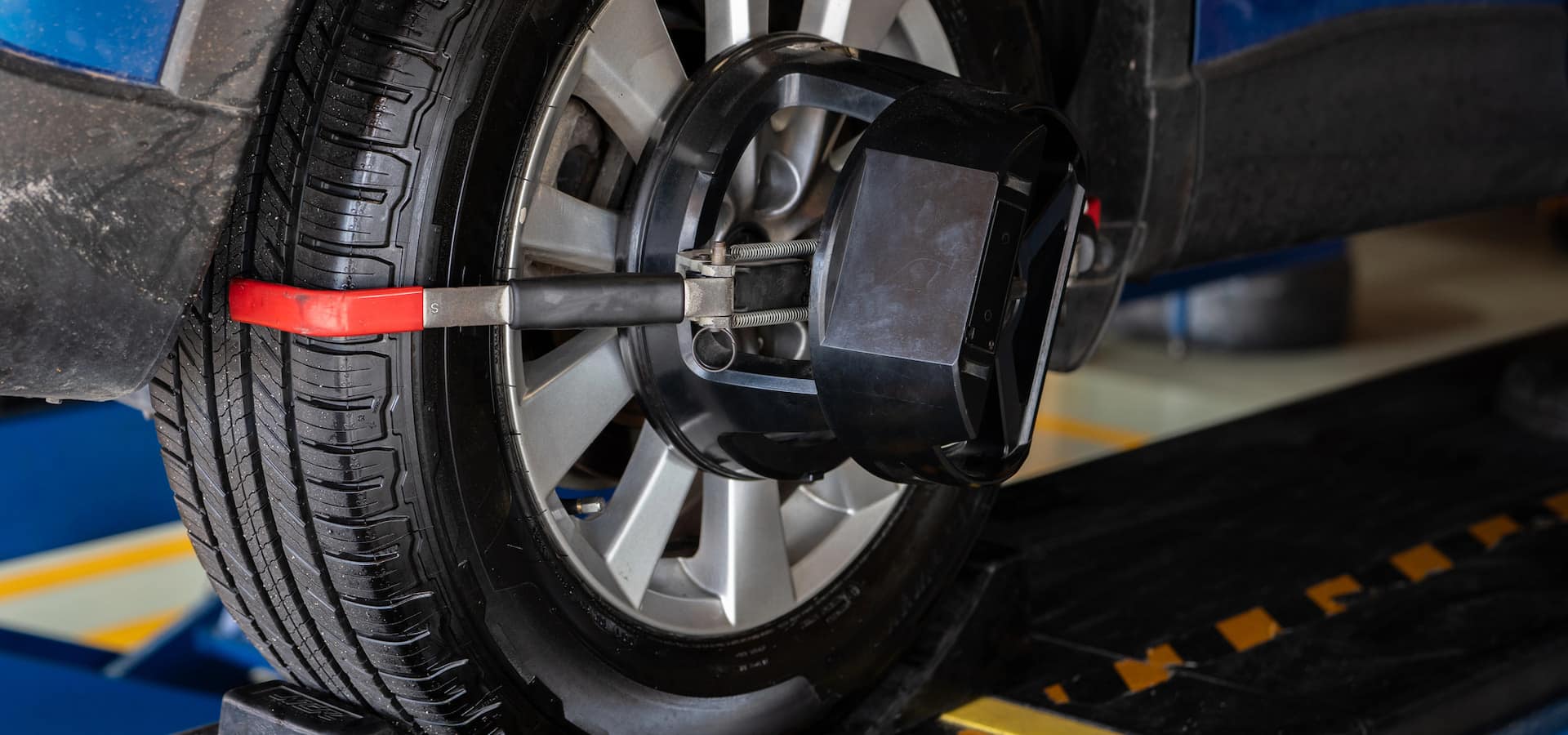
Lexus Wheel Alignment at Elevation Auto Repair
Most shops treat a Lexus like any other sedan when they drop it on the rack, and that's exactly where the trouble starts. Lexus builds precise multi-link suspension geometry into cars like the IS, GS, and RX, and getting those angles back to factory spec takes more than a quick toe adjustment.
Wheel alignment restores caster, camber, and toe to the values Toyota Motor Corporation engineered for your specific chassis. On a Lexus, that difference matters:
- Many RWD IS and GS models (GSE20/GSE30 IS, GRS/GWS GS) have adjustable rear camber and toe that generic shops skip, leading to chewed inner tire edges.
- Models with Variable Gear Ratio Steering or Lexus Dynamic Handling require a steering angle sensor reset with proper scan tooling after alignment, or the system logs faults and disables features.
We align to OEM specs using calibrated equipment and follow the documented reset procedures so your safety and driver-assist systems come back online correctly. That protects both your warranty coverage and your resale value.
Here's what you can expect from us:
- A pre-alignment inspection of tie rods, ball joints, and bushings before we touch a bolt
- All four angles set to Lexus factory tolerances
- Steering angle sensor and ADAS calibration where the platform calls for it
- A clear printout showing before and after readings
Symptoms – How to Know You Need This Service
Your Lexus gives clear hints when the alignment drifts out of spec. You may notice:
- Pulling to one side on a flat, straight road even with your hands relaxed on the wheel
- An off-center steering wheel when driving straight ahead
- Uneven tire wear – feathered edges or a worn inner shoulder, common on IS and GS rear tires
- Vibration through the wheel at highway speed
- A steering wheel that doesn't return to center smoothly after a turn
- Squealing tires during normal cornering
- Lane Departure Alert or Lane Keep Assist warnings triggering without cause, since those systems rely on correct steering geometry
Schedule soon if you notice pulling, an off-center wheel, or early tire wear – these get expensive the longer you wait. Stop driving and call us right away if you feel a sudden change in steering feel, hear clunking over bumps, or the wheel wanders hard, since that can point to a failed tie rod, ball joint, or bushing rather than a simple alignment.
Common Wheel Alignment Issues on Lexus Vehicles
Lexus builds vehicles that ride quietly and track straight – which is exactly why owners notice alignment drift faster than most drivers. The catch that generic shops miss is that many Lexus platforms rely on adaptive systems that assume a perfectly aligned baseline, so even minor toe or camber deviation shows up as pull, uneven wear, or steering-angle sensor faults.
- Rear toe wear on GS/IS RWD platforms (2006-2013 GSE20/GSE30): The independent multi-link rear suspension is sensitive to rear toe changes, producing inner-edge feathering on rear tires long before the fronts show anything.
- RX crossover front camber drift (2010-2015 RX350): Curb strikes and Denver potholes shift the front strut position, causing outer-shoulder wear and a subtle wander at highway speed.
- ES front pull after suspension work (2013-2018 ES350): Lower control arm bushings soften with age, letting caster settings wander and creating a lazy return-to-center feel.
- LX/GX body-on-frame toe shift (GX460, LX570): Off-road duty and load changes move front toe, chewing the outer edges of pricey OEM-size tires.
- Steering angle sensor faults after alignment: Many 2010-and-newer Lexus models throw VSC and traction lights if the sensor isn't reset to a true straight-ahead reference.
- Hybrid RX/NX ride-height variance: Battery weight and suspension aging can nudge cross-camber, showing up as slight steering-wheel offset.
Which Lexus Models We See for Wheel Alignment
We align the full Lexus lineup and know the quirks of each platform. The most common vehicles through our bays:
- IS 250 / 350 / 300 / 500 – GSE20 (2006-2013) and GSE30/GSE31 (2014-present); RWD and AWD variants have different rear specs, and F Sport models often need adjustable arms dialed in carefully
- IS F – aggressive alignment settings and stiffer bushings demand precision on the 2008-2014 cars
- GS 300 / 350 / 450h / GS F – GRS/GWS and later L10 chassis with full four-wheel adjustability
- ES 300h / 350 – FWD platforms (XV60, XZ10) where front camber and toe drive most tire wear
- RX 350 / 450h / RX F Sport – 2010-present crossovers that benefit from regular rear-toe checks
- NX 200t / 300 / 300h / 350h – compact SUV platforms with ADAS calibration needs after alignment
- RC / RC F – shared IS-based geometry with performance-tuned settings
- LS 460 / 500 – air-suspension models that need ride height verified before alignment
Models with Lexus Dynamic Handling or Variable Gear Ratio Steering get the required sensor resets included. We're happy to work on older LS400 and SC platforms too, though parts availability on those can vary. If you're unsure which chassis you have, tell us your year and model and we'll confirm the correct spec before you arrive.
Causes & Risks – What Happens if Ignored
Colorado roads are hard on alignment. Frost-heaved pavement, gravel shoulders, and constant curb parking all combine to knock settings out of spec on otherwise reliable Lexus suspensions. Age plays a role too – rubber bushings and ball joints relax over the years, letting toe and camber drift even without an impact.
Waiting turns a quick correction into a parts-and-labor problem. Once tire edges start scalloping, no alignment brings that rubber back.
- Ignored inner-edge wear on GS/IS rear tires usually means replacing tires months early once the cords show.
- Neglected front camber on an RX350 loads the wheel bearing unevenly, leading to bearing noise and eventual replacement.
- Persistent pull masks worn control arm bushings, which then wear tie-rod ends and stress the rack.
- Unaddressed steering-angle faults can partially disable VSC and stability assistance without an obvious warning.
- Long-term misalignment accelerates uneven brake pad and rotor wear as the vehicle fights to stay straight.
The cost jump is real – a straightforward alignment is far cheaper than a set of premium tires plus a bearing or control arm. We'll catch it early and keep the repair small.
Safety Impact – Why Wheel Alignment Matters
Alignment isn't just about tire life on a Lexus – it's the reference point several safety systems trust. When toe, camber, and the steering-angle sensor disagree, the electronics make decisions on bad data.
- Vehicle Stability Control (VSC) uses steering-angle input to decide when to intervene – a bad reference can delay or misfire that intervention.
- ABS and traction control rely on consistent tire contact that misalignment undermines during hard braking.
- Lane Keep Assist and Dynamic Radar systems on newer models expect a straight-tracking baseline to steer accurately.
Stop driving and call now if you notice:
- Sudden strong pull to one side under braking
- Steering wheel off-center combined with VSC/traction warning lights
- Vibration or wandering that worsens at speed
Schedule soon if you notice: mild pull, off-center wheel with no warning lights, or early uneven tire wear. Addressing a known alignment issue promptly also protects you – an unaddressed handling defect before an incident can complicate a liability or insurance claim.
How Lexus Wheel Alignment Actually Works
A Lexus alignment brings three core angles back into the factory window – toe, camber, and caster – measured against the vehicle's centerline on precision equipment. What sets Lexus apart from a generic domestic sedan is how tightly the electronic systems are tied to those mechanical settings, especially on 2010-and-newer models.
Once the wheels are set straight, the work isn't done. The steering-angle sensor has to learn its new zero point, and skipping that step leaves warning lights and degraded stability assist.
- OEM angle windows: Lexus specs tighter tolerances than many mainstream brands, so eyeballing "close enough" doesn't hold up.
- Steering-angle sensor calibration: Performed with Techstream-level tooling to reset the true straight-ahead reference after adjustment.
- Torque and sequence specs: Cam bolts, eccentrics, and tie-rod jam nuts have defined torque values that keep settings from drifting back out.
- ADAS awareness: On models with Lane Keep and radar cruise, alignment is the foundation those systems calibrate against.
Doing it the OEM way protects your Lexus warranty and preserves resale value –
How We Diagnose Wheel Alignment Issues on Lexus
Lexus platforms carry alignment quirks that a quick toe-and-go check misses. Rear-wheel-drive sedans like the IS (XE20/XE30) and GS often develop rear camber drift, while the RX and NX crossovers are notorious for uneven inner-edge tire wear from soft rear control-arm bushings. Our process is built around those tendencies.
- Interview and history review – we ask about pulling, steering-wheel offset, and any recent curb strikes or suspension work.
- Road test – we drive the car to feel for wander, return-to-center lag, and vibration that hints at more than a simple toe issue.
- Scan for related codes – using Techstream, we check the electric power steering and, on models so equipped, VGRS and the yaw-rate/steering-angle sensors, since a bad sensor mimics an alignment complaint.
- Visual and hands-on inspection – we check tie rod ends, ball joints, lower control-arm bushings, wheel bearings, and tire wear patterns on a lift.
- Precision measurement – we mount the Lexus on the alignment rack and pull live camber, caster, and toe against factory specs for that exact chassis code.
Once we see how the measured numbers line up with the wear and the road-test feel, we build a clear repair plan and a written quote before touching a single adjustment.
Wheel Alignment on Lexus: Repair vs. Replacement
Not every alignment complaint means new parts. We sort the situation into three honest categories.
- Adjustment only – healthy suspension that has simply drifted out of spec. Many Lexus models offer generous toe and rear-camber adjustment, so a straightforward setting corrects the pull and evens out tire wear.
- Partial replacement – one worn component while the rest of the assembly is sound. Common on higher-mileage RX and ES: a sloppy outer tie rod end or a cracked lower control-arm bushing gets replaced, then we align around the fresh part.
- Full replacement – cascading wear or safety-critical failure. When a GS or IS shows worn ball joints, failing wheel bearings, and collapsed bushings together, replacing the complete lower arm assembly is safer and often more sensible than chasing individual parts.
We show you the measurements and the worn parts, explain what each path does for handling and tire life, and let you choose. Preserving warranty coverage and resale value with OEM-grade parts guides the recommendation – never the biggest invoice.
How to Make Your Lexus Wheel Alignment Last Longer
An alignment holds far longer when the suspension and tires are treated well. A few habits go a long way on any Lexus.
- Ease off curbs and potholes – Denver's freeze-thaw potholes are the fastest way to knock toe out and bend components.
- Rotate tires on Lexus's recommended interval – even wear keeps the contact patch honest and reveals alignment drift early.
- Keep tire pressure at the door-jamb spec – underinflation loads the outer edges and hides misalignment.
- Avoid overloading – heavy cargo in an RX or GX changes ride height and stresses rear bushings.
Owner-friendly checks that are safe to do yourself:
- Glance at inner and outer tire edges for feathering or cupping.
- Note any new pull, steering-wheel offset, or clunk over bumps.
- Watch for a lit VSC or steering-related warning and mention it early.
Use OEM or OEM-equivalent bushings and tie rod ends where fitment matters, and keep steering-related software current at service time. Leave ball joint, bearing, and control-arm work to the shop – these are safety-critical, and a proper post-repair alignment protects both handling and resale value.
What to Expect When You Bring Your Lexus In
Lexus alignment is deceptively particular. The self-leveling AVS/adaptive suspension on GS, LS, and RX models has to be checked at correct ride height before any numbers are trusted, and the ES350 (XV60/XV70) rear camber will read out of spec if the vehicle isn't set to Lexus reference points first. Here's how a visit moves along.
- Drop-off or appointment – Tell us the pull, uneven tire wear, or steering-wheel offset you've noticed. Grab personal items from the cabin; we secure the vehicle either way.
- Initial inspection – We check tie rods, lower control arm bushings, and wheel bearings before touching the rack, since a worn RX330/RX350 rear trailing arm bushing will throw toe every time.
- Written estimate – You approve a clear scope before work starts. No surprise add-ons.
- During the work – We text or call with findings and photos if we spot anything, like a seized cam bolt on an older GX470.
- Pickup walkthrough – We review before/after alignment sheets and what we adjusted.
Loaner and shuttle options are available, and after-hours pickup can be arranged. Every alignment ends with a road test and a scan-tool re-check of steering angle sensor calibration. If the steering feels off afterward, bring it back and we'll recheck it.
Why Choose Elevation Auto Repair for Lexus Wheel Alignment
We treat Lexus alignment as a system, not a rack reading. That means calibrating the steering angle sensor on models with VGRS and Lane Departure Alert after adjustment, so your safety systems stay accurate and your warranty and resale value stay intact.
- Familiarity with Lexus TSBs and software updates that affect ride height, steering feel, and sensor calibration
- Correct reference-height setup for AVS/adaptive-suspension GS, LS, and RX platforms before measuring
- Attention to platform quirks – rear toe drift on ES and RX bushings, camber bolt seizing on GX/LX truck platforms
- OEM torque and fluid specs honored, with no guesswork substitutions
You get one shop handling diagnosis, the repair of any worn steering or suspension parts, and post-repair verification – no bouncing between a tire chain and a dealer. That end-to-end ownership is how we protect your tires, your handling, and the long-term value of your Lexus.
Our Lexus Services
- Air Conditioning AC Repair
- Battery Repair Replacement
- Brake Repair & Brake Fluid Change
- Check Engine Light Diagnostics
- Clutch Repair & Replacement
- Coolant Leak Repair
- Cooling System Repair
- Drive Shaft Repair
- Engine Repair
- Exhaust & Catalytic Converter Repair
- Head Gasket Repair & Replacement
- Oil Change
- Oil Leak Repair
- Scheduled Service Maintenance
- Steering Repair
- Suspension Repair
- Cambelt Timing Belt Replacement
- Transmission Repair
- Tune Up