
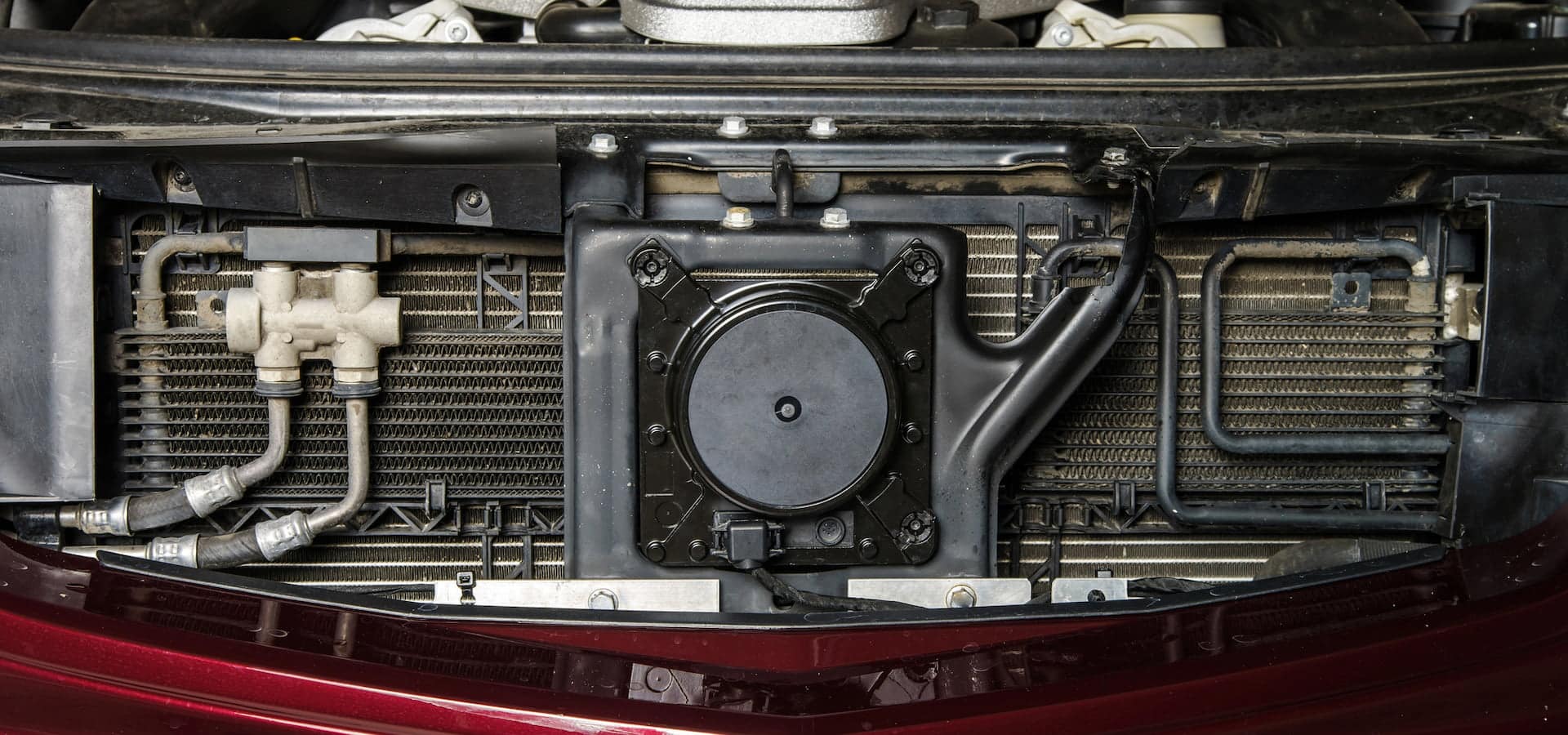
Lexus Cooling System Repair at Elevation Auto Repair
A Lexus runs cooler and quieter than most vehicles on the road – until a failing water pump, a cracked radiator tank, or a leaking coolant line changes that. Cooling system repair on a Lexus rewards patience and the right approach, which is why our Denver technicians treat these jobs as precision work rather than a quick swap.
The details separate a lasting repair from a repeat visit. Many Lexus V6 and V8 platforms route coolant through plastic-and-aluminum crossover pipes and thermostat housings that grow brittle with heat cycling, and several 2GR-FE and 3UR-FE engines are known for weeping coolant at pump gaskets and housing seams. We bleed these systems following Toyota/Lexus fill procedures, use the correct Toyota Super Long Life Coolant (SLLC, pink), and torque plastic housings to spec to avoid cracking – small steps a generic shop often skips.
Here's what you can expect when you bring your Lexus in:
- A pressure test and cooling-system inspection before we quote anything
- OEM or OEM-equivalent parts and the correct SLLC coolant, not a universal blend
- Proper vacuum-fill and bleed so no air pockets cause hot spots or false readings
- A clear explanation of what failed and what to watch going forward
Symptoms – How to Know You Need This Service
Cooling problems rarely announce themselves all at once. You may notice small clues before a warning light forces the issue.
- Temperature gauge climbing above its normal midpoint, especially in Denver stop-and-go traffic or on grades
- A sweet, syrupy smell after driving – usually leaking coolant hitting hot components
- Pink or orange puddles under the front of the car where the radiator or water pump sits
- Low coolant reservoir levels that keep dropping between visits
- A whining or grinding from the water pump area, hinting at a failing bearing
- Heater blowing cold at idle, a sign of air in the system or a stuck thermostat
- Steam from under the hood or a coolant warning message in the driver display
If you see steam, a red temperature warning, or the gauge in the hot zone, stop driving and let the engine cool – continued running risks warped heads and blown gaskets on aluminum Lexus engines. A faint smell, slow coolant loss, or an occasional high reading means schedule soon before a small leak becomes an overheat.
Common Cooling System Repair Issues on Lexus Vehicles
Lexus cooling systems are well-engineered, but heat, mileage, and plastic components eventually catch up with every platform. Here are the failure patterns we see most often, and what makes each one Lexus-specific.
- Plastic radiator end tank cracks (RX330/RX350, ES350, GS350 – 2GR-FE V6): The crimped plastic-and-aluminum radiator design develops seepage at the seam over time, often showing up as a slow coolant loss with no obvious puddle until the crack opens under pressure.
- Water pump weep hole leaks (2GR-FE and 1UR/3UR V8 platforms): The mechanical pump seal wears and begins weeping coolant, frequently accompanied by a faint bearing whine before it fails outright.
- Thermostat housing and gasket seepage (IS250/IS350 4GR/2GR): The gasket hardens with age and heat cycling, allowing coolant to weep down the block and mimic a larger leak.
- Radiator-to-transmission cooler contamination (RX and older ES models): When the internal ATF cooler in the radiator fails, coolant and transmission fluid cross-contaminate – the classic "strawberry milkshake" that threatens the transmission.
- Hybrid inverter coolant pump failure (RX400h, RX450h, GS450h, CT200h): The dedicated electric pump that cools the power electronics can stop circulating, triggering warning lights and hybrid-system derating.
- Heater core and coolant hose degradation (high-mileage LS and LX platforms): Aging rubber lines and heater cores develop pinhole leaks, sometimes fogging the cabin with sweet-smelling coolant vapor.
Which Lexus Models We See for Cooling System Repair
We service cooling systems across the Lexus lineup, from daily-driven sedans to V8 SUVs. These are the platforms and engines we most often work on:
- RX 350 / RX 450h (2007–present) – 2GR-FE and hybrid variants; water pump and coolant crossover pipe leaks are common
- ES 350 (2007–present) – 2GR-FE V6, similar pump and thermostat housing weeping
- IS 250 / IS 350 (2006–2015, XE20/XE30) – 4GR/2GR engines; radiator and hose failures with age
- GS 350 / GS 450h – radiator end-tank cracks and pump seepage
- GX 460 (2010–present) and LX 570 – 1UR/3UR V8s; heavier cooling loads from towing and off-road use
- LS 460 / LS 600h – complex plumbing where correct bleed procedure matters most
- RC / LC and F-Sport variants – higher output engines with added coolers we inspect closely
Hybrid models like the RX 450h and GS 450h use a separate inverter cooling loop with its own pump and reservoir – we test both circuits rather than assuming the engine loop is the only culprit. If you drive an older LS 400 or SC on the 1UZ-FE V8, we're glad to help, though parts availability can affect scheduling. Not sure which platform you have? Bring it by and we'll identify it and pressure-test the system.
Causes & Risks – What Happens if Ignored
Most Lexus cooling problems trace back to a mix of age, Colorado's dry heat and elevation swings, and design choices like plastic radiator tanks and long coolant service intervals. Once a small leak starts, the system loses its ability to hold pressure, and the failures tend to cascade.
Waiting turns an inexpensive fix into a major repair fast. A weeping water pump left alone for a few months can seize and take out the timing components on interference-designed V6s. Ignoring a cracked radiator tank often leads to a roadside overheat.
- A small radiator seam seep left untreated typically leads to sudden coolant loss and overheating during a highway climb.
- A weeping 2GR-FE water pump ignored over time can seize, damaging the drive belt and related components.
- Overheating on aluminum-block Lexus engines risks warped heads and blown head gaskets – a repair many times the cost of the original leak.
- A failing internal transmission cooler that goes unaddressed can destroy an otherwise healthy automatic transmission.
- On hybrids, a failed inverter coolant pump can force the system into limp mode and stress expensive power electronics.
We catch these early with pressure testing and a thorough inspection so a minor gasket or hose repair never grows into a head-gasket or transmission job.
Safety Impact – Why Cooling System Repair Matters
An overheating Lexus is a safety problem, not just a mechanical one. When engine temperature climbs, the vehicle can enter limp mode and lose power in traffic, and steam or coolant spray under the hood raises fire and visibility risks. Sudden power loss on a busy interstate puts you and everyone around you at risk.
Systems that depend on a stable running engine – power steering assist, brake booster vacuum, stability and traction control – can behave unpredictably when the engine derates or shuts down from heat. On hybrids, cooling faults can disable the electric drive assist.
- Stop driving now: temperature gauge in the red, steam from under the hood, coolant smell in the cabin, or sudden loss of power.
- Schedule soon: slow coolant loss, occasional heater performance drop, faint sweet odor, or a coolant warning that clears on restart.
There's also a liability angle – a known, unaddressed cooling defect that contributes to an at-fault incident can complicate an insurance claim. Handling the repair promptly keeps your Lexus safe and your record clean.
How Lexus Cooling System Repair Actually Works
Your Lexus cooling system circulates pressurized coolant through the block, cylinder heads, radiator, and heater core, with a thermostat regulating flow and electric or clutched fans managing airflow. On hybrid models, a separate low-temperature loop cools the inverter and power electronics independently of the engine loop.
What sets Lexus apart is the integration and the specifications. Many models use Toyota Super Long Life Coolant (pink SLLC), and mixing in a generic green or universal coolant can accelerate corrosion and gel formation. Air pockets in these systems don't self-purge easily, so the fill procedure matters as much as the parts.
- Coolant type: we refill with the correct OEM-spec SLLC rather than a one-size-fits-all product.
- Proper bleeding: Lexus V6 and V8 systems require a specific vacuum-fill or bleed sequence to clear trapped air that would otherwise cause hot spots.
- Hybrid loops: RX450h and similar models need their inverter coolant circuit serviced separately, often with Techstream to verify pump operation.
- Torque and sequence: thermostat housings, water pump bolts, and plastic fittings on aluminum blocks are torqued to spec to avoid stripped threads and repeat leaks.
Following these OEM steps
How We Diagnose Cooling System Repair Issues on Lexus
An overheating gauge, sweet coolant smell, or low-coolant warning on the dash points to a cooling fault – and our first move is to pin down the exact source before touching a single part. Lexus platforms hide their weak points well, so we follow a repeatable process built around the vehicle's specific engine family.
- Pull codes with Techstream (the factory Lexus scan tool), reading coolant temperature sensor data, thermostat commands, and electric water pump status on hybrid models like the RX 450h and ES 300h.
- Review live data during a warm-up cycle to catch a thermostat sticking open or closed and to verify the fan and coolant flow control valve respond correctly.
- Perform a cooling system pressure test to expose seepage at the plastic radiator end tanks, water pump weep hole, and timing-cover gaskets common on 2GR-FE V6 engines.
- Run a combustion-gas (block) test when we suspect a head gasket, especially on higher-mileage 3.5L V6 and turbo 2.0L models.
- Inspect visually for crusted coolant trails, brittle hoses, and a failing radiator cap, then confirm with a road test under load.
Once we know whether it's a thermostat housing, water pump, or radiator, we translate those findings into a clear repair plan and a written quote before any work begins.
Cooling System Repair on Lexus: Repair vs. Replacement
Not every cooling complaint means a big bill. We match the fix to the actual failure so you're not paying to replace serviceable parts.
- Genuine repair: A stuck thermostat, a leaking radiator cap, a loose hose clamp, or a coolant flush to clear contamination – the rest of the system stays put.
- Partial replacement: Swapping a failed water pump on a 2GR-FE while keeping the radiator, or replacing a single cracked plastic thermostat housing without touching the block. Common on ES 350, RX 350, and GS 350 models as they age.
- Full replacement: When end-tank cracks, a warped head gasket, and a tired water pump all show up together, or when repair labor overlaps and approaches the cost of a complete radiator and pump assembly, replacing as a set makes sense and prevents a return visit.
Hybrid Lexus models add an inverter cooling loop with its own electric pump – we treat that circuit separately so you only replace what has actually failed. We lay out both paths, explain the tradeoffs, and let you choose rather than steering you to the priciest option.
How to Make Your Lexus Cooling System Repair Last Longer
A fresh repair holds up best when the system isn't fighting neglect or heat abuse. A few habits go a long way on Colorado's climbs and altitude swings.
Driving and Load Habits
- Let the engine reach operating temperature before hard acceleration, especially on cold Denver mornings.
- Ease off during long mountain grades and heavy towing to keep coolant temps in range.
- Watch the temperature gauge and pull over promptly if it climbs – heat is what kills plastic housings and gaskets.
Owner Maintenance You Can Do
- Check coolant level at the reservoir when the engine is cold and look for pink Toyota Super Long Life Coolant residue under the car.
- Listen for a whine or gurgle from the water pump area and note any sweet smell from the vents.
- Respond to warning lights instead of topping off and waiting.
Brand-Specific Care
- Insist on OEM Toyota/Lexus pink coolant – mixing in generic universal fluid shortens gasket and pump life.
- Follow Lexus's coolant replacement intervals and keep hybrid system software current.
Level checks and visual inspections are safe DIY. Leave pressure testing, bleeding air from the system, and any work on hybrid coolant loops to us – those steps affect safety and warranty.
What to Expect When You Bring Your Lexus In
Sweet coolant smell, a temperature needle creeping up, or pink residue on your garage floor usually points to a cooling system leak. Here's how we move from symptom to solution once your Lexus arrives.
- Drop-off or scheduled appointment – Tell us what you've noticed: overheating in traffic, low coolant warnings, or heater output that fades. We log your concerns and get your vehicle into the queue.
- Initial inspection – We pressure-test the system and inspect the water pump, radiator, thermostat housing, and hose connections. On many V6 and V8 Lexus platforms, the plastic radiator end tanks and water pump weep holes are the usual leak sources.
- Written estimate – You get an itemized breakdown of parts and labor before we touch a wrench. Nothing moves forward without your approval.
- Repair with updates – We text or call with findings as the work progresses, including anything we spot nearby like a failing radiator cap or brittle hoses.
- Pickup walkthrough – We show you the replaced parts and explain what was done.
Loaner and shuttle options help keep your day moving, and after-hours pickup is available when your schedule runs late. Leave personal items where they are – we work around them. Before your Lexus leaves, we bleed the system fully, road-test for stable operating temperature, and run a scan-tool recheck. If anything feels off afterward, bring it back and we'll make it right.
Why Choose Elevation Auto Repair for Lexus Cooling System Repair
Lexus cooling systems have quirks that a general shop often misses. We know where these platforms fail and how to fix them so the repair holds.
- Platform-specific knowledge – We're familiar with water pump and thermostat failures on 2GR-FE V6 models (ES, RX, Camry-shared architecture) and the plastic timing-cover coolant passages on 1UR/3UR V8 trucks and LS sedans.
- TSB and software awareness – We check for Lexus service bulletins and cooling-related updates that affect fan control and thermostat behavior before assuming a mechanical fault.
- Correct fluids and specs – We refill with Toyota/Lexus Super Long Life Coolant to factory concentration and follow the proper bleed procedure, so you don't get trapped air pockets that mimic a bad thermostat.
We own the job end to end – diagnosis, repair, and post-repair verification all happen under one roof. That means no finger-pointing between shops and no guesswork about whether the overheating is actually resolved. As your Denver dealership alternative, we deliver that same brand-level care with honest diagnostics and clear communication throughout.
Our Lexus Services
- Air Conditioning AC Repair
- Battery Repair Replacement
- Brake Repair & Brake Fluid Change
- Check Engine Light Diagnostics
- Clutch Repair & Replacement
- Coolant Leak Repair
- Drive Shaft Repair
- Engine Repair
- Exhaust & Catalytic Converter Repair
- Head Gasket Repair & Replacement
- Oil Change
- Oil Leak Repair
- Scheduled Service Maintenance
- Steering Repair
- Suspension Repair
- Cambelt Timing Belt Replacement
- Transmission Repair
- Tune Up
- Wheel Alignment