Lexus Drive Shaft Repair at Elevation Auto Repair
Lexus builds drivetrains that feel silky for a reason, and that refinement is exactly what makes a worn drive shaft so easy to overlook until it becomes a real problem. A generic shop often treats every driveline the same, but AWD Lexus models and rear-drive sedans carry very different shaft designs, balancing tolerances, and CV joint specs.
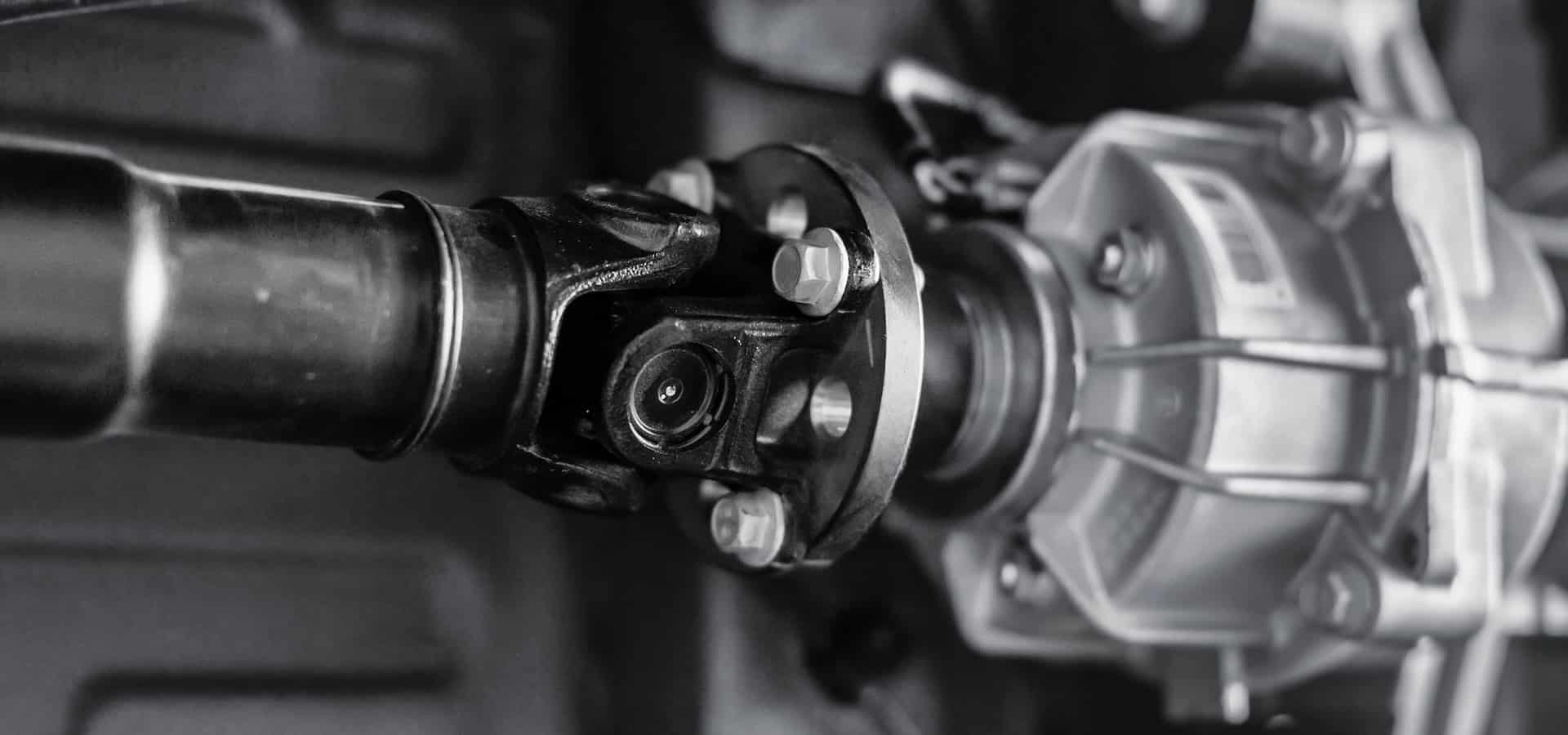
Drive shaft repair covers the components that transfer power from the transmission or transfer case to the wheels – the shaft itself, center support bearings, U-joints, and CV joints with their protective boots. On Lexus, the details matter. The RX and highlander-derived AWD platforms use a carrier bearing that hardens with age, while the IS and GS rear-drive cars rely on a two-piece shaft with a rubber flex coupling (the "giubo" style joint) that cracks over time.
Doing it right means honoring OEM torque specs on flange bolts, indexing the shaft to preserve factory balance, and checking transfer case fluid on AWD units before reassembly. We use factory-level diagnostic tooling to confirm the fault isn't being blamed on the wrong component.
- An honest diagnosis that pinpoints the shaft, bearing, or joint actually at fault
- OEM-correct torque and re-balancing to keep that signature Lexus smoothness
- Transparent pricing and clear communication before any work begins
- A road test to verify the vibration or noise is fully resolved
Symptoms – How to Know You Need This Service
Drive shaft problems tend to announce themselves gradually, then all at once. Here is what you may notice from behind the wheel:
- Vibration that increases with speed – often felt through the floor or seat, worse under acceleration
- A rhythmic clunk when shifting into Drive or Reverse – a classic sign of a worn U-joint or failing flex coupling
- Clicking or popping during tight turns – points to a torn CV boot and dry, damaged joint on AWD models
- A humming or growling that changes with vehicle speed – commonly a failing center support bearing
- Grease slung around the underside – a split boot flinging lubricant onto surrounding parts
- Shudder from a standstill – frequently the rubber flex disc on rear-drive IS and GS models
Schedule soon if you notice mild vibration or a torn boot – catching it early often saves the joint. Stop driving and have the vehicle towed if you feel a sudden loud clunking, severe shaking, or hear metal-on-metal contact. A shaft that separates at speed can damage the transmission, exhaust, and floor pan, so don't push it.
Common Drive Shaft Repair Issues on Lexus Vehicles
Most shops treat a Lexus drive shaft like any other, but the AWD and RWD platforms have their own wear paths that only show up when you know where to look. Here are the patterns we see most often across the lineup.
- Center support bearing failure on RWD IS/GS (2006-2013): The two-piece propshaft on the IS250/IS350 and GS models uses a rubber-isolated center bearing that dries out and cracks with age. Owners feel a low-frequency vibration around 40-50 mph and hear a rumble that changes with throttle.
- Outer CV boot splitting on RX AWD (RX330/RX350, 2004-2015): Denver road salt and heat cycling crack the front axle CV boots. Once grease escapes and grit gets in, the joint clicks hard on turns and eventually seizes.
- Rear diff-to-driveshaft flex coupler wear on GX470/GX460: The body-on-frame GX uses a rubber giubo-style flex disc that hardens, leading to a driveline clunk on gear engagement.
- Transfer case output seal leaks on LX570 and 4Runner-based platforms: Weeping seals contaminate the front driveshaft slip yoke, causing binding.
- Slip-yoke spline wear on higher-mileage RWD sedans: Worn splines produce a "clunk" on acceleration and deceleration.
- U-joint seizure on truck-based Lexus (GX/LX): Non-serviceable factory U-joints bind and vibrate as the needle bearings wear.
Which Lexus Models We See for Drive Shaft Repair
We handle drive shaft and CV joint work across the Lexus lineup, both rear-drive and AWD. The platforms we see most often:
- RX 350 / RX 450h (2010–2022) – AWD center support bearing wear and rear propeller shaft vibration are frequent here
- IS 250 / IS 350 (XE20, XE30) – rear-drive two-piece shafts with flex coupling shudder; AWD variants add front CV concerns
- GS 350 / GS 460 (2006–2020) – flex disc cracking and center bearing noise on higher-mileage cars
- GX 460 (2010–up) – body-on-frame with transfer case and front/rear shafts that see genuine off-road duty
- LX 570 (2008–2021) – heavy full-time 4WD driveline requiring careful re-torque and fluid checks
- ES 350 (front-drive) – CV axle and inner joint service rather than a traditional propeller shaft
- NX and RX hybrid AWD – electric rear-axle designs where diagnosis differs from mechanical shafts
AWD and full-time 4WD models (RX AWD, GX, LX) call for extra attention to the transfer case and viscous coupling, so the repair scope is broader than a rear-drive IS. If you drive an older LS or a rare grey-market variant we haven't documented, we'll still inspect it and tell you honestly whether it's work we can complete correctly. When in doubt, bring it by – we'd rather verify than guess.
Causes & Risks – What Happens if Ignored
Colorado driving is hard on driveline components. Elevation changes, sustained highway speeds on I-70, road salt, and dirt-road weekend trips all accelerate wear on CV boots, center bearings, and flex couplers. Age and heat cycling do the rest, especially on rubber isolators.
The catch is that early symptoms feel minor. A faint vibration or an occasional clunk is easy to postpone, but the failure curve on driveline parts is steep once contamination or metal-on-metal contact starts.
- Ignoring a split CV boot for a few months lets grease sling out and grit in – a simple boot replacement becomes a full axle or CV joint replacement.
- A dry center support bearing that vibrates will eventually let the propshaft wobble, damaging the transmission tail housing seal and the differential pinion flange.
- A hardened GX/GX470 flex coupler that clunks can crack completely, dropping driveline load onto adjacent components.
- Worn U-joints that are left alone can seize at speed, which can bend the shaft or damage the transfer case.
- A neglected slip yoke can gall the splines, forcing full driveshaft replacement instead of a seal or lube service.
The pattern is consistent – small parts protect big parts. Address the boot, bearing, or coupler early and you avoid the transmission, differential, and transfer case bills that follow.
Safety Impact – Why Drive Shaft Repair Matters
A failing driveshaft doesn't stay isolated. On AWD Lexus platforms it feeds directly into the systems that keep the vehicle planted and predictable.
- Stability and traction control: Vibration and driveline binding can confuse wheel-speed inputs, triggering VSC and traction warnings and unpredictable intervention.
- ABS behavior: A wobbling shaft near a wheel-speed sensor tone ring can distort readings and affect braking modulation.
- Steering feel: A worn front CV joint on RX or GX models transmits vibration into the steering, masking other developing problems.
- Loss of drive: A completely seized U-joint or separated flex coupler can strand the vehicle or cause a shaft to drop.
Stop driving now if you notice:
- A loud metallic banging under acceleration.
- Severe vibration that worsens quickly with speed.
- A grinding or scraping from under the floorpan.
Schedule soon if you notice: a faint highway-speed hum, an occasional clunk on gear engagement, or a rhythmic clicking during turns. Addressing a known driveline defect before an incident also keeps you clear of avoidable liability questions.
How Lexus Drive Shaft Repair Actually Works
A Lexus driveshaft transfers engine torque from the transmission or transfer case to the differentials, using U-joints or CV joints to allow for suspension movement and slip yokes to absorb length changes. On AWD models like the RX, NX, and LX, front and rear shafts work together and share duty with the transfer case, so balance and phasing matter more than on a simple RWD car.
What sets Lexus work apart is precision and calibration. These aren't parts you eyeball back together.
- Balance and phasing: Two-piece propshafts must be reinstalled in factory index position, or you reintroduce the exact vibration you set out to fix.
- Torque and sequence specs: Flex-coupler and flange bolts use OEM torque values and thread treatment to prevent loosening under load.
- Electronic systems: Newer Lexus models with electronic parking brakes and AWD coupling require the correct service mode and post-repair checks so VSC, ABS, and traction systems relearn cleanly.
- Contamination control: Transfer case and diff seals often need attention at the same
How We Diagnose Drive Shaft Repair Issues on Lexus
Most shops chase a driveline vibration to the tires and stop there. On rear- and all-wheel-drive Lexus platforms – think GS, IS, and LS sedans plus GX and LX SUVs – the real culprit is often a worn center support bearing or a failing flex disc (rubber "giubo") at the transmission flange, which a wheel balance never fixes.
- We pull codes with Techstream, the factory-level Lexus scan interface, checking for AWD transfer case faults, VSC/traction flags, and ABS wheel-speed data that hint at driveline imbalance.
- We road test at the speeds where the complaint appears – a low-speed clunk on GX470/GX460 U-joints reads differently than a 45-60 mph resonance from a dry center bearing.
- We lift the vehicle and inspect the CV boots on front axles, the flex disc for cracking, and the center support bearing rubber for separation and heat glazing.
- We measure driveshaft runout and check U-joint play by hand, plus phasing on two-piece shafts.
- We inspect transmission and differential mounts, since sagging mounts mimic driveshaft symptoms.
From there you get a plain-language explanation of what's worn, what's still good, and a written repair plan with transparent pricing before any work begins.
Drive Shaft Repair on Lexus: Repair vs. Replacement
Not every driveline noise means a new shaft. We match the fix to the actual failure.
- Genuine repair: A dry, clicking front CV axle on an AWD RX or a torn CV boot caught early often needs only reboot, regrease, and torque to spec – the shaft itself stays.
- Partial replacement: On GX and 4Runner-based platforms, worn U-joints or a failed center support bearing can be pressed out and renewed without replacing the entire two-piece shaft. A cracked flex disc on GS/IS/LS models is a bolt-in part swap.
- Full replacement: When there's cascading damage – bent tube, chewed splines, phasing loss, or a serviceable joint that costs nearly as much to rebuild as a new assembly – a complete driveshaft is the safer and smarter call.
Some Lexus front driveshafts are sold only as complete units from Toyota, which affects the math. We lay out both paths side by side, explain the trade-offs, and let you choose – we don't default to the priciest option.
How to Make Your Lexus Drive Shaft Repair Last Longer
Good habits protect the work and keep your Lexus quiet and stable for the long haul.
- Driving: Ease off aggressive launches, avoid deep potholes at speed, and don't overload the LX or GX beyond rated capacity – shock loads punish U-joints and CV joints. In Denver winters, let the driveline warm briefly before hard acceleration.
- Owner checks: Peek at CV boots for grease slinging or splits, listen for new clunks when shifting into drive or reverse, and note any vibration that grows with speed. Report changes early rather than waiting.
- Brand-specific care: Use OEM-spec transfer case and differential fluids on AWD models, keep to Lexus service intervals for driveline inspection, and stay current on software updates that affect AWD engagement behavior.
Safe DIY includes visual boot inspection and monitoring for new sounds. Leave U-joint replacement, flex disc work, driveshaft removal, and anything involving the AWD system to us – these are safety-critical and require proper torque specs and phasing to do right.
What to Expect When You Bring Your Lexus In
A driveline vibration on a Lexus rarely announces itself the same way twice. Rear-drive and AWD platforms like the GS, IS (GSE20/GSE30), LS, and the GX/LX SUVs each carry their own driveline layout, so the first thing we do is confirm whether the complaint traces to the drive shaft, center support bearing, or a worn U-joint versus a CV flange bolt torque issue.
- Drop-off or appointment – Tell us when the vibration shows up: highway cruise, launch, or under load on the LX 570's full-time AWD system. Details narrow the diagnosis fast.
- Initial inspection – We lift the vehicle, check runout on the shaft, inspect the center bearing rubber isolator, and verify flange bolt torque against Lexus specs.
- Written estimate – You get a clear breakdown of parts, labor, and what's confirmed versus recommended – no surprises added later.
- During the work – We keep you posted with plain-language updates and call before doing anything beyond the approved scope.
- Pickup walkthrough – We show you the replaced components and explain what we found.
Loaner and shuttle options are available – ask when you book. Remove valuables, though your personal items are safe with us, and after-hours pickup can be arranged. Every job ends with a road test and a scan-tool re-check to confirm no driveline or chassis codes remain. If anything feels off afterward, bring it back and we'll make it right.
Why Choose Elevation Auto Repair for Lexus Drive Shaft Repair
We treat the drive shaft as part of a system, not a standalone part. On Lexus platforms, a mistaken diagnosis often blames the shaft when the real culprit is a failing center support bearing or hardened driveline mounts – something generic shops miss because they don't check runout at the flange.
- Lexus-specific knowledge – We reference applicable TSBs and driveline software updates, and we know the AWD quirks on the GX 460 and LX platforms that affect balance and vibration.
- Correct fasteners and specs – Flange bolts get torqued to Lexus values, and phasing is respected during reassembly so you don't trade one vibration for another.
- End-to-end ownership – The same team diagnoses, repairs, and verifies the work with a road test and scan-tool re-check.
You get honest diagnostics, transparent pricing, and clear communication from a Denver dealership alternative that handles everything from routine maintenance to complex drivetrain repair under one roof.
Our Lexus Services
- Air Conditioning AC Repair
- Battery Repair Replacement
- Brake Repair & Brake Fluid Change
- Check Engine Light Diagnostics
- Clutch Repair & Replacement
- Coolant Leak Repair
- Cooling System Repair
- Engine Repair
- Exhaust & Catalytic Converter Repair
- Head Gasket Repair & Replacement
- Oil Change
- Oil Leak Repair
- Scheduled Service Maintenance
- Steering Repair
- Suspension Repair
- Cambelt Timing Belt Replacement
- Transmission Repair
- Tune Up
- Wheel Alignment