
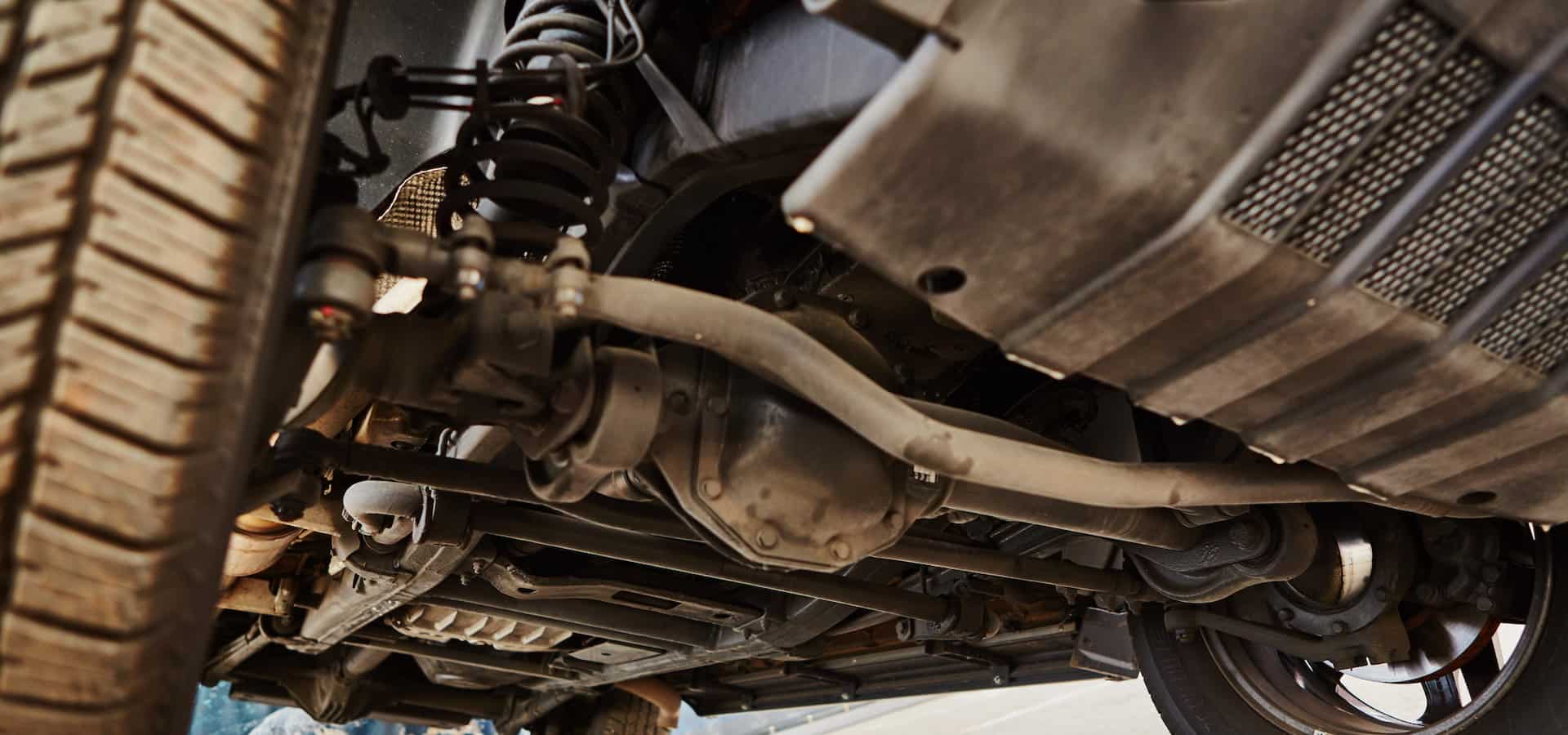
Hyundai Suspension Repair at Elevation Auto Repair
A Hyundai that clunks over Denver's pothole-scarred streets or wanders across I-25 lane markers doesn't need guesswork – it needs a shop that knows how these platforms are built. Suspension repair on a modern Hyundai involves more than swapping struts. It covers the strut assemblies, control arms, sway bar links, bushings, wheel bearings, and the electronic components that keep everything tracking straight.
Doing it right on a Hyundai means respecting a few brand-specific details. Later Sonata, Elantra, and Palisade models use aluminum front knuckles and specific control-arm bolt torque sequences that a generic shop often skips, leading to premature bushing wear. Many trims also require a steering angle sensor recalibration after front-end work, which needs OEM-aligned scan tooling rather than a basic code reader. We follow factory torque and alignment specs so the repair holds up.
- Honest diagnostics that pinpoint the failed component instead of blanket part replacement
- OEM-aligned torque specs and post-repair steering angle recalibration
- Precision alignment on modern equipment to protect your tires and handling
- Clear communication before any work begins, with no unnecessary repairs
Symptoms – How to Know You Need This Service
Suspension trouble usually announces itself before it strands you. On a Hyundai, you may notice these signs:
- Clunking or knocking over bumps – often worn sway bar links or failing strut mounts on higher-mileage Sonata and Tucson models
- Steering wander or a car that pulls – a common sign of worn control-arm bushings or alignment drift
- Uneven or feathered tire wear – points to worn components or an alignment that's out of spec
- Clicking or humming from a wheel that changes with speed – frequently a failing wheel bearing
- Bouncing that won't settle after a dip – tired struts or shocks losing damping
- A corner sitting low – possible coil spring failure, seen on some older Elantra and Accent units
- Vibration through the steering wheel – can be balance, but also a worn tie rod or bearing
Schedule soon for clunks, uneven tire wear, and bouncing. Stop driving and call us if you feel loose or disconnected steering, a sudden sagging corner, or grinding from a wheel – those point to structural components that can fail without warning.
Common Suspension Repair Issues on Hyundai Vehicles
Clunks over bumps, uneven tire wear, and a steering wheel that no longer centers are the symptoms Hyundai owners bring us most often. We start by pinning down which component is actually worn instead of throwing parts at the problem. Here are the patterns we see repeatedly across the lineup:
- Front strut mount and bearing noise – 2011-2016 Elantra (MD/UD) and Sonata (YF) commonly develop a creaking or popping from the upper strut mount, especially in Denver's temperature swings that harden the rubber isolators.
- Front lower control arm bushing wear – Tucson (2010-2015 LM/TL) and Santa Fe platforms wear the rear hydraulic control arm bushing early, producing brake-dive shudder and lateral wander.
- Sway bar end links and bushings – Sonata and Elantra end links rattle over broken pavement well before other components fail; a frequent, inexpensive fix that gets misdiagnosed as strut failure.
- Rear coil spring fatigue and fracture – Older Accent, Elantra, and Sonata models on salted winter roads see rear spring corrosion and cracking near the lower coil seat.
- Wheel bearing and hub noise – Santa Fe and Tucson front hub bearings produce a speed-dependent growl that changes when loading the wheel in a turn.
- Rear multilink toe and camber drift – Genesis and Sonata independent rear setups fall out of alignment spec after pothole impacts, chewing the inner tire edges.
Which Hyundai Models We See for Suspension Repair
We service suspension work across the current and recent Hyundai lineup. The most frequent visitors to our lifts:
- Sonata (LF 2015–2019, DN8 2020+) – front strut mounts, sway bar links, and control-arm bushings top the list
- Elantra (AD 2017–2020, CN7 2021+) – rear trailing-arm bushings and front links on daily-driven cars
- Tucson (TL 2016–2021, NX4 2022+) – wheel bearings and strut assemblies with higher mileage
- Santa Fe (TM 2019+) – control arms and rear shocks, especially on tow-duty units
- Palisade (LX2 2020+) – heavier three-row SUV that works through bushings and sway bar hardware
- Kona (OS 2018+) – front links and strut mounts on the compact platform
- Santa Cruz (2022+) – shares much of the Tucson NX4 chassis and its wear patterns
Work differs slightly on the sport-tuned N and N Line trims, which use firmer dampers and unique bushings that we source and torque to their specific specs. We also handle older Accent and Veloster models. For pre-2010 Hyundai platforms and rare imported variants, parts availability can vary, so we'll confirm before booking. Whatever you drive, we'll tell you honestly what your car needs.
Causes & Risks – What Happens if Ignored
Most Hyundai suspension wear traces back to Colorado driving realities – rough roads, potholes, gravel shoulders, and the freeze-thaw cycle that degrades rubber bushings and mounts faster than in milder climates. Age, mileage, and the softer OEM comfort tuning Hyundai favors also accelerate bushing and strut wear.
Waiting rarely saves money. A worn end link left alone loads the sway bar bushings and strut mount, turning a small job into a multi-part repair. Ignoring a growling wheel bearing for months can seize the hub and damage the ABS tone ring.
- Worn strut mounts left unaddressed transfer shock into the strut body, causing premature strut and spring failure.
- Failing control arm bushings throw off alignment, scrubbing tires bald in a few thousand miles.
- Neglected wheel bearings can seize, damage the hub, and disable the wheel speed sensor feeding ABS and stability control.
- Cracked rear springs can drop a coil, contact the tire, and cause sudden ride-height loss and handling instability.
- Loose end links reduce body control in emergency maneuvers and accelerate adjacent bushing wear.
The practical line: a symptom that starts as an annoying clunk becomes a safety and alignment problem the longer it rides.
Safety Impact – Why Suspension Repair Matters
Suspension components do more than smooth the ride – they keep the tires planted so braking, steering, and electronic stability systems can do their jobs. When a Hyundai's suspension degrades, those systems lose the grip and geometry they depend on.
- Braking – worn bushings and struts increase nose dive and stopping distance, and a damaged wheel bearing can corrupt the wheel speed signal ABS relies on.
- Stability and traction control – bad tone rings or hub sensors trigger false interventions or disable ESC entirely.
- Steering – failed control arm or strut mounts cause wander, pull, and vague on-center feel.
Stop driving and call now if you notice:
- A sudden clunk with visible ride-height drop or a leaning corner
- A loud grinding wheel bearing that worsens by the mile
- Steering that pulls hard or wanders after an impact
Schedule soon for intermittent creaks, mild rattles over bumps, or slow-developing uneven tire wear. Addressing a known worn component before an incident also keeps you clear of liability questions if handling contributed to a collision.
How Hyundai Suspension Repair Actually Works
Most Hyundais use a MacPherson strut front and a multilink or torsion-beam rear, with the electronics – ABS, stability control, and on many models electronic power steering – reading wheel speed and steering-angle inputs that suspension geometry directly affects. That's why a proper repair is more than bolting on parts.
On modern Hyundais, replacing a hub or disturbing the steering system often requires post-repair calibration through Hyundai's GDS diagnostic platform, not just a mechanical fit. We follow OEM torque sequences and ride-height-loaded bushing tightening so the rubber isn't preloaded incorrectly.
- Ride-height loaded torquing – control arm and strut bushings must be final-torqued at curb height, or they bind and fail early.
- Steering angle sensor reset – any tie rod or steering work requires a SAS calibration so lane-keep and ESC read correctly.
- Wheel speed sensor and tone ring checks – hub replacements are verified against ABS data before release.
- Precision alignment to Hyundai spec – multilink rears get individual toe and camber set to factory numbers, protecting tire life.
As your Denver dealership
How We Diagnose Suspension Repair Issues on Hyundai
Clunks over bumps, a wandering steering wheel, or uneven tire wear on your Elantra, Sonata, Tucson, or Santa Fe usually point to worn suspension components – and we start with a structured process to find the exact source rather than throwing parts at the symptom.
- Owner interview and road test – We confirm when the noise or pull happens: cold start, hard braking, low-speed turns, or highway speeds. Each tells us something different.
- Scan for related codes – Using Hyundai-capable diagnostic scan tools, we pull chassis and body module data, including electronic power steering (MDPS) faults and any stored ABS or ESC wheel-speed correlation issues that mimic suspension problems.
- Lift inspection – We check control arm bushings, sway bar end links, ball joints, strut mounts, and rear trailing arm bushings – a frequent wear point on CUV platforms like the Tucson and Santa Fe.
- Physical play test – Dial indicators and pry-bar checks reveal ball joint and tie rod movement beyond factory spec.
- Alignment measurement – Our alignment rack shows camber, caster, and toe deviations that expose bent or worn parts.
We combine tool data with hands-on measurement, then translate findings into a prioritized repair plan with a clear, itemized quote – no guesswork and no unnecessary line items.
Suspension Repair on Hyundai: Repair vs. Replacement
Not every suspension complaint means a full strut assembly. We match the fix to the actual condition of your Hyundai.
- Genuine repair – Retorquing loose subframe bolts, replacing a single sway bar end link, or correcting alignment after a curb strike. Often the assembly stays in service.
- Partial replacement – Swapping a worn front lower control arm bushing on an Elantra, replacing a leaking strut while keeping the spring and mount, or renewing a single failed ball joint. This keeps cost down without compromising safety.
- Full replacement – When wear cascades: a collapsed strut that has damaged the mount and bearing, corroded rear coil springs common in salt-belt climates, or multiple worn joints where repair cost approaches a complete loaded strut assembly.
On higher-mileage Sonatas and Santa Fes we frequently see clustered bushing and end-link wear – replacing them together restores handling and prevents repeat visits. We lay out each option with pros and tradeoffs so you decide, and we never default to the most expensive route.
How to Make Your Hyundai Suspension Repair Last Longer
Fresh parts last far longer when driving and maintenance habits back them up.
- Smooth over rough roads – Slow down for potholes, speed bumps, and broken pavement; harsh impacts are the fastest way to reload new bushings and struts.
- Avoid overloading – Respect cargo limits on the Tucson and Santa Fe; constant heavy loads accelerate spring sag and strut fatigue.
- Watch the climate – Denver winters and road salt attack coil springs and hardware; periodic underbody rinsing slows corrosion.
Owner checks you can safely do:
- Listen for new clunks or squeaks and note when they occur.
- Eyeball tire wear – inner or outer edge feathering signals alignment drift.
- Check tire pressures monthly, since low pressure loads suspension joints.
For your Hyundai specifically, use OEM-grade replacement parts and correct fluids, keep MDPS and chassis control software current per Hyundai service bulletins, and follow the factory alignment and inspection intervals. Leave ball joints, struts, springs, and alignment work to the shop – these are safety-critical and require proper torque specs and equipment. We're glad to show you what to monitor between visits.
What to Expect When You Bring Your Hyundai In
Clunks over bumps, a steering wheel that wanders, or uneven tire wear on your Sonata, Elantra, Tucson, or Santa Fe – we start by pinning down the actual cause before we touch a single component. Here's how a visit flows:
- Drop-off or appointment – Schedule ahead or leave the car with us. Clear out personal items you'll need; anything left behind stays secured. Shuttle and loaner options are available so you're not stuck waiting.
- Initial inspection – We put the Hyundai on the lift and check struts, control arm bushings, sway bar end links, ball joints, and the rear trailing arm bushings that loosen up on the TL Tucson and DM Santa Fe platforms.
- Written estimate – You get an itemized breakdown of what's worn versus what's still serviceable. No padding the list with parts that don't need replacing.
- Communication during the work – We call or text before adding anything to the job, so approval is always yours.
- Pickup walkthrough – We show you the old parts and explain what changed in how the car drives.
Every suspension repair ends with a road test and, where electronic steering or ride-height sensors are involved, a scan-tool re-check for stored codes. After-hours key drop is available. If something feels off once you're back on the road, bring it in – we'll re-verify our own work.
Why Choose Elevation Auto Repair for Hyundai Suspension Repair
Suspension work on modern Hyundais isn't just bolts and bushings – it ties into electric power steering calibration, alignment specs that vary by trim, and platform-specific quirks the factory documents in TSBs.
- Platform familiarity – We know the front strut mount and lower control arm bushing complaints common on LF Sonata and AD Elantra models, plus the rear knuckle and trailing arm bushing wear seen on the TL and TM Tucson.
- TSB and software awareness – Where a Hyundai bulletin calls for updated components or an EPS relearn after suspension service, we follow it rather than guessing.
- Correct specs – Torque values on subframe bolts and pinch-bolt joints, plus factory alignment ranges, get honored instead of eyeballed.
We own the job end to end – diagnosis, repair, alignment, and post-repair verification all happen under one roof with our own technicians. That means no finger-pointing between shops and a Hyundai that tracks straight, rides quiet, and wears its tires evenly for the long haul.
Our Hyundai Services
- Air Conditioning AC Repair
- Battery Repair Replacement
- Brake Repair & Brake Fluid Change
- Check Engine Light Diagnostics
- Clutch Repair & Replacement
- Coolant Leak Repair
- Cooling System Repair
- Drive Shaft Repair
- Engine Repair
- Exhaust & Catalytic Converter Repair
- Head Gasket Repair & Replacement
- Oil Change
- Oil Leak Repair
- Scheduled Service Maintenance
- Steering Repair
- Cambelt Timing Belt Replacement
- Transmission Repair
- Tune Up
- Wheel Alignment