
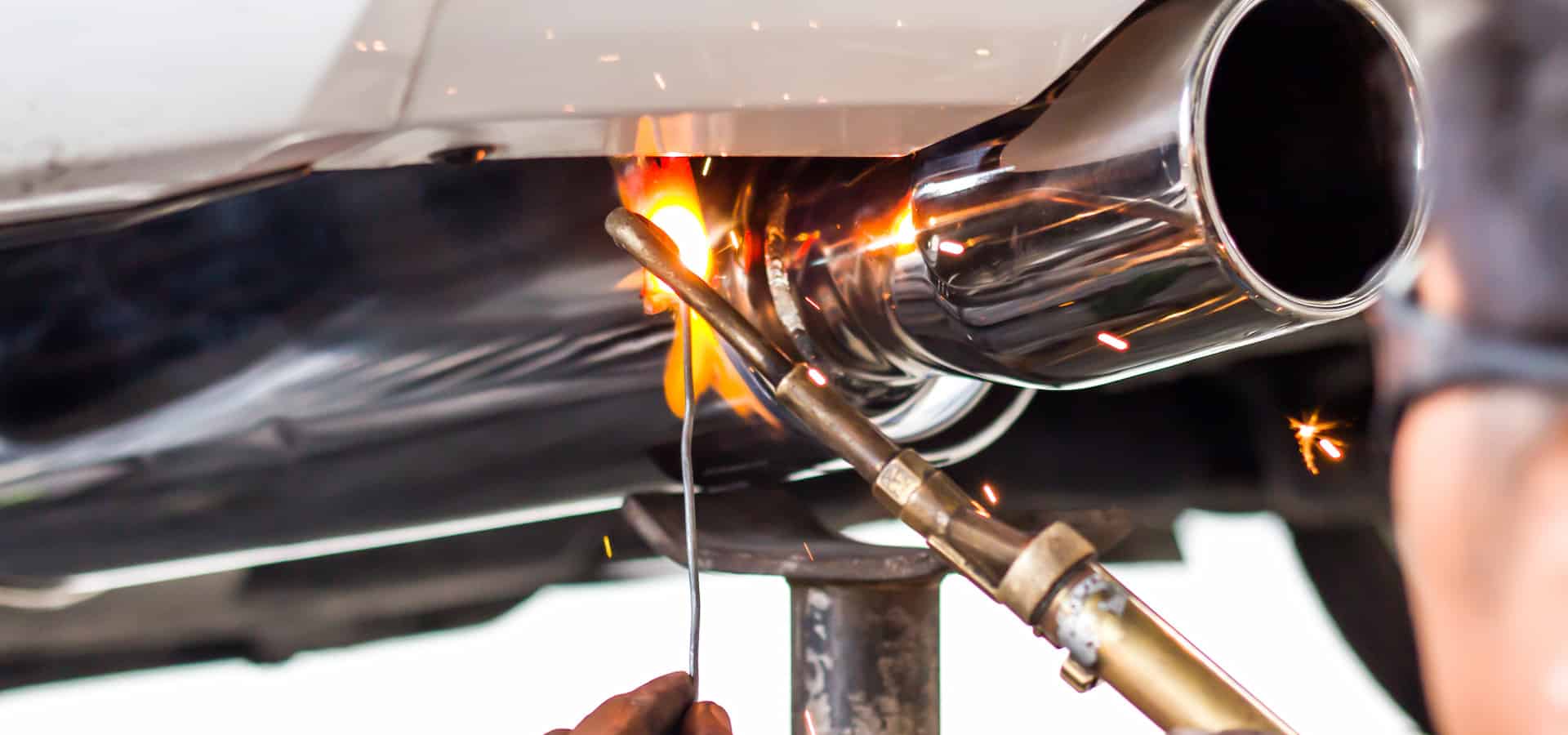
Hyundai Exhaust & Catalytic Converter Repair at Elevation Auto Repair
That rattle under your Sonata or the glowing check engine light with a P0420 code usually points to one thing – your exhaust system is asking for attention. On modern Hyundai vehicles, the catalytic converter is tied into oxygen sensor feedback and ECU fuel trims, so a sloppy repair can trigger new codes and cost you emissions compliance.
Hyundai's GDI engines run hotter and put more thermal stress on downstream components. On Theta II 2.0T and 2.4L platforms (2011-2019 Sonata, Santa Fe, Tucson), oil consumption issues can contaminate the catalyst substrate and kill converter efficiency early. Getting this right means diagnosing the root cause – not just bolting on a new part and hoping the light stays off.
We use OEM-correct converters that match Hyundai's flow and oxygen sensor placement, and we verify catalyst efficiency with live data before returning your car. Repairs done to factory spec help protect your emissions warranty and your resale value.
- Accurate diagnosis that separates a failing converter from an upstream fuel or oil-burning problem
- OEM-fit converters, gaskets, and clamps torqued to Hyundai specification
- Post-repair verification using live O2 sensor and fuel-trim data
- Clear explanation of what failed and why, with no upsells
Symptoms – How to Know You Need This Service
Your Hyundai gives you plenty of warning before an exhaust or converter problem becomes serious. Here is what you may notice from the driver's seat:
- Check engine light with codes like P0420 or P0430 – catalyst efficiency below threshold
- Rattling or metallic clatter under the car, especially at idle or over bumps – often a broken catalyst substrate
- Rotten-egg or sulfur smell from the tailpipe pointing to a saturated converter
- Sluggish acceleration or a sense the engine is choked, common with a clogged converter
- Loud droning or hissing from a cracked flex pipe or blown gasket
- Failed emissions test here in Colorado
- Vibration through the floor from a loose heat shield or hanger
Schedule soon for the rattle, warning light, or smell. Stop driving right away if you notice a strong burning odor in the cabin, visible smoke, or a sudden loss of power combined with overheating – a fully plugged converter can send heat back into the engine and cause bigger damage.
Common Exhaust & Catalytic Converter Repair Issues on Hyundai Vehicles
That rattle under the floor, a sulfur smell, or a check engine light with a P0420 code – these are the signs bringing most Hyundai owners into the shop. Hyundai builds reliable vehicles, but certain platforms show predictable exhaust and catalyst patterns.
- Catalytic converter efficiency codes (P0420/P0430) on 2011-2016 Sonata and Elantra (2.0L/2.4L Theta II) – The Theta II family's oil consumption tendency can contaminate the catalyst, killing efficiency prematurely and triggering the code long before the converter's expected life.
- Heat shield rattle on Tucson and Santa Fe – Spot-welded exhaust heat shields loosen with thermal cycling and road salt, producing a metallic buzz that mimics a much scarier internal failure.
- Flex pipe cracking on 2013-2018 Santa Fe and 3.3L V6 models – The braided flex coupling ahead of the muffler fatigues and splits, causing a ticking exhaust leak that grows louder under acceleration.
- Downstream O2 sensor failure on GDI engines – Carbon and fuel-trim drift on Hyundai's direct-injection engines can throw catalyst-related codes when the sensor, not the converter, is at fault.
- Rusted flange and gasket leaks on Denver-driven vehicles – Colorado's road treatment chemicals attack the resonator and mid-pipe flanges, especially on 10-year-plus Accents and Elantras.
- Turbo downpipe and cat issues on 1.6T/2.0T (Veloster N, Sonata, Santa Fe Sport) – The close-coupled converter sees higher heat, accelerating substrate breakdown when the engine runs rich.
Which Hyundai Models We See for Exhaust & Catalytic Converter Repair
We service exhaust and catalytic converter work across most Hyundai platforms on Denver roads. Find your car below:
- Sonata (YF, LF, DN8) – 2011-2023, especially Theta II 2.0T and 2.4L GDI where oil consumption can foul the converter
- Elantra (MD, AD, CN7) – 2011-2024 with the Nu 1.8L/2.0L and Gamma engines
- Tucson (LM, TL, NX4) – 2010-2024, including the 1.6T Smartstream variants
- Santa Fe / Santa Fe Sport (DM, TM) – 2013-2023 with 2.0T and 2.4L Theta engines
- Kona (OS) – 2018-2023, both 2.0L and 1.6T
- Veloster (FS, JS) – 2012-2022, including 1.6T N-line and Veloster N variants where the sport exhaust differs
- Palisade (LX2) – 2020-2024 with the Lambda 3.8L V6 dual-bank setup
- Accent and Venue – budget-friendly single-cat layouts we handle regularly
Performance variants like the Veloster N and Elantra N use a different tuned exhaust and catalyst arrangement, so we source variant-correct parts rather than generic replacements. For hybrid and Ioniq EV models, exhaust work is limited or not applicable – ask us and we'll point you the right direction.
Causes & Risks – What Happens if Ignored
Most Hyundai exhaust problems trace back to a mix of heat cycling, Denver's corrosive winter roads, high mileage, and platform-specific quirks like the Theta II oil-burning tendency that poisons catalysts. A leaking flange or a tired converter rarely stays a small problem.
Ignoring a P0420 for a few months while the underlying oil consumption continues usually means the replacement converter fails again – so the real fix addresses the engine cause, not just the part.
- An unaddressed exhaust leak upstream of the O2 sensor skews fuel trims, hurting mileage and eventually fouling the catalyst.
- A cracked flex pipe left alone can separate fully, dropping the exhaust and risking contact with the road or a burnt undercarriage.
- A clogged or collapsed converter substrate chokes exhaust flow, causing power loss, hard starts, and overheating that can damage exhaust valves.
- Rusted flanges that could have used a gasket now require pipe sections or full assemblies once the metal is too far gone.
- Carbon monoxide entering the cabin through a body leak becomes a genuine health hazard, not just a repair line item.
We diagnose the root cause first so you fix it once and protect your factory or powertrain warranty coverage.
Safety Impact – Why Exhaust & Catalytic Converter Repair Matters
Exhaust faults are more than noise. On a Hyundai, a compromised system affects the engine management the ABS and stability control rely on, and it can put toxic gas where you breathe it.
- Stop driving now: strong exhaust smell inside the cabin, a dragging or dropped exhaust component, or sudden severe power loss with the check engine light flashing.
- Schedule soon: intermittent P0420, a growing tick or drone under acceleration, a rattle on cold start, or slightly reduced fuel economy.
A rich-running condition from a failed sensor or plugged converter can trigger misfire codes that disable stability and traction assistance until resolved. A separated exhaust ahead of the catalyst also raises under-body temperatures near fuel and brake lines.
There's a liability angle too. If a known emissions defect goes unaddressed and contributes to a failed emissions test or an incident, that documentation matters. Getting it fixed keeps you compliant, safe, and protects resale value when the buyer runs a history report.
How Hyundai Exhaust & Catalytic Converter Repair Actually Works
Your Hyundai's exhaust does three jobs at once – it routes gases away, quiets them, and cleans them through the catalytic converter. Upstream and downstream oxygen sensors let the ECU compare exhaust before and after the catalyst to confirm it's working, which is exactly what a P0420 code reports.
Hyundai's implementation has details that separate proper repair from a generic muffler swap:
- GDI fuel trim behavior means we verify actual sensor data and fuel trims before condemning a converter, avoiding an unnecessary part.
- Close-coupled converters on turbo models (1.6T/2.0T) require correct heat-shield reinstallation and torque sequence to prevent warping.
- OEM-grade converters matched to your emissions spec are needed for the readiness monitors to set and pass Colorado emissions.
- Flange torque and gasket specs matter on rust-prone joints so leaks don't return after the first heat cycle.
- Scan-tool verification with the correct software confirms monitors complete before you leave. </
How We Diagnose Exhaust & Catalytic Converter Repair Issues on Hyundai
A rattling underbody, a sulfur smell, or a stubborn P0420 on the dash usually means your Hyundai's exhaust needs attention. Here's how we pin down the real cause before quoting a single part.
- Pull codes with a factory-grade scan tool that reads Hyundai's GDS/KDS data – P0420 and P0430 (catalyst efficiency), P0430 bank readings, and downstream O2 sensor trims that generic readers miss.
- Compare upstream and downstream oxygen sensor voltage patterns. A downstream sensor mirroring the upstream signal confirms the converter is no longer storing oxygen – common on 2.4L Theta II and Gamma 1.6L engines with high mileage.
- Check for related fault history – misfire codes or a lean condition from the Nu 2.0L or Smartstream engines that can overheat and destroy a catalyst.
- Perform a visual inspection: rusted flex pipes, cracked manifolds on early Sonata/Elantra platforms, loose heat shields, and separated weld seams.
- Run a backpressure test and road test to hear rattling substrate or feel restricted flow under load.
Once we know whether the problem is a failed converter, a leaking joint, or an upstream engine issue feeding it, we build a clear repair plan and quote so you know exactly what's needed and why.
Exhaust & Catalytic Converter Repair on Hyundai: Repair vs. Replacement
Not every exhaust complaint means a full converter. We match the fix to the actual condition of your Hyundai.
- Genuine repair: Replacing a leaking gasket, welding a cracked flex pipe, re-securing a rattling heat shield, or swapping a lazy downstream O2 sensor that's throwing a false P0420 on a Tucson or Santa Fe.
- Partial replacement: Replacing only the front catalyst section or a corroded mid-pipe while keeping the sound resonator and muffler intact – practical on higher-mileage Elantra and Sonata models where rust is localized.
- Full replacement: When the substrate is melted or physically broken, when an underlying misfire has contaminated the catalyst, or when repair cost approaches the cost of a new OEM-spec converter. Safety-critical exhaust leaks near the cabin also warrant full replacement.
Some early Theta II engines that burned oil can foul a converter internally – in those cases, addressing the engine issue first protects the new part. We walk you through each option, explain the trade-offs, and let you decide rather than defaulting to the priciest route.
How to Make Your Hyundai Exhaust & Catalytic Converter Repair Last Longer
A little care keeps your exhaust healthy and protects your warranty and resale value. Small habits go a long way.
- Let the engine reach operating temperature before hard acceleration – repeated cold, high-load starts stress converter substrate.
- Fix misfires and check engine lights promptly; raw fuel reaching the catalyst is what overheats and destroys it.
- Avoid short trips only, especially in Denver's cold winters – occasional highway driving lets the converter burn off deposits.
- Watch for road-salt corrosion on flex pipes and clamps during winter months.
What you can safely handle yourself:
- Listen for new rattles, ticking, or a deeper exhaust tone and note when they occur.
- Peek underneath for hanging heat shields, rust streaks, or dark soot at joints.
- Use quality fuel and keep up with Hyundai's recommended oxygen sensor and spark plug intervals.
Leave welding, converter replacement, and O2 sensor diagnostics to us – these are safety-critical and affect emissions compliance. Using OEM-spec catalytic converters and sensors matters on Hyundai; aftermarket cats often trip P0420 again. Keeping your ECM software current also prevents false catalyst codes. Bring it in early and we'll keep the repair – and your Hyundai – on the road.
What to Expect When You Bring Your Hyundai In
Maybe you're hearing a rattle under the floor, catching a sulfur smell, or staring at a P0420 catalyst efficiency code on your Sonata or Elantra. Here's how we take it from symptom to solution.
- Drop-off or appointment: Schedule ahead or leave it with us. Loaner and shuttle options are available, and after-hours pickup can be arranged if your day runs long.
- Initial inspection: We lift the vehicle and trace the exhaust from the manifold back – checking flex pipes, heat shields, resonators, and the catalytic converter for cracks, restriction, or the tell-tale honeycomb breakdown seen on higher-mileage Theta and Gamma engines.
- Written estimate: You get a clear, itemized quote before any work starts. No surprise add-ons, no guesswork.
- Communication during the work: We text or call with findings and photos. If we open something up and find a corroded downpipe or a failed oxygen sensor upstream, you approve it first.
- Pickup walkthrough: We show you what was replaced and why, and hand back any personal items exactly where you left them.
Every repair closes with a road test and a scan-tool re-check to confirm catalyst readiness monitors set and no fault codes return. If anything feels off afterward, bring it back and we'll re-verify.
Why Choose Elevation Auto Repair for Hyundai Exhaust & Catalytic Converter Repair
Converter and exhaust work on Hyundai vehicles often gets misdiagnosed. A P0420 isn't always a bad cat – it can be a lazy upstream O2 sensor, a small exhaust leak drawing false air, or an unaddressed misfire cooking the substrate. We diagnose the root cause before recommending parts.
- Platform-specific knowledge: Familiarity with Theta II 2.0T and 2.4L quirks, Gamma 1.6/2.0 GDI models, and the oil-consumption and misfire patterns that can prematurely damage a converter.
- TSB and software awareness: We check for applicable Hyundai technical service bulletins and ECM calibration updates that affect fuel trim and catalyst monitoring before condemning hardware.
- End-to-end ownership: Diagnosis, repair, and post-repair verification all happen under one roof with the same technicians – no handoffs.
Using OEM-grade converters and correct sensor torque specs keeps your emissions system compliant and protects factory warranty coverage and resale value. That's the difference between a quick patch and a repair built to last.
Our Hyundai Services
- Air Conditioning AC Repair
- Battery Repair Replacement
- Brake Repair & Brake Fluid Change
- Check Engine Light Diagnostics
- Clutch Repair & Replacement
- Coolant Leak Repair
- Cooling System Repair
- Drive Shaft Repair
- Engine Repair
- Head Gasket Repair & Replacement
- Oil Change
- Oil Leak Repair
- Scheduled Service Maintenance
- Steering Repair
- Suspension Repair
- Cambelt Timing Belt Replacement
- Transmission Repair
- Tune Up
- Wheel Alignment