Hyundai Wheel Alignment at Elevation Auto Repair
Hyundai's move to the K3 and N3 platforms brought stiffer body structures and more sophisticated multi-link rear suspensions – geometry that rewards precise setup and punishes sloppy work. A proper alignment on these cars is not a matter of setting toe and sending you out the door.
Many modern Hyundais tie the steering angle sensor and lane-keeping cameras into the alignment process, which means resetting front camber and toe without recalibrating the SAS or ADAS can trigger warning lights or leave driver-assist features misreading the road. On models like the Elantra, Sonata, and Tucson, we align to Hyundai's factory specs and confirm the electronics agree with the mechanical numbers.
We also respect the small details generic shops skip – correct subframe torque before adjustment, rear camber and toe on the independent rear setups, and proper procedure on lowered N-line and N variants. Alignment on a Hyundai N (i30 N, Elantra N, Kona N) runs tighter tolerances that affect tire wear and turn-in.
- Alignment measured and adjusted to Hyundai factory specifications
- Steering angle sensor and driver-assist calibration checked when required
- Suspension and steering inspection before we touch a single adjuster
- Clear, transparent report of before-and-after numbers with straight-talk pricing
Symptoms – How to Know You Need This Service
Alignment problems build slowly, then show up all at once on your tires and your steering. Watch for these on your Hyundai:
- Pulling to one side on a flat, straight road even when you hold the wheel steady
- Uneven or feathered tire wear – inner or outer edges wearing faster, common on Elantra and Sonata front tires
- Off-center steering wheel when driving straight ahead
- Vibration through the wheel that gets worse with speed
- Squealing tires during normal cornering or slow turns
- Loose or wandering feel, where the car needs constant small corrections
- Lane-keeping or driver-assist warnings after hitting a curb or pothole
If you feel a sudden hard pull, heavy shaking, or the steering going loose after an impact, stop driving and have it inspected right away – that can point to bent components, not just alignment. Edge wear, a slightly crooked wheel, or a mild pull can wait for a scheduled visit, but the sooner we look, the more tire life you save.
Common Wheel Alignment Issues on Hyundai Vehicles
Hyundai's shift to the third-generation platform architecture (K3 for models like the Elantra CN7 and Tucson NX4) brought sharper steering geometry that shows misalignment faster than older chassis. Denver roads, potholes, and long highway commutes accelerate the wear paths below.
- Inside-edge tire wear on 2021+ Elantra (CN7) and Sonata (DN8): The multi-link rear on these platforms runs aggressive negative camber from the factory, and worn rear trailing-arm bushings pull toe out of spec, feathering the inner tread.
- Rear toe drift on 2016-2020 Tucson (TL) and Santa Fe: Rear suspension settling with age changes rear thrust angle, so the vehicle tracks slightly crab-wise and eats tires on one rear corner.
- Steering pull after impact on Kona (OS) and Venue: Softer front lower control arm bushings on these smaller platforms deflect under a curb strike, knocking front camber and caster off.
- Off-center steering wheel on Elantra GT and Veloster: A common complaint after tire rotation or strut work when front toe is not reset to Hyundai's split-toe spec.
- Uneven wear on Palisade (LX2) and Santa Fe (TM): Heavier three-row loads combined with a sagging rear can shift both camber and toe on the rear multi-link setup.
- Tramlining on models with ADAS: Newer Hyundais with Lane Following Assist can fight a slightly misaligned front end, making the steering feel busy on grooved pavement.
Which Hyundai Models We See for Wheel Alignment
We align nearly every Hyundai on the road in the Denver area, from daily commuters to the performance N line. Find your car below:
- Elantra – AD (2017-2020) and CN7 (2021-present), including the Elantra N with its tighter performance geometry
- Sonata – LF (2015-2019) and DN8 (2020-present), independent rear suspension requiring rear toe and camber checks
- Tucson – TL (2016-2021) and NX4 (2022-present), including hybrid and plug-in variants
- Santa Fe – TM (2019-2023) and MX5 (2024-present)
- Kona – OS (2018-2023) and SX2 (2024-present), plus the Kona N and Kona Electric
- Palisade – LX2 (2020-present), where load-sensitive alignment matters for tire wear
- Veloster – JS (2019-2022) and the sought-after Veloster N
- Ioniq and Ioniq 5/6 – EV platforms where added battery weight affects alignment settings
- Accent and Venue – budget-friendly models we align regularly
N-line and N variants sit lower with sport tuning, so we set them to their specific factory targets rather than base-model numbers. If you have an older Genesis-badged Hyundai or a rare import-market model, call first and we'll confirm we can dial it in correctly before you book.
Causes & Risks – What Happens if Ignored
Most Hyundai alignment problems trace back to Denver-specific driving: pothole season after winter thaw, gravel shoulders on mountain routes, and the slow settling of suspension bushings as mileage climbs. Curb strikes and lowered ride heights on enthusiast Velosters add to it.
Ignoring an alignment issue rarely stays cheap. A minor toe error that would take a quick correction can chew through a set of tires before you notice, and by then the damage is measured in new rubber, not a service visit.
- Ignoring inner-edge wear on a CN7 Elantra for a few thousand miles typically ruins otherwise-good tires and can expose belts.
- A pull left uncorrected loads one side of the front bearings and tie-rod ends, turning an alignment into a suspension repair.
- Worn control-arm bushings that caused the misalignment keep worsening, adding clunks and further geometry drift.
- Rear thrust-angle problems on Tucson and Santa Fe force the steering to compensate, wearing steering-rack components.
- Compromised handling in wet or snowy Colorado conditions raises the odds of a loss-of-control incident.
We check the root cause first, name the worn part clearly, and give you a straight answer before any work begins.
Safety Impact – Why Wheel Alignment Matters
Alignment is not just tire life – it changes how your Hyundai's safety systems behave. Modern models lean on the steering angle sensor and yaw data, and a misaligned chassis feeds those systems inaccurate baseline readings.
- Electronic Stability Control (ESC) and traction control: These reference steering angle; a crooked wheel confuses the calibration and can delay intervention.
- ABS and braking balance: Uneven tire wear from bad alignment lengthens stopping distances, especially on wet Denver streets.
- Lane Keeping and Lane Following Assist: A pulling front end makes ADAS fight the wheel, reducing driver confidence in the system.
- Steering feel: Excess play or wander hides worn tie-rod ends that could fail.
Stop driving and call now if: the steering wheel shakes hard, the car darts when you brake, or you hear clunking over bumps. Schedule soon if: the wheel sits off-center, you feel a mild steady pull, or you spot uneven tread wear. Addressing a known geometry problem before an incident also keeps you on solid footing with insurers.
How Hyundai Wheel Alignment Actually Works
A Hyundai alignment sets three angles – camber, caster, and toe – at each corner so the tires meet the road the way the factory intended. On most current Hyundais, front toe and camber are adjustable while rear toe is set at the trailing-arm cam bolts, and the whole job references Hyundai's split-toe and thrust-angle targets rather than generic numbers.
What makes Hyundai work different from a quick generic alignment comes down to the electronics riding on top of the mechanical setup.
- Steering Angle Sensor (SAS) reset: After any alignment, newer Hyundais need the SAS zeroed so ESC and lane assist read straight-ahead correctly.
- ADAS camera relationship: On models with forward-facing camera systems, thrust angle must be dialed in so the driver-assist tracks true.
- OEM torque and cam-bolt sequence: Rear eccentric bolts on multi-link platforms must be torqued in the correct order to hold spec.
- Factory scan-tool steps: We use OEM-level software to confirm sensor calibration, not just a printout of numbers.
Getting these steps right is why we align to Hyundai's own specifications, verify the electronics afterward, and explain every number on your before-and-after report
How We Diagnose Wheel Alignment Issues on Hyundai
Hyundai's MacPherson strut front setups and multi-link rears (found on platforms like the Elantra CN7, Sonata DN8, and Tucson NX4) hold alignment well when the geometry is correct – but worn control arm bushings and soft rear toe links will quietly pull specs out of range. Our diagnosis starts with data, not guesswork.
- We connect a scan tool to check for stored chassis and steering-related codes, including SAS (steering angle sensor) faults that skew ADAS calibration on lane-keep-equipped models.
- We road test to feel for pulling, off-center steering wheel position, and uneven tire scrub under braking and cornering.
- We inspect tire wear patterns – inner-edge feathering often points to excessive toe, while camber wear signals bent or worn suspension components.
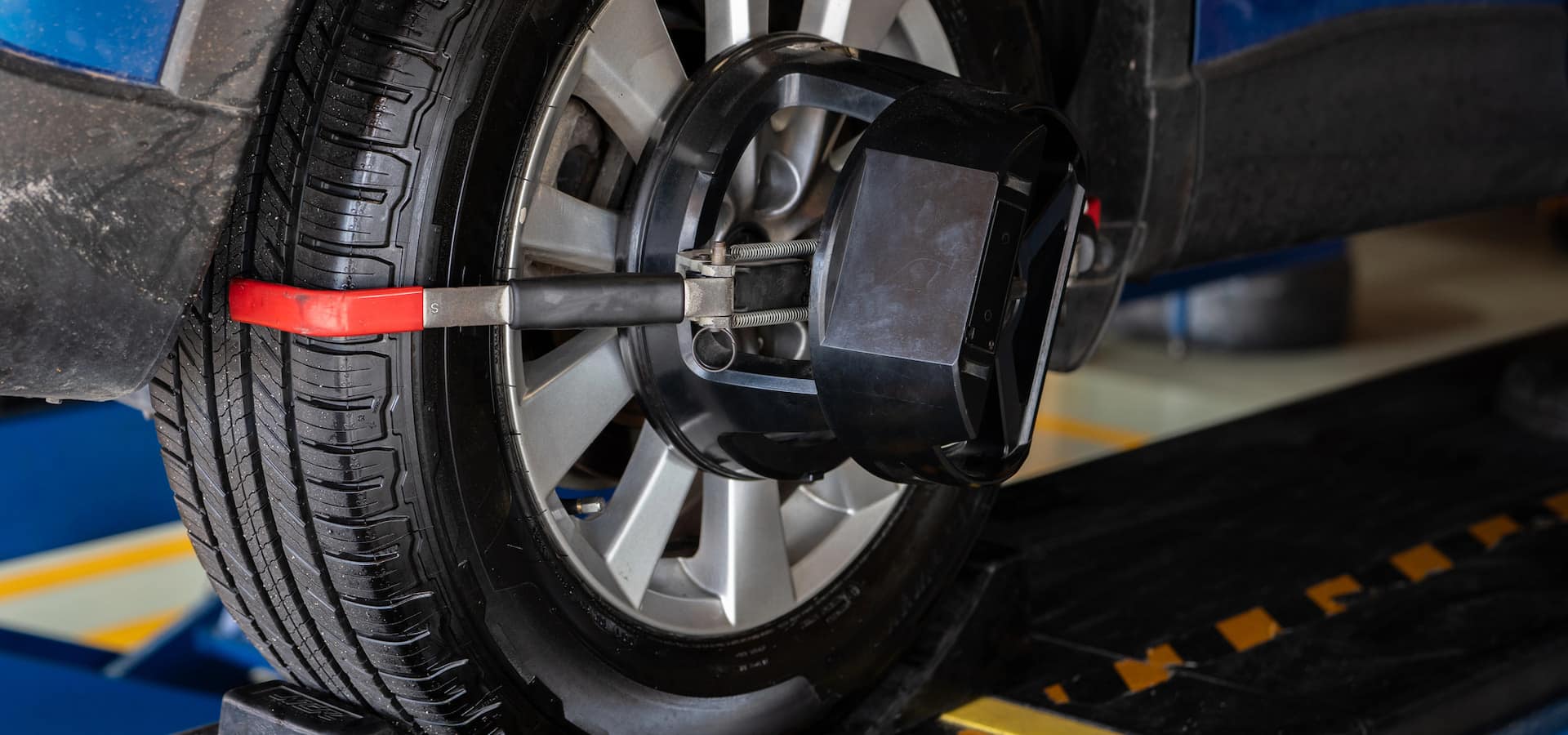
- We put the car on the alignment rack and capture live camber, caster, and toe readings against Hyundai factory specs for that exact chassis.
- We physically check tie rod ends, ball joints, strut mounts, and control arm bushings for play that would make an adjustment temporary.
Once we have both the printed alignment numbers and the physical inspection results, we build a clear repair plan with an itemized, transparent quote – no surprises before you approve anything.
Wheel Alignment on Hyundai: Repair vs. Replacement
Most Hyundai alignments are a straight adjustment. The decision to replace parts comes down to what the inspection reveals.
- True repair (adjust only): When suspension components are tight and tires are in good shape, we simply set toe, camber, and caster back to spec – common on Elantra and Sonata models after hitting Denver potholes.
- Partial replacement: When a single worn part throws things off, we replace just that piece – a sagging rear toe link, a loose outer tie rod end, or a cracked front control arm bushing – then align. The rest of the assembly stays.
- Full replacement: When wear has cascaded – a failing ball joint plus a torn strut mount plus a bent lower arm from impact – or when a safety-critical part is compromised, replacing the assembly is the right call. Adjusting around worn parts never holds.
We show you the worn components and the measurements behind our recommendation, then let you choose. Our goal is a lasting fix, not the biggest invoice.
How to Make Your Hyundai Wheel Alignment Last Longer
A fresh alignment lasts far longer when the suspension isn't fighting rough habits and worn parts. A few simple practices keep your Hyundai tracking straight.
Driving Habits That Protect Alignment
- Slow down for potholes and broken pavement – Denver winters are hard on tie rods and bushings.
- Avoid curbing your wheels when parking, which knocks camber and toe out.
- Don't overload the vehicle beyond its rated capacity, which stresses rear geometry.
Owner Maintenance You Can Do
- Rotate tires on Hyundai's recommended interval and keep them at the door-jamb PSI.
- Watch for new pulling, a crooked steering wheel, or uneven tread wear and bring it in early.
- Keep an eye on the steering and ADAS warning lights.
Brand-Specific Care
- Use OEM-spec replacement suspension parts – aftermarket bushings often wear faster and shift specs.
- Keep steering and ADAS software current, since sensor calibration ties into alignment on lane-keep models.
- Follow Hyundai's factory service intervals for chassis inspections.
Tire checks and PSI monitoring are safe DIY. Leave ball joints, tie rod replacement, and any alignment adjustment to us – these are safety-critical and need proper torque specs and a calibrated rack.
What to Expect When You Bring Your Hyundai In
Hyundai's front strut suspension on platforms like the Elantra AD/CN7, Sonata DN8, and Tucson NX4 relies on precise camber and toe settings that shift when strut mounts wear or the vehicle takes a curb hit. Here's how a visit flows:
- Appointment or drop-off – Schedule ahead or leave the car with us. Clear personal items from the cabin; anything left is set aside safely.
- Initial inspection – We check tire wear patterns, control arm bushings, tie rod ends, and strut mounts before touching the alignment rack, since worn parts throw off any correction.
- Written estimate – You get a clear breakdown of what needs adjustment versus what needs replacement, with transparent pricing and no surprise add-ons.
- Communication during the work – We call or text before proceeding if the inspection turns up a bent component or seized adjuster.
- Pickup walkthrough – We show you the before-and-after alignment readout and explain what changed.
Shuttle service and loaner availability help you stay on schedule, and after-hours pickup can be arranged. Every alignment ends with a road test to confirm the steering wheel sits centered and tracks straight. If anything feels off afterward, bring it back and we'll re-check it on the rack.
Why Choose Elevation Auto Repair for Hyundai Wheel Alignment
We align Hyundais to factory specs using equipment that reads live camber, caster, and toe – not eyeball adjustments. On models like the Santa Fe and Palisade, rear toe and camber matter as much as the front, and we set all four corners rather than a quick front-only pass.
What sets our Hyundai alignment work apart:
- Familiarity with Hyundai TSBs and steering software updates that affect pull complaints on electric power steering systems.
- Awareness of platform quirks – rear trailing arm bushing wear on multilink setups and front lower control arm play that skews toe readings if not addressed first.
- End-to-end ownership: we diagnose the root cause, replace failing steering and suspension parts, then verify the alignment holds under a road test.
You deal with one shop that handles inspection, repair, and post-alignment verification – with straightforward communication at each step so you know exactly what your Hyundai needs and why.
Our Hyundai Services
- Air Conditioning AC Repair
- Battery Repair Replacement
- Brake Repair & Brake Fluid Change
- Check Engine Light Diagnostics
- Clutch Repair & Replacement
- Coolant Leak Repair
- Cooling System Repair
- Drive Shaft Repair
- Engine Repair
- Exhaust & Catalytic Converter Repair
- Head Gasket Repair & Replacement
- Oil Change
- Oil Leak Repair
- Scheduled Service Maintenance
- Steering Repair
- Suspension Repair
- Cambelt Timing Belt Replacement
- Transmission Repair
- Tune Up