
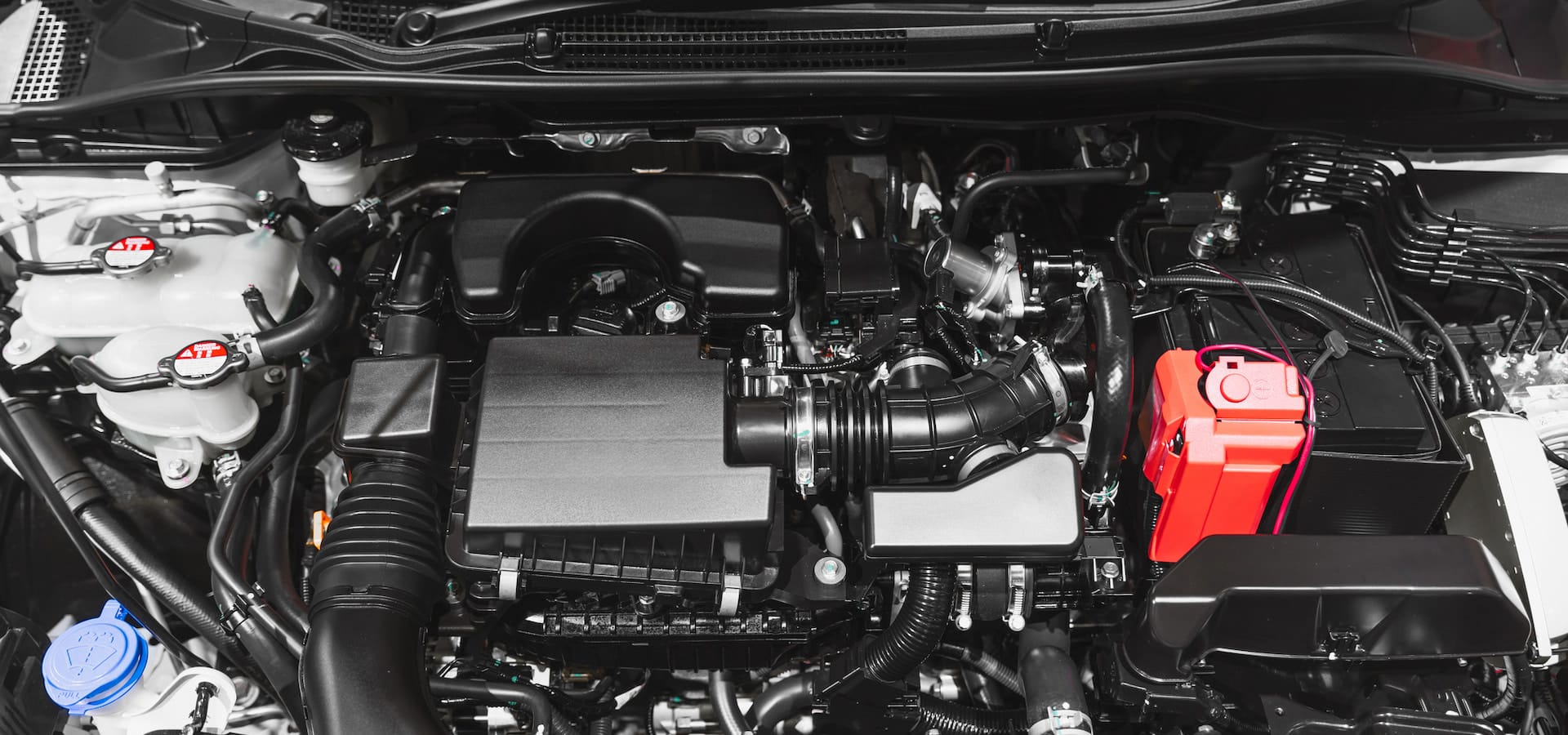
Hyundai Engine Repair at Elevation Auto Repair
When your Hyundai starts running rough, losing power, or lighting up the dash, you want a shop that actually knows the platform – not a generalist guessing at symptoms. Engine repair covers everything from targeted component replacement to full teardown and rebuild, and getting it right on a Hyundai means respecting the quirks of these engines.
Hyundai's Theta II 2.0L and 2.4L GDI engines (Sonata, Santa Fe, Tucson) have a well-documented history of connecting rod bearing wear and short-block failures, and many were addressed through Hyundai's extended warranty and knock-sensor detection software campaigns. Working these correctly requires GDS (Global Diagnostic System) scan access, proper interpretation of freeze-frame data, and knowledge of the OEM knock-sensor recall logic. Nu and Gamma engines bring their own carbon and timing concerns. We match torque sequences and use the correct fluid specs rather than eyeballing it.
Here's what you can expect when you bring your Hyundai to us:
- Honest diagnostics with clear findings – no unnecessary repairs tacked on
- OEM-correct torque specs, gaskets, and fluid volumes for your specific engine family
- Verification against Hyundai TSBs and recall campaigns tied to your VIN
- Transparent communication at every step, so you know what's happening and why
Symptoms – How to Know You Need This Service
Your Hyundai usually gives you warning before a major engine problem, and catching it early keeps a repair from becoming a replacement. You may notice one or several of these:
- A knocking or rod-knock sound from deep in the engine, often louder on cold start – on Theta II engines this can signal bearing failure. Stop driving and have it towed.
- Illuminated check engine light with misfire, knock-sensor, or lean codes stored
- Blue or white exhaust smoke pointing to oil burning or coolant intrusion
- Sudden oil consumption where you're adding oil between changes
- Rough idle, hesitation, or loss of power under acceleration
- Rattling on startup that may indicate timing chain or tensioner wear on Nu/Gamma engines
- Overheating or coolant loss with no visible external leak – schedule soon, and don't drive if the temp gauge climbs into the red
- Metallic debris found on the oil dipstick or drain plug
Knocking, overheating, or a flashing check engine light means stop and get it towed. Rough idle, mild smoke, or a steady CEL can typically wait until a scheduled appointment – but don't put it off long.
Common Engine Repair Issues on Hyundai Vehicles
If your Hyundai is knocking on cold starts, burning through oil between changes, or flashing a check engine light, you're seeing patterns we handle regularly. Certain Hyundai engine families have well-documented weak points tied to specific model years.
- Theta II 2.0T and 2.4L GDI rod bearing failure (2011-2019 Sonata, Santa Fe, Tucson): The most recognized Hyundai engine concern. Machining debris and oil-supply restriction lead to bearing wear, engine knock, and in severe cases seizure. Symptoms include a metallic tapping that grows with RPM.
- Nu 1.8L and Gamma 1.6L oil consumption: Piston ring and PCV design on these fours causes excessive oil burning, often without visible leaks. Owners of 2011-2016 Elantra models frequently top off between services.
- Smartstream 1.6T and 2.5L GDI carbon buildup: Direct injection deposits collect on intake valves since fuel never washes over them, causing rough idle and misfires on higher-mileage Palisade, Santa Fe, and Sonata units.
- Lambda 3.3L and 3.8L timing chain and tensioner wear: Rattle at startup on Genesis and older Azera V6 engines points to stretched chains or failing hydraulic tensioners.
- Water pump and thermostat housing leaks: Common across Gamma and Theta platforms as gaskets age, leading to coolant loss and overheating.
- Carbon-clogged EGR and intake on GDI turbo motors: Reduced power and stored codes tied to restricted airflow paths.
Which Hyundai Models We See for Engine Repair
We regularly handle engine work across Hyundai's modern lineup. Find your car below:
- Sonata (2011–2019, LF/YF) – Theta II 2.0T and 2.4L GDI, the most common engines we see for bearing and short-block concerns
- Santa Fe / Santa Fe Sport (2013–2019) – Theta II 2.4L and 2.0T, similar failure patterns to the Sonata
- Tucson (2010–2021) – Nu 2.0L and Theta II 2.4L, plus the 1.6T Gamma in later models
- Elantra (2011–2020) – Nu 2.0L and 1.8L, often seen for timing components and oil consumption
- Veloster (2012–2022) – Gamma 1.6L and 1.6T, including the Veloster N with its 2.0T Theta – performance variants need extra care on tuning and cooling
- Kona (2018–present) – Gamma 1.6T and Smartstream families
- Genesis Coupe (2010–2016) – Theta 2.0T and Lambda 3.8L V6, with variant-specific procedures for the turbo cars
We're candid about limits: very early pre-2010 platforms and the newest Smartstream direct-injection engines with proprietary calibration may require dealer-level programming for certain repairs. If your Hyundai falls into a gray area, we'll tell you up front and point you the right direction rather than guess.
Causes & Risks – What Happens if Ignored
Denver's altitude, temperature swings, and stop-and-go traffic push engines harder than gentler climates. Combine that with Hyundai's GDI design tendencies and short-interval city driving, and small issues compound quickly.
Most engine failures we see started as an ignored noise or a slow oil drop. Waiting rarely makes a Hyundai engine cheaper to fix.
- Ignored rod knock on Theta II engines: A faint tap left unaddressed for weeks often ends in a spun bearing and a full engine replacement instead of a bearing job.
- Low oil from GDI consumption: Running a quart low for months starves bearings and accelerates the exact wear pattern owners fear.
- Carbon buildup left untreated: Progresses from rough idle to misfires, fouled coils, and catalytic converter damage.
- Coolant leaks ignored: Overheating warps aluminum heads and blows head gaskets, turning a water pump job into major surgery.
- Timing chain rattle: A stretched chain that finally skips can bend valves and destroy pistons.
We catch these early with honest diagnostics and tell you what actually needs attention – nothing more.
Safety Impact – Why Engine Repair Matters
Engine problems rarely stay contained to the engine. On modern Hyundais, power delivery ties directly into braking assist, stability control, and drivetrain safety.
- A stalling engine kills power brake vacuum and electric steering assist, making the car far harder to stop and steer.
- Sudden loss of power on a highway merge or the I-70 grades creates real collision risk.
- Overheating can trigger limp mode, dropping speed unexpectedly in traffic.
- Misfires and rough running can disable traction and stability control functions that depend on stable engine data.
Stop driving now if you notice:
- Loud metallic knocking that changes with RPM
- Temperature gauge climbing into the red or steam from the hood
- A flashing check engine light (active misfire damaging the catalyst)
- Sudden power loss or the engine cutting out
Schedule soon for: steady oil consumption, cold-start rattle that clears, or a steady check engine light. Addressing a known Hyundai defect before an incident also protects you on the liability and insurance side.
How Hyundai Engine Repair Actually Works
A Hyundai engine is a tightly integrated system where the ECM constantly manages fuel timing, ignition, and variable valve timing based on dozens of sensors. On GDI and turbo Smartstream motors, injection happens at high pressure directly into the cylinder, which demands precise calibration and clean intake paths to run right.
Because so much is software-controlled, proper repair means more than swapping parts – it means restoring the engine to factory specifications and letting the electronics relearn correctly.
- OEM diagnostics: We pull live data and freeze-frame codes with scan tools that read Hyundai-specific parameters, not just generic OBD-II readings.
- Torque and sequence specs: Aluminum heads and GDI components require exact torque values and tightening sequences to avoid leaks and warping.
- Variable valve timing relearn: After timing chain or CVVT work, the system needs proper calibration so timing stays accurate.
- Injector and fuel-trim adaptation: High-pressure GDI components often need coding and relearn cycles after replacement.
- Post-repair verification: We confirm fuel trims, oil pressure, and temperature behavior before returning the car.
That attention to Hyundai's
How We Diagnose Engine Repair Issues on Hyundai
When your Hyundai starts running rough, flashing a check engine light, or knocking on cold starts, you want answers before parts get thrown at the problem. Our approach starts with data, not guesswork.
- Full scan with Hyundai-capable diagnostics: We pull codes and live data using a bidirectional scan tool that reads Hyundai-specific PIDs – fuel trims, cam/crank correlation, knock sensor activity, and freeze-frame conditions that a generic reader misses.
- Symptom correlation: Rod knock, oil consumption, and P1326 knock-sensor detection are frequently reported on Theta II 2.0T and 2.4L GDI engines in Sonata and Santa Fe models. We confirm whether a stored code reflects real mechanical wear or a sensor fault.
- Visual and hands-on inspection: We check for oil leaks at the valve cover and timing cover, inspect the belt and tensioner, and look for coolant intrusion or sludge on Lambda and Nu-series engines.
- Physical measurement: Compression and leak-down testing, oil pressure readings, and a cold-start listen isolate whether the noise is bearings, injectors, or timing components.
- Road test: We verify load behavior, shift quality, and how symptoms change with temperature.
Once we know the root cause, we build a clear repair plan and quote so you understand exactly what needs attention and why – no filler, no upsell.
Engine Repair on Hyundai: Repair vs. Replacement
Not every engine problem means a new engine. We sort the situation into three honest categories.
- Genuine repair: A single serviceable component is the culprit. Carbon cleaning on GDI intake valves, replacing a failed high-pressure fuel pump, a leaking valve cover gasket, or a bad ignition coil on a Gamma 1.6T all keep the core engine intact.
- Partial replacement: When one system wears but the block is sound, we replace the affected assembly – timing chain, guides, and tensioner on higher-mileage Nu 2.0L engines, or a water pump and thermostat housing that's weeping coolant, while keeping the rest of the engine in service.
- Full replacement: Spun rod bearings, scored cylinder walls, or knock caused by oil starvation on Theta II engines often mean the damage has cascaded. When repair cost climbs toward the price of a remanufactured or Hyundai short block, replacement is the smarter long-term call.
We lay out each option with the trade-offs so you decide – our goal is a reliable Hyundai, not the biggest invoice.
How to Make Your Hyundai Engine Repair Last Longer
A quality repair holds up far longer when your driving and maintenance habits back it up.
- Warm-up and load: Let the engine build oil pressure before hard acceleration, especially in Denver's cold mornings. Avoid lugging the engine under heavy load right after startup.
- Braking and driving style: Smooth, steady inputs reduce stress on turbocharged GDI engines and keep temperatures stable at altitude.
- Fluid discipline: Change oil on Hyundai's recommended interval – sooner if you do short trips. Theta and Gamma GDI engines are sensitive to oil quality, so we use the correct API/ILSAC spec.
Things you can safely do yourself:
- Check oil level and color regularly and watch for consumption between changes.
- Listen for new ticks, knocks, or whistles and note when they occur.
- Respond promptly to check engine or oil pressure lights instead of waiting.
Leave OEM software updates, timing component work, and internal engine service to the shop – Hyundai issues technical service bulletins and ECU calibrations that affect knock protection and idle behavior, and those need proper tooling. Sticking to genuine Hyundai parts and factory intervals is the surest way to protect the repair you paid for.
What to Expect When You Bring Your Hyundai In
Maybe your Sonata is ticking on cold starts, your Santa Fe is burning oil between changes, or the check engine light popped up with a rough idle. Whatever brought you in, here's how we handle your Hyundai from the moment you arrive.
- Drop-off or appointment – Tell us the symptoms in your own words. Note anything specific: noises, warning lights, when it happens. Loaner and shuttle options are available so you're not stranded, and after-hours key drop is offered for early mornings or late pickups.
- Initial inspection – We pull codes with factory-level scan tools (GDS-compatible), check freeze-frame data, and physically inspect the engine bay before guessing at parts.
- Written estimate – You get a clear breakdown of the problem, the fix, and the parts involved before we touch anything. No surprise add-ons.
- Repair with updates – We text or call as work progresses and check in before any change to the approved scope.
- Pickup walkthrough – We show you what was done and any old parts you want to see.
Grab personal items before drop-off, though we secure the cabin regardless. Every engine repair ends with a road test and a scan-tool re-check to confirm no lingering codes. If something feels off after you leave, call us and we'll get you back in to verify it.
Why Choose Elevation Auto Repair for Hyundai Engine Repair
Hyundai engines have real-world patterns we know cold. The Theta II 2.0T and 2.4L GDI engines in Sonata, Santa Fe, and Tucson models are prone to rod-bearing failure and oil consumption – some covered under extended warranties and campaigns, others not. We check for applicable TSBs and knock-sensor software updates before recommending internal work.
- Platform-specific diagnosis – We recognize Gamma 1.6T carbon buildup, Lambda V6 oil leaks, and the oil consumption complaints common on GDI-equipped models rather than throwing parts at symptoms.
- Software before hardware – Many Hyundai driveability issues trace back to ECU calibration or knock-sensor detection updates, and we verify those first.
- End-to-end ownership – The same shop that diagnoses your engine repairs it and verifies the fix with a post-repair scan and road test.
You get honest diagnostics with no unnecessary repairs, straight answers on what's covered versus what isn't, and repairs built for long-term reliability – all from your Denver dealership alternative under one roof.
Our Hyundai Services
- Air Conditioning AC Repair
- Battery Repair Replacement
- Brake Repair & Brake Fluid Change
- Check Engine Light Diagnostics
- Clutch Repair & Replacement
- Coolant Leak Repair
- Cooling System Repair
- Drive Shaft Repair
- Exhaust & Catalytic Converter Repair
- Head Gasket Repair & Replacement
- Oil Change
- Oil Leak Repair
- Scheduled Service Maintenance
- Steering Repair
- Suspension Repair
- Cambelt Timing Belt Replacement
- Transmission Repair
- Tune Up
- Wheel Alignment