
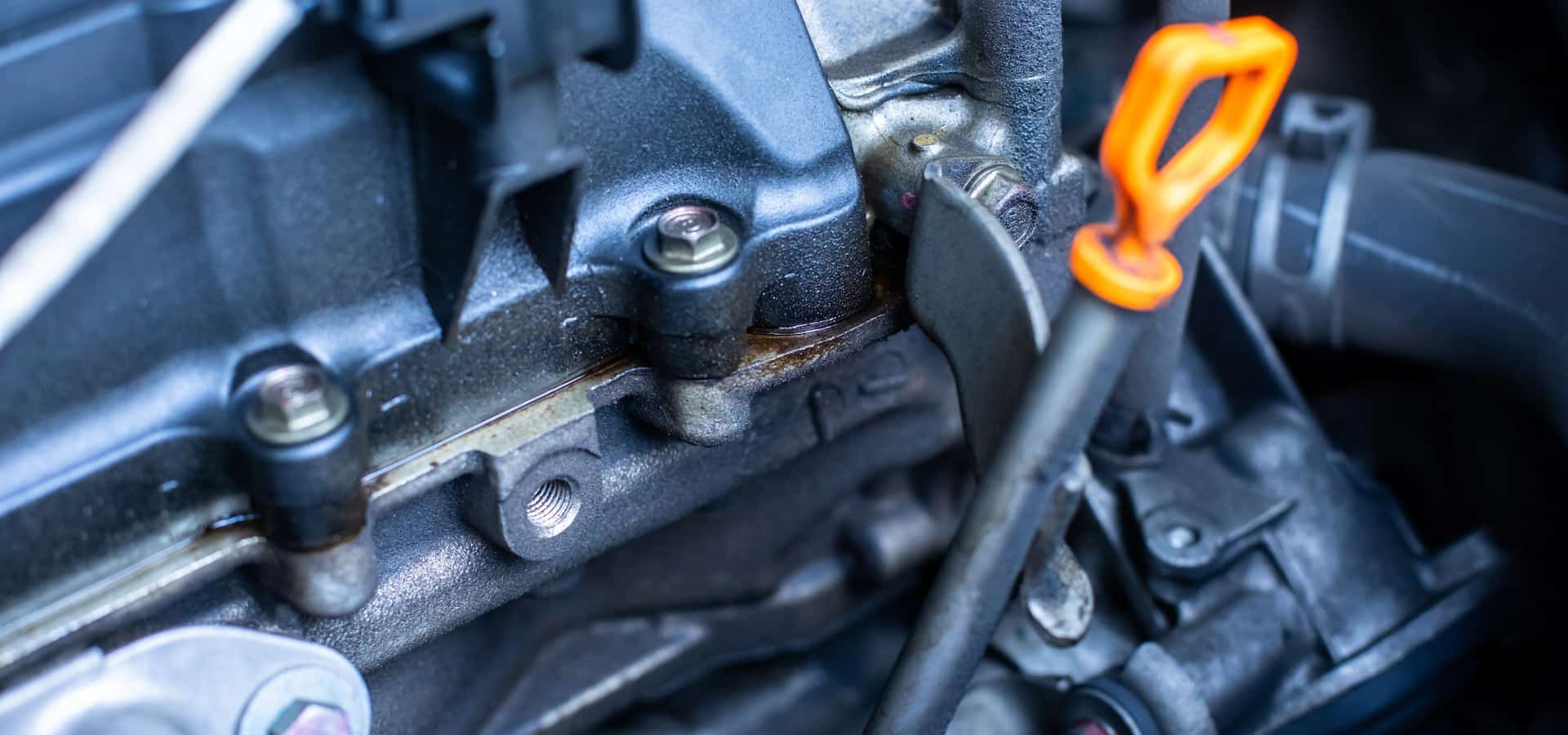
Hyundai Oil Leak Repair at Elevation Auto Repair
Hyundai engines have evolved fast over the last two decades, moving from the older Beta and Sigma engines to the modern Theta II, Nu, Gamma, and Smartstream families. Each generation seals oil a little differently, which is why chasing a leak on a Hyundai takes more than a can of stop-leak and a guess.
A proper repair starts with finding the true source. Oil migrates along the block, drips onto crossmembers, and shows up far from where it actually escapes. On many Theta II 2.4L and 2.0T engines we see valve cover gasket seepage and rear main seal weeping, while Lambda V6 platforms often leak at the timing cover and oil filter housing.
Getting it right on a Hyundai means respecting factory torque sequences on aluminum covers, using OEM-spec sealants like Hyundai's anaerobic gasket maker on the timing cover, and refilling with the correct viscosity. We use factory-level diagnostics and UV dye tracing rather than throwing parts at it.
- Precise leak source identification using UV dye and pressure testing
- OEM-grade gaskets, seals, and Hyundai-approved sealants
- Correct torque specs on aluminum covers to prevent re-leaks
- A clear explanation of what we found and what actually needs attention
Symptoms – How to Know You Need This Service
Oil leaks rarely announce themselves all at once. You may notice small signs long before a puddle shows up on the driveway.
- Burning oil smell – often strongest after highway driving when oil hits the hot exhaust manifold or turbo
- Blue-gray smoke from under the hood or tailpipe as leaking oil scorches nearby components
- Spots on your parking spot – amber to dark brown drips under the front or center of the car
- Low oil level between changes without obvious external cause
- Oil pressure warning light or a flickering low-oil indicator
- Visible residue around valve covers, the timing cover, or the oil filter housing
- Ticking or lifter noise at cold start when oil level runs low
Schedule soon if you see minor seepage or a faint burning smell. Stop driving immediately if the oil pressure light comes on, you hear knocking, or you spot heavy dripping – running a Hyundai engine low on oil risks bearing and turbo damage that costs far more than the leak itself.
Common Oil Leak Repair Issues on Hyundai Vehicles
Different Hyundai engine families leak in different places. Here are the patterns we see most often on Denver-area cars:
- Theta II 2.4L GDI valve cover gaskets (2011-2018 Sonata, Santa Fe, Tucson) – Heat cycling hardens the rubber, letting oil seep down onto the exhaust manifold, often mistaken for a burning smell before a visible drip appears.
- Lambda 3.3L/3.8L V6 rear main and timing cover seepage (Genesis, Azera, Santa Fe) – The valley area and timing cover interface are common weep points as the RTV sealant ages past the 100k mark.
- Gamma 1.6T oil pan and turbo feed/return lines (Veloster, Elantra Sport) – The banjo fittings and pan gasket see high heat, and the oil return line at the turbo can develop slow leaks.
- Nu 2.0L camshaft and crankshaft front seals (2011-2016 Elantra, Forte-shared platforms) – Front crank seals harden over time and weep behind the timing belt/chain cover.
- Smartstream 2.5L oil filter housing and cooler gaskets (newer Sonata/Santa Fe) – The composite housing gasket can seep as it ages, dropping oil down the block face.
- Engines with prior short-block or reman work – Cars that received a Theta II replacement under the extended warranty campaigns sometimes show fresh sealant that was rushed; we recheck those interfaces closely.
Which Hyundai Models We See for Oil Leak Repair
We service oil leaks across nearly the full Hyundai lineup, gas and turbocharged. These are the platforms and engine families we work on most often.
- Sonata (LF/DN8, 2015–present) – Theta II 2.4L GDI and 2.0T; common valve cover and rear main seal leaks
- Elantra (AD/CN7, 2017–present) – Nu 2.0L and Smartstream engines; valve cover gasket seepage
- Santa Fe / Santa Fe Sport – Theta II 2.0T and Lambda 3.3L V6; timing cover and oil filter housing leaks
- Tucson (TL/NX4) – Nu 2.0L and 1.6T Gamma; front cover and camshaft seal weeping
- Genesis / G80 / G90 – Lambda 3.8L and Tau 5.0L V8; more involved timing cover and cam carrier work
- Veloster and Kona – Gamma 1.6T variants where turbo oil lines and cover gaskets are frequent culprits
- Palisade – Lambda 3.8L V6; valve cover and oil pan gasket leaks
Turbocharged 1.6T and 2.0T variants need extra attention to turbo feed and return lines, so the repair differs from naturally aspirated cars. For older Beta and early Sigma engines we handle common cases but recommend a quick inspection first, since parts availability varies. Bring us your VIN and we'll confirm the exact engine and the right long-term fix.
Hyundai builds engines that reward attention. From the Theta II 2.4L and 2.0T to the Lambda V6 and newer Smartstream units, each platform routes oil through gaskets, seals, and housings that age in predictable ways. Knowing where a specific engine tends to weep is what separates a targeted repair from a guess. That platform knowledge is where our Denver technicians start every oil leak job.
Causes & Risks – What Happens if Ignored
Colorado's dry heat, altitude, and big temperature swings accelerate gasket hardening. Add stop-and-go city miles and Hyundai's direct-injection heat, and rubber seals give up sooner than they would in a milder climate. Age and GDI carbon heat are the usual culprits behind a slow weep becoming a steady drip.
A small leak rarely stays small. Waiting turns a gasket job into something far larger.
- Oil dripping onto the exhaust manifold can smoke, smell, and in rare cases start a fire.
- Ignoring a valve cover leak for months lets oil contaminate spark plug wells on GDI engines, causing misfires and coil failure.
- A neglected front crank or cam seal leak can soak a timing belt, risking belt slip or failure on interference engines.
- Chronic low oil from an unaddressed leak leads to bearing wear and, on Theta II engines, worsens known rod-knock risk.
- Oil migrating onto suspension bushings and motor mounts degrades them early, adding parts to the bill.
What starts as a gasket you can replace in one visit becomes an engine internal repair if oil level drops unnoticed. We'd rather catch it at the weep stage.
Safety Impact – Why Oil Leak Repair Matters
Oil leaks affect more than the engine. On a Hyundai, leaking fluid can reach systems that keep you in control.
- Oil pooling near the brake booster or dripping onto brake components reduces stopping confidence.
- Contaminated wheel-speed sensors or wiring can trigger ABS and stability control faults.
- Oil on serpentine belt surfaces can cause the belt to slip, cutting power steering assist and alternator output.
- Smoke from oil on hot exhaust reduces visibility and signals fire risk.
Stop driving now if you notice: heavy blue smoke, a rapid oil-pressure warning light, or a strong burning smell with visible dripping.
Schedule soon if you notice: a slow drip on the driveway, a faint oil smell after highway driving, or a low-oil reminder between changes.
There's also a liability angle – if a known leak causes a fire or a belt-driven system failure that contributes to an incident, an unaddressed defect can complicate an insurance claim. Fixing it promptly protects you on more than one front.
How Hyundai Oil Leak Repair Actually Works
Finding the true source matters more than replacing the first wet gasket you see. Oil travels, so a leak that shows up low on the block often originates higher up. We clean the area, apply UV dye or trace the flow path, and confirm the source before opening anything.
Hyundai's design choices shape how the repair is done correctly:
- GDI engines route wiring and high-pressure fuel components tightly around the valve cover, so proper disassembly sequence prevents damaging harnesses and fuel lines.
- Many gasket surfaces use anaerobic sealant with specific cure times and torque sequences – rushing this is why some leaks return.
- Timing-cover and front-seal jobs require correct front-end teardown and re-torque to spec to avoid re-leaking.
- Newer Smartstream and turbo platforms use composite housings that demand exact torque values to seal without cracking.
Our technicians follow OEM torque and sealant specs, use quality gaskets that hold up to Colorado heat cycling, and recheck the repair after a heat cycle. The goal is a fix that stays dry for the long haul, not a wipe-and-
Hyundai's Theta II, Nu, Gamma, and Lambda engine families each have their own oil leak signatures, and chasing them takes more than spotting a puddle. From valve cover gaskets on the 2.4L Theta II to rear main seal weep on early Sonata and Santa Fe platforms, knowing where each engine tends to fail is what separates a lasting fix from a repeat visit. That platform-specific knowledge is where we start.
How We Diagnose Oil Leak Repair Issues on Hyundai
Oil migrates, so the wet spot is rarely the source. We track leaks to their origin before touching a wrench.
- Pull codes and live data with a scan tool that reads Hyundai-specific PIDs, checking for oil pressure faults, PCV-related trims, and any pending engine light history.
- Degrease the suspect area and apply UV dye, then run the engine to reveal the exact seep point under pressure.
- Inspect the usual Hyundai offenders – valve cover gaskets on Theta II 2.4L and GDI 2.0T engines, timing cover and oil pan gaskets on Lambda V6s, and rear main seals on higher-mileage Sonata and Santa Fe units.
- Check the PCV system, since a clogged valve builds crankcase pressure that pushes oil past healthy gaskets – common on GDI motors.
- Road test to confirm the leak worsens under load and heat, then remeasure oil level against consumption history.
From there we build a plain-language repair plan and a written quote, so you see the source, the parts involved, and the reasoning before any work begins.
Oil Leak Repair on Hyundai: Repair vs. Replacement
Not every leak calls for major teardown. We match the fix to the actual condition of the part.
- Genuine repair: A weeping valve cover or oil pan gasket on a Nu or Gamma engine often needs only a fresh OEM gasket, proper cleaning, and correct torque – the cover itself stays.
- Partial replacement: A failed cam carrier seal or PCV valve gets swapped while the surrounding assembly, still in good shape, remains in place. Same logic applies to a single leaking sensor O-ring.
- Full replacement: When a Theta II shows a leaking rear main seal alongside bearing noise, or timing cover access requires most of the front end apart anyway, replacing the full seal set and worn hardware prevents a second labor bill later.
When cascading wear appears or repair cost creeps toward replacing the assembly, we lay out both paths with the tradeoffs. You choose – we never default to the priciest option to pad a ticket.
How to Make Your Hyundai Oil Leak Repair Last Longer
A fresh gasket lasts far longer when the conditions that killed the old one are addressed too.
- Driving habits: Let the engine warm before hard acceleration, especially in Denver's cold mornings, so gaskets expand evenly and seals aren't shocked by pressure spikes.
- Watch your oil: GDI Hyundai engines can consume oil, so check the dipstick regularly and top off promptly rather than running low and stressing seals.
- Listen and look: Note any new burning smell, ticking, or spots on your driveway and report changes early.
Brand-specific care makes the difference:
- Use the correct viscosity OEM-spec oil and quality filters – wrong-weight oil raises pressure on fresh gaskets.
- Keep up with Hyundai's service intervals and let updated ECU or PCV-related software be applied when available.
- Replace the PCV valve on schedule to stop crankcase pressure from pushing oil past new seals.
Safe DIY includes dipstick checks, visual driveway inspections, and monitoring warning lights. Leave valve cover, timing cover, and rear main seal work to the shop – these involve torque specs and sealing surfaces where a small error turns into a repeat leak. Bring it to us and it gets done once, correctly.
What to Expect When You Bring Your Hyundai In
Hyundai oil leaks rarely announce themselves the same way twice. On Theta II 2.4L engines you might find weeping at the valve cover gasket or the oil filter housing, while Lambda V6 and Gamma 1.6L platforms tend to seep from the rear main or the timing cover. We sort out the real source before touching a wrench.
- Drop-off or appointment – Schedule ahead or drop the car and describe when you notice spots, burning smells, or low-oil warnings. Shuttle and loaner options are available so you stay on the road.
- Initial inspection – We degrease, add UV dye if needed, and trace the leak to its origin rather than guessing from a wet undercarriage.
- Written estimate – You get a clear breakdown of the failed component, the gaskets or seals involved, and any related items worth addressing while the area is apart.
- Communication during the work – We call or text before doing anything not on the original estimate. No surprises.
- Pickup walkthrough – We show you the old parts and explain what caused the leak.
Leave personal items in the glovebox or trunk – they stay untouched. After-hours pickup can be arranged when your schedule is tight. Before the keys go back in your hand, every repair gets a road test and a scan-tool recheck for pressure and codes. If anything feels off afterward, bring it back and we make it right.
Why Choose Elevation Auto Repair for Hyundai Oil Leak Repair
Chasing a Hyundai oil leak takes brand knowledge, not just a socket set. We track Hyundai TSBs and reflash campaigns, so we know when a leak ties back to a known valve cover revision, an updated oil filter housing design, or PCV-related crankcase pressure issues that push oil past seals.
- Platform-specific diagnosis – We know where Theta II, Gamma, and Lambda engines actually leak and don't throw parts at the problem.
- Correct gaskets and torque specs – Reused hardware and one-time seals are handled to Hyundai specification, which is what keeps the repair dry for the long haul.
- End-to-end ownership – The same shop diagnoses, repairs, and verifies. No handoffs, no finger-pointing.
We're your Denver dealership alternative for honest Hyundai service. That means no padded repairs, clear communication at every step, and work focused on long-term reliability so the leak stays fixed instead of returning next season.
Our Hyundai Services
- Air Conditioning AC Repair
- Battery Repair Replacement
- Brake Repair & Brake Fluid Change
- Check Engine Light Diagnostics
- Clutch Repair & Replacement
- Coolant Leak Repair
- Cooling System Repair
- Drive Shaft Repair
- Engine Repair
- Exhaust & Catalytic Converter Repair
- Head Gasket Repair & Replacement
- Oil Change
- Scheduled Service Maintenance
- Steering Repair
- Suspension Repair
- Cambelt Timing Belt Replacement
- Transmission Repair
- Tune Up
- Wheel Alignment