
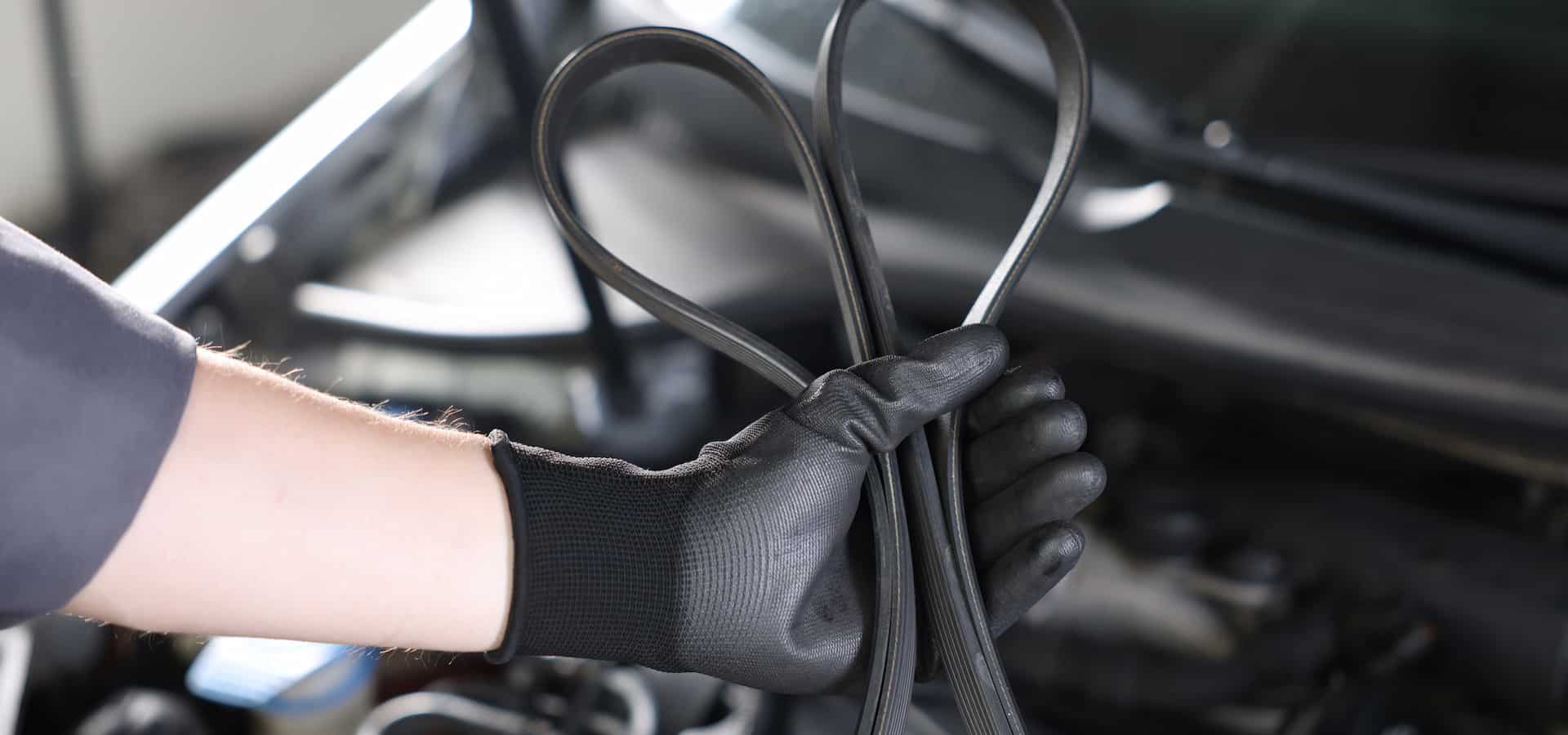
Hyundai Cambelt Timing Belt Replacement at Elevation Auto Repair
Hyundai's engine lineup mixes belt-driven and chain-driven designs, and knowing which is which is where a specialist earns their keep. Many older Sonatas, Santa Fes, and the 2.7L Delta V6 (found in Tiburon, Santa Fe, and Sonata) run interference timing belts – meaning a broken belt lets valves and pistons collide, turning a maintenance item into an engine rebuild.
Doing this job right on a Hyundai is not a generic belt swap. The 2.7L and 3.5L V6 platforms demand correct cam and crank alignment marks, proper tensioner and idler pulley replacement, and a water pump inspection while the front cover is open. We follow OEM torque specs for the crank pulley and cam sprockets, and we replace the tensioner as a set rather than reusing a fatigued spring.
Skipping the associated components – or reusing a worn hydraulic tensioner – is how a fresh belt fails early. We treat the timing job as a complete front-end refresh.
- Belt, tensioner, and idler pulleys replaced as a matched set
- Water pump and seals inspected and replaced when warranted
- Cam and crank timing verified against Hyundai alignment marks
- Clear communication before any added work is approved
Symptoms – How to Know You Need This Service
Timing belts rarely give dramatic warning, which is why mileage intervals matter. Still, you may notice signs that the belt or its tensioner is failing:
- A high-pitched squeal or ticking from the front of the engine, often worse on cold starts
- A slapping or rattling noise suggesting a loose belt or failing tensioner
- Rough idle or misfires if the belt has jumped a tooth and thrown timing off
- Hard starting or a no-start condition
- Visible cracking, glazing, or missing teeth on the belt if the cover is opened
- Coolant seepage near the timing cover, pointing to a weeping water pump
- Check engine light with camshaft/crankshaft correlation codes
If the engine suddenly loses power, backfires, or dies while driving – stop and shut it off immediately. On an interference engine, continued cranking after a belt failure can bend valves. Squeals, minor ticks, or an approaching mileage interval mean you should schedule soon rather than gamble.
Common Cambelt Timing Belt Replacement Issues on Hyundai Vehicles
Hyundai's engine lineup mixes timing belts and timing chains depending on the platform, and knowing which is which changes the whole conversation. Older belt-driven engines like the Beta and early Sigma V6 need scheduled belt service, while many later Theta and Gamma units run chains. Here are the patterns we see most often on belt-equipped Hyundais in the Denver area:
- Beta I/II 2.0L (1996-2008 Elantra/Tiburon): Interference design where a snapped belt lets valves meet pistons. Belts hardened and cracked past their service window are a frequent cause of bent valves.
- Sigma/Delta V6 (Sonata, XG300/XG350, early Santa Fe): Belt runs behind covers with multiple idlers and a hydraulic tensioner – tensioner leak-down is a common culprit long before the belt itself frays.
- Water pump driven by the timing belt: On many V6 and Beta engines the pump is spun by the belt, so a weeping pump contaminates the belt and takes it out early.
- Idler and tensioner bearing whine: Dry bearings develop a rattle or growl that precedes belt tracking problems and eventual jump.
- Oil or coolant contamination: Front crank and cam seal seepage on higher-mileage cars swells the belt and accelerates tooth shear.
- Heat and altitude wear: Colorado's dry air and temperature swings age rubber faster than the mileage number alone suggests.
Which Hyundai Models We See for Cambelt Timing Belt Replacement
Timing belt work applies mainly to Hyundai's older belt-driven engines. Newer four-cylinders moved to timing chains, so identifying your engine is the first step.
- Sonata (EF/NF) 2.7L Delta V6 – interference belt engine, roughly 1999–2009
- Santa Fe (SM/CM) 2.7L V6 – early 2001–2009 models with the belt-driven Delta
- Tiburon (GK) 2.7L V6 – 2003–2008, interference design
- Tucson (JM) 2.7L V6 – 2005–2009 belt-equipped variants
- XG300/XG350 3.0L and 3.5L V6 – belt-driven Sigma engines
- Older Elantra and Accent 1.6L/1.8L – early-generation belt engines before the chain switch
Later Hyundai four-cylinders – including the 2.4L Theta II and most 2011-and-newer Sonata, Elantra, and Tucson models – use timing chains, which are a different repair. If you drive one of those, we handle chain and tensioner service too, just under a separate procedure. Not sure which one you have? Give us your VIN and we'll confirm before anything gets scheduled, so you only pay for the work your Hyundai actually needs.
Causes & Risks – What Happens if Ignored
Most timing belt failures on Hyundai come down to age, heat cycling, and neglected companion parts rather than the belt simply wearing out on its own. Denver's altitude and dry climate harden rubber, while stop-and-go driving heat-soaks the front of the engine.
Waiting past the recommended interval on an interference engine is the expensive mistake. A belt that jumps a few teeth throws off valve timing; a belt that snaps outright drops valves into piston territory in an instant.
- A tired tensioner that goes unaddressed lets the belt track sideways, then shred – turning a routine service into a valve job.
- A leaking timing-belt-driven water pump left in place contaminates a fresh belt and can strand you with an overheat.
- Ignoring a bearing whine for weeks often ends with a seized idler that instantly stops the belt on a running interference engine.
- A belt that skips timing triggers rough running, misfire codes, and hard starts before it fails completely.
- What could have been a belt, tensioner, and pump package becomes bent valves, damaged guides, and cylinder head machining.
The good news is that this is one of the most predictable services on the car – replaced on schedule, it rarely surprises anyone. We inspect the whole front-of-engine system so you replace it once and drive with confidence.
Safety Impact – Why Cambelt Timing Belt Replacement Matters
A timing belt that lets go doesn't just stall the engine – it kills power steering assist and vacuum-boosted braking the moment the crank stops turning. On the highway that means a sudden loss of drive with heavy steering and a firm brake pedal.
When the engine dies unexpectedly, stability control, ABS, and traction systems drop offline along with it, and a stall in traffic puts you and everyone around you at risk.
- Stop driving now: loud rattle or grinding from the timing cover, sudden rough running with a burning rubber smell, or the engine dying and refusing to restart.
- Schedule soon: a light whine at idle, minor coolant seepage near the timing cover, or a car approaching its belt interval by age or mileage.
There's also a liability angle: if you're aware the belt is overdue and a stall causes a collision, that known-neglect timeline can matter. Staying ahead of the interval keeps every safety system powered and keeps you in control.
How Hyundai Cambelt Timing Belt Replacement Actually Works
The timing belt keeps the crankshaft and camshafts turning in exact sync so the valves open and close at the right moment relative to the pistons. On Hyundai's interference engines there's no clearance to spare, which is why setting timing marks precisely is everything.
What sets proper Hyundai work apart is respecting the platform's specifics rather than eyeballing it. We follow OEM alignment procedures, torque specs, and tensioner-setting steps so the belt tracks true and lasts its full life.
- Belt-driven water pumps on many V6 and Beta engines get replaced together with the belt so you're not back in the same covers twice.
- Hydraulic and spring tensioners require a specific compression and pin-pull sequence to set proper belt tension.
- Crank and cam timing marks must line up to factory reference before the belt goes on, then be verified by hand-rotation before startup.
- Front crank and cam seals are inspected and replaced where seeping to protect the new belt.
- Torque values on the crank bolt and idler hardware follow Hyundai specs to prevent slippage and bearing failure.
We handle the whole job under one roof – belt, tensioner, idlers, pump, and seals – so your Hyundai leaves timed correctly and ready for the next long interval.
Hyundai's interference engines make timing belt service a precision job, not a guessing game. On belt-driven platforms like the older Beta and Gamma four-cylinders and the earlier V6 layouts, a snapped cambelt means valves meet pistons – and that turns a routine service into a rebuild. Many modern Hyundais have moved to timing chains, so the first thing worth confirming is whether your specific engine even uses a belt. That distinction shapes everything that follows.
How We Diagnose Cambelt Timing Belt Replacement Issues on Hyundai
We start by verifying the engine architecture, then work through condition and timing accuracy before recommending anything.
- Confirm belt vs. chain: We check the VIN and engine code – Beta II 1.6/1.8, older Gamma 1.6, and early Delta/Mu V6 engines are belt-driven, while many newer Nu, Gamma GDI, and Theta variants use chains.
- Scan for related codes: Using GDS (Hyundai's Global Diagnostic System) or an equivalent OEM-capable scanner, we pull camshaft/crankshaft correlation codes such as P0016 and P0340 that hint at belt stretch or a slipping tensioner.
- Live data review: We compare crank and cam position sensor timing under load to catch a belt jumping a tooth.
- Physical inspection: Covers come off for a visual on cracking, glazing, tooth wear, oil contamination, and tensioner/idler play.
- Road test and listen: We check for rough idle, hard starts, and any ticking or chirping that points to a failing tensioner bearing or water pump.
- Measure and document: Coolant weep from the water pump and pulley bearing wear get noted so nothing is missed.
From those findings we build a clear repair plan and an itemized quote, so you know exactly what's being replaced and why before we begin.
Cambelt Timing Belt Replacement on Hyundai: Repair vs. Replacement
Timing belt work rarely reduces to a single-part fix, but the scope still varies by condition.
- Minor service scenarios: If the belt is within interval and clean, adjusting or replacing a single squealing accessory belt or reseating a cover may be all that's needed.
- Partial replacement: When the belt shows early wear but the tensioner and pump test healthy, the belt alone can be replaced – though this is uncommon on higher-mileage Beta and V6 engines.
- Full timing kit replacement: The right call when cascading wear appears – a glazed belt paired with a noisy tensioner bearing, or coolant weeping from the water pump behind the belt. On interference Hyundai engines we install belt, tensioner, idlers, and water pump together, since labor overlaps heavily and a failed pump ruins a new belt.
We walk you through each option with the inspection evidence in hand. If the safe, cost-effective choice is a partial repair, that's what we recommend – we don't push a full kit when the parts don't justify it.
How to Make Your Hyundai Cambelt Timing Belt Replacement Last Longer
A fresh belt lasts longest when driving habits and maintenance support it.
- Warm up gently: Let the engine settle before hard acceleration, especially in Denver's cold mornings, so the tensioner and idler bearings aren't stressed cold.
- Avoid chronic overheating: Heat degrades rubber – address coolant leaks and a weak thermostat promptly to protect the belt behind it.
- Watch fluid leaks: Oil or coolant contamination accelerates belt breakdown, so fix front-cover seepage early.
Owner-friendly habits that help:
- Listen for new chirps, ticks, or squeals from the timing cover area and mention them early.
- Keep an eye on the check engine and temperature lights.
- Check coolant level and look for puddles under the front of the engine.
Use genuine Hyundai or OEM-equivalent belts and water pumps – aftermarket bargain kits often use lower-grade bearings. Keep software current, follow Hyundai's published timing belt interval for your engine, and use the correct coolant spec. Visual checks and fluid monitoring are safe to do yourself; belt replacement and tensioner work on interference engines should stay with the shop, where correct timing alignment and torque specs protect your valves.
What to Expect When You Bring Your Hyundai In
Hyundai's belt-driven engines – the older Beta and Delta families along with certain Sonata, Tucson, and Santa Fe applications – reward precise cam-to-crank alignment. Get the sequence wrong and an interference engine will bend valves. Here's how we handle your visit:
- Drop-off and intake – Schedule an appointment or drop the vehicle overnight using our after-hours key box. Tell us any noises, oil weeping near the front cover, or check engine codes you've noticed.
- Initial inspection – We pull the upper covers to check the existing belt, tensioner, idlers, and water pump condition, then verify timing marks before disassembly.
- Written estimate – You get a clear, itemized quote covering the belt kit, tensioner, and pump replacement. We call before adding anything, so there are no surprises.
- Updates during service – We text or call at key milestones. Ask about shuttle service or a loaner if you need to keep moving.
- Pickup walkthrough – We show you the old parts, explain what we found, and go over your next belt interval.
Grab your parking pass, garage remote, and other personal items before drop-off. After reassembly we set base timing, road test the car under load, and run a scan-tool re-check for cam/crank correlation faults. If anything feels off afterward, bring it back and we'll recheck it right away.
Why Choose Elevation Auto Repair for Hyundai Cambelt Timing Belt Replacement
Timing belt work on Hyundai isn't a parts-swap you rush. We follow OEM torque specs for the crankshaft bolt and tensioner, and we set timing against factory marks rather than eyeballing it.
- Platform-specific knowledge – Familiarity with Beta and Delta engine quirks, common tensioner and idler bearing wear, and water pump failures that ride on the same belt path.
- TSB and software awareness – We check for relevant Hyundai service bulletins and any related updates that affect a belt or cooling-system job.
- Complete kit replacement – Belt, tensioner, idler pulleys, and water pump replaced together, since sending the car out with an aging pump behind a fresh belt invites a repeat visit.
We own the whole job – diagnosis, teardown, precise reassembly, and post-repair verification with a road test and scan-tool confirmation. That single-shop accountability is what keeps your Hyundai reliable long after you drive away, and it's why Denver drivers choose us as their dealership alternative for honest, straightforward repair.
Our Hyundai Services
- Air Conditioning AC Repair
- Battery Repair Replacement
- Brake Repair & Brake Fluid Change
- Check Engine Light Diagnostics
- Clutch Repair & Replacement
- Coolant Leak Repair
- Cooling System Repair
- Drive Shaft Repair
- Engine Repair
- Exhaust & Catalytic Converter Repair
- Head Gasket Repair & Replacement
- Oil Change
- Oil Leak Repair
- Scheduled Service Maintenance
- Steering Repair
- Suspension Repair
- Transmission Repair
- Tune Up
- Wheel Alignment