
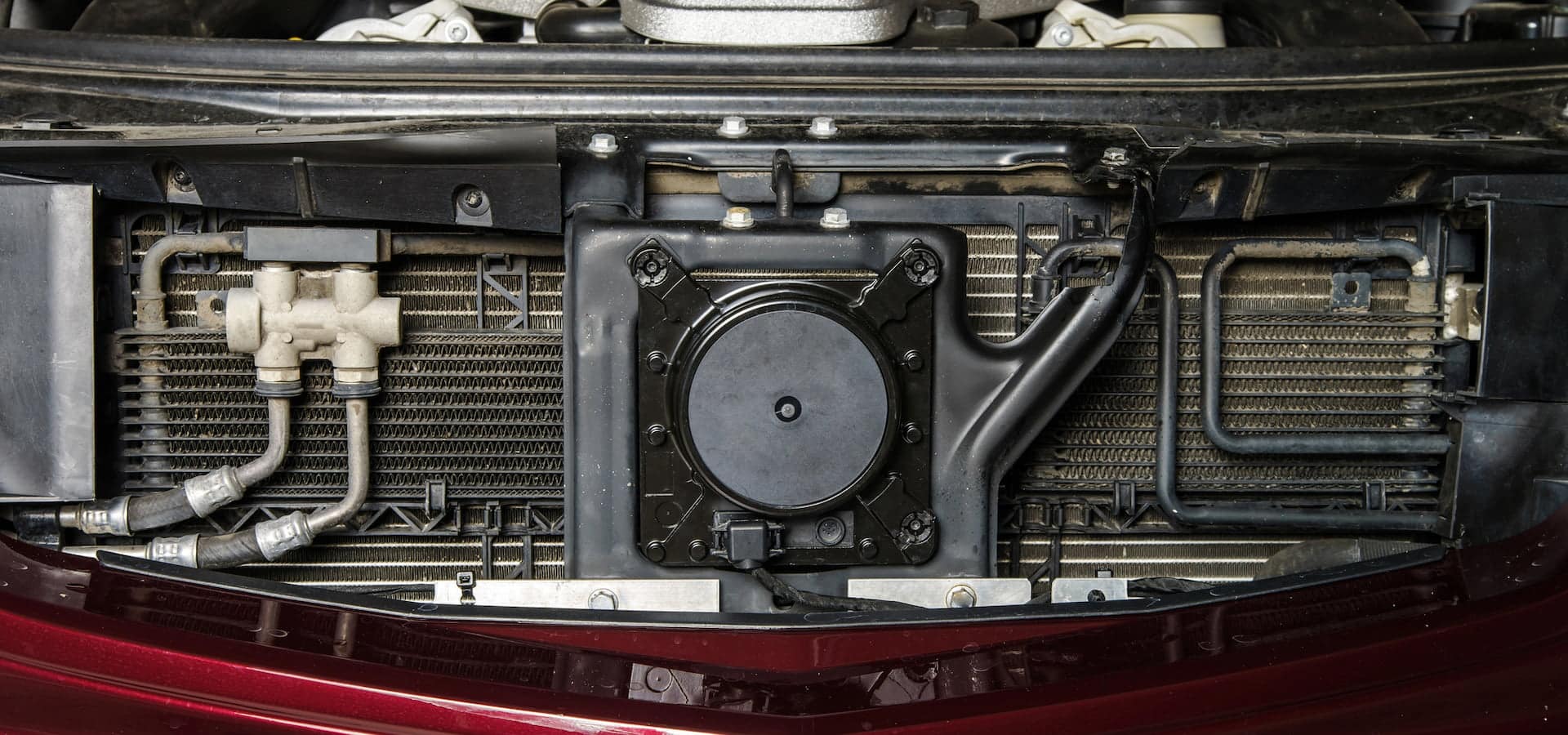
Hyundai Cooling System Repair at Elevation Auto Repair
Hyundai's Theta II, Nu, Gamma, and Lambda engine families each cool differently, and Denver's altitude and temperature swings put real stress on plastic coolant components. Getting cooling repair right on these platforms means more than swapping a hose – it takes knowing where Hyundai routes its electronically controlled thermostats and where the plastic housings crack first.
Several Hyundai engines use an integrated thermostat housing molded from composite plastic that grows brittle with heat cycling, plus electric water pumps on newer turbo GDI applications that report faults through the ECU. We follow Hyundai's fill and bleed sequence to purge trapped air from the heater core and block, and we use factory-spec long-life coolant rather than a generic universal blend that can gel or corrode aluminum passages.
On many Theta II 2.4L and 2.0T applications, careless work leaves air pockets that trigger overheating even after a "successful" repair – so procedure matters.
What you can expect from us:
- Pressure and block testing to pinpoint the real leak before parts get replaced
- Correct Hyundai long-life coolant and proper air-bleed procedure
- Honest diagnostics with no unnecessary parts thrown at the problem
- Clear communication about what failed and what to watch next
Symptoms – How to Know You Need This Service
Cooling problems on a Hyundai often start small and escalate fast. Watch for these signs:
- Temperature gauge climbing toward red or swinging erratically – stop driving immediately if it hits the hot zone
- Sweet, syrupy smell or visible steam from under the hood – pull over and let it cool
- Green, orange, or pink puddles under the front of the car when parked
- Heater blowing cold at idle, often a sign of low coolant or a trapped air pocket
- Coolant warning light or a check engine light with thermostat or coolant-temp codes
- Gurgling or bubbling sounds from the dash after shutdown
- Radiator fans running loud and constant even on cool days
- White exhaust smoke or coolant loss with no visible leak – possible head gasket involvement, so schedule right away
You may notice a few of these together as the system loses pressure. Overheating and steam mean stop now – continued driving on a Theta II or Lambda engine risks warped heads. A slow drip or occasional low-coolant light means schedule soon before it turns into a roadside failure.
Common Cooling System Repair Issues on Hyundai Vehicles
Across the Sonata, Elantra, Santa Fe, Tucson, and Kona lineups, a handful of failure patterns show up repeatedly. Knowing these lets us go straight to the source instead of guessing.
- Thermostat housing leaks (Theta II 2.4L GDI, 2011-2019 Sonata/Santa Fe) – the integrated plastic housing warps and seeps coolant at the gasket surface, often mistaken for a water pump leak.
- Water pump weep failures (Lambda 3.3L/3.8L V6) – the internal pump on these engines drips at the timing cover, and a seep can go unnoticed until temperature climbs.
- Radiator end-tank cracking (2013-2020 Elantra, Tucson) – plastic tank seams split with age and heat cycling, especially on Denver's temperature swings.
- Electric cooling fan and control module faults (Smartstream 1.6T, Kona/Elantra N-Line) – fan modules fail intermittently, causing heat soak in traffic while highway driving stays fine.
- Coolant hose and quick-connect fitting failures – Hyundai's molded hoses and snap fittings harden and leak at the joints on higher-mileage cars.
- Head gasket and coolant loss on early Theta II engines – overheating events on the 2.0T and 2.4L can lead to combustion gases entering the cooling system.
Which Hyundai Models We See for Cooling System Repair
We handle cooling work across most modern Hyundai platforms sold in the U.S. Find your car below:
- Sonata (YF, LF, DN8) – 2011-present, Theta II 2.4L GDI and 2.0T; thermostat housing and water pump leaks are common
- Elantra (MD, AD, CN7) – 2011-present, Nu 1.8L/2.0L; plastic coolant crossover and radiator neck issues
- Tucson (LM, TL, NX4) – 2010-present, Theta II and Smartstream engines; electric water pump faults on turbo variants
- Santa Fe (DM, TM) – 2013-present, Lambda 3.3L V6 and 2.4L; radiator and coolant hose service
- Kona – 2018-present, Gamma 1.6T; compact packaging makes thermostat access trickier
- Veloster (FS, JS) – including the 1.6T and Veloster N with the Theta II 2.0T; N models get extra attention for track-heat stress
- Genesis Coupe (BK) – 2010-2016, 2.0T and 3.8L; older radiators and hoses often due
- Palisade (LX2) – 2020-present, Lambda 3.8L V6
Turbo GDI cars with electric water pumps need scan-tool verification of pump operation, and Veloster N and other performance variants run hotter, so we check the whole loop rather than just the failed part. If you have a very early Hyundai or an EV thermal-management system we don't routinely service, we'll tell you up front and point you in the right direction.
Hyundai's cooling systems have their own personality – plastic-heavy component design, thermostat housings integrated into complex assemblies, and on turbocharged Theta and Smartstream engines, extra cooling loops that generic shops often overlook. Getting these platforms back to reliable operating temperature takes familiarity with how Hyundai builds them. That's where our team focuses, and we'll walk you through what we see and how we fix it.
Causes & Risks – What Happens if Ignored
Most Hyundai cooling problems trace back to a mix of plastic component fatigue, Colorado's dry heat and altitude, and coolant that hasn't been serviced on Hyundai's recommended interval. Old coolant loses its corrosion inhibitors and starts attacking the aluminum and plastic surfaces it's supposed to protect.
A small seep is cheap to address. Waiting turns it into something far more involved.
- Ignoring a thermostat housing weep for months often leads to a low-coolant overheat event and a warped cylinder head.
- A neglected water pump seep on the Lambda V6 can fail suddenly, dumping coolant and stranding you.
- A cracked radiator tank that keeps getting topped off masks the real leak until the engine runs hot on a highway grade.
- Repeated low-coolant driving on Theta II engines is a leading path to head gasket failure and combustion-gas contamination.
- Skipped coolant flushes let corrosion clog the heater core and radiator, adding parts to what should have been a simple job.
The safety line is simple – once the temperature gauge climbs into the upper range or you smell hot coolant, driving further risks permanent engine damage. We'd rather see it early.
Safety Impact – Why Cooling System Repair Matters
An overheating Hyundai does more than threaten the engine. Heat and coolant loss ripple into systems you rely on to stay in control.
- Engine power reduction – the ECU forces a limp mode when it detects overheating, cutting power in traffic or on a merge.
- Loss of cabin defrost and heat – a failed heater core or low coolant kills windshield defogging in Denver winters.
- Sudden stalling – a severe overheat can shut the engine down, taking power steering assist and brake boost with it.
- Warning light cascade – coolant sensor faults can trigger related check-engine and traction warnings that mask the real issue.
Stop driving now if: the temperature gauge is in the red, steam or sweet-smelling vapor comes from the hood, or the engine goes into reduced-power mode.
Schedule soon if: you notice a small coolant smell after parking, occasional top-offs, or a fan that runs louder than usual.
If a known cooling defect is left unaddressed and contributes to an incident, that unrepaired condition can complicate an insurance claim – another reason to document and fix it early.
How Hyundai Cooling System Repair Actually Works
A Hyundai cooling system moves coolant through the block and head, out to the radiator, and back – with an electric fan, a thermostat, and on turbo models an extra loop for the intercooler and turbo bearing housing. What sets Hyundai apart is how much of this is managed electronically and packaged in integrated plastic assemblies.
Because of that design, the repair has to follow Hyundai's procedures rather than a one-size-fits-all approach:
- Confirm the leak or fault with a pressure test and, where needed, a combustion-gas test to rule out head gasket involvement.
- Replace the failed component with OEM-grade parts – housing, pump, radiator, or fan module.
- Refill with Hyundai's specified long-life coolant, not a universal blend that can corrode the system.
- Run the factory bleed procedure to clear air pockets that cause false hot spots.
- Verify fan operation and thermostat regulation with a scan tool reading live coolant temperature data.
Design points that shape the work:
- Electric cooling fans need module checks and
Hyundai cooling systems have their own personality – plastic thermostat housings that grow brittle, electric water pumps on Theta II and Smartstream engines, and the multi-port coolant control valves used on newer Nu and Gamma platforms. These aren't the copper-and-rubber setups of decades past, so they demand a shop that reads Hyundai-specific data rather than guessing. That's where our approach separates itself from generic radiator work.
How We Diagnose Cooling System Repair Issues on Hyundai
A leaking radiator and an overheating engine can share symptoms but have completely different root causes. We work through a structured process to find the actual failure point.
- Scan with Hyundai-capable diagnostics – We pull codes and live data using scan tools that read Hyundai's coolant temperature sensors, ECT-to-thermostat correlation, and electric water pump duty cycle. Codes like P0128 (coolant below regulating temp) or P00B7 (coolant flow low) point us in the right direction fast.
- Verify sensor accuracy – We compare commanded versus actual coolant temperature to catch a lazy thermostat or a coolant control valve stuck on 2.0L and 2.4L Theta II applications.
- Pressure test the system – A cold pressure test exposes seeping thermostat housings, cracked plastic radiator end tanks, and weeping water pump weep holes common on higher-mileage GDI engines.
- Visual and cooling fan check – We inspect hoses, the surge tank for cracks, and confirm the electric fan staging responds to temperature commands.
- Road test under load – We watch temperature behavior climbing Denver grades, since altitude and load reveal a marginal system a parking-lot idle never will.
From there we build a clear repair plan and quote so you know exactly what failed, what it affects, and what it takes to fix it – no mystery line items.
Cooling System Repair on Hyundai: Repair vs. Replacement
Not every cooling complaint means a big job. We match the fix to the failure.
- Genuine repair – A single clamp, a hose, a thermostat, or a leaking cap on an otherwise healthy system. If the radiator and pump test sound, we replace the small part and move on.
- Partial replacement – Common on Theta II and Nu engines where the integrated thermostat housing or coolant control valve fails while the radiator and pump remain serviceable. We swap the worn assembly and keep the good components.
- Full replacement – When wear cascades: a failing electric water pump that's already contaminated coolant, a cracked plastic radiator paired with a tired pump, or repeated overheating that risks head gasket and cylinder head damage. When repair cost creeps toward replacement, replacement wins on reliability.
We lay out both paths – what each costs you long term and what risk you carry – then let you decide. Our job is the honest recommendation, not the biggest invoice.
How to Make Your Hyundai Cooling System Repair Last Longer
Good habits stretch the life of every part we install. A few things matter more than most owners realize.
- Warm up before hard driving – Let temperatures stabilize before demanding load, especially in Denver's cold mornings when plastic housings are most brittle.
- Ease off on long grades – Steady throttle instead of aggressive surges keeps peak coolant temperatures in check on mountain drives.
- Check the surge tank – Peek at the coolant level and color when the engine is cold. Rust-brown or oily coolant is your early warning to bring it in.
- Listen and watch – A whining electric water pump, a sweet coolant smell, or a flickering temperature light all deserve attention before they strand you.
Brand-specific care makes a real difference here:
- Use Hyundai's long-life coolant (the pink/red phosphate-organic formula) – mixing incompatible coolant gels and clogs passages.
- Keep ECM software current, since Hyundai updates fan and pump control strategies through service campaigns.
- Follow the factory coolant service interval instead of stretching it indefinitely.
Topping off coolant and visual checks are safe to DIY. Pressure testing, bleeding air from the system, and any work involving the electric pump or thermostat housing belong in the shop – trapped air pockets and mis-torqued plastic housings cause the exact overheating you're trying to avoid. Bring it to us and we'll handle it right the first time.
What to Expect When You Bring Your Hyundai In
Hyundai cooling systems have their own personality – plastic thermostat housings that warp, water pumps driven off the timing chain on Theta and Nu engines, and electric coolant pumps on hybrid and turbo platforms that need scan-tool activation to bleed properly. Here's how a visit unfolds.
- Drop-off or appointment – Schedule ahead or leave the car with us. Clear out personal items from the cabin; we'll note anything left behind on the intake sheet.
- Initial inspection – We pressure-test the system, inspect the radiator, hoses, thermostat housing, and water pump weep hole, and pull codes with Hyundai-capable diagnostics for coolant temp and pump-related faults.
- Written estimate – You get a line-item breakdown of parts and labor before any work begins, with photos of what we found.
- Updates during the job – We call or text if anything changes, and we don't add repairs without your approval.
- Pickup walkthrough – We show you the old parts, explain the fix, and cover what to watch for.
Ask about shuttle or loaner options and after-hours key return when you book. Before your Hyundai leaves, we perform a road test to confirm operating temperature holds steady, then re-scan to verify no coolant or thermostat codes reappear. If something feels off afterward, bring it back and we'll re-check it.
Why Choose Elevation Auto Repair for Hyundai Cooling System Repair
Cooling faults on Hyundai vehicles often trace back to platform-specific quirks, not just a leaky hose. We work these systems the way the factory intended.
- TSB and software awareness – We check for applicable Hyundai bulletins and coolant temperature sensor or electric pump control updates that affect how the system behaves on Sonata, Elantra, Santa Fe, and Tucson models.
- Correct bleed procedures – GDI, turbo, and hybrid platforms need proper vacuum-fill and scan-tool pump activation to purge air pockets that cause hot spots and false overheating.
- Right coolant, right spec – We use the correct long-life phosphate-based Hyundai coolant rather than a generic mix that can gel or corrode aluminum passages.
We own the job from diagnosis through post-repair verification, so the technician who found the problem confirms the fix under a road test and scan check. That end-to-end accountability keeps your Hyundai running at the right temperature and catches small issues before they turn into a cracked head or blown gasket.
Our Hyundai Services
- Air Conditioning AC Repair
- Battery Repair Replacement
- Brake Repair & Brake Fluid Change
- Check Engine Light Diagnostics
- Clutch Repair & Replacement
- Coolant Leak Repair
- Drive Shaft Repair
- Engine Repair
- Exhaust & Catalytic Converter Repair
- Head Gasket Repair & Replacement
- Oil Change
- Oil Leak Repair
- Scheduled Service Maintenance
- Steering Repair
- Suspension Repair
- Cambelt Timing Belt Replacement
- Transmission Repair
- Tune Up
- Wheel Alignment