
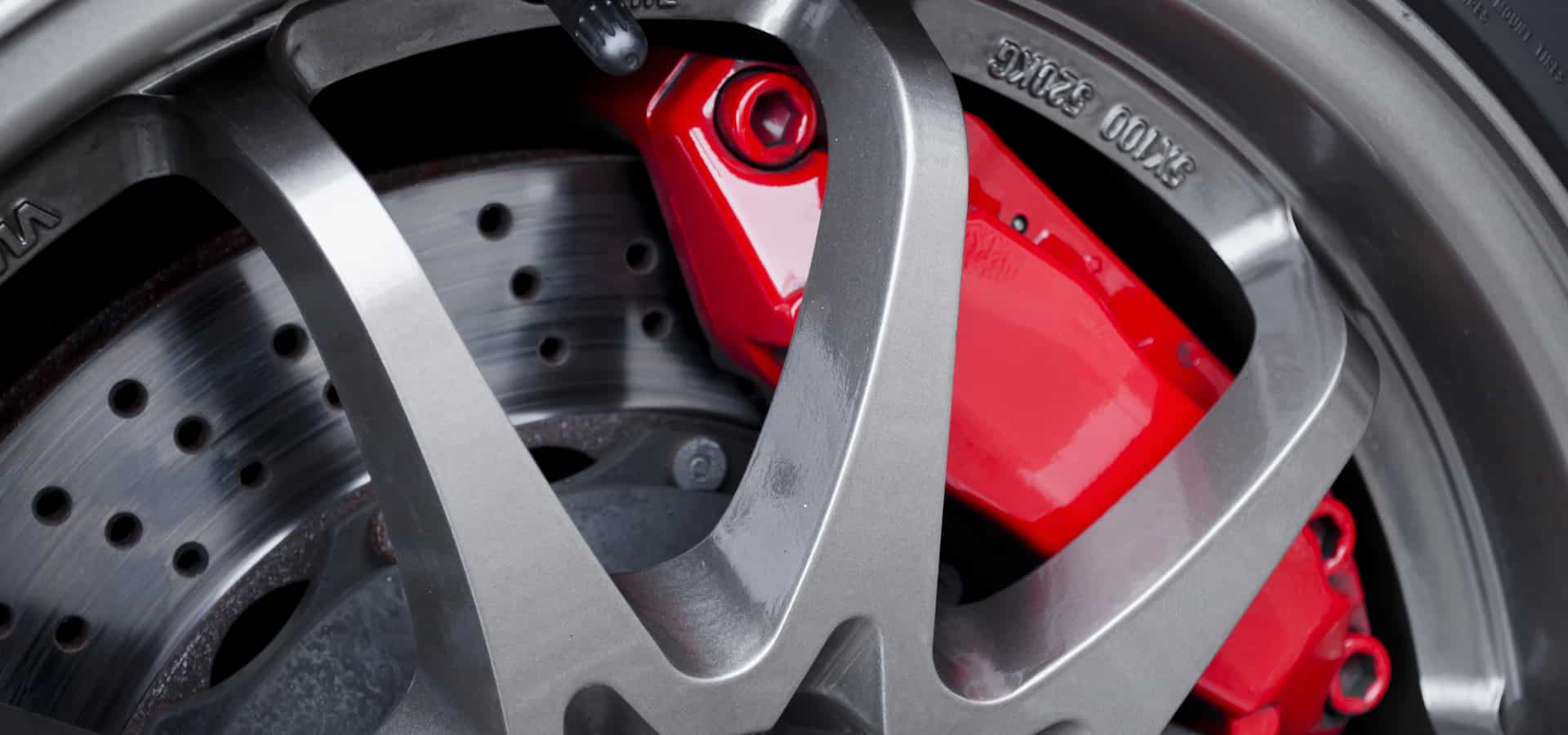
Hyundai Brake Repair & Brake Fluid Change at Elevation Auto Repair
A spongy pedal or a grinding rotor on your Hyundai isn't something to sit on, and we take care of it the right way the first time. Brake service done properly protects your factory warranty, keeps your resale value intact, and gets you back on Denver roads with confidence.
Brake repair covers pad and rotor replacement, caliper service, and hardware, while a brake fluid change flushes moisture-laden fluid that lowers boiling point and corrodes internal components. Hyundai systems have quirks a generic shop can miss – many Sonata, Elantra, and Santa Fe models use an electronic parking brake that must be retracted with a scan tool before rear pads come off, and later Palisade and Tucson trims tie brake work to ADAS calibration and blind-spot logic.
We follow Hyundai torque specs on caliper bracket bolts and guide pins, bleed in the correct sequence, and use DOT-spec fluid that meets factory moisture and boiling-point requirements. Skipping the electronic parking brake procedure is a common way DIY jobs damage rear caliper actuators.
- Honest diagnostics – we recommend brake work only when your Hyundai actually needs it
- OEM-correct pads, rotors, and DOT-spec fluid installed to factory torque
- Electronic parking brake retracted and reset properly with a scan tool
- Clear communication and pricing before any work begins
Symptoms – How to Know You Need This Service
Your Hyundai gives plenty of warning before brakes become unsafe. Watch for these signs and let us sort out which are urgent.
- You may notice a squealing or high-pitched chirp that stops when you brake – that's the wear indicator on your pads. Schedule soon.
- A grinding or metal-on-metal sound means pads are gone and rotors are being damaged. Stop driving and have it inspected right away.
- A soft or sinking brake pedal points to air or moisture in the fluid or a leak. Treat this as urgent.
- Steering-wheel or pedal vibration under braking usually signals warped or unevenly worn rotors – common on Sonata and Elantra front rotors.
- The brake warning light or ABS light on the dash means the system flagged low fluid, worn pads, or a sensor fault. Have it scanned soon.
- A burning smell after stops can indicate a sticking caliper or dragging pad. Stop driving if it's strong.
- Longer stopping distances or the car pulling to one side while braking.
- An electronic parking brake fault message, seen on newer Tucson and Santa Fe models.
When in doubt, err toward caution – any grinding, pedal sink, or burning smell deserves an immediate look.
Common Brake Repair & Brake Fluid Change Issues on Hyundai Vehicles
Soft pedal, a grinding front end, or a stability light on your dash? Hyundai brake systems have predictable wear paths, and knowing them lets us fix the right thing the first time. Here are the patterns we see most often in Denver:
- Front pad and rotor wear on the Sonata (LF/DN8) and Elantra (AD/CN7) – these front-heavy sedans eat inner pads first, and warped rotors often show up as steering-wheel shimmy under braking.
- Rear caliper seizing and uneven pad wear on the Santa Fe and Tucson (TL/TM) – rear calipers on these crossovers can stick from corrosion, dragging the pad and cooking the rotor on one side.
- Neglected brake fluid on 2011+ models with hygroscopic DOT 3/4 – fluid absorbs moisture over time, lowering the boiling point and causing a spongy pedal, especially noticeable coming down I-70.
- Electronic parking brake (EPB) faults on Palisade, Santa Fe, and newer Tucson – the actuator won't retract for a pad swap without proper service-mode entry, and DIY attempts throw EPB warnings.
- Regenerative braking blending issues on Ioniq, Kona EV, and Sonata Hybrid – worn friction brakes hide behind regen, so hydraulic wear is often missed until it's advanced.
- ABS module and wheel speed sensor faults on older Elantra/Accent – corroded sensor tone rings trigger ABS and traction lights that mimic bigger brake problems.
Which Hyundai Models We See for Brake Repair & Brake Fluid Change
We handle brake service across nearly the entire modern Hyundai lineup. Find your model below to get a sense of what your car needs.
- Elantra (AD 2017-2020, CN7 2021+) – frequent front rotor wear; N and N Line trims use larger brakes and require attention to pad compound
- Sonata (LF 2015-2019, DN8 2020+) – common pedal-feel complaints and rear electronic parking brake on higher trims
- Tucson (TL 2016-2021, NX4 2022+) – newer NX4 ties braking to ADAS features that may need calibration awareness
- Santa Fe (TM 2019+, MX5 2024+) – heavier SUV brakes with electronic parking brake actuators
- Palisade (LX2 2020+) – larger rotors and driver-assist integration on this three-row platform
- Kona (OS 2018-2023, SX2 2024+) – including Kona N with upgraded braking hardware
- Santa Cruz (2022+) and Veloster / Veloster N (2019-2022) – N models run performance pads and require correct fluid spec
- Ioniq and Ioniq 5/6 hybrids and EVs – regenerative braking means pads last longer but rotors can corrode; fluid service still matters
We're glad to look at older Accent, Azera, and first-generation models too, though parts availability can vary. If we spot something outside our scope, we'll tell you straight rather than guess.
Causes & Risks – What Happens if Ignored
Colorado's mountain grades, road salt, and temperature swings are hard on Hyundai brakes. Heat from long descents boils moisture-laden fluid, while winter brine accelerates caliper and rotor corrosion. Age and mileage do the rest.
Brake fluid that's never been serviced past 2-3 years is the quiet culprit behind most spongy-pedal complaints. Waiting compounds the damage in ways that get expensive fast.
- Ignoring worn pads leads to metal-on-metal contact that scores rotors – a simple pad job becomes pads and rotors.
- A seized rear caliper on a Tucson or Santa Fe keeps dragging, overheating and glazing the rotor and destroying the new pads within weeks.
- Moisture-saturated fluid corrodes the ABS pump and caliper pistons from the inside, turning a routine flush into hydraulic component replacement.
- Delaying EPB actuator repair on a Palisade can leave the parking brake stuck engaged or disengaged.
- Neglected regen-blended brakes on hybrids and EVs can rust in place, seizing when you finally need the friction brakes.
Once the pedal goes to the floor or you feel pulsing under hard stops, you're into unsafe territory – not a wait-and-see situation.
Safety Impact – Why Brake Repair & Brake Fluid Change Matters
Brakes on a modern Hyundai tie directly into ABS, electronic stability control (ESC), traction control, and on many models Autonomous Emergency Braking. When the hydraulic side degrades, those safety systems lose the pressure and response they depend on.
Boiled fluid can cause total pedal fade on a long descent. A failing wheel speed sensor disables ABS and stability control exactly when you need them on snow. Uneven braking can pull the car during an emergency stop.
- Stop driving now: pedal sinks to the floor, grinding metal-on-metal, brake warning light with a hard or fading pedal, or fluid leaking at a wheel.
- Schedule soon: light squeal, mild shimmy under braking, slightly longer stopping distance, or fluid due by age.
There's also a liability angle – if a known brake defect goes unaddressed and contributes to a collision, that can affect insurance outcomes. Keeping brake service documented protects both your safety and your record.
How Hyundai Brake Repair & Brake Fluid Change Actually Works
Your brakes convert pedal pressure into hydraulic force at each caliper, clamping pads onto rotors. On newer Hyundais, that system talks constantly to the ABS module, ESC, and the electronic parking brake – which is why a proper repair is more than swapping pads.
Most Palisade, Santa Fe, Tucson, and Sonata models use an EPB that must be placed in service mode through the vehicle's diagnostic port before the rear caliper piston can be retracted. Skipping that step damages the actuator. We use OEM-level scan tools to enter maintenance mode, calibrate afterward, and confirm no stored faults remain.
- EPB service-mode entry and recalibration on models with electronic parking brakes.
- Correct DOT 3/DOT 4 fluid to Hyundai spec, with a full flush that cycles the ABS module to purge old fluid completely.
- Factory torque and sequence specs on caliper brackets and wheel fasteners to prevent warping.
- Wheel speed sensor and tone-ring checks so ABS and stability systems read cleanly after the job.
- Regen-brake verification on Ioniq, Kona EV, and hybrid models to confirm friction brakes work in harmony with regeneration.
Doing it the OEM way keeps your warranty intact and protects resale value – and it's what keeps you safely on the road. Bring your Hyundai in and we'll diagnose it straight, no unnecessary rep
How We Diagnose Brake Repair & Brake Fluid Change Issues on Hyundai
When your Hyundai pulses under braking, squeals at low speed, or the brake warning light comes on, we start with a structured inspection that separates real problems from surface noise. Here's how we work through it:
- We pull codes and live data with a Hyundai-capable scan tool (GDS-level access), reading ABS, ESC, and EPB module faults that a generic OBD-II reader misses – wheel speed sensor dropouts and electronic parking brake actuator faults on Sonata, Elantra, and Tucson models show up here.
- We test brake fluid condition with moisture strips and a boiling-point check, since DOT 3/DOT 4 absorbs water and drops performance – a frequent finding on higher-mileage Santa Fe and Palisade vehicles that skipped fluid intervals.
- We measure rotor thickness with a micrometer and check lateral runout, then gauge pad material remaining against Hyundai minimum specs.
- We inspect calipers, slide pins, and flex lines for sticking, corrosion, or leaks – seized slide pins are a common cause of uneven pad wear on Colorado-driven Hyundais exposed to road salt.
- We road test for pull, pedal feel, and vibration under controlled braking to confirm the complaint.
Once we've combined scan data with physical measurements, we build a clear repair plan and a written quote so you know exactly what needs attention now versus what can wait – no guesswork, no surprise add-ons.
Brake Repair & Brake Fluid Change on Hyundai: Repair vs. Replacement
Not every brake concern means a full brake job. We match the fix to what your Hyundai actually needs.
- Genuine repair: Fluid flush and bleed, caliper slide pin cleaning and re-lubrication, or replacing a single hardware kit when rotors and pads still measure within spec – common on newer Elantra and Kona models with early wear.
- Partial replacement: Fresh pads and a rotor resurface or replacement on one axle while the healthy axle stays put. Front pads often wear faster than rear on Tucson and Santa Fe, so replacing what's worn keeps cost sensible.
- Full replacement: When rotors are below minimum thickness, a caliper has failed, or you're seeing cascading wear from a seized component, we replace the affected assembly. Safety-critical parts and repairs that approach the cost of new components get the honest recommendation to replace.
Using OEM-grade pads and rotors matters here – it preserves braking feel, protects your Hyundai warranty, and helps resale value down the road. We walk you through each option with the measurements in front of you, so you decide based on facts rather than being pushed toward the biggest ticket.
How to Make Your Hyundai Brake Repair & Brake Fluid Change Last Longer
Good brake life comes down to how you drive and a few simple habits that catch problems early.
- Driving style: Coast and brake gradually instead of hard last-second stops, especially on Denver-area descents where heat builds fast and warps rotors.
- Load awareness: Avoid riding the brakes downhill when hauling passengers or gear in a Palisade or Santa Fe – downshift and let engine braking help.
- Climate care: Colorado moisture and road salt accelerate caliper and slide pin corrosion, so periodic cleaning pays off.
Owner checks you can safely do:
- Listen for new squeals, grinding, or a soft pedal and note when they happen.
- Watch for the brake or ABS warning light and check your fluid level against the reservoir markings.
- Glance at pad thickness through the wheel spokes when you clean the car.
Stick with Hyundai-specified DOT 4 fluid and OEM parts, follow the factory fluid interval, and keep ABS and EPB software current at service visits. Leave fluid flushes, caliper work, and anything involving the electronic parking brake to the shop – these are safety-critical and require proper bleeding and tool-based release procedures to do right.
What to Expect When You Bring Your Hyundai In
Spongy pedal, a grinding front end, or a brake warning light on your Sonata, Elantra, Tucson, or Santa Fe – we start by pinning down the real cause before touching a wrench. Here's how a brake visit moves through our shop:
- Drop-off or appointment: Schedule ahead or leave the vehicle with us. Ask about shuttle service or a loaner if you need to keep moving during the day.
- Initial inspection: We measure pad thickness, rotor runout and minimum spec, caliper slide-pin condition, and check for the warped-rotor pulsation common on Sonata and Tucson platforms. Brake fluid moisture content gets tested with a meter before we recommend a flush.
- Written estimate: You get an itemized breakdown – what needs replacing now, what can wait, and why. No surprise add-ons.
- Updates during the work: We call or text before proceeding on anything beyond the approved scope.
- Pickup walkthrough: We show you the worn parts, explain what was done, and cover break-in for new pads and rotors.
Secure any personal items or valuables before drop-off, and ask about after-hours key return if your schedule runs late. Every brake job finishes with a road test to confirm firm pedal feel and even stopping, plus a scan-tool check to clear any ABS or ESC codes. If anything feels off afterward, bring it back and we'll re-verify it.
Why Choose Elevation Auto Repair for Hyundai Brake Repair & Brake Fluid Change
Brake work on a Hyundai isn't just pads and rotors – it's knowing the platform. We track Hyundai TSBs and software updates that affect braking, including EPB calibration on Santa Fe and Palisade models and ABS/ESC module behavior that generic shops overlook.
- Correct fluid and procedure: We flush with the DOT spec your Hyundai calls for and bleed in the proper sequence, using a scan tool to cycle the ABS module so no old fluid stays trapped.
- Electronic parking brake handling: Rear brake service on EPB-equipped models requires putting the caliper into service mode – we do it right so you don't fry an actuator.
- End-to-end ownership: The same shop diagnoses, repairs, and verifies the work, so nothing gets handed off or guessed at.
Doing brakes to Hyundai's factory torque and fluid specs protects your warranty and keeps resale value intact. As your Denver dealership alternative, we give you that dealer-level precision with honest diagnostics and clear communication on every visit.
Our Hyundai Services
- Air Conditioning AC Repair
- Battery Repair Replacement
- Check Engine Light Diagnostics
- Clutch Repair & Replacement
- Coolant Leak Repair
- Cooling System Repair
- Drive Shaft Repair
- Engine Repair
- Exhaust & Catalytic Converter Repair
- Head Gasket Repair & Replacement
- Oil Change
- Oil Leak Repair
- Scheduled Service Maintenance
- Steering Repair
- Suspension Repair
- Cambelt Timing Belt Replacement
- Transmission Repair
- Tune Up
- Wheel Alignment