Dodge Air Conditioning AC Repair at Elevation Auto Repair
When the vents in your Charger, Durango, or Grand Caravan start blowing warm air on a hot Denver afternoon, you want a shop that knows Dodge cooling systems inside and out. A working A/C system is more than comfort – it also runs your defrost and cabin defog, so a proper repair keeps you safe and preserves the factory design your warranty and resale value depend on.
Dodge A/C work isn't a one-size-fits-all charge-and-go job. Many late-model Dodge and Chrysler platforms use variable-displacement compressors and R-1234yf refrigerant on newer builds, which requires the correct recovery machine and refrigerant type – mixing systems damages components. Electronic controls on the ATC (Automatic Temperature Control) head talk to the body control module, so a symptom that looks like a refrigerant issue is sometimes a blend-door actuator or software concern that only shows up on a proper scan tool.
Here's what you can expect when you bring your Dodge to us:
- Accurate leak detection with electronic sniffers and UV dye rather than guesswork
- Correct refrigerant type and precise charge weight for your specific model year
- Honest diagnostics that separate a failed compressor from an actuator or control fault
- Repairs done to factory spec to protect your comfort systems long-term
Symptoms – How to Know You Need This Service
Dodge A/C problems usually build over a few weeks before the system quits entirely. Catching them early keeps a small repair from turning into a full compressor replacement.
- Air blows warm or only cools intermittently, often worse at idle or in stop-and-go traffic
- A loud rattle, grinding, or squeal when the A/C clicks on – often a failing compressor clutch or bearing
- Musty or sour smell from the vents, pointing to a dirty evaporator or clogged cabin filter
- Air that cools on one side but not the other – a classic blend-door actuator fault on many Dodge models
- Fog or oily film on the inside of the windshield when defrost runs
- Water pooling on the passenger floor from a plugged evaporator drain
- Clicking or knocking from behind the dash as an actuator hunts for position
Schedule soon if you notice weak cooling or odors. Stop driving and call us right away if you smell something burning near the vents or hear a harsh metallic grinding when the compressor engages – a seizing compressor can throw debris through the system and damage the belt-driven components it shares.
Common Air Conditioning AC Repair Issues on Dodge Vehicles
When the vents blow warm on a hot Denver afternoon, most Dodge owners assume they just need a "recharge." The truth is usually more specific, and the pattern often ties back to the platform. Here are the failure modes we see most on Dodge cars and trucks:
- Evaporator core leaks on 2011-2020 Grand Caravan and Journey – slow refrigerant loss with a faint sweet smell at the vents; the buried evaporator makes this a dash-out job, so early diagnosis saves labor.
- A/C compressor clutch failure on 2009-2018 Ram 1500 (DS/DJ) – a loud engagement clunk or a clutch that won't pull in, often traced to a failing clutch coil or low system pressure locking out the compressor.
- Blend door actuator failure on Charger, Challenger, and 300 (LX/LD platform) – a clicking or knocking behind the dash and one side blowing cold while the other blows warm, a well-known wear point on these RWD platforms.
- Condenser damage on Ram trucks and Durango (WD) – rock strikes through the exposed grille puncture the condenser, causing a rapid refrigerant leak that mimics a compressor problem.
- Radiator/cooling fan module faults on 3.6L Pentastar Dodges – a weak or failed electric fan lets high-side pressure spike, so the A/C cuts out at idle but works while moving.
- Expansion valve and orifice clogging – after a compressor comes apart internally, metal debris migrates through the system and blocks flow, a common repeat failure when only the compressor is replaced.
Which Dodge Models We See for Air Conditioning AC Repair
We service A/C systems across the full modern Dodge lineup, and we're happy to tell you which platforms show up most in our bays.
- Charger and Challenger (LX/LD/LA, 2006–present) – common blend-door actuator and compressor clutch complaints; SRT and Hellcat variants share the same core A/C hardware
- Durango (WD, 2011–present) – rear A/C lines and dual-zone control issues are frequent on three-row trips
- Grand Caravan (RT, 2008–2020) – rear evaporator and expansion valve concerns are typical given the long refrigerant runs
- Journey (JC, 2009–2020) – condenser damage and refrigerant leaks are common
- Dart (PF, 2013–2016) – compressor and pressure sensor faults
- Ram trucks (older Dodge Ram badging through 2010) – heater/A/C blend actuators and blower resistor issues
Newer builds using R-1234yf need the proper recovery equipment, which we have on-site. Dual-zone ATC systems on Durango and Charger require careful actuator calibration after service. If you're driving a pre-2000 Dodge with an older R-12 or early R-134a retrofit, let us know when you call so we can confirm we're set up for your system before you make the trip.
Causes & Risks – What Happens if Ignored
Most Dodge A/C trouble starts with age, Colorado's dry heat cycling the seals, and the vibration these trucks and sedans live with. Refrigerant leaks are slow at first, and a system running low starves the compressor of the oil suspended in the refrigerant.
Waiting turns a small fix into a chain reaction. A low charge that could have been a simple O-ring repair often becomes a full compressor replacement once the bearings run dry.
- Ignoring a slow evaporator leak on a Grand Caravan for a season typically drains the charge low enough to burn up the compressor.
- Running a Ram with a failing clutch coil eventually seizes the compressor and shreds the serpentine belt, taking out charging and power steering with it.
- A blend door actuator left clicking on an LX platform can jam a door and force the whole HVAC housing apart to repair.
- A compressor that grenades sends metal through the condenser and expansion valve, turning one part into three.
- Overheating from a weak cooling fan stresses the head gasket and transmission on Pentastar V6 models.
Addressing the leak early keeps the repair small and protects both your factory warranty coverage and resale value.
Safety Impact – Why Air Conditioning AC Repair Matters
A/C isn't just comfort. On modern Dodges the same systems tie into defrost, engine cooling, and the belt that drives safety-critical accessories.
- Defrost and defog – the A/C compressor runs to dehumidify air for the front and side windows; a dead system means fogged glass and reduced visibility.
- Cooling overlap – a seized compressor can throw the serpentine belt, killing power steering assist and the water pump, leading to sudden hard steering and overheating.
- Engine cooling – shared electric fan circuits mean an A/C fault can allow high coolant temperatures that stress the drivetrain.
Stop driving now if:
- You hear a loud grinding or squeal and lose steering assist.
- The temperature gauge climbs into the red at idle.
- Windows fog and won't clear with defrost.
Schedule soon if you notice weak cooling, intermittent cold air, or a clicking dash. If a known component fails and contributes to a collision, an unaddressed defect can also complicate insurance claims – another reason to keep the repair documented.
How Dodge Air Conditioning AC Repair Actually Works
Your Dodge A/C is a sealed loop that moves heat out of the cabin. The compressor pressurizes refrigerant, the condenser at the front of the truck releases that heat, an expansion valve drops the pressure, and the evaporator behind the dash absorbs cabin heat before the blower pushes cool air to the vents.
What sets Dodge apart is how tightly the HVAC talks to the vehicle's control modules, especially on Charger, Challenger, 300, Ram, and Durango platforms. A proper repair isn't just "add gas."
- Automatic climate systems use blend door actuators that must be recalibrated so the modules know door position after replacement.
- Many newer Dodges have transitioned to R-1234yf refrigerant, which needs specific recovery equipment and exact charge weights – overfilling kills cooling.
- Factory scan tools read HVAC module data, actuator sweeps, and pressure sensor values that generic code readers miss.
- Evaporator and condenser jobs require pulling a deep vacuum and following OEM oil-charge specs so the new compressor stays lubricated.
We use the right tooling and follow the factory service sequence so your system cools correctly and stays sealed. That's the difference between a lasting repair and a comeback – and it's how one trusted Denver shop keeps your Dodge reliable for the long haul.
How We Diagnose Air Conditioning AC Repair Issues on Dodge
When your Dodge starts blowing warm air, cycling the compressor rapidly, or filling the cabin with a musty smell, you want a straight answer about what failed and what it takes to fix it. Here's how we track it down.
- We connect a wiTECH or comparable OEM-level scan tool to pull HVAC and body control module codes – on Chargers, Challengers, Durangos, and RAM trucks this reveals blend-door actuator faults, pressure sensor readings, and compressor clutch commands the generic code readers miss.
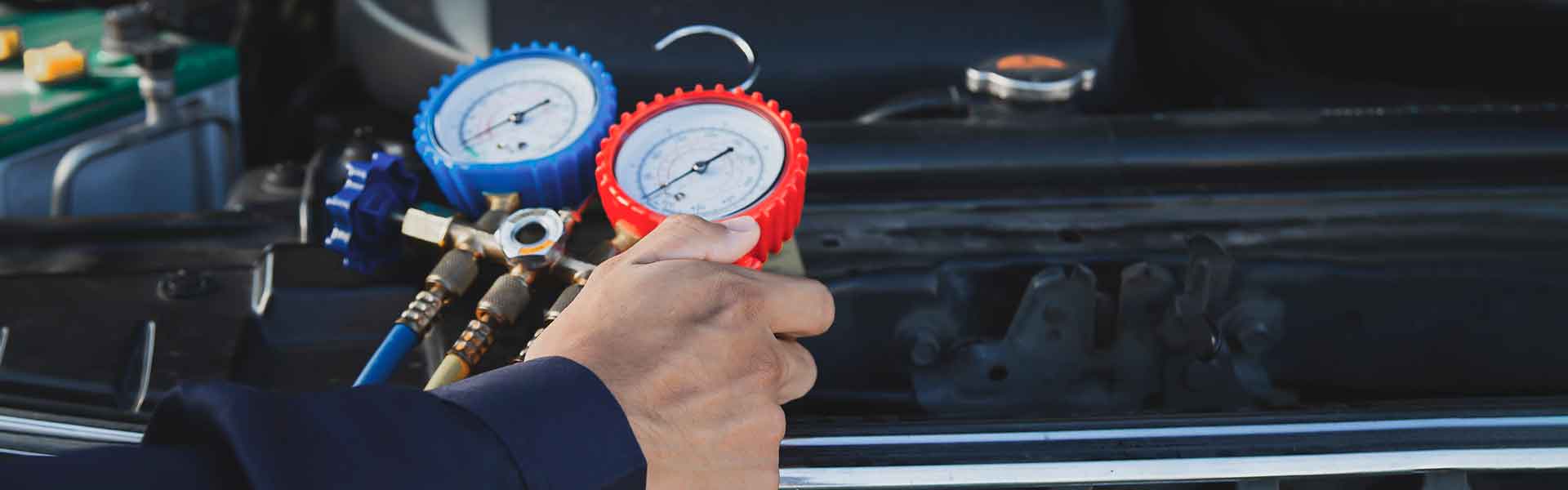
- We check high and low side static pressures with manifold gauges to see whether the system is low on R-134a or R-1234yf refrigerant, overcharged, or blocked.
- We inspect for oily residue at the condenser, compressor shaft seal, and line fittings – a UV dye trace confirms slow leaks common on high-mileage LX-platform cars.
- We command the compressor clutch and blend doors through the scan tool to isolate a stuck actuator, a frequent culprit behind one-side-cold complaints on Grand Cherokee and Durango.
- We road test to confirm cooling under load and listen for compressor bearing noise or clutch chatter.
Once we know whether it's a leak, an electrical fault, or a failed component, we lay out a clear repair plan and quote before any work begins – no surprises.
Air Conditioning AC Repair on Dodge: Repair vs. Replacement
Not every warm-air complaint means a new compressor. We match the fix to the actual failure.
- Genuine repair: A slow leak at an O-ring or Schrader valve, a low charge, or a sticking blend-door actuator – these are single-part or seal-and-recharge jobs that leave the rest of the system intact.
- Partial replacement: A failed compressor clutch coil on some LX cars can sometimes be addressed without swapping the whole compressor, or a leaking condenser can be replaced while the good compressor and evaporator stay in place.
- Full replacement: When a compressor grenades internally, it sends metal debris through the lines. On Dodge V6 and HEMI applications that usually means replacing the compressor, condenser, orifice tube or expansion valve, and flushing the system to protect the new parts.
Cost is the tiebreaker when a major repair approaches replacement value, and contamination is the safety call – reusing a fouled system just kills the new compressor. We walk you through each option, what it protects, and what it costs, so you decide with the full picture instead of being pushed toward the biggest bill.
How to Make Your Dodge Air Conditioning AC Repair Last Longer
A few habits keep a repaired Dodge A/C system cold for the long haul and help preserve warranty coverage and resale value.
- Run it year-round: Use the A/C or defrost setting monthly, even in Denver winters, to keep the compressor seals lubricated and prevent them from drying out.
- Ease the initial load: Crack the windows to vent heat before switching the A/C to max on a hot day so the compressor isn't fighting a superheated cabin.
- Replace the cabin air filter on schedule – a clogged filter starves airflow and makes the system work harder. This is a safe DIY on most Chargers, Durangos, and RAM trucks.
- Listen and watch: Note new clutch chatter, weaker airflow, or a musty smell early, and check for green or oily residue near the front of the engine bay.
Insist on the correct OEM refrigerant – R-134a on older platforms, R-1234yf on newer Dodge models – along with the specified PAG oil charge and Mopar-grade components. Keep HVAC software current during service visits, and follow Dodge's maintenance intervals. Leave recharging, leak repair, and compressor work to the shop, since improper charging damages the system and mishandled refrigerant is a safety hazard.
What to Expect When You Bring Your Dodge In
Warm air blowing when you expect cold, a compressor that won't engage, or that faint musty smell from the vents – those are the complaints we hear most from Dodge owners. Here's how your visit unfolds:
- Drop-off or appointment – Schedule ahead or leave the vehicle with us. Shuttle and loaner options are available so you're not stranded, and after-hours key drop keeps things flexible around your workday.
- Initial inspection – We connect our HVAC gauges, check static and running pressures, and scan the HVAC and body control modules for actuator and blend-door faults common on Charger, Challenger, Durango, and Ram platforms.
- Written estimate – You get a clear breakdown of what we found and what it takes to fix it before any work starts. No surprise add-ons.
- Communication during the work – We text or call with updates and photos, and we ask before moving forward on anything beyond the approved scope.
- Pickup walkthrough – We show you the replaced parts, explain the repair, and answer questions.
Leave personal items in the cabin if you like – we work around them. Before you drive off, we verify vent temperatures, run a road test, and re-scan for stored codes. If something feels off afterward, bring it back and we'll recheck it.
Why Choose Elevation Auto Repair for Dodge Air Conditioning AC Repair
Dodge A/C problems have patterns, and we know them. Rear-air Durangos and Grand Caravans hide leaks in the auxiliary lines and rear evaporator. LX-platform Chargers and Challengers frequently show blend-door actuator failures and clutch relay issues, while Ram trucks commonly develop condenser leaks and expansion-valve restrictions.
- Brand-specific diagnostics – We pull HVAC and BCM codes with scan tools that read Dodge-specific data, and we cross-check known TSBs and software updates that address compressor cycling and blend-door calibration.
- Correct refrigerant handling – We identify R-134a versus R-1234yf systems on newer models and evacuate, weigh, and recharge to factory spec rather than guessing by pressure alone.
- End-to-end ownership – The same shop diagnoses the fault, performs the repair, and verifies the fix with a road test and re-scan.
Using OEM-grade components and factory procedures protects your warranty coverage and helps hold resale value. You get one shop for everything – A/C today, brakes or an oil change tomorrow – with straight answers and repairs built to last through Denver summers.
Our Dodge Services
- Battery Repair Replacement
- Brake Repair & Brake Fluid Change
- Check Engine Light Diagnostics
- Clutch Repair & Replacement
- Coolant Leak Repair
- Cooling System Repair
- Drive Shaft Repair
- Engine Repair
- Exhaust & Catalytic Converter Repair
- Head Gasket Repair & Replacement
- Oil Change
- Oil Leak Repair
- Scheduled Service Maintenance
- Steering Repair
- Suspension Repair
- Cambelt Timing Belt Replacement
- Transmission Repair
- Tune Up
- Wheel Alignment