Dodge Oil Leak Repair at Elevation Auto Repair
Dodge's HEMI and Pentastar engines share a reputation for stout performance, but their gasket materials and case designs age in predictable ways. Chasing a leak on a 5.7L HEMI or a 3.6L Pentastar means knowing exactly where these platforms weep before oil ever hits your driveway.
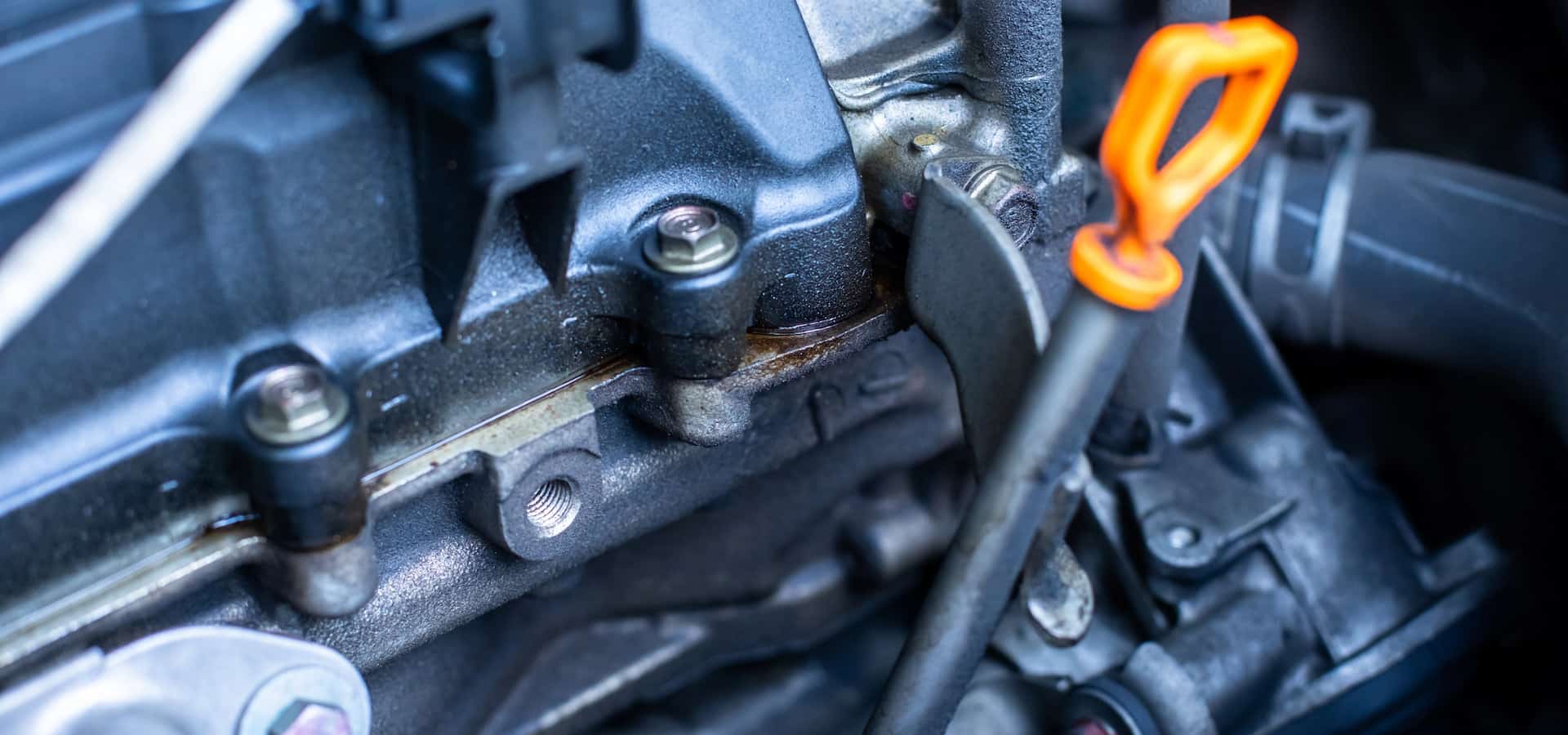
Oil leak repair is more than swapping a valve cover gasket. On the Pentastar, the oil filter housing is molded plastic and cracks with heat cycling – a leak there mimics a rear main and gets misdiagnosed constantly. On the HEMI, the timing cover, oil pan rail, and rear main each have their own torque sequence and RTV requirements. A generic shop reuses old fasteners and skips the FCA-specified sealant cure time; that's how comebacks happen.
We UV-dye trace, pressure-check, and confirm the actual source before recommending anything. Our technicians follow the Mopar torque specs and staged tightening patterns that keep aluminum covers from warping.
- Precise source identification with dye tracing – no guessing, no parts-cannon repairs
- OEM-grade gaskets, seals, and Mopar-spec sealants applied correctly
- Fast diagnosis and turnaround so you're back on the road quickly
- Clear explanation of what leaked, why, and what we did about it
Symptoms – How to Know You Need This Service
Dodge oil leaks rarely announce themselves loudly, so the early clues matter. Here's what drivers typically notice before things get worse.
- A burning-oil smell after highway driving as leaks drip onto hot exhaust manifolds
- Dark spots or puddles under the front of the vehicle, often centered on Pentastar models near the oil filter housing
- Blue-tinged smoke from under the hood at stoplights
- Oil pooling in spark plug tube wells on HEMI engines, sometimes triggering a rough idle or misfire code
- The oil pressure or low-oil warning light illuminating on the cluster
- Visibly low dipstick readings between changes with no visible smoke from the tailpipe
- A slick, gritty film coating the underside of the engine or front subframe
Schedule soon for minor seepage or that faint burning smell. Stop driving immediately if the oil pressure light comes on, you see oil actively streaming, or the level drops fast – running a HEMI or Pentastar low on oil risks bearing and timing chain damage. Get it towed rather than gamble on the drive over.
Common Oil Leak Repair Issues on Dodge Vehicles
Dodge oil leaks tend to cluster around a handful of predictable spots depending on engine family and mileage. Here are the patterns we see most often on Denver-area Dodges:
- Pentastar 3.6L (2011+ Charger, Challenger, Journey, Durango) oil filter housing: Early housings were plastic and crack with heat cycling, dumping oil down the front of the block and often getting mistaken for a valve cover leak. The updated aluminum housing is the correct fix.
- 5.7L / 6.4L HEMI valve cover gaskets: The rubber gaskets harden over time and seep near the rear of the heads, dripping onto the exhaust manifolds – that's the burning-oil smell many HEMI owners notice first.
- HEMI rear main seal weep: Higher-mileage 5.7L engines develop rear main seepage that shows up as drips near the bellhousing, sometimes confused with a transmission leak.
- Oil pan gasket and RTV seams: Common across HEMI and Pentastar platforms, especially where thermal cycling breaks down the factory sealant over years of Colorado temperature swings.
- Cummins 6.7L (Ram 2500/3500) front and rear crank seals: Diesel front timing cover and rear main seals weep with age and hard use, often alongside a leaking turbo drain tube.
- Camshaft position sensor and cam adjuster o-rings on the 3.6L: Small o-rings dry out and leak oil that can migrate into wiring connectors.
Which Dodge Models We See for Oil Leak Repair
We work on the full modern Dodge lineup and the platforms they share with Chrysler and Jeep. Find your vehicle below to see where leaks commonly originate.
- Charger & Challenger (LX/LD, LA, 2006–present) – 5.7L, 6.4L 392, and 6.2L Hellcat HEMIs; watch for oil pan rail, timing cover, and rear main seepage
- Durango (WD, 2011–present) – Pentastar 3.6L and 5.7L HEMI; oil filter housing cracks are a frequent Pentastar culprit
- Grand Caravan (RT, 2011–2020) – 3.6L Pentastar; oil cooler and housing leaks are the usual suspects
- Journey (2009–2020) – 3.6L Pentastar and earlier 2.4L; valve cover and housing seepage common
- Ram 1500 (DS/DT) – 5.7L HEMI and 3.6L eTorque; timing cover, oil pan, and rear main are typical
- Dart (PF, 2013–2016) – 2.0L and 2.4L Tigershark; valve cover and front crank seal leaks
Hellcat and 392 Scat Pack variants get extra attention around the supercharger and dry-sump-adjacent seals where added heat accelerates gasket wear. For older pre-2005 Dodge platforms and diesel Cummins-specific work, reach out first so we can confirm we're the right fit before you make the trip.
Dodge builds engines with real personality – the 5.7L and 6.4L HEMI, the Pentastar 3.6L V6, and the turbo 2.0L found in newer Hornets. Each of these has its own oil-sealing quirks, and knowing where a given platform tends to weep is what separates a fast diagnosis from a week of guesswork. At Elevation Auto Repair, we get Dodge oil leaks identified quickly and sealed correctly the first time.
Causes & Risks – What Happens if Ignored
Most Dodge oil leaks trace back to heat, age, and the dry high-altitude climate around Denver, which is hard on rubber gaskets and RTV seams. Add stop-and-go driving and towing loads, and factory seals give up sooner than they would in milder conditions.
A small seep rarely stays small. Oil that drips onto hot exhaust or belts creates its own chain of problems.
- Cracked Pentastar oil filter housing left unaddressed can drop oil pressure and starve bearings if it fails outright.
- HEMI valve cover oil onto the exhaust manifold leads to smoke, odor, and eventually degraded spark plug tube seals and ignition misfires.
- Oil contaminating the serpentine belt causes slippage, squeal, and possible belt failure – which kills the water pump and alternator drive.
- Ignored rear main seepage can saturate the clutch or contaminate the flexplate area and require far more labor to clean up later.
- Chronic low oil level from an unwatched leak risks accelerated wear on lifters, cam phasers, and bearings.
What starts as a gasket seep becomes a multi-system repair once oil reaches belts, sensors, and the exhaust. We'd rather catch it early and keep you moving.
Safety Impact – Why Oil Leak Repair Matters
Oil leaks are not just a maintenance nuisance on a Dodge – they can compromise systems you rely on to stop and steer.
- Oil on the serpentine belt can disable power steering assist and the water pump, making the vehicle harder to control and prone to overheating.
- Oil dripping on hot exhaust manifolds is a genuine fire risk, especially under a loaded engine bay.
- Contaminated wiring connectors on the 3.6L can throw faults that affect engine management and stability-related sensors.
- Sudden oil-pressure loss from a failed housing or seal can leave you stranded in traffic.
Stop driving now if you see smoke from the engine bay, smell burning oil, or a warning light for oil pressure appears. Schedule soon if you notice small spots on the driveway, a faint oil smell after driving, or slightly low oil at checks. Addressing a known leak before it causes a breakdown also keeps you clear of avoidable liability if an oil-slicked belt or fire leads to an incident.
How Dodge Oil Leak Repair Actually Works
Sealing a Dodge oil leak means finding the true source first, then following the platform's specific gasket, torque, and sealant procedures. We often add UV dye and run the engine to trace the exact origin, since a top-end seep can mimic a lower leak once oil spreads across the block.
Dodge design choices shape how the repair has to be done:
- Pentastar oil filter housings require the updated aluminum unit with correct o-ring seating and torque – reusing a cracked plastic housing just repeats the failure.
- HEMI valve covers use precise bolt-torque sequences and integrated spark plug tube seals that must be handled together to seal properly.
- RTV-sealed oil pans and covers demand the correct FCA-spec sealant, clean mating surfaces, and cure time before refilling.
- Cummins crank seals need proper installation depth and often O
Dodge's Pentastar 3.6L V6 and the HEMI 5.7L both have well-documented oil leak patterns that a shop sees week after week – oil cooler housing seepage on the Pentastar, valve cover gasket weeping on the HEMI, and rear main seal leaks on higher-mileage Chargers, Challengers, and Ram trucks. Knowing where a specific engine tends to fail lets us find the source fast instead of guessing.
How We Diagnose Oil Leak Repair Issues on Dodge
Oil leaks hide behind splash shields, drip downstream, and mimic each other. Our process pins the real source before any parts come off.
- Scan first. We connect a factory-capable scan tool (wiTECH-level access) to pull codes and check for related faults – oil pressure sensor readings, engine oil temperature, and any low-oil-level warnings on Pentastar and HEMI platforms.
- Cold visual inspection. We lift the vehicle and trace oil trails from the highest dry point down, checking common Dodge culprits: oil cooler housing/adapter on the 3.6L, valve cover gaskets, the oil filter housing, and the rear main seal.
- UV dye and degrease. When the origin is ambiguous, we clean the area, add UV dye, and run the engine to isolate a weeping gasket from a leaking seal.
- Road test and pressure check. A short drive under load reveals leaks that only appear at operating temperature and oil pressure.
- Measure and confirm. We verify oil level, condition, and whether coolant intrusion is present – a telltale sign of a failed 3.6L oil cooler.
From there you get a plain-language explanation of the source, the parts involved, and a clear repair plan and quote before we turn a wrench.
Oil Leak Repair on Dodge: Repair vs. Replacement
Not every leak means a big job. We match the fix to the failure.
- Genuine repair. A weeping valve cover gasket on a HEMI, a loose oil filter housing, or seepage from a drain plug or oil pan bolt often needs only a new gasket, reseal, or proper torque – the surrounding assembly stays put.
- Partial replacement. The Pentastar oil cooler housing is a common example. When the plastic housing cracks or its gaskets fail, we replace that unit (often upgrading to the revised design) while keeping the cooler lines and surrounding components.
- Full replacement. A leaking rear main seal on a high-mileage Charger or Ram may require transmission removal, so if the flexplate, seal surface, or related parts show cascading wear, replacing everything together makes more sense than opening the job twice.
We lay out each option side by side – what it costs, how long it lasts, and the trade-offs – so you decide. We never push the priciest route when a targeted repair holds up.
How to Make Your Dodge Oil Leak Repair Last Longer
A clean reseal lasts far longer when the engine isn't fighting heat, pressure, and neglected fluids.
Driving and Load Habits
- Let the engine reach operating temperature before hard acceleration – cold oil stresses fresh gaskets.
- Avoid extended idling in Denver summer heat, which raises oil temps and pressure on seals.
- Ease off heavy towing loads in a Ram until a new seal has fully cured.
Owner Maintenance
- Check the driveway for fresh spots and glance at the oil level monthly.
- Watch for the oil pressure light or a burning-oil smell and report changes early.
- Keep up with Dodge's recommended oil change intervals – dirty, overheated oil is what killed the original gasket.
Brand-Specific Care
- Use the correct SAE 0W-20 or 5W-20 spec oil for your Pentastar or HEMI and OEM-quality filters.
- Keep powertrain software current, since updates can refine oil temperature and pressure behavior.
Topping off fluids and visual checks are safe to do yourself. Reseal work, oil cooler replacement, and rear main seal jobs involve torque specs and safety-critical assemblies – leave those to the shop.
What to Expect When You Bring Your Dodge In
Dodge oil leaks rarely announce themselves cleanly. The 5.7L and 6.4L HEMI often weep from the valve cover gaskets and the oil cooler adapter (the plastic housing on 6.4L and 3.6L Pentastar engines is a repeat offender), while the 3.6L Pentastar in Chargers, Challengers, and Journeys is known for oil filter housing cracks and rear main seal seepage. We pin down the exact source before touching a wrench.
- Drop-off or appointment: Schedule ahead or leave it with us. Grab your garage opener and valuables – we'll note personal items and secure the vehicle.
- Initial inspection: We clean, dye-trace, and pressure-check to separate a true leak from residual oil, then trace it to the gasket, seal, or housing at fault.
- Written estimate: You get a clear breakdown of parts and labor before we proceed – no surprise add-ons.
- During the work: We text or call with updates and photos, and we ask before any change to scope.
- Pickup walkthrough: We show you the old parts and explain what we found and fixed.
Loaner and shuttle options help you keep moving, and after-hours pickup is available when your day runs long. Every repair closes with a road test and scan-tool re-check to confirm the leak is gone and no codes remain. If anything feels off afterward, bring it back and we'll re-verify at no run-around.
Why Choose Elevation Auto Repair for Dodge Oil Leak Repair
We treat Dodge oil leaks as a diagnosis problem first, not a parts-swap. Many shops replace a valve cover gasket when the real source is the oil cooler housing above it dripping down. We trace it properly the first time.
- Platform-specific knowledge: We know the Pentastar oil filter housing failures, HEMI valve cover and oil pan gasket weeping, and rear main seal patterns across LX/LD Chargers, LC Challengers, and RT/JC Durangos and Journeys.
- TSB and software awareness: We check for applicable Dodge service bulletins and updated part revisions – plastic housings replaced with upgraded designs, for example – so the fix lasts.
- OEM-correct procedures: Torque specs and sealant applications matter on aluminum HEMI covers and Pentastar housings. We follow factory sequences and use the right RTV where called for.
You get one shop owning the whole job – diagnosis, repair, and post-repair verification – as your Denver dealership alternative. Fast, honest work that keeps your Dodge on the road and off the driveway drip pan.
Our Dodge Services
- Air Conditioning AC Repair
- Battery Repair Replacement
- Brake Repair & Brake Fluid Change
- Check Engine Light Diagnostics
- Clutch Repair & Replacement
- Coolant Leak Repair
- Cooling System Repair
- Drive Shaft Repair
- Engine Repair
- Exhaust & Catalytic Converter Repair
- Head Gasket Repair & Replacement
- Oil Change
- Scheduled Service Maintenance
- Steering Repair
- Suspension Repair
- Cambelt Timing Belt Replacement
- Transmission Repair
- Tune Up
- Wheel Alignment