Dodge Brake Repair & Brake Fluid Change at Elevation Auto Repair
Dodge brakes take a beating, especially the heavy Hemi-powered platforms hauling weight around Denver's grades and stop-and-go traffic. Getting the job done right means matching pad compounds, rotor specs, and fluid to how the vehicle was engineered – not just slapping on whatever fits the caliper.
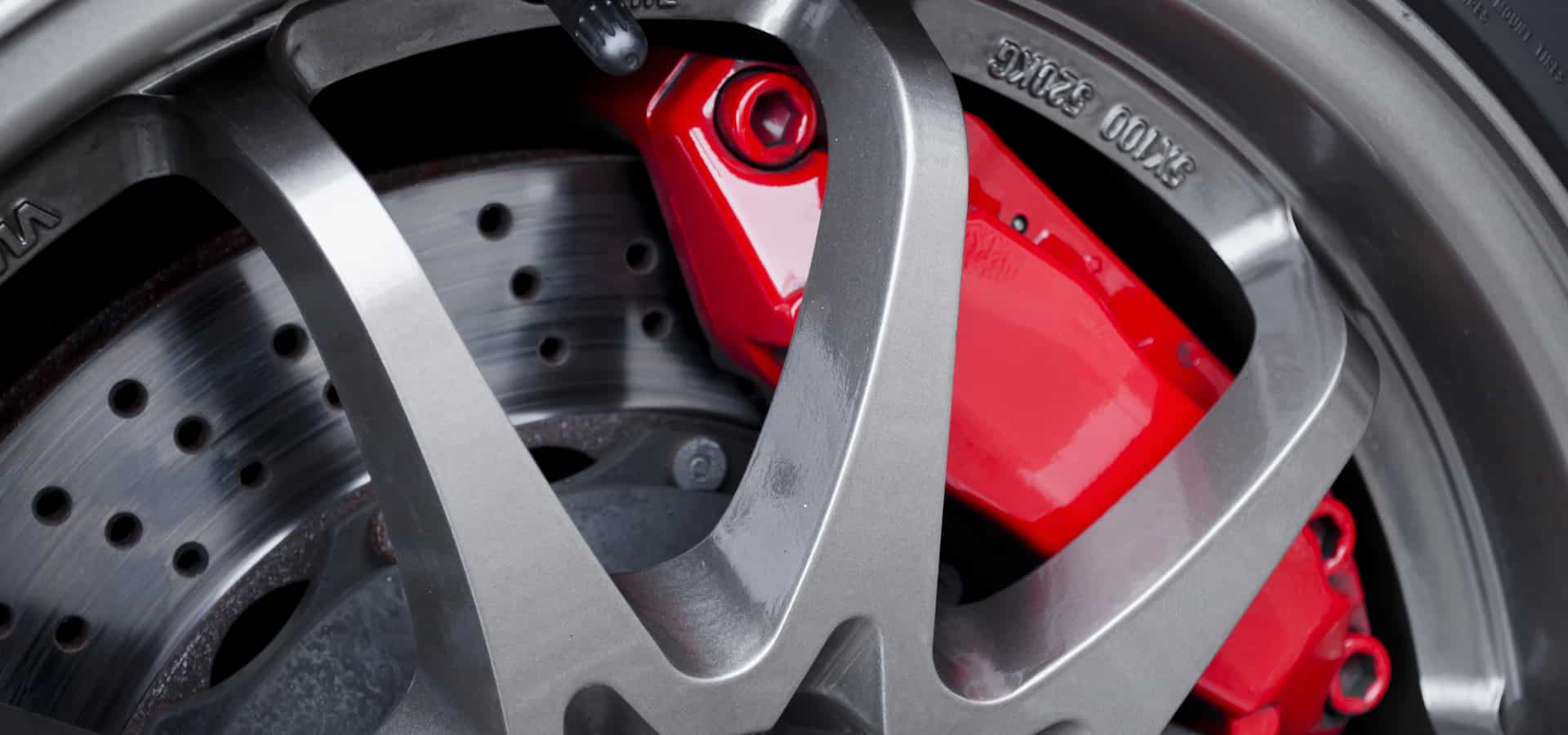
Brake repair covers pads, rotors, calipers, hoses, and the hydraulic fluid that moves it all. On a Dodge, the details matter. Late-model Charger, Challenger, and Durango (LX/LD/WD platforms) use electronic parking brakes that require a scan tool to retract the rear caliper pistons – force them by hand and you damage the actuator motor. Brembo four-piston setups on SRT and R/T trims demand correct pad bedding and even torque across all fasteners to avoid pad taper and pedal pulsation.
Brake fluid absorbs moisture over time, which drops the boiling point and leads to a soft pedal under hard use. We flush to the DOT 3 or DOT 4 spec your Dodge calls for and bleed the ABS module properly so no old fluid hides in the system.
- Electronic parking brake service done with proper scan-tool retraction
- OEM-matched pads, rotors, and fluid for your specific trim
- Full hydraulic flush including ABS module bleeding
- Honest inspection – we replace what's worn, not what pads your invoice
Symptoms – How to Know You Need This Service
Brakes give plenty of warning before they fail. Here's what Dodge drivers tend to notice first:
- Grinding or metal-on-metal noise – pads are worn to the backing plate and scoring rotors. Stop driving and schedule immediately.
- Squealing on light braking – wear indicators contacting the rotor, telling you pads are near the end.
- Soft or spongy pedal – often moisture-saturated fluid or air in the lines. If the pedal sinks to the floor, do not drive.
- Pulsing or vibration through the pedal or steering wheel – warped or unevenly worn rotors, common on heavier LX and Durango platforms.
- Pulling to one side when braking – a sticking caliper or collapsed brake hose.
- ABS, brake, or traction control warning light – have it scanned before it escalates.
- Burning smell after stops – overheated brakes or a caliper not releasing. Get it looked at soon.
- Longer stopping distances – worn friction material or fluid past its service life.
Any grinding, a pedal that drops, or a smell of hot metal means you should stop driving and call us. Squeaks, mild vibration, or a warning light mean schedule soon before the repair grows.
Common Brake Repair & Brake Fluid Change Issues on Dodge Vehicles
Dodge platforms share braking hardware across trucks, muscle cars, and family haulers, and each has its own wear signature. Here are the patterns we see most often at Elevation Auto Repair, then how we correct them.
- Warped front rotors on 2011-2023 Charger/Challenger (LX/LD platform): Heavier curb weights and aggressive OEM pad compounds lead to rotor thickness variation, producing a steering-wheel shimmy under braking. Hemi-equipped trims accelerate this because of the added front-end mass.
- Rear caliper seizing on 2009-2018 Ram 1500 (DS/DT): Slide pins and caliper bores corrode from road salt and Colorado winter brine, causing uneven pad wear and a dragging rear brake that overheats one side.
- Neglected brake fluid on 2007-2017 Jeep-derived and Dodge Journey/Grand Caravan: DOT 3/DOT 4 fluid absorbs moisture, dropping the boiling point and leaving a spongy pedal, especially noticeable on I-70 mountain descents.
- ABS module and wheel speed sensor faults on Durango (WD/WK platform): Cracked sensor tone rings and connector corrosion trigger ABS and traction lights, disabling stability control features.
- Electronic parking brake actuator issues on 2015+ Charger/Challenger/Durango: The rear EPB motors bind or throw faults when calipers are serviced without retracting them electronically first.
- Premature pad wear on heavily loaded Ram ProMaster: Front-heavy commercial use chews through pads and glazes rotors far quicker than passenger trims.
Which Dodge Models We See for Brake Repair & Brake Fluid Change
We service the full modern Dodge lineup plus older trucks and SUVs. Find your platform below:
- Charger (LX/LD, 2006–2023) – R/T, GT, and Scat Pack; SRT/Hellcat trims run Brembo six-piston fronts that need precise pad matching.
- Challenger (LC/LA, 2008–2023) – same Brembo considerations on SRT, 392, and Hellcat variants; base and R/T use single- and dual-piston setups.
- Durango (WD, 2011–present) – electronic parking brake requires scan-tool retraction; SRT models carry upgraded Brembo hardware.
- Grand Caravan / Journey – common for pad, rotor, and fluid service; watch for sticking rear calipers on higher-mileage examples.
- Ram 1500 (DS/DT, 2009–present) – heavy front rotors and larger fluid capacity; we handle both classic and DT-generation trucks.
- Dart (PF, 2013–2016) – smaller platform with straightforward brake service.
Any Dodge with the electronic parking brake gets the correct retraction procedure so we don't cook the actuator. Brembo-equipped SRT and Hellcat cars get careful even torque and proper bedding to prevent judder. We work on most Dodge models from the mid-2000s forward – if you've got something older or unusual, call and we'll tell you honestly whether it's a fit.
Causes & Risks – What Happens if Ignored
Most Dodge brake trouble traces back to Denver's climate and terrain: winter road salt corrodes calipers and lines, long mountain grades cook fluid, and high-altitude stop-and-go traffic hammers pads. Age and moisture do the rest, since brake fluid degrades on a schedule whether the vehicle is driven hard or not.
Small symptoms rarely stay small. A light squeal today becomes a metal-on-metal problem that takes out rotors, and a soft pedal you tolerate on flat roads can fade entirely on a long descent.
- Worn pads left too long score and gouge rotors, turning a pad-only job into pads plus rotors.
- A seized rear caliper on a Ram 1500 overheats, warps its rotor, and can boil the fluid at that corner.
- Moisture-laden fluid corrodes ABS valve bodies and caliper bores from the inside, adding hydraulic repairs.
- Ignoring a spongy pedal risks total brake fade on grades like Floyd Hill and Genesee.
- Unaddressed wheel speed sensor faults disable ABS and stability control exactly when you need them on ice.
Catch these early and the fix stays straightforward. Wait, and hydraulic components, sensors, and rotors join the bill.
Safety Impact – Why Brake Repair & Brake Fluid Change Matters
Brakes on a modern Dodge are tied into far more than the pedal. When hydraulics or sensors degrade, the ABS, traction control, electronic stability control, and even hill-start assist lose the inputs they depend on.
Contaminated fluid that boils under heavy braking causes pedal fade, while a failing wheel speed sensor can make the ABS pump cycle unpredictably or shut stability control off entirely on a Charger or Durango.
- Stop driving now: pedal sinks to the floor, grinding metal-on-metal, brake warning light with fluid loss, or smoke and burning smell from a wheel.
- Schedule soon: light squeal, mild shimmy under braking, ABS or traction light without a hard pedal, slightly longer stopping distances.
There is also a liability angle. If a known-worn brake component or a documented fluid service interval is neglected and contributes to a collision, that omission can affect insurance and fault findings. Keeping brake service current protects both your safety and your standing after an incident.
How Dodge Brake Repair & Brake Fluid Change Actually Works
Your Dodge uses a hydraulic system where the master cylinder pushes fluid through the ABS module to each caliper, clamping pads against the rotor. On newer models, the rear brakes are managed by an electronic parking brake motor rather than a cable, which changes how the job has to be done.
That electronic layer is the key difference from generic brake work. Retracting an EPB caliper or bleeding through the ABS module requires factory-aligned software and procedures, not just a wrench.
- Electronic parking brake: 2015+ Charger, Challenger, and Durango rear calipers must be placed in service mode with a scan tool before pads are changed, then recalibrated after.
- ABS module bleeding: Full fluid flushes on ABS-equipped Dodge platforms use a bidirectional scan tool to cycle the pump valves and purge trapped air.
- Torque and sequence specs: Caliper bracket and guide-pin fasteners follow Dodge-specified torque values to prevent warping and pin bind.
- Sensor calibration: Wheel speed sensor and stability control faults are cleared and verified against live data, not just reset.
We use modern diagnostic equipment and OEM-aligned procedures so the brakes, ABS, and stability systems all leave calibr
How We Diagnose Brake Repair & Brake Fluid Change Issues on Dodge
A spongy pedal, a pulsing steering wheel, or a grinding noise on your Ram, Charger, Durango, or Challenger tells us where to start – and we back that up with measurement instead of guesswork. Here's how our technicians work through it.
- Verify the complaint on a road test: We reproduce the pull, vibration, or soft pedal and note when it happens – light braking, hard stops, or only when warm.
- Scan with wiTECH-compatible tooling: Dodge ABS modules store fault codes for wheel speed sensors, the pump motor, and pressure sensors. This flags issues like faulty tone rings or an ABS module fault common on late-model Charger/Challenger LX/LD platforms.
- Measure rotor thickness and runout: We mic each rotor against Dodge minimum spec and check for the pedal pulsation that plagues heavier Durango and Ram 1500 front rotors.
- Inspect pads, calipers, and hoses: We look for uneven pad wear, seized slide pins, and swollen flex lines that cause dragging or a low pedal.
- Test brake fluid condition: We check moisture content with a fluid tester, since water-saturated DOT 3/DOT 4 lowers the boiling point and softens the pedal.
Once we have the data, you get a plain-language explanation of what's worn, what's still good, and a clear quote before any work begins – no surprise add-ons.
Brake Repair & Brake Fluid Change on Dodge: Repair vs. Replacement
Not every brake concern means new everything. We match the fix to what the parts actually need.
- Genuine repair: A brake fluid flush, cleaning and re-lubricating sticky caliper slide pins, or replacing a single leaking flex line often restores full braking on a Charger or Journey without touching the rest of the assembly.
- Partial replacement: Worn pads with rotors still above minimum thickness get new pads and hardware only. On Ram 1500 trucks, we frequently replace front pads and resurface or swap rotors while keeping serviceable calipers.
- Full replacement: When wear cascades – scored rotors below spec, seized calipers, and metal-on-metal pads on a Durango – piecemeal repair costs approach a complete axle job. Safety-critical damage like a collapsed caliper piston or contaminated fluid throughout the system also calls for full service.
We show you the measurements and the worn parts, then lay out the options ranked by cost and longevity. You decide – we never default to the biggest ticket.
How to Make Your Dodge Brake Repair & Brake Fluid Change Last Longer
Denver's hills, stop-and-go traffic, and temperature swings work brakes hard. A few habits stretch the life of every component.
Driving habits that help
- Coast to slow down before braking instead of riding the pedal down long grades – heavy Durango and Ram loads build serious heat.
- Avoid two-footed driving that lightly drags the brakes.
- Downshift or use tow/haul mode when loaded or descending to reduce brake heat and fluid boil.
Owner maintenance you can do
- Peek through the wheel spokes for pad thickness and rotor scoring.
- Listen for new squeals, grinding, or a pedal that sinks – catch issues early.
- Watch the brake and ABS warning lights and check the fluid reservoir level.
Brand-specific care
- Use the DOT 3 or DOT 4 fluid Dodge specifies, and flush on the recommended interval to fight moisture and corrosion in the ABS unit.
- Keep ABS and brake module software current, which we handle during service.
- Stick with quality OEM-equivalent pads and rotors sized for your platform's weight.
Visual checks and topping off fluid are fine to DIY. Leave caliper service, fluid flushing, and rotor work to us – these are safety-critical, and we do them to Dodge spec so you stay confidently on the road.
What to Expect When You Bring Your Dodge In
Spongy pedal, a pulsing wheel under braking, or a fluid warning on your Charger, Durango, or Ram? Here's how we move you from symptom to fixed.
- Drop-off or appointment – Schedule ahead or bring it by. Tell us what you're feeling: grinding, longer stops, a soft pedal that sinks, or a pull to one side.
- Initial inspection – We measure pad thickness, rotor runout and minimum thickness, check caliper slide pins for seizing, and test brake fluid moisture content with a refractometer.
- Written estimate – You get a clear breakdown of what needs attention now versus what to watch, with no padding for repairs your Dodge doesn't need.
- Communication during the work – We call or text before any added labor, so nothing happens without your approval.
- Pickup walkthrough – We show you the old pads and rotors and explain the fluid flush and any software or reset steps performed.
Loaner and shuttle options help you stay on schedule, and after-hours pickup is available when your day runs long. Leave personal items in the cabin – we work around them.
Every job ends with a road test and a scan-tool re-check of the ABS module. If something feels off afterward, bring it back and we'll re-verify at no runaround.
Why Choose Elevation Auto Repair for Dodge Brake Repair & Brake Fluid Change
Dodge brake work has real quirks, and we handle them from diagnosis through post-repair verification – no farming out, no guesswork.
- Platform-specific knowledge – We see warped rotors and premature pad wear on WK2 Grand Cherokee and Durango, rear caliper drag on LX/LD Charger and Challenger, and heavy front loading on DT/DS Ram 1500 trucks.
- Electronic parking brake procedures – Later Charger, Challenger, and Grand Cherokee models require putting the EPB into service mode with a scan tool before rear pad service. We follow that step so the actuator isn't damaged.
- TSB and software awareness – We check for Dodge brake-related bulletins and ABS module updates that address pedal feel and noise complaints.
- Correct fluid and flush – We flush to the DOT 3 or DOT 4 spec your model calls for and bleed in the factory sequence to clear moisture-laden fluid that corrodes ABS components.
We torque caliper brackets and wheels to Dodge specs and verify the whole system with a road test and ABS scan before your truck or car leaves. That end-to-end ownership is what keeps your brakes reliable well past the repair.
Our Dodge Services
- Air Conditioning AC Repair
- Battery Repair Replacement
- Check Engine Light Diagnostics
- Clutch Repair & Replacement
- Coolant Leak Repair
- Cooling System Repair
- Drive Shaft Repair
- Engine Repair
- Exhaust & Catalytic Converter Repair
- Head Gasket Repair & Replacement
- Oil Change
- Oil Leak Repair
- Scheduled Service Maintenance
- Steering Repair
- Suspension Repair
- Cambelt Timing Belt Replacement
- Transmission Repair
- Tune Up
- Wheel Alignment