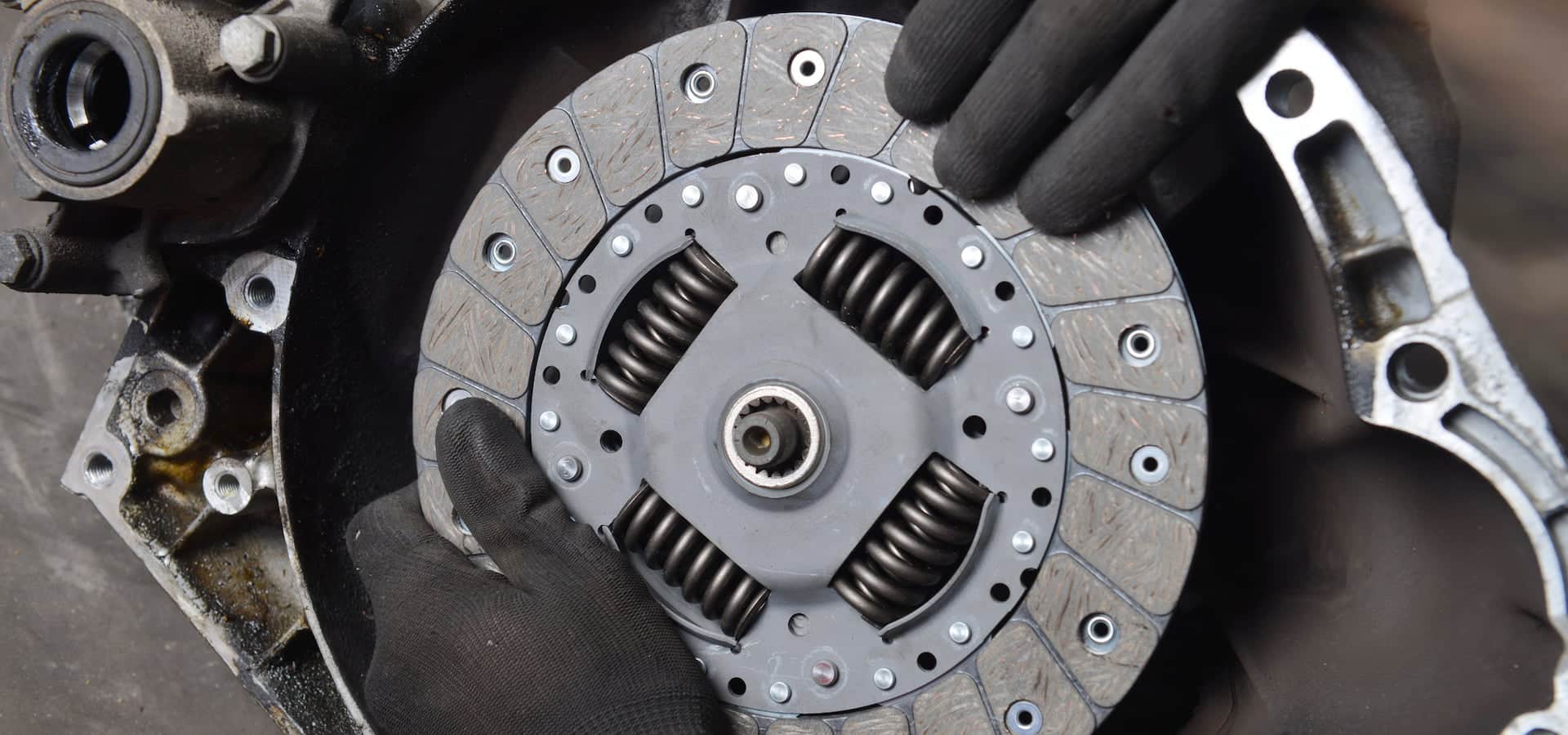
Dodge Clutch Repair & Replacement at Elevation Auto Repair
Dodge manual transmissions live a hard life – Hemi torque, turbocharged Neon SRT-4 power, and the driving style that comes with performance-minded owners all put real stress on the clutch. Replacing one correctly means matching the clutch, pressure plate, flywheel, and hydraulics to how the vehicle is actually driven, not just bolting in the cheapest kit.
Doing this right on a Dodge takes platform knowledge. Many Dodge manuals use a concentric slave cylinder integrated inside the bellhousing, so a leaking or failing slave means the transmission comes back out if it wasn't addressed the first time. Hydraulic clutch systems on the Neon and Dart need proper bleeding to remove all air, and dual-mass flywheels on some diesel and performance applications must be measured against factory runout and wear specs before deciding to resurface or replace.
We use OEM-aligned torque specs on bellhousing and pressure plate fasteners and confirm pilot bearing and release bearing fit for your exact application. Here's what you can expect:
- Inspection of the full clutch assembly – disc, pressure plate, flywheel, and hydraulics – before any parts are ordered
- Concentric slave cylinder replacement recommended whenever the transmission is out
- Flywheel measured and resurfaced or replaced to factory specification
- Clear explanation of your options with no unnecessary add-ons
Symptoms – How to Know You Need This Service
Clutch problems usually build gradually, then reach a point where the vehicle becomes hard or unsafe to drive. On a Dodge, watch for these signs:
- The engine revs climb but the vehicle doesn't accelerate to match – classic clutch slip, most obvious under load or in higher gears
- A high, grabby pedal engagement point that keeps creeping up as the disc wears
- Difficulty getting into gear, or grinding when shifting despite using the clutch fully
- A soft, sinking, or floor-sticking pedal – often a failing master or slave cylinder
- A burning smell after hard driving or hill starts
- Shudder or vibration through the pedal when releasing the clutch, common with worn dual-mass flywheels
- Chirping or rumbling that changes when you press the pedal – a release or pilot bearing warning
If the pedal drops to the floor and won't build resistance, or you can't select gears at all, stop driving and have it towed – you likely have a hydraulic failure. Slip, a rising engagement point, or occasional grinding mean you should schedule soon before the flywheel takes damage.
Common Clutch Repair & Replacement Issues on Dodge Vehicles
Dodge's manual-transmission lineup spans everything from the Neon and SRT-4 to the Viper and heavy-duty Ram 2500/3500 diesels, and each platform wears its clutch differently. Knowing the specific failure path saves guesswork on the bench.
- 2003-2005 Neon SRT-4 (turbo 2.4L): The factory clutch and dual-mass flywheel struggle with even modest boost increases. Owners commonly report chatter, slippage under hard acceleration, and premature disc glazing once the turbo is tuned.
- Ram 2500/3500 Cummins (G56 and NV5600 manuals): Heavy towing loads the clutch hard. The G56 in 2005+ trucks is known for premature release-bearing wear and a heavy pedal caused by the hydraulic concentric slave cylinder (CSC) failing internally.
- 2008-2010 Viper (ZB II, V10): High-torque applications shred worn discs quickly, and the twin-disc setups demand exact clamp-load and runout specs to avoid engagement judder.
- Challenger/Charger 6-speed (Tremec TR-6060): Aggressive launches and clutch-dumping on the 5.7L/6.1L/6.4L HEMI cars lead to burned facings and a spongy pedal from a failing hydraulic master or slave.
- Dakota/Durango manuals: Rear main and input-shaft seal seepage contaminates the friction surface, causing slip and grabbiness that mimics a worn disc.
- Concentric slave cylinder failures across newer platforms: The internal CSC design means a leaking unit soaks the clutch and requires transmission removal even for a "hydraulic" fault.
Which Dodge Models We See for Clutch Repair & Replacement
We regularly service manual-transmission Dodge vehicles across cars and trucks. Find yours below:
- Dodge Neon / SRT-4 (2000-2005) – the turbocharged SRT-4 chews through stock clutches quickly; upgraded discs and pressure plates are common here
- Dodge Dart (2013-2016) – 1.4L MultiAir turbo and 2.0L/2.4L manuals with hydraulic clutch systems that need careful bleeding
- Dodge Charger / Challenger (2008-present) – manual-equipped Hemi and V6 cars using the Tremec TR-6060; high torque makes flywheel and clutch matching important
- Dodge Ram / Ram 2500-3500 (Cummins diesel) – NV5600 and G56 six-speeds with dual-mass flywheels that require measurement before resurfacing
- Dodge Dakota and Durango (manual variants, earlier years) – V6 and V8 trucks with conventional clutch assemblies
- Dodge Viper – high-torque V10 applications; we handle these on a case-by-case basis given specialized parts
Performance and SRT variants often benefit from upgraded components matched to power level, and diesel Ram trucks frequently need dual-mass flywheel decisions made honestly. If you have an automatic-only Dodge, this service won't apply – but we handle transmission work across the board. Not sure what your Ram or Charger uses? Bring it in and we'll confirm.
Causes & Risks – What Happens if Ignored
Most Dodge clutch wear traces back to how the truck or car is used, not just age. Stop-and-go Denver traffic, mountain grade towing with a Cummins, and spirited HEMI driving all accelerate friction loss. Colorado's elevation and heat also work the cooling and hydraulic systems harder than sea-level driving.
A slipping clutch caught early is usually a straightforward disc, pressure plate, and flywheel job. Waiting turns it into something far bigger.
- Ignoring slip for weeks glazes and overheats the flywheel, turning a resurface into a full flywheel replacement.
- A leaking concentric slave cylinder that goes unaddressed contaminates a fresh disc, meaning the transmission comes back out.
- Chattering dual-mass flywheels on SRT-4 and Cummins trucks can fracture, sending debris into the bellhousing.
- Riding a failing release bearing eventually damages the pressure plate fingers and input-shaft splines.
- A worn clutch that won't fully disengage grinds synchros in the TR-6060 or G56, adding a transmission rebuild to the bill.
On the safety side, a clutch that slips on a mountain grade or fails to disengage in traffic leaves you unable to control power delivery – exactly when you need it most. We steer these repairs toward the smallest fix that restores full reliability.
Safety Impact – Why Clutch Repair & Replacement Matters
A failing clutch does more than annoy you – it undermines the control systems your Dodge relies on to move and stop safely. When engagement is unpredictable, throttle response, hill-holding, and traction management all suffer.
- Stop driving now: The pedal goes to the floor with no resistance, the clutch won't disengage to shift, or you smell burning with sudden power loss on a grade.
- Stop driving now: Grinding on every shift or the truck creeping while the pedal is fully depressed.
- Schedule soon: Light slip under hard acceleration, mild chatter on takeoff, or a slowly rising engagement point.
- Schedule soon: A heavier-than-normal pedal or occasional hydraulic sponginess.
On heavy-duty Rams, a clutch that won't hold under a trailer load can surge or lurch, affecting stability and braking distance. A known slave-cylinder or dual-mass defect left unrepaired before an incident can also complicate liability if a failure contributes to a collision. Addressing it promptly keeps you in full command of the vehicle.
How Dodge Clutch Repair & Replacement Actually Works
Your clutch connects engine power to the transmission through a friction disc squeezed between the flywheel and a spring-loaded pressure plate. Pressing the pedal sends hydraulic pressure to a slave cylinder that releases that clamp so you can shift. On most modern Dodge manuals, that slave lives inside the bellhousing as a concentric unit around the input shaft – which is why even a "simple" hydraulic leak means pulling the transmission.
Dodge's implementation adds specifics that generic service can miss:
- Dual-mass flywheels on SRT-4 and Cummins applications require runout and clamp-load checks – a mismatched single-mass conversion changes drivability and NVH.
- Concentric slave cylinders must be bench-bled and installed to precise shim/height specs so pedal travel matches engagement.
- G56 and TR-6060 bellhousing bolts follow specific torque values and sequences to avoid distortion and bearing whine.
- Heavy-duty Ram clutches demand correct pilot-bearing seating and rear-main seal inspection while the transmission
Dodge manual transmissions cover a lot of ground – from the NV3500 and NSG370 five- and six-speeds behind the Dakota and older Rams to the Tremec TR-6060 in the Challenger and Charger, plus the getrag units in the Neon SRT-4 and Caliber SRT-4. Each uses a different clutch actuation setup, and that matters. Many modern Dodge cars run a hydraulic concentric slave cylinder (CSC) integrated with the throwout bearing, so a "simple" clutch job often means dropping the transmission regardless. Knowing the platform quirks before we pull anything apart is what keeps the repair honest and the quote accurate.
How We Diagnose Clutch Repair & Replacement Issues on Dodge
Clutch complaints on a Dodge rarely announce themselves clearly – slipping, chatter, a high engagement point, or a pedal that sinks to the floor all point to different failures. We work through it methodically.
- Interview and history – towing habits, mileage, and whether the pedal changed suddenly (often a hydraulic leak) or gradually (friction wear).
- Scan for related codes – using a Dodge-capable scan tool (wiTECH-level access) we check for clutch pedal position sensor faults, PCM starter-interlock inputs, and any transmission-related DTCs that mimic clutch symptoms.
- Road test – we load the drivetrain in higher gears to confirm slip, feel for release bearing noise, and check engagement height against spec for that platform.
- Hydraulic inspection – on CSC-equipped Chargers, Challengers, and Calibers, we check the master cylinder, line, and reservoir for fluid loss and air.
- Visual and measurement – flywheel condition, fluid contamination, and rear main seal weepage that can foul a fresh clutch.
Once we know whether the issue is friction, hydraulic, or mechanical, we translate it into a clear written plan and quote – so you know exactly what work is needed and why before we start.
Clutch Repair & Replacement on Dodge: Repair vs. Replacement
Not every clutch complaint means a full assembly. We match the fix to the actual failure.
- Genuine repair – a spongy pedal from a leaking master or slave cylinder, or a bled-air condition, can sometimes be corrected by replacing that single hydraulic component and flushing the system, leaving a healthy disc alone.
- Partial replacement – a worn throwout bearing or a hydraulic CSC failure on a Charger or Challenger may only need that part, though because the trans is already out, replacing the disc at the same time is often the smarter long-term move.
- Full replacement – slipping under load, glazed or contaminated friction material, a scored flywheel, or worn pressure plate fingers on a hard-driven SRT-4 or Hemi Challenger calls for a complete kit: disc, pressure plate, release bearing, and flywheel resurfacing or replacement.
When repair cost creeps toward a full kit – and the transmission is already unbolted – we lay out both paths honestly. You get the reasoning and the numbers, not a push toward the priciest option.
How to Make Your Dodge Clutch Repair & Replacement Last Longer
A fresh clutch lasts far longer when the driving and upkeep support it – especially on torque-heavy Hemi and turbocharged Dodge platforms.
Driving habits that help
- Avoid riding the pedal at stoplights – rest your foot on the floor, not the clutch.
- Match revs on downshifts to reduce shock loading, particularly on the TR-6060.
- Ease off aggressive launches and heavy towing until the friction surfaces have bedded in.
- Let the drivetrain warm briefly in Colorado cold before hard use.
Owner maintenance you can safely do
- Check the clutch fluid reservoir level and watch for a dropping level, which signals a hydraulic leak.
- Listen for new chatter, squeal, or a rising engagement point and report changes early.
- Keep an eye on warning lights and address them before they compound.
Brand-specific care
- Use the correct Dodge-spec hydraulic fluid and OEM-grade clutch components – bargain kits often glaze early under Hemi torque.
- Keep PCM and transmission software current, and follow Dodge's published service intervals.
Fluid checks and listening are fine at home. Hydraulic bleeding, CSC work, and anything requiring the transmission to come out belongs with us – it is safety-critical and easy to get wrong.
What to Expect When You Bring Your Dodge In
Dodge clutch work spans a wide range of platforms – from the NV3500 and G56 manual gearboxes in Ram trucks to the Getrag units behind the 2.4L and the SRT4 turbo cars. Each has its own quirks, and our process is built to catch them before parts come off.
- Drop-off or appointment: Schedule ahead or leave it with us. Clear personal items from the cabin – we'll note anything left behind and secure your vehicle.
- Initial inspection: We verify the complaint on a road test, then check for hydraulic clutch failures (a common weak point on Neon/SRT4 and PT Cruiser slave cylinders), disc glazing, worn pressure plate fingers, and pilot bearing noise.
- Written estimate: You get a line-item breakdown covering the clutch kit, flywheel resurfacing or replacement, and any related seals before we proceed – no surprise add-ons.
- Updates during the work: We call or text with findings, especially if we uncover a leaking rear main seal or a scored dual-mass flywheel that should be addressed while the transmission is out.
- Pickup walkthrough: We show you the old parts and explain what we found.
Shuttle and loaner options help keep your day moving, and after-hours pickup is available when your schedule runs late. Before you leave, we road test to confirm smooth engagement and pedal feel, run a scan-tool re-check for stored codes, and invite you back if anything feels off.
Why Choose Elevation Auto Repair for Dodge Clutch Repair & Replacement
Clutch jobs on Dodge platforms reward attention to detail. We track Dodge TSBs and software updates that affect drivability after a clutch replacement, including clutch-position learn procedures on newer manual and dual-clutch applications.
- Platform-specific know-how: Familiarity with G56 dual-mass flywheel wear on Ram Cummins trucks, hydraulic slave cylinder failures on Neon and SRT4 cars, and shift-quality complaints tied to worn concentric bearings.
- OEM-aligned procedures: Proper flywheel surface specs, bolt torque and thread-locker per factory guidance, and correct fluid fill for the hydraulic circuit rather than a generic bleed.
- End-to-end ownership: The same shop that diagnoses your clutch handles the repair and the post-repair verification – no handoffs, no finger-pointing.
You get honest diagnostics that separate a failing clutch from a hydraulic or linkage issue, so you only pay for the work your Dodge actually needs. From the initial road test to the final scan-tool check, we focus on long-term reliability and clear communication every step of the way.
Our Dodge Services
- Air Conditioning AC Repair
- Battery Repair Replacement
- Brake Repair & Brake Fluid Change
- Check Engine Light Diagnostics
- Coolant Leak Repair
- Cooling System Repair
- Drive Shaft Repair
- Engine Repair
- Exhaust & Catalytic Converter Repair
- Head Gasket Repair & Replacement
- Oil Change
- Oil Leak Repair
- Scheduled Service Maintenance
- Steering Repair
- Suspension Repair
- Cambelt Timing Belt Replacement
- Transmission Repair
- Tune Up
- Wheel Alignment