
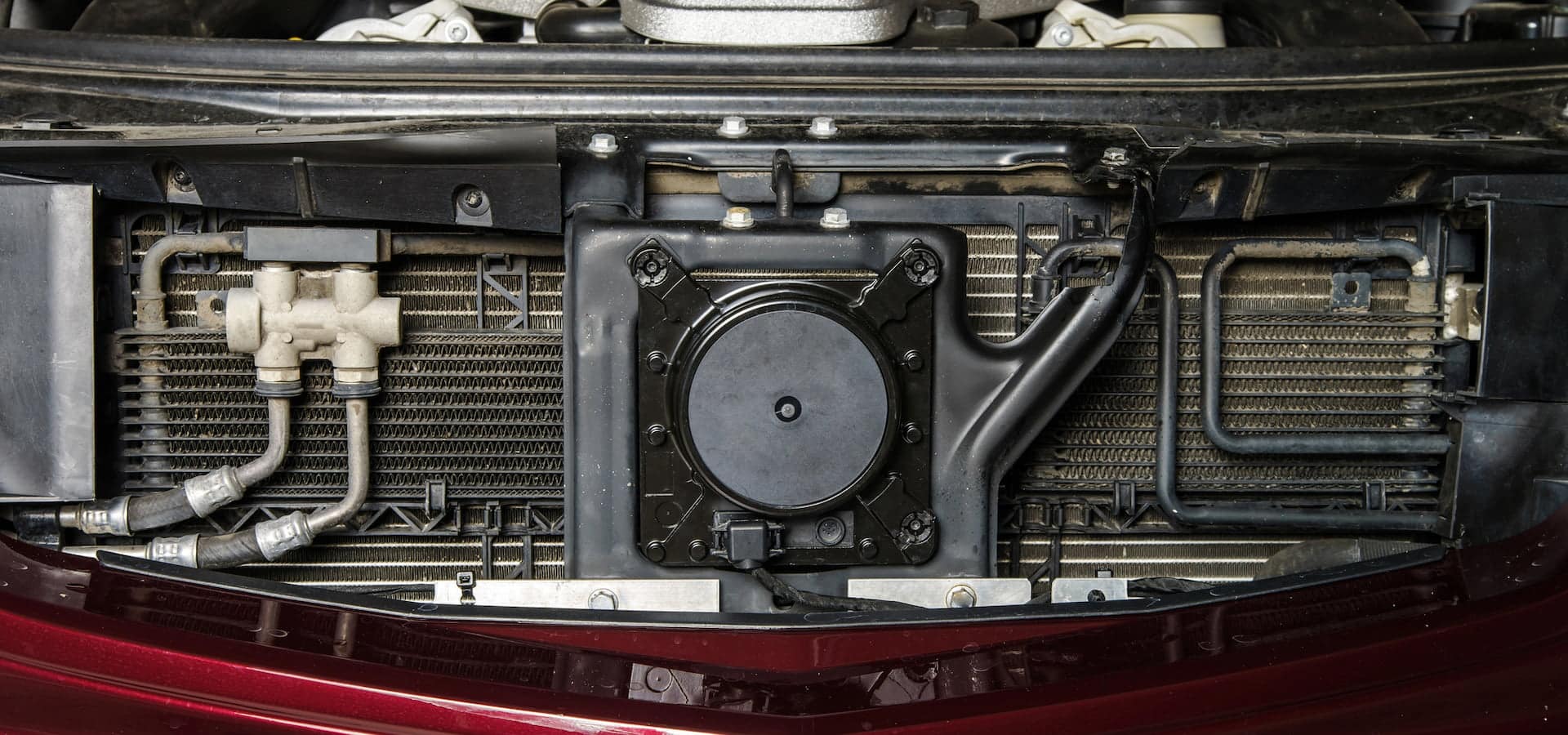
Dodge Cooling System Repair at Elevation Auto Repair
Dodge cooling systems run harder than most people realize, especially the HEMI-powered platforms and the turbocharged Neon SRT-4 and Dart 1.4T engines that share hardware with wider Chrysler and FCA designs. Denver's altitude and temperature swings only add stress to plastic radiator end tanks, thermostat housings, and water pump seals that were never designed for endless heat cycling.
Getting this work right on a Dodge is different from a generic radiator swap. The 5.7L and 6.4L HEMI trucks use a mechanical water pump with a specific torque sequence, while the 3.6L Pentastar V6 hides a plastic thermostat housing prone to cracking and coolant weeping. We use factory-correct MS-9769 (Mopar OAT/HOAT) coolant rather than a one-size-fits-all jug, because mixing chemistries on these platforms accelerates corrosion and gasket failure.
We also verify repairs with proper scan-tool data – watching coolant temp sensor readings and electric fan commands – so you leave with a system that holds up long-term, not one that just stops leaking today.
- Straight diagnostics with no invented repairs
- OEM-spec Mopar coolant and correctly torqued components
- Pressure and thermal testing before we return the vehicle
- Clear explanation of what failed and why
Symptoms – How to Know You Need This Service
Cooling problems tend to escalate fast on Dodge platforms, so recognizing early signs saves you from a warped head or cracked block.
- You may notice the temperature gauge climbing toward the red zone, especially climbing I-70 or sitting in traffic – stop driving immediately if it reaches the top.
- A sweet, syrupy smell after shutdown often points to a leaking Pentastar thermostat housing or radiator end tank.
- Green, orange, or pink puddles under the front of the vehicle after parking.
- White steam or a rising temp needle with the HEMI – shut it down rather than risk head gasket damage.
- Heater blowing cold air, which usually signals low coolant or trapped air after a slow leak.
- A gurgling sound behind the dash or an overflow tank that boils over.
- Check engine light with codes like P0128 (coolant below regulating temp) or P0217 (overheat condition).
Intermittent temperature swings or a slow drip can usually be scheduled soon, but any active overheating, steam, or a hard-cooling shutdown warrants immediate attention.
Common Cooling System Repair Issues on Dodge Vehicles
Dodge owners tend to see the same handful of cooling failures repeat across generations, largely because of shared plastic components and high-output engine heat loads.
- Cracked plastic thermostat housings on the 3.6L Pentastar (2011-present Charger, Challenger, Durango, Grand Caravan) – the integrated housing warps and seeps coolant, often triggering P0128 and overheating codes as the housing degrades.
- Water pump failure on 5.7L/6.4L HEMI engines (2009-present Ram 1500, Charger, Challenger) – the mechanical pump's bearing and seal wear leads to weep-hole leaks and coolant loss, sometimes after towing seasons.
- Radiator end-tank cracks on Ram 1500/2500 (DS and DT platforms) – the plastic-to-aluminum crimp joints fatigue with heat cycling, showing up as pink residue at the radiator corners.
- Failing electric cooling fan modules on later Chargers and Durangos – the fan control module or the fan motor itself quits, causing overheating in traffic while highway cruising stays fine.
- Heater core and hose degradation on higher-mileage minivans (Grand Caravan) – aged quick-connect fittings and clamps seep, leaving coolant smell in the cabin.
- Coolant bypass and degas bottle cracking – the pressurized reservoir on many Dodge platforms develops hairline cracks around the cap neck, causing slow loss and air pockets.
Which Dodge Models We See for Cooling System Repair
We work on the full range of modern and late-model Dodge platforms, and we identify by engine family since cooling parts often carry across body styles.
- Charger & Challenger (LX/LD/LA, 2006–present) – 3.6L Pentastar thermostat housing and water pump leaks; 5.7L/6.4L HEMI mechanical water pumps and radiator end-tank cracks.
- Durango (WD, 2011–present) – shared Pentastar and HEMI cooling components, plus electric fan module faults.
- Ram 1500/2500/3500 (2009–2018 badged Dodge) – HEMI water pumps, viscous fan clutch wear, and heavy-duty radiator concerns.
- Grand Caravan (RT, 2008–2020) – Pentastar cooling leaks and radiator/fan assembly failures.
- Journey (JC, 2009–2020) – 2.4L and 3.6L cooling system service, including thermostat and hose degradation.
- Dart (PF, 2013–2016) – 1.4L MultiAir turbo and 2.0L/2.4L Tigershark cooling circuits, which route differently from V6 models.
- SRT variants (Hellcat, 392, SRT-4 Neon) – supercharged and turbo cars run dual heat exchangers and intercooler loops that require extra bleed steps.
We're transparent about limits: very early classic Dodge muscle and some heavy commercial chassis fall outside what we routinely service. Call first and we'll confirm before you make the trip.
Dodge cooling systems have their own personality – from the HEMI's aluminum crossover housings to the plastic-intensive designs on the Pentastar V6. These platforms run hot, tow heavy, and pack a lot of hardware into tight engine bays, which means cooling repairs on a Ram, Charger, Challenger, Durango, or Grand Caravan reward a shop that knows where these systems actually fail. Here's how we get your Dodge back to running cool and keep it that way.
Causes & Risks – What Happens if Ignored
Most Dodge cooling problems trace back to heat cycling on plastic components, Colorado's dry high-altitude climate accelerating coolant breakdown, and the heavy loads these trucks and V8s routinely carry. Age and neglected coolant flushes do the rest – old fluid loses its corrosion inhibitors and eats water pump seals from the inside.
Waiting turns a small seep into a cascade. A cracked Pentastar thermostat housing that gets ignored for a few weeks often ends with a low-coolant overheat event, and repeated overheating warps aluminum heads or blows a head gasket.
- Ignoring a weeping water pump typically leads to sudden coolant loss and roadside overheating.
- A small radiator end-tank crack left for months can escalate into a full radiator failure under towing load.
- Overheating a HEMI or Pentastar risks head gasket failure and warped cylinder heads – a far more expensive repair than the original part.
- Air pockets from a failing degas bottle create hot spots that damage the water pump and thermostat.
- Coolant leaking onto belts or sensors can trigger additional drivability faults and no-start conditions.
We'll catch it early, pressure-test the system, and fix the actual source so it doesn't snowball.
Safety Impact – Why Cooling System Repair Matters
An overheating Dodge is more than an inconvenience – heat-related failures cascade into the systems you rely on to control the vehicle. Sudden coolant loss can cause power loss on the highway, and steam or coolant on the road creates hazards for you and traffic behind you.
- Stop driving now: temperature gauge in the red, steam from the hood, coolant smell in the cabin, or a hard-to-steer condition after overheating.
- Schedule soon: slow coolant loss, occasional low-coolant warning, sweet smell after parking, or heater blowing cold.
On modern Dodge vehicles, engine overheating can push the powertrain into limp mode, reducing throttle response and disabling features that support stability and traction control. A failed cooling fan in stop-and-go traffic can spike temperatures fast, and repeated overheating that's a documented, known issue can complicate liability if a breakdown contributes to an incident. Getting ahead of it keeps you and everyone around you safer.
How Dodge Cooling System Repair Actually Works
Your Dodge's cooling system circulates coolant through the block and heads, past the thermostat, into the radiator where airflow and the electric fan shed heat, then back again – all monitored by coolant temperature sensors feeding the PCM. On Pentastar and HEMI platforms, that loop runs through integrated plastic housings and pressurized degas bottles that demand precise handling during service.
What sets Dodge work apart is the integration and the software. Many components share housings, and the PCM watches temperature closely enough that a sloppy repair throws codes.
- Proper vacuum-fill procedures are required to purge air pockets from the block and heater core – Dodge systems are notorious for trapped air if hand-filled.
- Torque specs and sequence on plastic thermostat housings matter – over-torquing cracks the new part immediately.
- Correct coolant type (OAT-based HOAT/MS-90032 spec) must be used to protect seals and prevent gel formation.
- PCM verification with factory-grade scan tools confirms sensor readings and clears related codes after the repair.
We follow OE
Dodge cooling systems carry their own quirks, and knowing the platform is half the battle. The 3.6L Pentastar V6 found across Chargers, Challengers, Durangos, and Grand Caravans is notorious for plastic thermostat housings that crack and weep coolant, while the 5.7L HEMI trucks and SUVs push their radiators and water pumps hard under towing loads. Older 2.7L V6 engines had a reputation for sludge choking coolant passages. Each of these demands a targeted approach rather than a parts-cannon guess.
How We Diagnose Cooling System Repair Issues on Dodge
A leaking or overheating Dodge gets a structured workup, not a shortcut. Here is how our technicians approach it.
- Pull codes with a factory-capable scan tool – Using wiTECH-compatible diagnostics, we read PCM data for coolant temperature sensor readings, thermostat regulation faults (P0128), and radiator fan control commands that generic readers often miss.
- Live data review – We watch actual coolant temp climb against commanded fan speed to confirm whether the thermostat, sensor, or fan module is the culprit.
- Cooling system pressure test – A hand pump reveals slow leaks at the plastic thermostat housing, water pump weep hole, radiator end tanks, and heater core fittings common on Pentastar and HEMI platforms.
- Visual inspection – We check for the telltale pink or orange OAT coolant residue, swollen hoses, and clogged radiator fins.
- Road test – We verify temperature stability under load and confirm heater output, which points to airlocks or a failing pump impeller.
Once we isolate the fault, you get a plain-language explanation and a clear repair plan with a quote before any work begins – no surprises.
Cooling System Repair on Dodge: Repair vs. Replacement
Not every cooling issue means a big bill. The right call depends on what has actually failed.
- Genuine repair – A weeping hose clamp, a stuck thermostat, or a low-coolant condition from a minor seep. On many Pentastar V6s, replacing the cracked thermostat housing alone restores full function without touching the rest of the system.
- Partial replacement – A failed water pump or radiator gets swapped while the surrounding hoses and reservoir stay in service if they test sound. On HEMI trucks, we often replace the pump and thermostat together since labor overlaps.
- Full replacement – When we find cascading wear – a degraded radiator, tired pump, brittle hoses, and a contaminated system all at once – rebuilding piece by piece costs more than doing it right in one visit. Overheating that has warped a HEMI head also changes the conversation toward broader repair.
We lay out each option with its trade-offs so you decide what fits your Dodge and your budget – never pushed toward the priciest route.
How to Make Your Dodge Cooling System Repair Last Longer
Good habits protect the work and keep your Dodge running cool for years.
- Ease the thermal load – Let the engine warm before hard acceleration, and avoid sustained high-RPM towing in Denver's thin air and summer heat, which stresses pumps and radiators.
- Watch your gauges and lights – A creeping temperature needle, sweet coolant smell, or low-level warning are early signals worth acting on quickly.
- Check coolant regularly – Peek at the overflow reservoir level and color when cold. Look for pink or orange drips on the driveway.
- Use the correct coolant – Dodge specifies OAT (typically MOPAR 10-year/150,000-mile formula). Mixing incompatible coolant types causes gelling and clogged passages.
- Keep software current – Updated PCM calibrations can refine fan and thermostat control on some models.
Safe DIY includes topping off coolant when cold and inspecting hoses. Leave pressure testing, thermostat housing replacement, and any work near hot engine components to our technicians – these are safety-critical jobs where a mistake means burns or repeat overheating.
Dodge cooling systems have their own personality across the lineup, and knowing those quirks separates a lasting fix from a repeat visit. The 3.6L Pentastar V6 in Chargers, Challengers, and Journeys is prone to cracked plastic thermostat housings and weeping coolant crossover pipes buried under the intake. Hemi-powered trucks and Durangos see radiator end-tank seepage and failing water pumps, while older 2.7L LH-platform engines were notorious for coolant intrusion and gasket trouble. We diagnose the platform in front of us, not a generic template.
What to Expect When You Bring Your Dodge In
From the first phone call to the pickup walkthrough, we keep the process clear and the decisions in your hands.
- Drop-off or appointment – Schedule ahead or leave it with us; grab personal items from the cabin, though we secure whatever stays behind.
- Initial inspection – Pressure test the system, inspect the radiator, water pump, thermostat housing, hoses, and check for combustion gases in the coolant when a head gasket is suspected.
- Written estimate – You get a line-item breakdown of parts and labor before any wrench turns, with OEM versus quality aftermarket options explained.
- Repair updates – We call or text with findings and never expand the job without your approval.
- Pickup walkthrough – We show you the replaced parts and explain what we found.
Need to keep moving? Ask about shuttle and loaner availability, plus after-hours pickup. Every cooling repair finishes with a proper burp of the system, a road test to confirm stable operating temperature, and a scan-tool re-check for stored codes. If anything feels off afterward, bring it back – we stand behind the work and want it right for the long haul.
Why Choose Elevation Auto Repair for Dodge Cooling System Repair
Cooling problems on a Dodge often trace back to platform-specific weak points, and we chase root causes instead of throwing parts at symptoms.
- Brand-specific knowledge – We stay current on Dodge TSBs and PCM software updates that affect cooling fan operation, electric fan control, and thermostat behavior on Pentastar and Hemi platforms.
- Correct fill and bleed – Dodge systems trap air easily; we follow the proper bleed procedure and use the correct HOAT/OAT coolant spec so you avoid hot spots and air-lock overheating.
- End-to-end ownership – The same shop handles diagnosis, repair, and post-repair verification, so nothing gets lost in a handoff.
We treat cooling repair as a reliability job, not a quick patch. That means torquing plastic housings to spec to prevent cracking, replacing the correct thermostat and water pump together when it makes sense, and confirming the fix under real load. You get a straight diagnosis, honest recommendations, and a Dodge that holds temperature mile after mile.
Our Dodge Services
- Air Conditioning AC Repair
- Battery Repair Replacement
- Brake Repair & Brake Fluid Change
- Check Engine Light Diagnostics
- Clutch Repair & Replacement
- Coolant Leak Repair
- Drive Shaft Repair
- Engine Repair
- Exhaust & Catalytic Converter Repair
- Head Gasket Repair & Replacement
- Oil Change
- Oil Leak Repair
- Scheduled Service Maintenance
- Steering Repair
- Suspension Repair
- Cambelt Timing Belt Replacement
- Transmission Repair
- Tune Up
- Wheel Alignment