
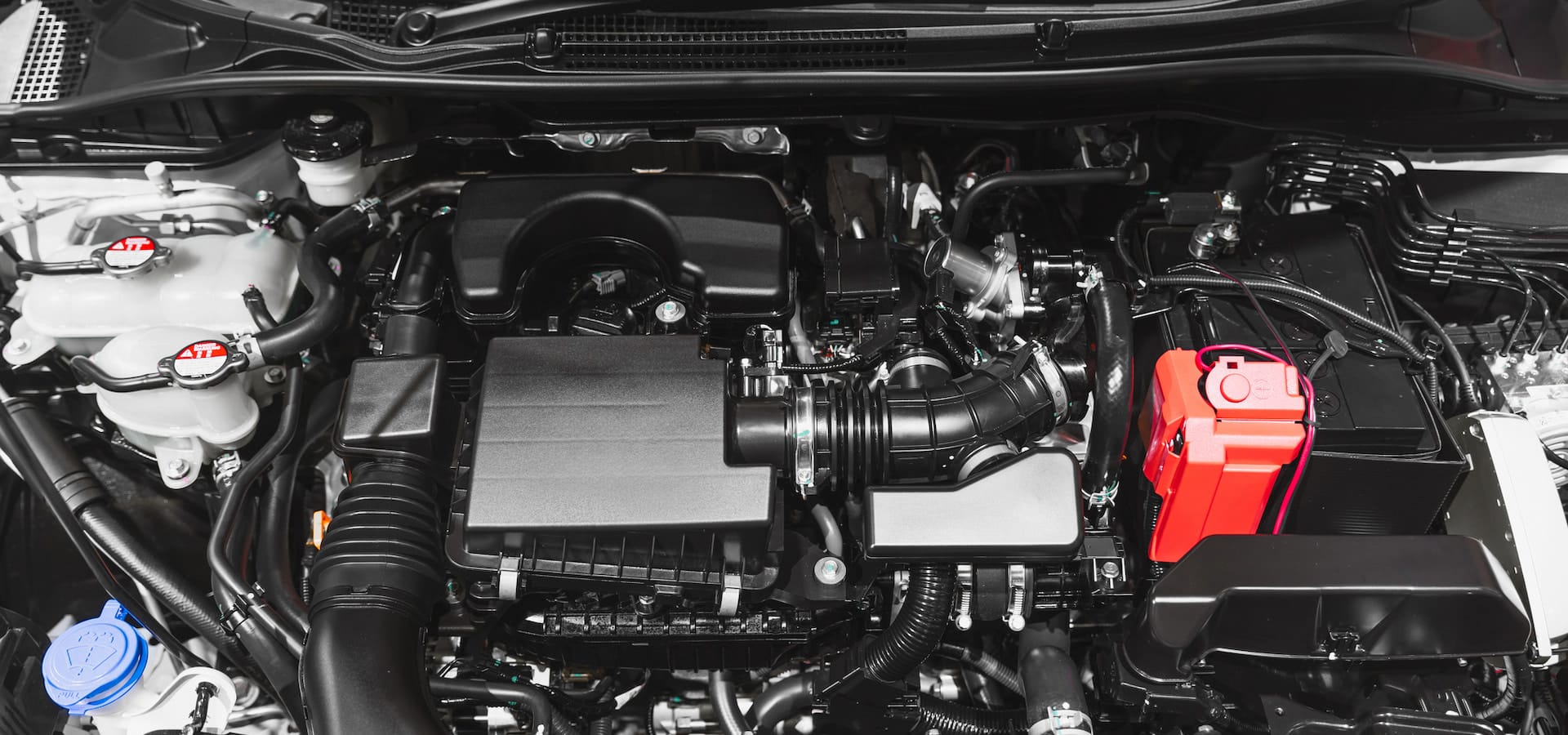
Dodge Engine Repair at Elevation Auto Repair
Get a Dodge engine repair wrong and the bill snowballs fast – a mistimed HEMI or a botched Pentastar head job can turn a fixable problem into a full teardown. These engines reward patience and precise procedures, not guesswork.
Dodge platforms carry quirks a general shop often misses. The 5.7L and 6.4L HEMI use the Multi-Displacement System (MDS) with lifters that fail and wipe cam lobes, while the 3.6L Pentastar (2011+) is known for cylinder head failures on early builds and oil filter housing leaks. Correct repair means honoring factory torque sequences on aluminum heads, using the right MOPAR oil viscosity for VVT and MDS operation, and pulling live data with a scan tool that reads Chrysler-specific PIDs and reflashes the PCM when needed.
We treat every Dodge engine job as a chance to find the root cause, not just quiet the symptom. Detail matters here – one skipped clearance check or torque-to-yield bolt can undo the whole repair.
- Honest diagnostics that pinpoint the actual failed component before any parts go on
- OEM-grade parts and fluids matched to your engine's VVT, MDS, and cooling specs
- Clear updates at every step so you know what we found and why it matters
- Repairs built for long-term reliability, not a quick patch
Symptoms – How to Know You Need This Service
Dodge engines tend to warn you before they quit. Catching these early keeps a repair manageable instead of catastrophic.
- Ticking or tapping from the top end – often failing MDS lifters or collapsed lifters on a HEMI, especially at idle
- Rough idle, misfire, or a flashing check engine light – stop driving immediately, since a flashing light means raw fuel is reaching the catalytic converter
- Coolant loss with no visible leak – common on Pentastar heads and can signal a cracked head or failing gasket
- Oil spots under the front of the vehicle – frequently the plastic oil filter housing on the 3.6L; schedule soon before levels drop
- Blue or white smoke from the exhaust – oil consumption or coolant intrusion; have it looked at right away
- Knocking or deep metallic sound under load – possible bearing or rod issue; stop driving and tow it in
- Overheating gauge climb – shut it down promptly to avoid warped aluminum heads
- Rattle on cold start that fades – timing chain or tensioner wear worth inspecting soon
When in doubt, a quick diagnostic scan tells us whether it's safe to keep driving or time to bring it in.
Common Engine Repair Issues on Dodge Vehicles
Dodge engines have well-documented weak points, and Denver's altitude and temperature swings tend to surface them faster. Here are the patterns we see most often across the lineup.
- HEMI lifter failure and "tick" (2009-2020 5.7L/6.4L) – Collapsed MDS (Multi-Displacement System) lifters wipe out the camshaft lobe when they fail, turning a lifter job into a full cam-and-lifter replacement. The audible tick is the early warning.
- 3.6L Pentastar cylinder-head issues (2011-2013) – Early Pentastars in the Grand Cherokee, Charger, and Challenger developed left-bank head failures causing misfires and rough running, often after coolant or valve-seat problems.
- Pentastar rocker arm / lifter tick (2014+) – Later 3.6L engines still throw cam/crank correlation and misfire codes tied to failing rocker arms and lash adjusters.
- Oil cooler and cooler-housing leaks (3.6L) – The plastic oil filter housing and cooler assembly cracks with heat cycling, dumping oil and coolant and mimicking a head-gasket leak.
- 3.0L EcoDiesel emissions and EGR faults (Ram 1500) – EGR cooler cracking and DEF/exhaust aftertreatment faults are frequent, and they cascade into limp mode if ignored.
- Timing chain and phaser wear (2.4L Tigershark, Journey/Dart) – Oil consumption and rattle on cold start point to worn tensioners and phasers on these four-cylinders.
Which Dodge Models We See for Engine Repair
We work on the full range of modern and late-model Dodge platforms. Find your engine below to see how the work applies.
- Charger & Challenger (LX/LD/LC, 2006–present) – 3.6L Pentastar, 5.7L HEMI, and 6.4L 392 variants; SRT and Scat Pack cars need extra care around forged internals and cooling
- Durango (WD, 2011–present) – 3.6L and 5.7L; frequent oil housing leaks and MDS lifter concerns
- Ram 1500 (DS/DT, 2009–present) – 5.7L HEMI with eTorque on later trims and the 3.6L; timing and lifter work is common
- Grand Caravan & Journey (2011–2020) – 3.6L Pentastar with early-year cylinder head failures on 2011–2013 builds
- Dart (PF, 2013–2016) – 2.0L and 2.4L Tigershark; oil consumption and PCV issues
- Hellcat / Redeye supercharged 6.2L – supercharged builds where precision on assembly and boost-related components is non-negotiable
Naturally aspirated HEMI and Pentastar work is our bread and butter. For very early 1990s–2000s Dodge engines, parts availability varies, so call first and we'll tell you honestly whether we're the right fit for your vehicle.
Getting engine repair wrong on a Dodge is expensive in ways that show up months later – a mis-diagnosed Pentastar tick, an overlooked HEMI lifter, a coolant intrusion nobody caught. At Elevation Auto Repair, we treat these platforms with the detail they demand, then get you back on the road with a fix that holds.
Causes & Risks – What Happens if Ignored
Most Dodge engine problems trace back to a mix of heat cycling, deferred oil changes, and platform-specific design choices like plastic coolant components and the MDS system. Denver's dry, high-altitude driving accelerates oil breakdown and stresses cooling components already prone to cracking.
The danger is how fast a small symptom compounds. A HEMI tick you ignore for a few weeks of hard driving can flatten a cam lobe, and now the metal debris circulates through the oiling system.
- Ignoring a HEMI lifter tick typically ends with a wiped camshaft and contaminated oil galleries – a far larger repair than a single lifter.
- Letting a 3.6L oil-cooler housing seep leads to low oil pressure, overheating, and eventual bearing damage.
- Driving an EcoDiesel in limp mode with unresolved EGR faults risks turbo and aftertreatment damage.
- Continuing to run a misfiring Pentastar dumps raw fuel into the catalytic converters and destroys them.
- Chronic low oil from Tigershark consumption spins bearings and can seize the engine.
The cost jump is real: a leak or tick caught early is a bolt-on repair. Wait, and you are into machine work, converters, and internal components.
Safety Impact – Why Engine Repair Matters
An engine problem rarely stays contained to the engine. On modern Dodge vehicles, powertrain faults ripple into systems you rely on to stop and steer.
- Power-assisted braking – A rough-running or stalling engine reduces vacuum and hydraulic assist, lengthening stopping distance.
- Electronic stability control and traction control – A misfire or limp-mode event can disable ESC and ABS functions that share powertrain data.
- Power steering – Stalling at speed on electric or hydraulic assist systems makes the wheel suddenly heavy.
- Sudden loss of power – A seized HEMI cam or catastrophic misfire can strand you in traffic.
Stop driving now if you notice: knocking that grows with RPM, oil-pressure warning light, steam or coolant smell, or the vehicle dropping into limp mode at highway speed.
Schedule soon if you notice: intermittent tick, occasional misfire, minor oil or coolant seepage, or a check-engine light with no drivability change. Leaving a known defect unaddressed can also complicate an insurance claim after an incident.
How Dodge Engine Repair Actually Works
A Dodge engine is a tightly integrated system where the PCM controls fuel, spark, variable cam timing, and on HEMIs the MDS cylinder deactivation. That means repairs are rarely just mechanical – they involve software and precise sequencing.
When we replace lifters, phasers, or heads, timing has to be set to Dodge's exact specification and the PCM often needs a relearn so cam/crank correlation reads correctly. Doing this without the right procedure throws phantom codes and repeat failures.
- MDS and VVT calibration – HEMI and Pentastar variable timing components require correct phaser positioning and PCM relearn.
- Torque-to-yield fasteners – Head bolts and main components use angle-torque specs; reusing stretched bolts causes gasket failure.
- OEM-level scan capability – We pull live data and Dodge-specific fault codes to confirm the actual failure before parts go in.
A misdiagnosed engine problem on a Dodge gets expensive fast. Guess wrong on a Pentastar 3.6L ticking noise or a HEMI 5.7L lifter failure, and you can pour money into parts that were never the issue. That is why thoroughness matters more than a quick scan and a parts swap. We chase the root cause on every Charger, Challenger, Durango, Ram, and Journey that rolls in – then we tell you exactly what we found before any wrench turns.
How We Diagnose Engine Repair Issues on Dodge
Dodge engines throw plenty of misleading symptoms, so we start broad and narrow down with evidence, not assumptions.
- Full scan with a Dodge-capable tool – We pull codes from all modules using a scanner that speaks the CAN-bus and reads live data the way factory equipment does, catching PCM, cam/crank correlation, and misfire counters that generic readers miss.
- Freeze-frame and live data review – Fuel trims, oil pressure sensor readings, and cam timing data reveal issues like MDS solenoid faults on HEMI engines or oil-pressure-triggered VVT problems on the 3.6L Pentastar.
- Visual inspection – We look for the telltale signs: cylinder-head oil cooler seepage on the 3.6L, weeping intake gaskets, coolant crossover leaks, and evidence of past overheating.
- Mechanical measurement – Compression and leak-down testing separate a worn ring pack from a dropped valve seat or a cracked head, common on hard-run HEMI and turbo applications.
- Road test – We drive it to confirm ticking, hesitation, or misfire under real load and temperature.
From there you get a plain-language report and a clear repair plan with a quote – no surprises, no padded line items.
Engine Repair on Dodge: Repair vs. Replacement
Not every engine problem needs a big fix. We match the repair to the actual condition of your engine.
- Genuine repair – When the block and rotating assembly are sound, we handle it as a targeted fix: cleaning carbon, replacing a leaking oil cooler housing on the Pentastar, swapping a failed MDS solenoid or coil pack, or resealing a valve cover.
- Partial replacement – When one system is worn but the rest is healthy, we replace the affected parts and keep the good hardware. Think a single collapsed lifter and cam on a 5.7L HEMI, or timing chain guides on a high-mileage 3.6L, rather than an entire engine.
- Full replacement – When damage cascades – spun bearing, scored cylinder walls after oil starvation, or a repair bill that creeps toward the cost of a remanufactured long-block – replacement is the honest call.
We lay out the options side by side with the reasoning behind each, so you decide what fits your budget and how long you plan to keep the vehicle.
How to Make Your Dodge Engine Repair Last Longer
Good repair work lasts longer when the driving and upkeep back it up.
Driving Habits That Help
- Let the engine reach operating temperature before hard acceleration, especially in cold Denver winters – the HEMI and Pentastar rely on oil flow before load.
- Avoid lugging the engine or towing beyond rating, which stresses freshly repaired lifters, chains, and gaskets.
- Ease off aggressive stop-and-go driving that heat-cycles the cooling system hard.
Maintenance You Can Do Yourself
- Check oil level and color regularly – Pentastar and HEMI engines are sensitive to low oil and extended intervals.
- Listen for new ticking, whining, or rough idle and report changes early.
- Watch for a check-engine or oil-pressure light and don't keep driving on it.
Brand-Specific Care
- Use the correct oil grade and spec Dodge calls for – the wrong viscosity affects VVT and MDS operation.
- Stick to OEM or equivalent gaskets and filters where sealing and flow matter.
- Keep PCM software current and follow Dodge's service intervals.
Fluids, filters, and visual checks are safe to handle at home. Leave timing components, internal engine work, and anything involving high-pressure or safety-critical systems to our technicians.
A misdiagnosed engine problem on a Dodge gets expensive fast. Confuse a HEMI Multi-Displacement System (MDS) lifter tick for a routine valvetrain noise, or overlook the active-fuel-management wear pattern on a 5.7L, and you end up replacing parts that were never the problem. Precision at the diagnostic stage is what separates a lasting repair from a repeat visit.
What to Expect When You Bring Your Dodge In
From the first phone call to the drive home, the process stays clear and predictable. Here is how a typical visit runs:
- Drop-off or appointment – Schedule ahead or bring it in. We ask about symptoms: cold-start ticking, misfire codes, oil consumption, coolant loss, or a check engine light.
- Initial inspection – We pull codes with factory-level scan tools, check freeze-frame data, and inspect for known Dodge trouble spots like MDS lifter failure on the 5.7L HEMI or Pentastar 3.6L cylinder-head issues on 2011-2013 models.
- Written estimate – You get an itemized breakdown before any work starts. Nothing gets replaced without your approval.
- Updates during the work – We call or text as we confirm findings, especially if teardown reveals something the scan tool couldn't show.
- Pickup walkthrough – We show you the old parts, explain what was done, and cover any maintenance that keeps the repair holding.
Loaner and shuttle options are available so you stay mobile, and after-hours pickup can be arranged. Take valuables and personal items with you before drop-off. Every engine repair ends with a road test and a post-repair scan-tool re-check to confirm codes stay clear. If something feels off afterward, bring it back and we'll re-verify.
Why Choose Elevation Auto Repair for Dodge Engine Repair
Dodge engines have their own quirks, and we repair them with that platform knowledge front and center. We track TSBs and software updates across the HEMI, Pentastar, and turbocharged 2.0L and 2.4L GME lineups, so a fix isn't just mechanical – it accounts for calibration and known factory revisions.
- Familiarity with MDS lifter and camshaft wear on 5.7L HEMI engines, plus proper lifter and roller replacement rather than partial patchwork.
- Experience with 3.6L Pentastar left-bank cylinder-head failures and oil-cooler leaks common on early builds.
- PCM software checks and reflashes where a TSB addresses drivability or misfire complaints.
We own the job start to finish – diagnosis, teardown, repair, and post-repair verification all happen under one roof. That means no finger-pointing between shops and no guesswork handed off mid-repair. As your Denver dealership alternative, we pair honest diagnostics with repairs built for long-term reliability, so your Dodge leaves running the way it should.
Our Dodge Services
- Air Conditioning AC Repair
- Battery Repair Replacement
- Brake Repair & Brake Fluid Change
- Check Engine Light Diagnostics
- Clutch Repair & Replacement
- Coolant Leak Repair
- Cooling System Repair
- Drive Shaft Repair
- Exhaust & Catalytic Converter Repair
- Head Gasket Repair & Replacement
- Oil Change
- Oil Leak Repair
- Scheduled Service Maintenance
- Steering Repair
- Suspension Repair
- Cambelt Timing Belt Replacement
- Transmission Repair
- Tune Up
- Wheel Alignment