Dodge Wheel Alignment at Elevation Auto Repair
Dodge builds vehicles across wildly different platforms – a body-on-frame Ram pickup, a rear-drive LX/LD Charger, and a compact FWD Dart all demand different alignment approaches. A one-size-fits-all rack setting won't cut it. Getting the geometry right means respecting each platform's factory caster, camber, and thrust-angle targets.
The LX/LD sedans (Charger, Challenger) use a SLA front and multi-link rear that reacts sharply to worn control-arm bushings and sagging springs, throwing rear thrust angle off. Ram 1500 trucks – especially the 2019+ DT with its coil-rear and available air suspension – need ride height verified before the alignment even begins, since the compliance module reference points shift readings. We calibrate to OEM specs, not eyeballed numbers, and account for Colorado's crowned roads and altitude-loaded suspension.
Software matters too. Newer Dodge and Ram builds tie into steering angle sensor and forward-camera calibration after alignment work, and skipping that step leaves lane-keep and adaptive cruise reading wrong. Here's what you can expect:
- Four-wheel alignment measured against Dodge/Mopar factory specs
- Ride-height and suspension inspection before adjustment
- Steering angle sensor reset and ADAS calibration when required
- A clear printout of before-and-after readings – no guesswork
Symptoms – How to Know You Need This Service
Alignment problems show up in how the car drives and how your tires wear. On a Dodge you may notice:
- The vehicle pulls left or right on a flat, straight road
- Your steering wheel sits crooked when driving straight
- Uneven tire wear – inner or outer edges scrubbing faster, common on LX rears with tired bushings
- A steering wheel that shimmies or vibrates at highway speed
- Squealing or feathered tires you can feel by running a hand across the tread
- The Ram feels darty or wanders, requiring constant correction
- Lane-keep assist or forward-collision warnings acting erratic after a curb strike or new tires
If the car suddenly pulls hard, the steering feels loose, or you hit a pothole and now something clunks – stop driving and have it inspected, since that points to a bent component or failed link rather than just alignment. A gradual pull or slow tire wear is safe to schedule soon before it costs you a set of tires.
Common Wheel Alignment Issues on Dodge Vehicles
Dodge builds everything from heavy-duty trucks to muscle sedans, and each platform wears its alignment settings differently. The suspension geometry on a Ram is worlds apart from a Charger on the LX/LD chassis, so the way misalignment shows up depends heavily on what you drive.
- Ram 1500/2500/3500 (DS/DJ) front-end wear – The upper and lower ball joints and track bar bushings on 4WD Rams take a beating. As they loosen, caster and camber drift, producing that classic "death wobble" on 2013–2018 heavy-duty models with worn steering dampers.
- Charger/Challenger LX/LD rear toe wear – The independent rear suspension on these RWD platforms is sensitive to rear toe. Worn rear cradle bushings let toe fall out of spec, chewing the inner edges of rear tires on 2011+ models.
- Durango WK2 (shared with Grand Cherokee) – Lower control arm bushings and tie rod ends wear early, pulling front camber out and creating uneven shoulder wear.
- Dart PF platform – Front strut mounts and control arm bushings degrade, letting camber wander on 2013–2016 cars, often mistaken for tire defects.
- Journey front-end sag – Softer front suspension bushings and worn sway bar links allow toe drift, showing feathered tread across the fronts.
- Lifted or leveled Rams – Any leveling kit changes factory caster/camber. Without a corrected alignment, you get pull, wander, and rapid tire cupping.
Which Dodge Models We See for Wheel Alignment
We align nearly the full modern Dodge and Ram lineup. Find your platform below:
- Charger & Challenger (LX/LD, 2006–present) – rear-drive and AWD; SRT, Scat Pack, and Hellcat variants need extra attention to caster and camber for wide, staggered tires
- Ram 1500 (DS 2009–2018, DT 2019–present) – DT coil-rear and air-suspension trucks require ride-height verification first
- Ram 2500/3500 (heavy-duty) – solid front axle setups with different caster and toe procedures than the 1500
- Durango (WD, 2011–present) – shares the LX-derived platform; AWD versions common in Denver
- Journey (2009–2020) – FWD/AWD crossover, straightforward four-wheel alignment
- Dart (PF, 2013–2016) – compact FWD, prone to inner-edge front wear when toe drifts
- Grand Caravan (RT, 2008–2020) – FWD minivan; alignment often pairs with control-arm and tie-rod work
Classic and pre-2000 rear-drive Dodges fall outside our routine alignment work – those older solid-axle and drum-brake setups are better handled by a dedicated classic specialist. For everything from a daily Charger to a work-ready Ram, we've got the tooling and specs on hand.
Causes & Risks – What Happens if Ignored
Colorado roads are hard on alignment. Potholes after freeze-thaw cycles, unpaved mountain access, curb strikes, and the sheer weight Rams carry all knock settings out over time. Age plays its part too – rubber bushings dry out at Denver's altitude and low humidity, letting geometry shift gradually until you feel the pull.
Waiting rarely saves money. A small toe adjustment left alone becomes a set of scrapped tires and, eventually, worn steering and suspension components.
- Ignoring front toe on a Ram for a few thousand miles typically scrubs the outer edges bald, forcing a premature tire replacement.
- A developing track bar or ball joint issue that starts as mild wander can escalate into full death wobble – a genuine safety event on 4WD Rams.
- Untreated rear toe wear on a Charger/Challenger destroys inner tire edges you cannot see, often failing before the visible tread does.
- Worn control arm bushings left in service damage the tie rod ends and wheel bearings next, turning a simple alignment into a multi-part repair.
- Chronic pull adds steering fatigue and hides worsening component wear until something fails at speed.
Catching it early keeps the fix to an adjustment instead of a parts job – that is exactly the kind of honest diagnostic call we make before recommending anything.
Safety Impact – Why Wheel Alignment Matters
Alignment is a safety system, not a comfort feature. On modern Dodge vehicles, the steering angle sensor feeds the electronic stability control (ESC), ABS, and traction control. When alignment drifts and the wheel sits off-center, those systems work from a skewed baseline, which can blunt how quickly stability control intervenes.
- Stop driving now: violent front-end shake or death wobble on a Ram after hitting a bump, a hard pull that fights the wheel, or clunking during turns.
- Schedule soon: steady drift to one side, off-center steering wheel, uneven tire wear, or a slightly vague on-center feel.
Misalignment lengthens braking distances because scrubbing tires give up grip, and it can trigger ESC or ABS warning lights when the steering angle sensor reads a mismatch. On lifted Rams especially, uncorrected caster reduces high-speed stability. There is also a liability angle – if a known steering or alignment defect goes unaddressed and contributes to a crash, that history matters. Correcting alignment restores the clean reference point every one of these systems depends on.
How Dodge Wheel Alignment Actually Works
A proper alignment sets three angles – caster, camber, and toe – so all four tires point where the chassis expects. On Dodge platforms, this is more than turning tie rods. Many newer models require a steering angle sensor calibration afterward so the ESC and lane-assist systems recognize the new straight-ahead position.
What sets Dodge work apart is platform-specific procedure and tooling. Rams with electronic stability systems need the SAS reset through the factory scan tool (wiTECH) after any alignment, and 4WD trucks demand attention to the track bar and correct caster before toe is even touched. Skipping those steps leaves warning lights and a truck that still wanders.
- Steering angle sensor calibration via wiTECH on ESC-equipped models after every alignment.
- Track bar and ball joint inspection first on Ram 4WD platforms – geometry must be sound before adjusting.
- Correct caster/camber targets for lifted or leveled Rams, not just factory numbers.
- OEM torque and sequence specs on tie rods, cam bolts, and control arm hardware to hold the settings.
- Rear toe and cradle checks on LX/LD Chargers and Challengers, which generic four-wheel alignments often overlook.
Doing it to Dodge spec is what keeps the correction lasting and the safety systems honest – one shop, the right tooling, and clear communication on
Dodge platforms carry alignment quirks that reward a technician who knows where to look. The RAM 1500 DT and older DS body styles, the LX/LD cars like the Charger and Challenger, and the front-drive Journey and Grand Caravan each wear their suspension differently. A Charger's SRT-tuned camber settings and a RAM's leaf-and-coil rear setup demand different measurement targets, and the factory specs shift by trim and drivetrain. That platform knowledge is where dealership-level care meets honest shop pricing.
How We Diagnose Wheel Alignment Issues on Dodge
Alignment trouble rarely announces itself with one clean symptom, so we work through the whole picture before touching an adjustment bolt.
- Interview and road test – we confirm the complaint, whether it's a pull, off-center wheel, or feathered tires, and note conditions on Denver's crowned roads.
- Scan with a Dodge-capable tool – wiTECH or an equivalent bidirectional scanner reads steering angle sensor data, electronic stability faults, and any active steering calibrations on LX/LD and RAM DT models.
- Lift and visual inspection – we check tie rod ends, control arm bushings, ball joints, sway bar links, and the RAM's track bar for play, torn boots, or wear.
- Tire wear read – inner-edge wear on Chargers often points to worn rear toe links; cupping suggests a shock or bushing issue.
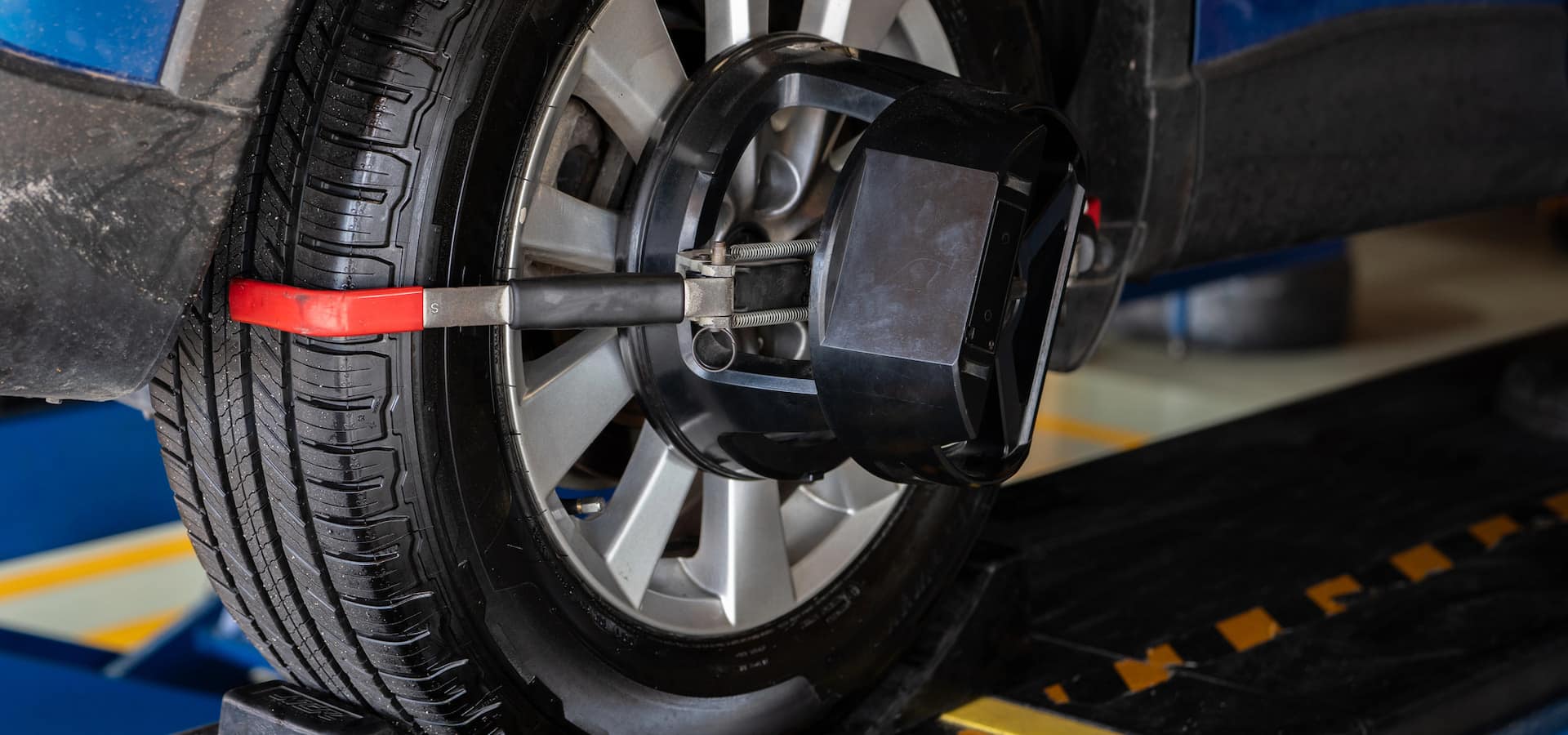
- Rack the vehicle on the alignment machine – we measure camber, caster, toe, and thrust angle against Dodge's trim-specific factory numbers.
Those readings tell us whether you need a simple adjustment or a worn part addressed first. Before any work begins, you get a plain explanation of what's out of spec and a clear quote – no surprises.
Wheel Alignment on Dodge: Repair vs. Replacement
A true alignment is often just an adjustment, but worn parts change the math. Here's how we sort it out.
- Repair / adjustment only – when all components are tight and serviceable, we correct toe, camber, and caster with the factory cam bolts and eccentrics. Many LX/LD cars only need a rear toe correction to cure inner-edge tire wear.
- Partial replacement – when a single part is worn, we replace just that piece and realign. Common examples include outer tie rod ends on RAM 1500 trucks or a loose track bar causing wandering on 4x4 models.
- Full replacement – when wear cascades, replacing one part alone won't hold an alignment. Sagging control arm bushings, multiple loose joints, or safety-critical ball joint play call for a broader repair before alignment makes sense.
We show you the measurements and the worn parts, then explain the options side by side. The goal is an alignment that actually holds – not the biggest invoice.
How to Make Your Dodge Wheel Alignment Last Longer
Good alignment habits protect your tires and your steering components long after you leave the rack.
- Ease off potholes and Denver's rough winter roads – hard impacts knock toe out and bend components fast.
- Avoid overloading RAM beds beyond rated capacity, which stresses rear suspension geometry.
- Keep tires rotated on schedule and inflated to the door-jamb spec to slow uneven wear.
A few owner checks go a long way between visits:
- Watch for a steering wheel that sits off-center or a steady pull on flat road.
- Run your hand across tire edges monthly to catch feathering early.
- Listen for clunks over bumps, which often flag a loose link or bushing before alignment drifts.
Brand-specific care matters too. Use OEM-grade steering and suspension parts so geometry holds to factory numbers, keep steering angle and stability software current, and follow Dodge's recommended inspection intervals.
Checking tire pressure and doing a visual look-over is safe DIY. Diagnosing ball joints, track bars, and the alignment itself involves safety-critical steering parts – leave those to us so your Dodge stays planted and predictable.
What to Expect When You Bring Your Dodge In
Dodge platforms – from the LX/LD Charger and Challenger to the DS/DT Ram 1500 and the RU Durango – each carry their own alignment quirks tied to suspension geometry and electronic steering calibration. Here's how a visit flows:
- Drop-off or appointment: Schedule ahead or drop off early. Leave the vehicle unlocked with only the ignition key so we can move it through the shop and onto the alignment rack.
- Initial inspection: Before touching camber and toe, we check tie rod ends, control arm bushings, ball joints, and the RU Durango's known upper control arm wear, plus tire wear patterns that hint at bent components.
- Written estimate: You get a clear breakdown of what the alignment needs and any worn parts that would waste the alignment if left alone. Nothing proceeds without your approval.
- Updates during the work: We text or call with findings and answer questions directly – no vague runaround.
- Pickup walkthrough: We show you the before-and-after alignment printout and explain what changed.
Loaner and shuttle options are available – ask when you book. Grab personal items ahead of time, and after-hours pickup can be arranged. Every alignment ends with a road test and a steering-angle sensor re-check so the wheel sits centered. If anything feels off afterward, bring it back and we'll recheck it.
Why Choose Elevation Auto Repair for Dodge Wheel Alignment
A proper Dodge alignment is more than turning tie rods. On late-model Chargers, Challengers, and Rams, alignment work often ties into the steering angle sensor and electronic power steering, which need to be recalibrated after adjustment or the system fights back.
- Platform-aware setup: We reference Dodge TSBs and software updates that affect steering pull complaints and drift, especially on LX/LD and DS/DT trucks where geometry and load specs differ from car chassis.
- Full-rack precision: Alignments are performed to factory camber, caster, and toe specs – not eyeballed – with attention to the Ram's front-end wear that throws numbers off.
- End-to-end ownership: We diagnose the pull, replace worn tie rods or bushings, set the alignment, then verify with a road test and scan-tool re-check.
You get one shop that handles diagnosis, parts, alignment, and calibration under a single roof – with honest recommendations and no unnecessary add-ons. That combination protects your tires, sharpens handling, and keeps your Dodge tracking straight for the long haul.
Our Dodge Services
- Air Conditioning AC Repair
- Battery Repair Replacement
- Brake Repair & Brake Fluid Change
- Check Engine Light Diagnostics
- Clutch Repair & Replacement
- Coolant Leak Repair
- Cooling System Repair
- Drive Shaft Repair
- Engine Repair
- Exhaust & Catalytic Converter Repair
- Head Gasket Repair & Replacement
- Oil Change
- Oil Leak Repair
- Scheduled Service Maintenance
- Steering Repair
- Suspension Repair
- Cambelt Timing Belt Replacement
- Transmission Repair
- Tune Up