
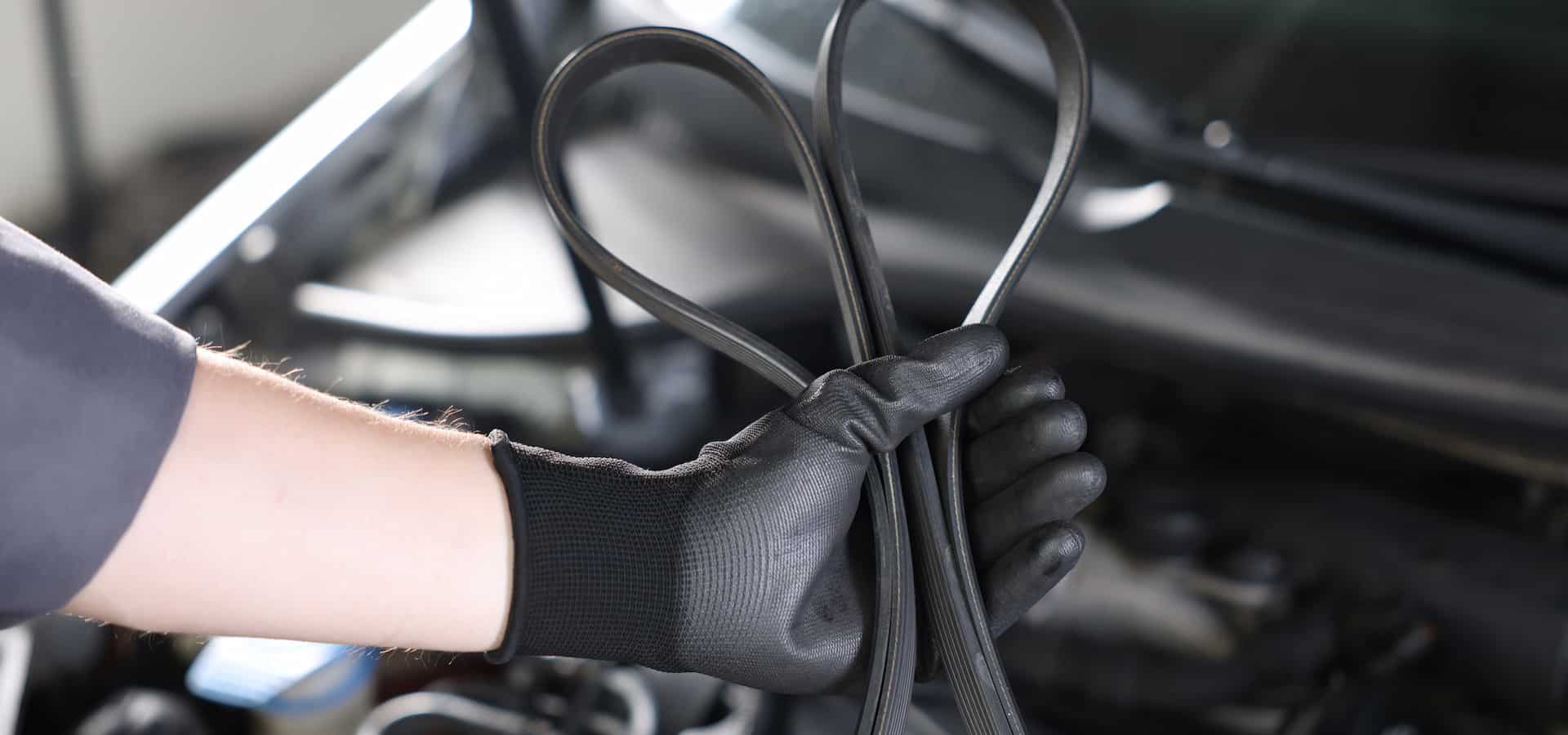
Mazda Cambelt Timing Belt Replacement at Elevation Auto Repair
Older Mazdas built on the Familia, MX-5, and 626/MPV families ran interference engines where a snapped timing belt meant bent valves and a wrecked cylinder head. That single fact is why belt service on these platforms rewards a shop that knows the specifics rather than one that treats every belt the same.
Doing it right on a Mazda means more than swapping the belt. The BP, B6, and FS four-cylinders and the KL-series V6 each have their own tensioner behavior, water pump layout, and crank/cam alignment marks that must line up exactly before the timing cover goes back on. On a rotary 13B-REW in the FD RX-7, there's no belt at all – the eccentric shaft turns the rotors – so we set correct expectations up front rather than quoting the wrong job.
We also replace wear items that live behind the cover while it's open, because getting back in there later doubles the labor. Here's what you can expect:
- Belt, tensioner, and idler pulleys replaced together as a kit
- Water pump inspection or replacement while the front of the engine is open
- Cam and crank timing verified against factory alignment marks
- Front crank and cam seals checked for leaks before reassembly
Symptoms – How to Know You Need This Service
Timing belts wear on a schedule, but they also give warning signs between service intervals. On a Mazda you may notice:
- A high-pitched squeal or chirp from the front of the engine, often worse on cold starts
- A rhythmic ticking or slapping sound that speeds up with engine RPM
- Rough idle or a slight misfire as belt teeth wear and cam timing drifts
- Visible cracks, glazing, or missing teeth if you peek behind the upper timing cover
- Coolant seeping near the timing cover – a sign the water pump behind the belt is failing
- Harder starting or the engine cranking longer than usual
- Oil contamination on the belt from a leaking front cam or crank seal
Schedule soon if you hear squealing or notice a rough idle. Stop driving immediately if you hear loud slapping, see coolant leaking near the belt, or the engine suddenly won't start after a knock – on an interference Mazda engine, a broken belt while running can bend valves. Call us and we'll get you looked at before that happens.
Common Cambelt Timing Belt Replacement Issues on Mazda Vehicles
The specific concerns depend heavily on which engine family your Mazda uses. These are the patterns we see most often across the lineup:
- Aging rubber belts on the 1.6L and 1.8L BP/B6 engines (Miata NA/NB, 1990-2005): These are interference designs where a snapped belt lets pistons meet valves. The belt itself often looks acceptable while the tensioner spring and idler bearing quietly wear out.
- 2.0L and 2.3L FS/L-series belts (Protege, early Mazda3, MX-5): Water pumps are frequently driven by or buried behind the timing belt, so a weeping pump contaminates the belt with coolant and accelerates cracking.
- 2.0L and 2.3L MZR/L3 tensioner and guide wear (2003-2013 Mazda3, Mazda6): Hydraulic tensioner bleed-down and worn plastic guides produce a rattle on cold start that owners often mistake for a normal engine noise.
- SkyActiv-G timing chain stretch (2012-onward Mazda3, CX-5, Mazda6): These use chains, not belts, but a stretched chain throws cam-crank correlation codes and mimics belt-service symptoms – worth confirming which system you actually have.
- Coolant-fouled belts in Denver's climate: Big temperature swings and dry air harden rubber faster, so belts on higher-mileage Mazdas here often crack sooner than the mileage interval alone suggests.
- Reused seals and neglected accessories: Front crank and cam seals, along with the water pump, commonly begin leaking right after a belt replacement if they were not renewed as a set.
Which Mazda Models We See for Cambelt Timing Belt Replacement
Belt service applies mainly to Mazda's older, pre-timing-chain generations. Find your car below:
- MX-5 Miata (NA/NB, 1990–2005) – B6ZE 1.6L and BP 1.8L four-cylinders, belt-driven and interference
- Protegé (BG/BH/BJ, 1990–2003) – B6, BP, and FS-DE engines on belt drive
- 626 and MX-6 (1988–2002) – FS four-cylinder and KL/KF 2.5L V6 variants
- MPV (1996–2006) – GY/AJ V6 platforms with belt-driven cams
- Millenia (1995–2002) – KL and Miller-cycle KJ V6, both belt-driven
- RX-7 (FD, 1993–1995) – 13B-REW rotary uses no timing belt; we inspect the accessory belts and eccentric shaft instead
A note on newer cars: from the mid-2000s onward Mazda moved most engines to timing chains – the MZR 2.0/2.3, SKYACTIV-G, and SKYACTIV-D families use chains, not belts. If you drive a Mazda3, Mazda6, CX-5, or CX-9 from that era, you likely don't need this service, and we'll tell you straight rather than sell you a belt job. Not sure which your car has? Bring it by and we'll confirm before any work starts.
Mazda's timing systems reward attention to detail. Many older Mazda four-cylinders relied on rubber timing belts with tight interference-engine tolerances, while newer SkyActiv engines moved to timing chains with their own service demands. Knowing which platform sits in front of you – and following Mazda's exact torque and alignment procedure – separates a belt job that lasts from one that fails early.
Causes & Risks – What Happens if Ignored
Timing belt trouble on a Mazda usually comes down to age, heat cycling, and neglected companion parts rather than mileage alone. Rubber degrades from within, tensioner bearings dry out, and water pumps seep long before anything squeals.
Waiting turns an affordable, scheduled job into a major engine repair. On interference engines like the BP and B6, that gap is dramatic.
- Cracked or contaminated belt ignored: continued driving frays the belt until it jumps a tooth or snaps entirely.
- Snapped belt on an interference engine: bent intake and exhaust valves, damaged pistons, and possible head work – a repair many times the cost of the belt service.
- Worn tensioner or idler bearing: seizes and shreds the belt with no warning, even on a belt that looks fine.
- Weeping water pump left in place: coolant softens the new belt and leads to overheating, warped heads, and blown gaskets.
- Skipped seal replacement: oil leaks onto the fresh belt and shortens its life dramatically.
The safety line is clear – a belt that has begun chirping, cracking, or throwing timing codes should be addressed before your next long drive. Our honest diagnostics tell you whether it is a "schedule soon" item or a "do not drive" situation.
Safety Impact – Why Cambelt Timing Belt Replacement Matters
A timing belt failure rarely stays contained to the engine. When the belt lets go, the engine stops instantly – and that cascades into the systems that keep you controllable on the road.
- Power steering assist: lost immediately on belt-driven or engine-dependent systems, making the wheel heavy at exactly the wrong moment.
- Vacuum-assisted brakes: a dead engine drains brake booster vacuum, so the pedal turns hard after a pump or two.
- Stability control, ABS, and traction: these rely on a running engine and stable electrical supply; a stall can disable them mid-maneuver.
Stop driving now if you notice any of these:
- A loud rattle or grinding from the timing cover area
- A sudden loss of power followed by no restart
- Coolant pooling near the front of the engine with overheating
Schedule soon if you hear a light cold-start chirp, see fine cracks on an inspected belt, or are past the recommended interval. Addressing a known worn belt before it fails also keeps you clear of the liability questions that follow a preventable roadside breakdown.
How Mazda Cambelt Timing Belt Replacement Actually Works
The timing belt keeps the crankshaft and camshafts turning in exact sync so valves open and close at the right instant relative to the pistons. On Mazda's interference four-cylinders, that synchronization is unforgiving – there is no clearance to spare if timing slips.
Getting it right means aligning factory timing marks precisely, then setting tension and torque to Mazda's spec. Newer SkyActiv models complicate things further with chain-driven timing and electronic systems that need attention around the same service.
- Exact alignment: crank and cam marks must line up per the OEM sequence before the belt goes on – guessing costs valves.
- Correct tension: BP/B6 and MZR engines use specific tensioner settings;
Mazda's engineering leans heavily on precise valve timing, and knowing which platform sits in your bay changes everything. Older belt-driven engines like the BP and FS four-cylinders, plus the diesel SkyActiv-D 2.2 in later CX-5 and Mazda6 models, all treat a worn or misrouted belt very differently. Getting this right on an interference engine – where a snapped belt lets pistons kiss valves – is why specialist attention matters.
How We Diagnose Cambelt Timing Belt Replacement Issues on Mazda
We treat a suspected timing belt concern as a whole-system inspection, not a single-part swap. Here's our process:
- Pull codes with a Mazda-capable scan tool (IDS-equivalent / MDARS-level access) to read cam-crank correlation faults, misfire counters, and any variable valve timing (S-VT/VVT) actuator errors that hint at timing drift.
- Check live data for camshaft-to-crankshaft phase angle and confirm whether the ECU is compensating for a stretched belt or slipped tooth.
- Remove upper covers for a visual on the belt – glazing, cracked backing, missing teeth, and oil contamination from a leaking front cam or crank seal.
- Inspect the tensioner, idlers, and water pump (belt-driven on many Mazda fours) for play, bearing noise, and coolant weeping.
- Verify timing marks against Mazda specs and, on SkyActiv-D, assess the belt-in-oil wear pattern unique to that diesel.
- Road test to catch cold-start rattle, rough idle, or hesitation under load.
From there we build a clear repair plan and quote, so you see exactly what needs attention and why – no guesswork, no surprise add-ons.
Cambelt Timing Belt Replacement on Mazda: Repair vs. Replacement
Not every timing concern demands the full kit, but cutting corners on an interference engine invites disaster. Here's how we frame the call:
- Minor repair: A fresh belt caught early with a healthy tensioner and clean seals may only need the belt and a re-tension to spec – rare, but it happens on lower-mileage Mazdas.
- Partial replacement: If the belt is worn but idlers and pump still measure good, we replace the belt and tensioner while documenting the rest for the next interval.
- Full replacement: On BP/FS and SkyActiv-D engines near their service window, we recommend the complete kit – belt, tensioner, idlers, and the water pump if belt-driven. Once the front cover is open, the labor overlap makes replacing worn seals and the pump the smarter spend.
Because these are interference designs, we lean toward doing it once, correctly. We lay the options in front of you – condition, mileage, and risk – and let you decide with full information rather than pushing the priciest ticket.
How to Make Your Mazda Cambelt Timing Belt Replacement Last Longer
A fresh belt lasts longest when the engine around it stays healthy. Simple habits go a long way.
- Let the engine warm briefly before hard acceleration, especially in Denver's cold mornings, so oil reaches the tensioner and seals.
- Avoid sustained heavy loads and towing beyond your Mazda's rating, which stresses belt-driven accessories.
- Fix front-cover oil or coolant leaks quickly – contamination is the number-one killer of an otherwise good belt.
Owner-level care that helps:
- Listen for new ticking, rattling, or whining at cold start and report changes early.
- Keep coolant and oil at proper levels using Mazda-spec fluids – SkyActiv-D in particular needs the correct low-SAPS oil to protect its belt-in-oil system.
- Follow Mazda's published belt interval by mileage and age, and keep ECU software current at service visits.
Visual checks and fluid top-offs are fine to do yourself. Leave belt inspection under the covers, tensioning, and any timing work to us – on an interference Mazda, a small mistake gets expensive fast. Bring it in and we'll handle the rest.
What to Expect When You Bring Your Mazda In
Mazda timing systems vary widely across the lineup, so the first thing we confirm is exactly what your engine uses. Older 1.6L and 2.0L B-series and FS-DE motors run rubber belts on interference designs, while most modern Skyactiv-G engines switched to chains – knowing which one you have shapes the whole job.
- Drop-off or appointment – We log your VIN, decode the exact engine family, and note mileage against the belt's service interval.
- Initial inspection – We check the belt, tensioner, idlers, water pump, and crank/cam seals for oil weep, cracking, or glazing before quoting.
- Written estimate – You get an itemized breakdown covering the belt kit, tensioner, and water pump, with any seal replacements called out separately.
- During the work – We text or call with photos if we find anything beyond the original scope, and nothing extra happens without your approval.
- Pickup walkthrough – We show you the old parts and explain what was replaced and why.
Loaner and shuttle options are available – just ask when scheduling, and after-hours pickup can be arranged. Clear out personal items you'll need, since the cabin stays untouched otherwise.
Every Mazda gets a road test plus a scan-tool re-check for stored codes before it goes back to you. If anything feels off after pickup, bring it straight back and we'll recheck it.
Why Choose Elevation Auto Repair for Mazda Cambelt Timing Belt Replacement
Getting cam timing right on a Mazda interference engine is unforgiving – a tooth off can mean bent valves. We set timing marks to Mazda specs, torque the crank bolt to the factory sequence, and verify tensioner deflection rather than eyeballing it.
- Platform knowledge – We know which Protegé, Miata, and early 626/MX-6 engines are interference and which Skyactiv units use chains that stretch instead of belts.
- TSB and software awareness – We check for relevant Mazda bulletins and any control-module updates tied to your engine before returning the car.
- Full kit replacement – Belt, tensioner, idlers, and water pump go in together so you're not back in six months for a pump that outlived a fresh belt.
We own the whole job – diagnosis, teardown, reassembly, and post-repair verification all happen here under one roof. That means one shop accountable for the result, honest recommendations without unnecessary add-ons, and a Denver dealership alternative that keeps your Mazda reliable for the long haul.
Our Mazda Services
- Air Conditioning AC Repair
- Battery Repair Replacement
- Brake Repair & Brake Fluid Change
- Check Engine Light Diagnostics
- Clutch Repair & Replacement
- Coolant Leak Repair
- Cooling System Repair
- Drive Shaft Repair
- Engine Repair
- Exhaust & Catalytic Converter Repair
- Head Gasket Repair & Replacement
- Oil Change
- Oil Leak Repair
- Scheduled Service Maintenance
- Steering Repair
- Suspension Repair
- Transmission Repair
- Tune Up
- Wheel Alignment