
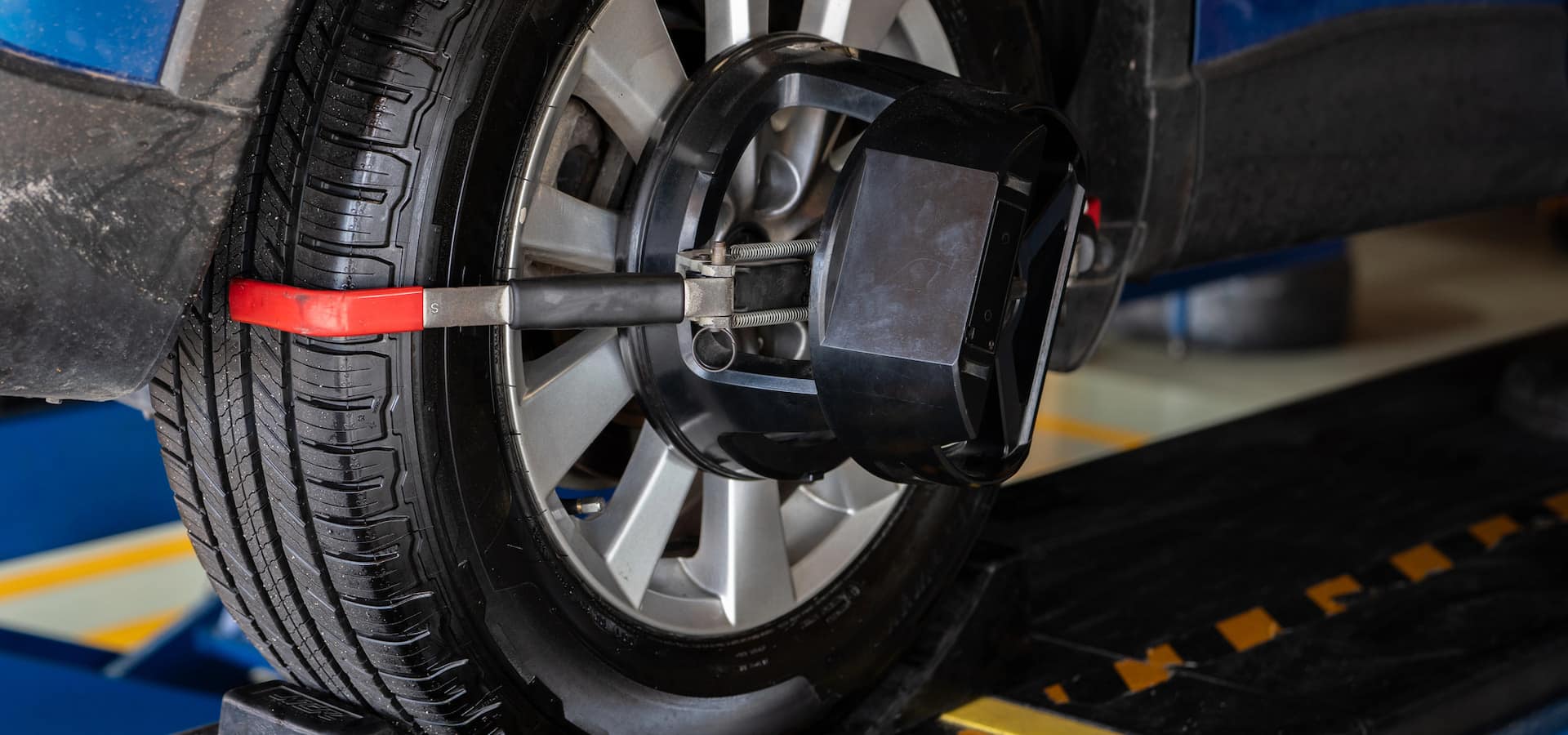
Mazda Wheel Alignment at Elevation Auto Repair
Your Mazda was built to feel connected to the road – that's the whole point of the Jinba Ittai philosophy behind cars like the MX-5 and Mazda3. When the steering feels vague or the car pulls to one side, that sharp feedback disappears fast.
Wheel alignment sets the angles of your wheels – camber, caster, and toe – back to Mazda's factory specifications. Doing it right on a Mazda isn't a generic rack-and-go job.
- Many later Mazda3 (BM/BN) and CX-5 (KE/KF) models use electric power steering with a steering angle sensor that needs recalibration after alignment work, especially with i-ACTIVSENSE cameras and radar.
- SkyActiv chassis platforms have tighter toe and camber tolerances than most drivers realize, and rear toe adjustment on the CX-5 and Mazda6 (GJ/GL) demands proper eccentric bolt torque to hold spec.
We align to Mazda's published angles, not a rough ballpark. Here's what you can expect:
- A pre-alignment inspection of tie rods, ball joints, and bushings so we're not setting angles on worn parts
- Four-wheel measurement with results compared against factory spec
- Steering angle sensor and driver-assist recalibration when the platform requires it
- Straight talk about whether you actually need the alignment or just a rotation and rebalance
Symptoms – How to Know You Need This Service
Alignment problems build gradually, then suddenly you're fighting the wheel on I-25. Here's what Mazda drivers tend to notice first:
- The car drifts or pulls to one side when you briefly let go of the wheel on a level road
- Your steering wheel sits crooked while driving perfectly straight
- Uneven or feathered tire wear – inner or outer edges going bald faster than the rest
- A vibration or shimmy through the wheel that gets worse at highway speed
- Tires that squeal on turns even at moderate speeds
- Loose, wandering steering that makes you constantly correct
- Rapid tire wear soon after hitting a Denver pothole or curb
If you feel a sudden hard pull, notice a clunk paired with the pull, or see cords showing through a tire, stop driving and have it towed in – that points to a bent component or blown-out tire, not just alignment. Steady drift, a slightly off-center wheel, or gradual edge wear are safe to schedule soon before your tires pay the price.
Common Wheel Alignment Issues on Mazda Vehicles
If your Mazda pulls to one side, chews through tires on the inside edge, or the steering wheel sits crooked on a straight road, alignment is usually the culprit. Mazda's chassis tuning leans toward sharp, responsive handling, which means the suspension geometry is sensitive and shows misalignment quickly.
- Inner tire wear on Mazda3 (BK/BL/BM/BP platforms): The multi-link rear setup runs a fair amount of negative camber from the factory. Sagging springs or worn rear trailing-arm bushings push camber further negative, scrubbing the inside shoulders long before the tread looks worn.
- Rear toe drift on Mazda6 (GH/GJ): The rear toe adjusters seize with age and Denver road salt, so a rear alignment that should take minutes turns into a fight with corroded eccentric bolts.
- CX-5 and CX-30 pull after pothole impacts: Front lower control arm bushings and strut mounts deflect enough to shift caster and camber, producing a steady pull that a simple toe adjustment won't fix.
- MX-5 Miata (NC/ND) track-day misalignment: Owners who lower these cars gain aggressive negative camber and toe changes that need corner-balancing, not a basic set-to-spec.
- Steering angle sensor faults post-repair: Later Mazdas with i-Activsense will throw stability-control and lane-keep warnings if the SAS isn't recalibrated after alignment.
- Off-center steering wheel on CX-9 (TC): Heavier front end accelerates tie-rod end wear, showing up as a wandering feel at highway speed.
Which Mazda Models We See for Wheel Alignment
We align the full modern Mazda lineup plus plenty of older favorites. Find your car below:
- Mazda3 (BK, BL, BM/BN) – 2004–present hatch and sedan; SkyActiv BM/BN cars need steering sensor recalibration with alignment
- Mazda6 (GG, GH, GJ/GL) – 2003–present; rear toe eccentrics on GJ/GL require careful setup
- CX-5 (KE, KF) – 2013–present; the most common alignment we see, often after pothole season
- CX-30, CX-50, CX-9 (TB, TC) – crossovers with i-ACTIVSENSE that need camera and radar checks after work
- MX-5 Miata (NA, NB, NC, ND) – 1990–present; the ND especially rewards a precise, spec-tight alignment, and track-prepped cars often want custom settings
- CX-3, Mazda2, CX-7, Tribute – older and compact models still on the road
Turbo variants like the Mazdaspeed3/6 and CX-5 Turbo align the same way mechanically, though we pay extra attention to worn bushings from harder driving. Very early 1980s–90s Mazdas with rare parts can be harder to source components for, so we'll tell you up front if a specific model falls outside what we can support. Bring your car in and we'll dial it back to factory feel.
Causes & Risks – What Happens if Ignored
Most Mazda alignment problems trace back to a mix of Colorado's rough roads, curb strikes, worn suspension bushings, and normal settling as springs age. Front-wheel-drive Mazdas carry most of their weight over the front axle, so front components wear first and pull the geometry out of spec.
Waiting rarely makes it cheaper. A toe adjustment ignored for a season can quietly ruin a set of tires, and a pull left alone often points to a failing bushing or bearing that keeps damaging its neighbors.
- Ignoring inner-edge wear for a few months: commonly destroys otherwise healthy tires and forces early replacement.
- Driving on a pull after a pothole: loads one wheel bearing unevenly, turning a minor alignment into a bearing and hub job.
- Delaying rear toe correction on a Mazda6: lets the eccentric bolts corrode solid, adding labor to free them later.
- Uncorrected camber on a lowered Miata: overheats the inner tread and shortens tire life dramatically on track and street alike.
- Neglected tie-rod play on a CX-9: progresses to steering wander that becomes genuinely unsafe at highway speed.
The good news is that catching these early usually means a straightforward alignment plus one worn part – not a full suspension overhaul.
Safety Impact – Why Wheel Alignment Matters
Alignment isn't only about tire life. On modern Mazdas, the same wheel and steering geometry feeds the electronic safety systems that keep the car predictable in an emergency.
- Dynamic Stability Control (DSC) and Traction Control: rely on accurate steering angle data. A misaligned car reporting a crooked wheel can confuse these systems.
- ABS and braking balance: pulling under braking extends stopping distance and can unsettle the car on slick roads.
- Lane-keep and i-Activsense features: depend on a centered steering wheel and calibrated sensors to track correctly.
- Straight-line stability: worn tie-rods or bushings make the car wander, which is dangerous at speed and in crosswinds.
Stop driving and get it looked at now if:
- The steering wheel shakes hard or the car darts unpredictably.
- You feel play or clunking in the steering when turning.
- The car pulls strongly during braking.
Schedule soon if: the wheel sits slightly off-center, you notice uneven tire wear, or there's a mild steady pull. Addressing a known geometry problem before an incident also keeps you clear of the liability questions that come with driving a car you knew handled poorly.
How Mazda Wheel Alignment Actually Works
A wheel alignment sets three angles – camber, caster, and toe – so all four tires point where the chassis engineers intended. On a Mazda, front toe and camber are the primary adjustments, while the multi-link rear ends on the Mazda3, Mazda6, and CX crossovers allow rear toe and camber correction that many rivals lock out.
What sets Mazda work apart is the electronics tied into the steering. Later models won't fully behave until the systems that watch the wheels are reset to match the new geometry.
- Steering angle sensor (SAS) calibration: required after alignment so DSC and lane-keep read a true center.
- OEM-level scan tooling: we use factory-grade diagnostics to clear and recalibrate i-Activsense sensors, not just a generic code reader.
- Torque-to-spec fasteners: control-arm and subframe bolts follow Mazda's sequence and values
How We Diagnose Wheel Alignment Issues on Mazda
If your Mazda pulls to one side, chews through the inside edge of a tire, or the steering wheel sits crooked on a straight road, the alignment angles have drifted out of Mazda's factory spec. Here's how our technicians pin down the cause.
- Interview and road test: We confirm the pull direction, wander, or vibration on the same roads you drive daily, then note torque steer that can mimic misalignment on the SkyActiv-powered Mazda3, Mazda6, and CX-5.
- Visual and mechanical inspection: We check tire wear patterns, tire pressures, and inspect front lower control arm bushings, tie rod ends, and the rear multi-link arms that wear on higher-mileage BM/BN Mazda3 and GJ/KF platforms.
- Suspension load and play check: We inspect strut mounts, wheel bearings, and ball joints, since worn parts throw off readings if measured first.
- Computerized alignment scan: Wheels mount to precision targets and we compare live camber, caster, toe, and thrust angle against Mazda's OEM values.
- Steering angle sensor check: On models with i-Activsense, we verify the steering angle sensor and calibrate it after adjustment so lane-keep and stability systems read true center.
Once we've isolated whether it's a simple adjustment or a worn component driving the readings, we walk you through a clear repair plan and a quote before any work begins.
Wheel Alignment on Mazda: Repair vs. Replacement
Not every out-of-spec alignment means new parts. The right call depends on what's actually moving the angles.
- Adjustment only (a true repair): When suspension components are tight and healthy, we simply reset toe, camber, and caster to Mazda spec. This handles most curb-strike and post-tire-rotation drifts on the Mazda3 and CX-5.
- Partial replacement: A single worn tie rod end or a cracked front control arm bushing gets replaced while the rest of the assembly stays. Adjusting alignment on top of worn parts won't hold, so we correct the part first, then align.
- Full assembly replacement: When you see cascading wear – a sagging strut, damaged knuckle, or bent lower arm from a hard pothole hit – or when repair cost approaches the price of a complete arm, replacing the assembly restores geometry and safety margin.
Rear multi-link Mazdas sometimes need adjustable arms or shims to bring stubborn rear camber back into range. We lay out each option – what it fixes, what it costs, and what it leaves untouched – so you decide, not us.
How to Make Your Mazda Wheel Alignment Last Longer
A fresh alignment holds far longer when the driving and upkeep support it. A few habits go a long way.
- Ease over hazards: Slow down for potholes, curbs, and Denver's rough winter roads – hard impacts bend arms and knock toe out fast.
- Watch your tires: Check pressures monthly against the door-jamb spec and rotate on Mazda's interval so tread wears evenly and doesn't hide a developing alignment problem.
- Listen and feel: Note new clunks over bumps, a steering wheel that no longer centers, or a fresh pull – early signs of a loosening tie rod or worn bushing.
- Avoid overloading: Constant heavy cargo in a CX-5 or CX-9 changes ride height and accelerates rear suspension wear.
Stick with OEM or OE-equivalent suspension parts and Mazda-spec fluids, and keep i-Activsense software current so steering-angle and stability calibrations stay accurate. Checking tire pressure and eyeballing tread is safe DIY. Leave ball joints, tie rods, strut work, and the alignment itself to us – these are safety-critical, and a proper reset needs calibrated equipment. Bring it in at the first sign of pull or uneven wear and we'll keep small drifts from becoming expensive tire and suspension repairs.
What to Expect When You Bring Your Mazda In
Maybe your Mazda3 pulls slightly to the right on I-25, or the wheel sits crooked on center after you clipped a Denver pothole. Whatever brought you in, here's how a wheel alignment visit runs from start to finish.
- Drop-off or scheduled appointment – Tell us what you're feeling: the pull, uneven tire wear on the CX-5's front edges, or a wheel that fights back on straightaways. Loaner and shuttle options are available, and after-hours pickup can be arranged so your schedule stays intact.
- Initial inspection – We check tire wear patterns, control arm bushings, tie rod ends, and ball joints before touching the alignment rack. On the SkyActiv platforms, worn front lower control arm bushings frequently skew camber readings, so we rule those out first.
- Written estimate – You get a clear breakdown of alignment work plus any worn steering or suspension parts we found. Nothing gets done without your approval.
- Communication during the work – We text or call with before-and-after alignment numbers so you see exactly what changed.
- Pickup walkthrough – We show you the printed alignment sheet and explain each corrected angle.
Leave personal items in the car if you like – we work around them. Every alignment ends with a road test to confirm the wheel sits centered and the pull is gone. If anything still feels off, bring it back and we'll recheck it.
Why Choose Elevation Auto Repair for Mazda Wheel Alignment
A good alignment on a Mazda isn't just setting toe and calling it done. The SkyActiv chassis on the 2014-plus Mazda3, Mazda6, and CX-5 responds to caster and camber precision, and steering-angle sensor calibration matters after any suspension work.
- Mazda-specific know-how – We track Mazda TSBs and software updates, including steering-angle sensor relearn procedures and any EPS recalibration needed after alignment on later models with i-ACTIVSENSE.
- Platform awareness – Front bushing wear on higher-mileage Mazda3 and CX-5 units, plus rear multilink toe drift, get addressed so your alignment actually holds.
- End-to-end ownership – The same shop that diagnoses the pull repairs the worn parts and verifies the fix on a road test and scan-tool recheck.
You get honest diagnostics – if your Mazda only needs an alignment, that's all you'll pay for. We set factory angles, protect your tire life, and hand you the printed proof before you drive off.
Our Mazda Services
- Air Conditioning AC Repair
- Battery Repair Replacement
- Brake Repair & Brake Fluid Change
- Check Engine Light Diagnostics
- Clutch Repair & Replacement
- Coolant Leak Repair
- Cooling System Repair
- Drive Shaft Repair
- Engine Repair
- Exhaust & Catalytic Converter Repair
- Head Gasket Repair & Replacement
- Oil Change
- Oil Leak Repair
- Scheduled Service Maintenance
- Steering Repair
- Suspension Repair
- Cambelt Timing Belt Replacement
- Transmission Repair
- Tune Up