
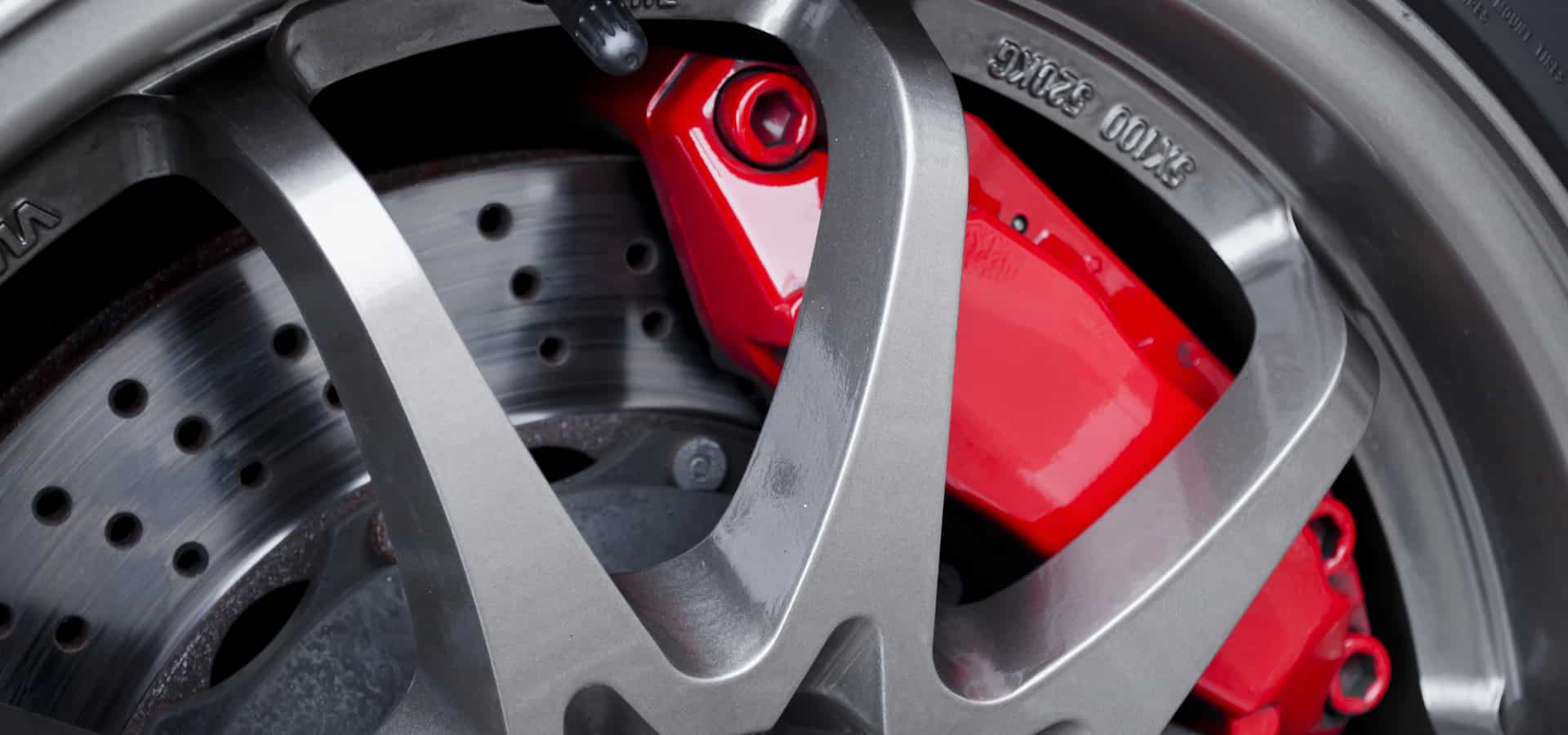
Mazda Brake Repair & Brake Fluid Change at Elevation Auto Repair
Get a Mazda's brakes wrong and the bill climbs fast – warped rotors from over-torqued lug nuts, seized calipers on the SkyActiv-G platforms, or an ABS module that traps air because the fluid was never bled properly through the scan tool. Mazda brake work rewards precision, and that's the standard we hold at Elevation Auto Repair.
Brake service on a Mazda covers pads, rotors, calipers, hardware, and a full brake fluid exchange that flushes old, moisture-laden DOT 3 or DOT 4 through the master cylinder and every corner. On modern Mazdas the job isn't finished until the ABS/DSC circuits are cycled and bled – something a generic shop skips.
Two Mazda-specific factors shape how we approach this:
- Later CX-5, Mazda3, and Mazda6 models pair Smart Brake Support and i-ACTIVSENSE with the hydraulic system, so proper fluid bleeding often requires activating ABS solenoids with factory-level tooling.
- Mazda publishes precise caliper bracket and wheel-bearing torque specs – rushing these invites pedal pulsation and premature rotor wear.
What you can expect from us:
- Correct DOT-spec fluid and a full system flush, not a top-off
- Torque-to-spec reassembly with fresh caliper hardware
- Honest measurement of pad and rotor thickness before any parts are sold
- Clear communication about what your Mazda actually needs
Symptoms – How to Know You Need This Service
Mazdas tend to communicate brake trouble early. Watch for these signs from the driver's seat:
- Squealing or metallic grinding – the wear indicators are contacting the rotor, or pads are worn to the backing plate. Grinding means schedule right away before rotor damage sets in.
- Pulsation or shudder through the pedal when braking from highway speed – commonly warped or unevenly deposited front rotors on Mazda3 and CX-5.
- Soft, spongy, or sinking pedal – often moisture-saturated brake fluid or air in the system. Stop driving and have it towed if the pedal goes to the floor.
- Brake, ABS, or DSC warning lights illuminated on the cluster – have it scanned promptly.
- Longer stopping distances or the car pulling to one side under braking – a sticking caliper or uneven pad wear.
- Burning or chemical smell after hard stops – dragging brakes or overheated fluid. Address quickly.
- Clicking or rattling from a wheel over bumps – worn or missing caliper hardware.
Any dashboard brake warning combined with a low or fading pedal is a stop-driving situation. Squeaks and mild pulsation can wait for a scheduled appointment, but don't let them linger.
Common Brake Repair & Brake Fluid Change Issues on Mazda Vehicles
Mazda's SkyActiv chassis and earlier platforms each have their own brake wear signatures. These are the patterns we see most often on Denver-area cars:
- Front rotor warping and pedal pulsation – Common on 2014+ Mazda3 (BM/BN) and CX-5 (KE/KF) where the relatively thin front rotors and aggressive pad compound show judder after heavy highway or mountain-descent braking.
- Rear caliper drag on electronic parking brake models – Later CX-5, CX-9 (TC), and Mazda3 use an electric parking brake actuator; the rear pistons can hang up if the caliper isn't wound back through the correct service mode, causing premature rear pad wear.
- Neglected brake fluid absorbing moisture – Mazda's DOT 3 hydraulic systems lose their boiling point over time. Colorado's elevation and long grades make fade from moisture-laden fluid a real problem past the recommended interval.
- Sticky slide pins and rust-jacking – Older Mazda6 (GH/GJ) and MX-5 (NC/ND) caliper guide pins seize when the grease dries out, leading to tapered pad wear and uneven braking.
- Corroded rear drum hardware – Base-trim Mazda2 and early Mazda3 rear drums accumulate rust on the wheel cylinders and return springs, producing a soft or grabby pedal.
- Worn wheel speed sensors triggering ABS faults – Debris and corrosion at the sensor tone rings can set ABS and DSC warning lights that mimic a brake hydraulic problem.
Which Mazda Models We See for Brake Repair & Brake Fluid Change
We handle brake repair and fluid exchange across nearly the entire modern Mazda lineup here in Denver:
- Mazda3 (BK, BL, BM/BN, BP) – 2004 to present, including SkyActiv-G hatch and sedan; front rotor pulsation is the frequent complaint.
- Mazda6 (GG, GH, GJ/GL) – 2003 to present; larger rear calipers and the sport variants benefit from OEM-grade pads.
- CX-5 (KE, KF) – 2013 to present; a heavy commuter platform where rear pads and fluid moisture are common.
- CX-30, CX-9 (TB, TC), CX-50 – brake and fluid service including i-ACTIVSENSE bleeding.
- MX-5 Miata (NC, ND) – 2006 to present; track-driven cars need careful fluid selection and Brembo hardware attention on Club trims.
- CX-3 and Mazda2 – compact platforms, straightforward pad and rotor service.
Turbocharged and sport-tuned variants, along with Miatas that see autocross or track duty, often run hotter and boil old fluid faster – we account for that with the right DOT specification. We're candid about limits too: very early rotary and pre-2000 Mazdas fall outside what we routinely stock parts for, though we're happy to talk through options if you drive one.
Get a Mazda brake job wrong and the bill compounds quickly. Skip the fluid flush interval, use the wrong pad compound, or fail to reset the electronic parking brake correctly on a newer CX-5 or Mazda3, and a routine service turns into warped rotors, seized calipers, or a stability control fault that keeps the car in limp behavior. Mazda's braking systems are precise, and they reward being serviced to spec. Here's how we approach it.
Causes & Risks – What Happens if Ignored
Most Mazda brake trouble traces back to a mix of Denver driving conditions and normal wear. Steep grades on I-70, stop-and-go city traffic, road salt in winter, and skipped fluid flushes all accelerate the wear paths above. The single biggest driver we see is old brake fluid – once it absorbs moisture, its boiling point drops and pedal feel goes soft under sustained braking.
Waiting rarely saves money. A worn pad left too long chews into the rotor, and a dragging caliper cooks its own seals.
- Ignoring a squealing wear indicator for a few weeks lets the pad backing score the rotor – a pad-only job becomes pads plus rotors.
- Skipping the fluid flush interval invites internal corrosion in the ABS modulator, one of the most expensive brake components to replace.
- A hanging rear caliper on an EPB-equipped CX-5 overheats the pad and can seize the piston, adding a caliper to the repair.
- Dried slide pins cause tapered wear that ruins pads early and stresses the rotor.
- Moisture in the fluid produces brake fade on long mountain descents – the point where driving becomes genuinely unsafe.
Safety Impact – Why Brake Repair & Brake Fluid Change Matters
Mazda's braking system is tied directly to ABS, Dynamic Stability Control (DSC), traction control, and Smart City Brake Support on equipped models. Degraded fluid or a failing hydraulic component doesn't just lengthen stopping distance – it can disable the safety features layered on top of the brakes.
- Stop driving now: pedal sinks to the floor, brake warning light with a hard or spongy pedal, fluid leaking at a wheel, or grinding metal-on-metal.
- Schedule soon: light squeal at low speed, mild pulsation through the pedal, ABS/DSC light without pedal change, or a parking brake that won't fully release.
Automatic emergency braking relies on healthy hydraulics and accurate wheel speed data – if the system detects a fault, it may deactivate collision mitigation entirely. There's also a liability angle: if a known worn or leaking brake component isn't addressed before a collision, it can complicate an insurance claim. Sound brakes keep every downstream safety system working as Mazda designed it.
How Mazda Brake Repair & Brake Fluid Change Actually Works
A Mazda brake service is more than swapping pads. On most 2014-and-newer models, the rear brakes use an electronic parking brake, so the rear pistons must be retracted electronically before the calipers can be opened. Do it manually and you risk damaging the actuator motor.
Fluid changes follow a proper bleed sequence, and the ABS unit often needs a scan-tool-assisted bleed to purge air from the modulator.
- EPB service mode – The rear calipers are placed in maintenance mode with a scan tool that talks to Mazda's system, then reactivated and calibrated after reassembly.
- Correct fluid spec – Mazda specifies the DOT-rated fluid for the platform; mixing types or reusing contaminated fluid undermines the whole flush.
- Torque and sequence – Caliper bracket bolts, guide pins, and wheel fasteners each get set to Mazda's torque values to prevent warping and uneven clamping.
- ABS module bleed
Get brake work wrong on a Mazda and the cost shows up fast – warped rotors from over-torqued lug nuts, spongy pedal from air trapped in the ABS unit, or a dragging caliper that eats a fresh set of pads in a few thousand miles. Mazda's braking systems, from the SkyActiv G-series to the CX-5 (KE and KF chassis) and the Mazda3 (BM, BN, BP platforms), reward precise procedures and punish shortcuts. That precision is where we focus.
How We Diagnose Brake Repair & Brake Fluid Change Issues on Mazda
A pull, a pulse, or a soft pedal each point somewhere different. We work through Mazda brake complaints in a set order so nothing gets missed.
- Connect a Mazda-capable scan tool (MDARS-compatible) to read ABS/DSC module codes, wheel-speed sensor data, and brake-pad wear inputs on equipped models like the CX-9 (TC platform).
- Check stored G-Vectoring and i-ACTIVSENSE faults that can mimic or accompany brake concerns on later Mazda3 and CX-30 models.
- Road test to reproduce the symptom – pedal feel, pull under braking, vibration frequency, and noise at specific speeds.
- Lift the vehicle and measure rotor thickness and runout with a micrometer and dial indicator against Mazda's minimum specs.
- Inspect pad thickness, caliper slide pins, dust boots, and flex hoses for swelling or cracking.
- Test brake fluid moisture content with a refractometer or test strips – moisture above roughly 3% drops boiling point and causes fade.
The measurements plus the scan data give us a clear picture. We then lay out a plain-language repair plan and an itemized quote before any parts go on the car – no guessing, no surprise add-ons.
Brake Repair & Brake Fluid Change on Mazda: Repair vs. Replacement
Not every brake concern means replacing everything. The right call depends on what's actually worn.
- Genuine repair: Cleaning and lubricating sticky caliper slide pins, re-torquing hardware, or a fresh brake fluid flush when the pedal is soft but pads and rotors measure in-spec.
- Partial replacement: New pads and rotors while keeping serviceable calipers – common on Mazda3 and CX-5 that see stop-and-go Denver commuting. Replacing a single seized caliper while the opposite side is still healthy.
- Full replacement: When cascading wear appears – scored rotors below minimum, contaminated pads from a leaking caliper, and swollen flex hoses together. At that point piecemeal repair costs approach a complete corner rebuild and compromises safety.
Rotors thinned past Mazda's minimum can't be safely machined and will warp again quickly, so we replace rather than cut them. We walk you through what we measured, show you the worn parts, and explain the options ranked by safety and value – not by ticket size. You decide with the facts in front of you.
How to Make Your Mazda Brake Repair & Brake Fluid Change Last Longer
Good brake life on a Mazda comes from how you drive and how you keep up with small checks.
- Coast toward stops instead of late, hard braking – it cuts pad and rotor heat, which matters on Denver's long downhill grades.
- Avoid riding the brakes downhill; use engine braking and lower gears where you can.
- Ease off heavy loads and roof cargo when possible, since added weight accelerates pad wear.
- Listen for new squeal or grinding and feel for pedal pulsation – early attention prevents rotor damage.
- Check the brake fluid level and dashboard warning lights during routine fill-ups.
Brand-specific care pays off: use Mazda-spec DOT 3 or DOT 4 fluid and OEM-quality pads formulated for the SkyActiv platforms, and follow Mazda's brake fluid interval – moisture creeps in even if you rarely brake hard. Keeping the ABS/DSC software current also helps the system modulate correctly.
Visual checks and fluid-level monitoring are safe to do yourself. Bleeding the ABS module, replacing calipers, and machining or measuring rotors are safety-critical – leave those to the shop so the pedal you trust actually stops the car.
Getting brakes wrong on a Mazda has real consequences – a soft pedal on a 2014-2018 Mazda3 (BM/BN chassis) with sticky rear caliper slides, or an ABS fault after a fluid flush done without proper bleeding on a CX-5. These cars use electronically managed systems that don't tolerate shortcuts. We treat every brake job as a system, not just a pad swap.
What to Expect When You Bring Your Mazda In
From the moment you schedule, the process is built to keep you informed and your Mazda safe.
- Drop-off or appointment – Schedule ahead or drop by. Leave personal items in the cabin if you like; we note them and lock the vehicle.
- Initial inspection – We measure pad thickness, rotor runout and minimum thickness, inspect caliper guide pins and boots, and test brake fluid moisture content with a refractometer or test strips.
- Written estimate – You get a clear breakdown of what needs attention now versus what can wait, with photos of worn components.
- Communication during the work – We call or text before any additional work, so nothing happens without your approval. Shuttle service and loaner options help you stay on schedule.
- Pickup walkthrough – We show you the old parts, explain what was done, and go over break-in expectations for new pads and rotors.
Before your Mazda leaves, we road test it and re-scan the ABS/DSC system to confirm no stored codes. After-hours pickup is available when arranged. If the pedal ever feels off after service, bring it back – we'll re-check bleed quality and caliper function at no runaround.
Why Choose Elevation Auto Repair for Mazda Brake Repair & Brake Fluid Change
Mazda braking systems have their own personality, and we service them accordingly. We follow Mazda's recommended DOT 3 fluid specs and factory bleed sequence, and we watch for the platform quirks that trip up generic shops.
- TSB and software awareness – We check for applicable Mazda service bulletins, including brake feel and DSC-related updates on Skyactiv models, before assuming a mechanical fault.
- Platform-specific know-how – Rear caliper seize on Mazda3 and Mazda6 (GJ chassis), parking brake actuator issues on electronic-parking-brake CX-5 and CX-9 models, and G-Vectoring interaction with the stability system.
- Proper fluid service – Moisture-tested, full-system flush rather than a partial top-off, so you keep a firm pedal and protect the ABS module from internal corrosion.
We own the job end to end – diagnosis, repair, and post-repair verification with scan-tool confirmation. As your Denver dealership alternative, you get honest recommendations and no unnecessary parts, backed by technicians who work on Mazdas every week.
Our Mazda Services
- Air Conditioning AC Repair
- Battery Repair Replacement
- Check Engine Light Diagnostics
- Clutch Repair & Replacement
- Coolant Leak Repair
- Cooling System Repair
- Drive Shaft Repair
- Engine Repair
- Exhaust & Catalytic Converter Repair
- Head Gasket Repair & Replacement
- Oil Change
- Oil Leak Repair
- Scheduled Service Maintenance
- Steering Repair
- Suspension Repair
- Cambelt Timing Belt Replacement
- Transmission Repair
- Tune Up
- Wheel Alignment