
Mazda Air Conditioning AC Repair at Elevation Auto Repair
You slide into your Mazda3 on a warm Denver afternoon, hit the A/C button, and get nothing but warm air pushing through the vents. That moment is frustrating, but it's also fixable – and fixing it correctly on a Mazda takes more than dumping in a can of refrigerant.
Mazda climate systems have their own quirks that reward a specialist's touch. Many SkyActiv models run R-1234yf refrigerant, which requires the right recovery machine and charging equipment – not the older R-134a setup. We've also seen recurring compressor clutch and control-valve issues on the 2014+ Mazda3 and CX-5, plus condenser leaks on rock-chipped front-mount units common to Colorado driving. Precise refrigerant charge weight and correct PAG oil type matter, since Mazda's variable-displacement compressors are sensitive to overcharge and contamination.
We diagnose with proper leak detection and system pressure testing rather than guessing, so you're not paying for parts your car doesn't need. Here's what you can expect:
- Electronic leak detection and full high/low-side pressure analysis
- Correct refrigerant type and exact charge weight for your model
- Honest findings – we only recommend what your Mazda actually needs
- Fast turnaround so you're back on the road comfortable and cool
Symptoms – How to Know You Need This Service
Mazda A/C trouble usually announces itself gradually. Watch for these signs from the driver's seat:
- Warm or lukewarm air even with the temperature set to its coldest – often a refrigerant leak or failing compressor.
- Weak airflow from the vents, which can point to a clogged cabin filter or a failing blower motor.
- A grinding or squealing noise when the A/C engages – frequently a worn compressor clutch or bearing.
- Musty or mildew smell when the system turns on, usually a dirty evaporator or blocked condensate drain.
- Cold air that fades to warm after a few minutes of driving, a classic sign of a slow leak or overheating condenser.
- Water pooling on the passenger floor, often a plugged evaporator drain.
- Clicking or rapid cycling of the compressor, which can signal low charge or a bad pressure switch.
Most A/C symptoms let you schedule at your convenience. However, if you notice a burning smell, smoke, or a squealing belt that smells hot, stop driving and have it inspected right away – a seized compressor can damage the accessory belt and related components.
Common Air Conditioning AC Repair Issues on Mazda Vehicles
You climb into your Mazda on a hot Denver afternoon, crank the dial to max, and get nothing but warm air off the vents. That moment sends a lot of owners our way, and the culprits tend to follow familiar patterns across the lineup. Here's what we see most often on Mazda A/C systems.
- Condenser leaks on 2014-2018 Mazda3 and CX-5 (SkyActiv platform): The front-mounted condenser sits low and exposed, so road debris and rock strikes on I-70 punch pinhole leaks that slowly bleed off refrigerant.
- Compressor clutch and control valve failure on 2007-2015 CX-9 and Mazda6: The variable-displacement compressors wear internally, leading to weak cooling, clutch cycling noise, or metallic debris contaminating the whole loop.
- Evaporator core leaks on older MX-5 Miata (NC chassis) and early SkyActiv cars: A slow refrigerant loss with a faint sweet smell and fogging at the vents often points to the evaporator buried in the dash.
- Blend door actuator faults on CX-5 and Mazda3: A clicking behind the dash or air that won't switch from hot to cold usually means a failed actuator, not a refrigerant problem at all.
- Cabin blower resistor / final-stage unit failure: Fan works only on high speed – a classic resistor breakdown seen across many Mazda models.
- O-ring and line fitting seepage: Age and Colorado's dry, high-altitude swings harden seals at the compressor and line connections, causing gradual performance loss.
We pinpoint which of these you're facing fast, so you're not paying to chase symptoms.
Which Mazda Models We See for Air Conditioning AC Repair
We service A/C systems across nearly the entire modern Mazda lineup. These are the platforms we most commonly work on:
- Mazda3 (BM/BN, 2014–2018 and BP, 2019+) – SkyActiv-G models; frequent compressor clutch and condenser concerns.
- Mazda6 (GJ/GL, 2014+) – both 2.5L and turbocharged 2.5T variants.
- CX-5 (KE, 2013–2016 and KF, 2017+) – our highest-volume Mazda for A/C work, including condenser leaks.
- CX-30, CX-9 (TC, 2016+), and CX-50 – newer R-1234yf systems that need the correct equipment.
- MX-5 Miata (ND, 2016+ and NC, 2006–2015) – compact engine bays that reward careful component access.
- CX-3 and Mazda2 – smaller platforms with the same SkyActiv climate architecture.
Turbocharged models like the Mazda6 2.5T and CX-9 pack tighter engine bays, so condenser and line service takes extra care – something we plan for. We also handle older NA/NB Miatas and pre-SkyActiv models, though parts availability on very early cars can vary. If you're unsure whether your Mazda runs R-134a or R-1234yf, bring it in and we'll identify it correctly before any work begins.
Causes & Risks – What Happens if Ignored
Most Mazda A/C trouble traces back to a mix of Colorado climate, normal aging, and a couple of platform quirks. Big temperature swings stress seals, dry air accelerates O-ring shrinkage, and low refrigerant forces the compressor to run without proper oil circulation.
A small leak feels harmless for a while, but the system rarely stays that way. Refrigerant carries the compressor's lubricating oil, so once the charge drops, wear starts stacking up quickly.
- Low refrigerant left unaddressed starves the compressor of oil and can seize it, turning a simple seal repair into a full compressor replacement.
- A seized compressor sheds metal debris throughout the lines, condenser, and evaporator, often requiring a system flush and multiple new components.
- A minor condenser pinhole ignored through a hot season lets moisture enter, corroding the accumulator/drier and clogging the expansion valve.
- A failing blend door actuator can jam a door and leave you stuck with defrost-only airflow, a real problem for winter visibility.
- Blower resistor faults sometimes escalate to a burned connector or fire-risk hot spot in the HVAC wiring.
Catching a leak early usually means a seal and a recharge. Waiting turns it into compressor, drier, and condenser work. We'll show you exactly where your system stands.
Safety Impact – Why Air Conditioning AC Repair Matters
Air conditioning isn't only about comfort. On Mazda vehicles, the HVAC system ties directly into windshield defog and defrost, and driver alertness on long drives depends on a cabin that isn't overheating.
- Stop driving / schedule urgently: loud grinding or squealing from the compressor (metal contamination in progress), burning smells from the blower area, or defrost that won't clear a fogged windshield.
- Schedule soon: gradually weaker cooling, intermittent cold air, mild musty odors, or fan that only runs on certain speeds.
A compressor that locks up can throw or shred the serpentine belt, which on many Mazda engines also drives the water pump and charging system – suddenly you're facing overheating and a dead battery on the shoulder. Defog failure in a Denver snowstorm is a genuine visibility hazard. If a known refrigerant or component issue contributes to a collision, an unrepaired defect can complicate liability too. We prioritize the safety-critical items first and get you back on the road quickly.
How Mazda Air Conditioning AC Repair Actually Works
Your Mazda's A/C is a closed loop that moves heat out of the cabin. The compressor pressurizes refrigerant, the condenser sheds that heat up front, the expansion valve drops the pressure, and the evaporator behind the dash absorbs cabin heat while the blower pushes cooled air through the vents. Sensors and the climate control module manage the whole cycle.
Mazda's SkyActiv-era systems lean on variable-displacement compressors and electronically controlled climate modules, which changes how the work has to be done versus a generic recharge.
- Refrigerant type matters: newer Mazda models use R-1234yf, which needs dedicated equipment and can't be mixed with older R-134a.
- Precise charge weights: variable-displacement compressors are sensitive to over- or under-charging, so we recover, evacuate, and recharge by weight to Mazda spec – not by guesswork.
- Vacuum and leak testing: proper evacuation pulls moisture out before recharge, protecting the drier and expansion valve.
- Actuator and sensor calibration: blend door actuators and climate modules often need to relearn their range after replac
How We Diagnose Air Conditioning AC Repair Issues on Mazda
You climb into your Mazda3 or CX-5 on a hot Denver afternoon, crank the fan, and get lukewarm air pushing through the vents. That moment tells us something specific is wrong, and our job is to find it fast without guessing your wallet into an early grave.
- Interview and symptom capture – We ask when the cooling drops off (idle vs. highway), whether the compressor cycles, and if you hear clicking or hissing near the dash.
- Scan for stored codes – Using Mazda-capable diagnostics (Mazda Modular Diagnostic System / IDS equivalent), we read HVAC and body control module data to catch faults like pressure sensor errors, blower resistor faults, or a compressor clutch relay that won't command on.
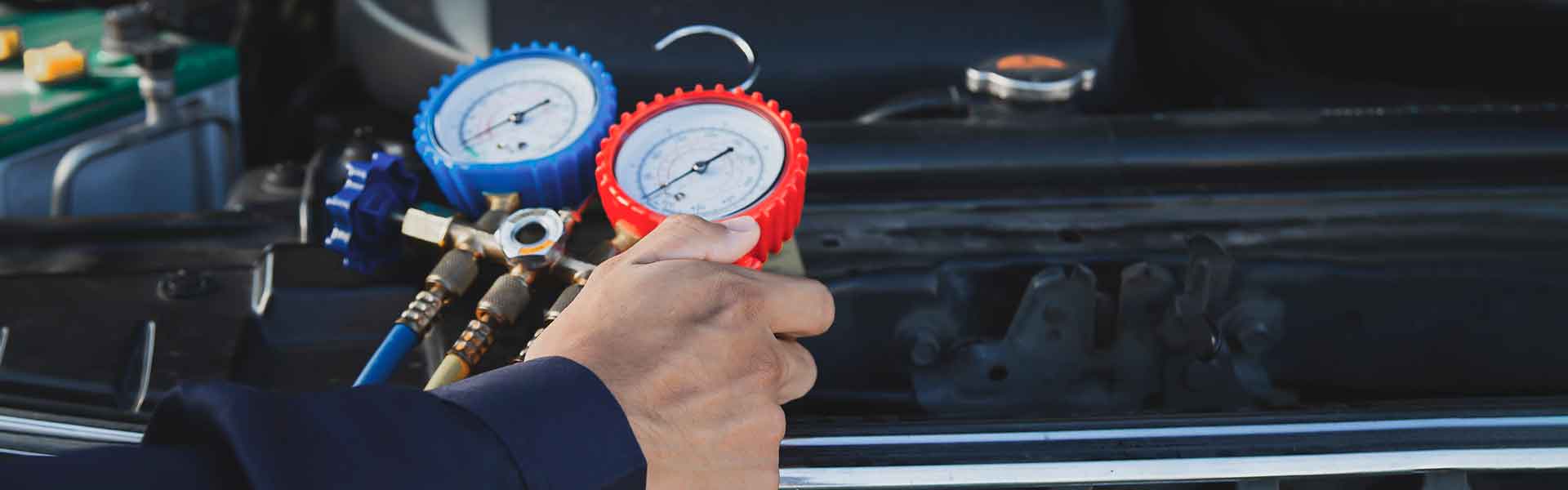
- System pressure test – We connect manifold gauges to the high and low side ports to see actual refrigerant charge and whether the TXV or orifice is metering correctly.
- Electrical checks – We verify the magnetic clutch engagement, the actuator motors behind the dash (a known blend-door complaint on some Mazda6 and CX-9 platforms), and the pressure switch signals.
- Visual and dye inspection – We look at the condenser (front-mounted and vulnerable to rock strikes), hose fittings, and evaporator drain, adding UV dye when a slow leak is suspected.
- Road test – We confirm cooling under real load and airflow at different speeds.
From there we build a clear repair plan and quote so you know exactly what's failing and why before any work begins.
Air Conditioning AC Repair on Mazda: Repair vs. Replacement
Not every warm-air complaint means a new compressor. We sort the fix into three honest buckets.
- True repair – A recharge with correct refrigerant, a single O-ring or Schrader valve replacement, a blower resistor swap, or reseating a connector. Common on Mazda3 and CX-30 when a fitting weeps slowly and the compressor still runs strong.
- Partial replacement – Replacing just the failed part while keeping the rest of the system. A leaking condenser from road debris, a stuck blend-door actuator on Mazda6/CX-9, or a failed pressure sensor can be swapped without touching a healthy compressor.
- Full replacement – When the compressor seizes and sends metal debris through the lines, we recommend replacing the compressor, receiver-drier, and orifice/TXV, then flushing the system. Reusing contaminated components almost guarantees a repeat failure, so this protects your investment.
We lay out the options side by side – what each path costs relative to the others and how long it should hold up – so you choose based on facts, not pressure toward the priciest ticket.
How to Make Your Mazda Air Conditioning AC Repair Last Longer
Once your Mazda's A/C is blowing cold again, a few habits keep it that way and help you spot trouble early.
Driving and usage habits
- Run the A/C briefly even in winter to keep seals lubricated and prevent the compressor from drying out.
- Use recirculation on extreme-heat days to reduce compressor load in Denver's dry, high-altitude climate.
- Avoid maxing cooling the second you start – let airflow build gradually to ease strain on the clutch.
Owner maintenance you can handle
- Replace the cabin air filter on Mazda's recommended interval – a clogged filter mimics weak cooling and overworks the blower.
- Listen for new clicking, squealing, or rapid cycling and note when it happens.
- Check that the condenser area behind the front bumper stays clear of leaves and debris.
Brand-specific care
- Insist on the correct refrigerant type and OEM-spec charge amount – overfilling stresses the compressor.
- Keep body and HVAC software current, since Mazda updates can refine actuator and climate control behavior.
- Follow Mazda's service intervals for system inspection.
Filters and visual checks are safe DIY. Leave refrigerant handling, electrical repairs, and evacuation to the shop – it's regulated work and mistakes get expensive fast.
What to Expect When You Bring Your Mazda In
You reach for the A/C on a hot Denver afternoon and get lukewarm air, or a musty smell rolls out of the vents on a CX-5 or Mazda3. Those clues point somewhere specific, and our job is to find the source quickly instead of guessing.
- Drop-off or appointment – Tell us what you're noticing: weak cooling, clutch cycling, hissing near the expansion valve, or the compressor never engaging. Grab personal items from the cabin; we secure the vehicle either way.
- Initial inspection – We check system pressures on both sides, inspect the condenser for road debris and stone strikes, test the compressor clutch and relay, and scan the climate control module for stored codes on Mazda's system.
- Written estimate – You get a clear breakdown of what's failing and what it takes to fix it before any work starts.
- During the work – We call or text with findings. Loaner and shuttle options help you keep moving, and after-hours pickup is available when your schedule runs late.
- Pickup walkthrough – We show you the replaced parts and vent temperatures at idle and at speed.
Every A/C repair ends with a road test and a scan-tool re-check to confirm pressures hold and the compressor cycles correctly. If anything feels off afterward, bring it back and we'll make it right.
Why Choose Elevation Auto Repair for Mazda Air Conditioning AC Repair
Mazda A/C problems tend to follow patterns, and knowing them saves you from paying for parts that were never the issue. We see recurring condenser failures on 2014+ CX-5 and Mazda6 (KE/GJ platforms) from front-mounted stone damage, plus expansion valve and evaporator complaints on Skyactiv-era cars where weak cooling gets blamed on a low charge.
- Familiar with Mazda TSBs and climate control software updates that resolve blend-door and compressor engagement quirks
- Proper evacuate-and-recharge to spec with the correct refrigerant and PAG oil charge for your model
- Electronic leak detection and dye tracing instead of topping off and hoping
- Compressor, condenser, and evaporator diagnosis handled in-house
We own the work start to finish – diagnosis, repair, and the post-repair verification that proves the fix held. That's the dealership-level Mazda knowledge without the dealership runaround, all under one roof in Denver.
Our Mazda Services
- Battery Repair Replacement
- Brake Repair & Brake Fluid Change
- Check Engine Light Diagnostics
- Clutch Repair & Replacement
- Coolant Leak Repair
- Cooling System Repair
- Drive Shaft Repair
- Engine Repair
- Exhaust & Catalytic Converter Repair
- Head Gasket Repair & Replacement
- Oil Change
- Oil Leak Repair
- Scheduled Service Maintenance
- Steering Repair
- Suspension Repair
- Cambelt Timing Belt Replacement
- Transmission Repair
- Tune Up
- Wheel Alignment