
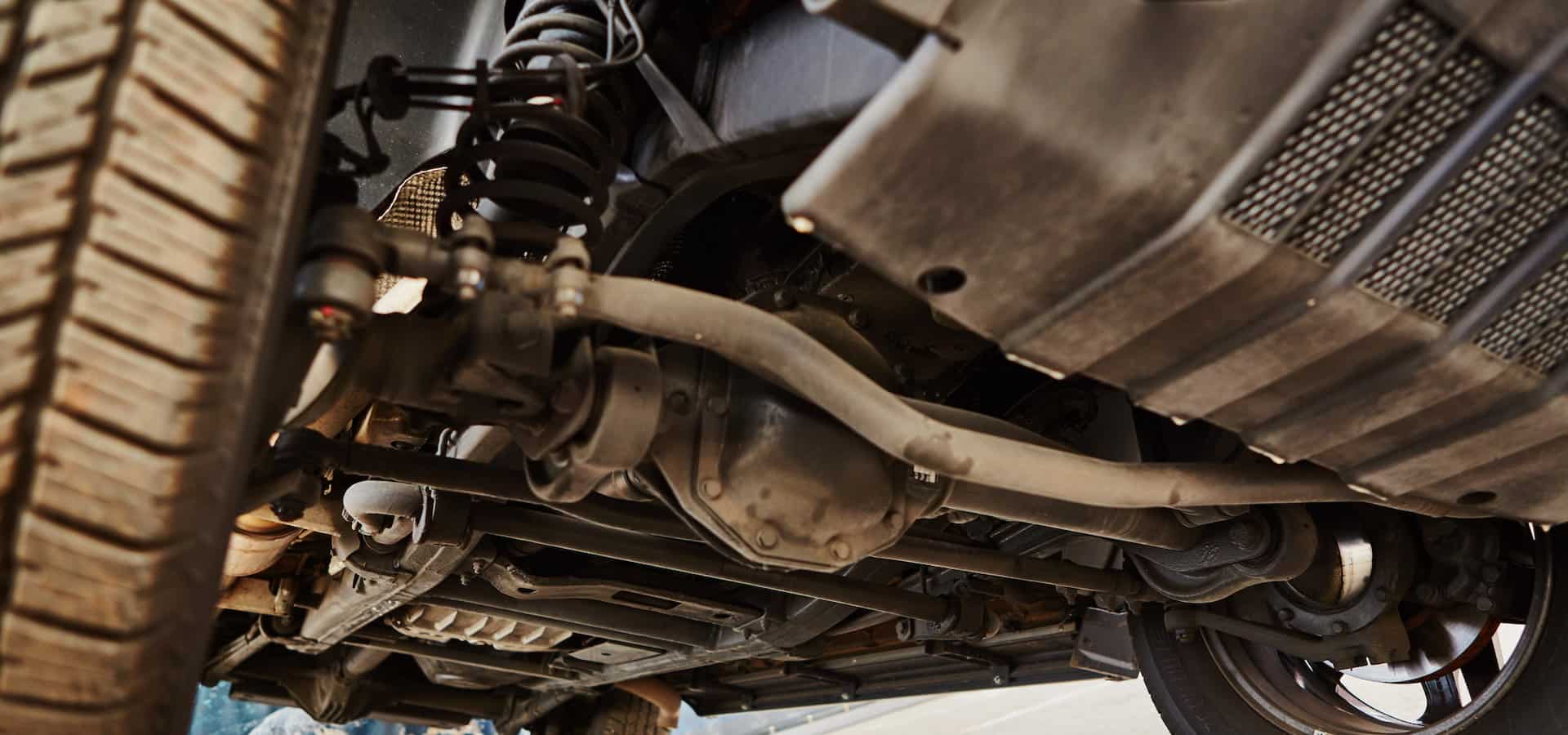
Mazda Suspension Repair at Elevation Auto Repair
A customer brought in a 2016 CX-5 last month convinced the tires were bad – the real culprit was a pair of worn rear trailing arm bushings that had been quietly killing the alignment for months. That's the kind of thing that separates a Mazda done right from a rushed job.
Mazda builds cars that reward tight, responsive handling, so the suspension geometry matters more than on the average commuter. Getting it back to factory spec means respecting the details that generic shops skip.
- Mazda's KPC (Kinematic Posture Control) and G-Vectoring systems on newer models depend on properly torqued, undamaged suspension links to behave correctly.
- Skyactiv platforms (CX-5, Mazda3, Mazda6) use specific front lower control arm bushing and rear multi-link torque values that must be set with the suspension loaded, not hanging.
We use factory-referenced torque sequences and OEM-grade parts so your Mazda tracks straight and steers the way it should. Here's what you can expect from us:
- Honest diagnostics – we show you the worn part before recommending replacement.
- Load-set torque procedures on bushings and links, per Mazda spec.
- A precision alignment after the work so tire wear stays even.
- Clear communication about what's urgent versus what can wait.
Symptoms – How to Know You Need This Service
Suspension wear rarely announces itself all at once. On a Mazda you'll usually feel it in the steering long before anything fails outright. Watch for these:
- A clunk or knock over bumps – often worn front control arm bushings or sway bar end links on Mazda3 and CX-5 platforms.
- Uneven or cupped tire wear, especially on the rear of multi-link Skyactiv models.
- Steering that wanders or feels vague on the highway.
- A creaking or groaning sound when turning slowly – frequently strut mounts or bearings.
- The nose diving hard under braking or the body floating over dips (tired struts/shocks).
- Vibration through the wheel that builds with speed.
- The car pulling to one side after hitting a pothole.
Schedule soon for creaks, clunks, and uneven tire wear – they worsen but aren't immediate hazards. Stop driving and call us if you feel sudden looseness in the steering, hear metal-on-metal grinding, or see a wheel sitting at an odd angle. Those point to a failed ball joint or control arm, and continuing to drive risks losing control.
Common Suspension Repair Issues on Mazda Vehicles
Mazda's SkyActiv chassis tuning leans toward sporty handling, which puts real load on specific suspension components. These are the patterns we see most often across Denver's rough roads and freeze-thaw cycles:
- Front lower control arm bushings (2014-2018 Mazda3 BM/BN, CX-5 KE): The rear hydraulic bushing softens and cracks with age, producing a clunk over bumps and vague steering. Mazda's compliant bushing design trades some durability for ride quality.
- Rear shock and strut fade (Mazda6 GJ/GL): Blown or weeping dampers show up as float, nose-dive under braking, and uneven tire cupping – often before the customer notices any leak.
- Stabilizer bar end links and bushings (CX-5, CX-9 TC): The larger crossovers wear links quickly, creating a rattle over washboard surfaces and dead spots in turn-in.
- Rear trailing arm and toe-link bushings (MX-5 Miata NC/ND): Enthusiast driving accelerates bushing wear, leading to inconsistent rear alignment and unpredictable handling.
- Wheel bearing hub assemblies (CX-30, CX-5): A growling that changes with cornering load usually points to a failing sealed hub bearing.
- Coil spring corrosion and sag: Denver road salt attacks the lower spring coils, causing pitting, breakage, and a noticeable ride-height drop on one corner.
Which Mazda Models We See for Suspension Repair
We work on the full modern Mazda lineup and many older ones. Find your car below:
- Mazda3 (BK, BL, BM/BN, BP), 2004–present – front control arm bushings and rear beam or multi-link wear are the usual jobs; Skyactiv BM/BN models often need sway bar links.
- Mazda6 (GG, GH, GJ/GL), 2003–present – front lower control arms and rear multi-link bushings; the sportier setups load the front strut mounts harder.
- CX-5 (KE, KF), 2013–present – rear trailing arm and lateral link bushings, plus front strut assemblies on higher-mileage examples.
- CX-30, CX-50, CX-9 (TC) and CX-90 – newer platforms where correct KPC-aware alignment matters after any link replacement.
- MX-5 Miata (NA, NB, NC, ND), 1990–present – double-wishbone bushings, ball joints, and shocks; track-driven cars need extra attention to alignment specs.
- CX-3, CX-7, Tribute, and older 626/Protegé – we still service these as parts allow.
Turbocharged and sportier trims (Mazdaspeed3, MX-5 with sport suspension) put more stress on bushings and mounts, so we inspect those areas closely. For very early or rare imports where OEM parts are scarce, we'll tell you honestly before booking the work.
A Mazda3 owner rolled into our Denver shop describing a rhythmic clunk over every expansion joint on I-25. She figured it was just road noise. It turned out to be worn front lower control arm bushings and a tired stabilizer link – a common wear path on the BM/BN generation. Catching it early kept a simple job from turning into a full corner rebuild, and that is exactly the kind of outcome we aim for on every Mazda that comes through the door.
Causes & Risks – What Happens if Ignored
Most Mazda suspension wear comes down to a mix of Colorado potholes, salted winter roads, high-mileage age, and the firm factory tuning that loads bushings and dampers harder than a soft-riding sedan would. Heat cycling and UV exposure also dry out rubber components faster than owners expect.
Small symptoms rarely stay small. Ignoring a worn control arm bushing for several months typically lets the arm shift under load, which chews through tires and knocks alignment out of spec. Here is how minor issues escalate:
- A soft control arm bushing left alone accelerates ball joint wear and destroys front tire edges.
- A weeping shock or strut that goes unaddressed overloads springs and mounts, adding parts to the repair.
- Worn stabilizer links transfer stress to the bar mounts and bushings, turning a quick part swap into a wider job.
- A noisy wheel bearing can seize, damaging the hub, ABS tone ring, and CV components.
- Corroded coil springs can snap, puncturing a tire or contacting the strut body while driving.
The safety line gets crossed once steering feels loose or the car wanders under braking – that is the point to stop delaying. We prioritize honest diagnostics so you only fix what actually needs fixing, before a modest repair grows into a full corner overhaul.
Safety Impact – Why Suspension Repair Matters
Suspension is not isolated. On a Mazda it works directly with braking, steering, and the electronic stability and traction control systems. Worn components change how the car keeps tires planted, which affects everything downstream.
- Failing dampers extend stopping distances and can confuse DSC and ABS by letting wheels chatter and lose grip.
- Loose bushings and ball joints introduce steering slop, reducing your ability to react in an emergency.
- A seized wheel bearing can damage the ABS sensor ring, triggering warning lights and disabling stability aids.
Stop driving now if you notice:
- A sudden clunk followed by the car pulling hard to one side
- A broken spring sound, visible ride-height drop, or metal-on-metal contact
- Steering that feels disconnected or a wheel that shudders violently
Schedule soon if you notice: mild clunks over bumps, uneven tire wear, or slow steering return. If a known suspension defect is left unaddressed and contributes to a collision, that can complicate liability and insurance claims – another reason to document and address issues promptly.
How Mazda Suspension Repair Actually Works
Most Mazdas use a MacPherson strut front and multi-link rear setup, tuned with Mazda's focus on quick, natural steering response. That tuning depends on precise bushing compliance and alignment angles, so sloppy work shows up immediately in how the car drives.
What makes Mazda suspension repair different from generic bolt-swapping:
- Newer Mazdas (CX-5, CX-30, Mazda3) often carry an electronic parking brake that must be placed in service mode before rear work – done properly with OEM-level scan tooling.
- Models with i-Activ AWD require correct handling of hub, sensor, and driveline components to keep the system reading wheel data accurately.
- Bushings and subframe fasteners have specific torque and tightening-sequence specs, and many bush
A Denver customer once brought in a 2014 CX-5 convinced the front end was falling apart – every expansion joint on I-25 sent a clunk through the steering wheel. The culprit turned out to be worn front sway bar end links, a familiar weak point on the first-generation KE-chassis CX-5. That kind of specific knowledge is what separates a real fix from a parts-cannon guess.
How We Diagnose Suspension Repair Issues on Mazda
Suspension noise and vibration rarely point to just one thing, so we work through a repeatable process instead of chasing symptoms.
- Interview and history review – When the clunk or pull shows up, over what surfaces, and whether it changes with speed or braking.
- Factory-level scan – We connect Mazda-compatible diagnostics (Mazda Modular Diagnostic System / MDARS-style tooling) to pull chassis and stability codes, check TPMS data, and confirm whether i-ACTIVSENSE or electronic power steering calibrations are flagged.
- Lift inspection – Hands-on check of control arm bushings, ball joints, tie rod ends, strut mounts, and sway bar links. On SkyActiv platforms like the 3 (BM/BN) and 6 (GJ/GL), we pay close attention to rear trailing arm and lower control arm bushings.
- Measurement and play test – Dial-indicator and pry-bar checks for ball joint and wheel bearing play, plus ride-height comparison side to side.
- Road test – Confirming the noise or wander before and after, over the same roads the owner drove.
The scan tells us what the electronics see; the visual and road test tell us what's actually worn. We combine both into a plain-language repair plan and an itemized quote, so you know exactly which parts need attention and why – no filler line items.
Suspension Repair on Mazda: Repair vs. Replacement
Not every worn front end needs a full rebuild. We sort the work into three honest categories.
- Genuine repair – Re-torquing loose subframe bolts, replacing a single sway bar end link, or correcting a lost alignment after a curb strike. On many Mazda3 and Mazda6 platforms, one $ part and a fresh alignment quiets the whole front end.
- Partial replacement – Swapping a failed strut mount or a torn lower control arm bushing while keeping the good strut and knuckle. Mazda often integrates the ball joint into the lower control arm, so a worn joint means replacing that arm as a unit rather than pressing in a loose joint.
- Full replacement – When wear has cascaded: leaking struts plus collapsed mounts plus tired links on higher-mileage CX-5 and CX-9 platforms. Once repair cost approaches the price of complete corner assemblies, or when a safety-critical ball joint is involved, replacement is the smarter long-term call.
We show you the worn parts on the lift and lay out the options ranked by value – not by ticket size. You decide with the full picture in front of you.
How to Make Your Mazda Suspension Repair Last Longer
Good parts installed correctly still depend on how the car is driven and maintained afterward.
- Driving habits – Ease over potholes and speed bumps, avoid slamming into Denver's winter potholes, and don't overload the cargo area past Mazda's rated capacity, which stresses rear bushings and struts.
- Owner checks – Listen for new clunks over bumps, watch for uneven or feathered tire wear, and note any new pull or steering-wheel vibration early.
- Brand-specific care – Use OEM or OE-equivalent bushings and end links; cheap aftermarket parts on SkyActiv platforms often wear out fast. Keep chassis and EPS software current per Mazda service bulletins, and follow the maintenance intervals in your owner's manual.
- Tire and alignment discipline – Rotate on schedule and get an alignment after any suspension work or hard impact to protect new components.
Safe DIY includes visual bushing checks, monitoring tire wear, and reporting new noises promptly. Leave ball joint, strut, and control arm work – anything safety-critical or requiring proper torque specs and alignment – to the shop, so your Mazda stays predictable on the road.
What to Expect When You Bring Your Mazda In
A clunk over Denver's rough winter roads, a Mazda3 that wanders on I-25, or a CX-5 that thumps through potholes – these are the complaints that usually start the conversation. Here's how a visit moves from that first symptom to a solid fix.
- Drop-off or appointment: Tell us what you feel and hear – rear-end knocks, uneven tire wear, a steering pull. Grab any personal items from the cabin; we'll set the vehicle up for inspection.
- Initial inspection: We put the Mazda on the lift and check control arm bushings, sway bar end links, strut mounts, and the rear multi-link components common on SkyActiv platforms like the Mazda3, Mazda6, and CX-5.
- Written estimate: You get a clear breakdown of worn parts and recommended work – no padded add-ons, only what the suspension actually needs.
- During the work: We check in as things progress and call before any change in scope. Shuttle and loaner options are available so you're not stranded.
- Pickup walkthrough: We show you the replaced parts and explain what was corrected. After-hours pickup can be arranged when your schedule is tight.
Every job ends with a road test and a scan-tool re-check for steering angle sensor and any related codes. If something still feels off, bring it back – we'll re-verify the fix.
Why Choose Elevation Auto Repair for Mazda Suspension Repair
Mazda suspension work rewards attention to platform-specific detail, and that's how we approach every job. We know the failure patterns – front lower control arm bushings on 2014+ Mazda3 and CX-5 SkyActiv chassis, rear trailing-arm and multi-link bushing wear that mimics a wheel bearing, and clunking sway bar end links that show up early on higher-mileage examples.
- Brand-specific knowledge: We reference applicable Mazda TSBs and check for steering and stability software updates that affect how the car tracks after suspension repair.
- Correct specs: Torque-to-yield hardware and bushing bolts tightened at ride height, following Mazda procedure – not guessed and not shortcut.
- Post-repair alignment: A precision alignment brings caster, camber, and toe back to Mazda's targets to protect tire life and restore the sharp steering feel these cars are known for.
We own the work from start to finish – diagnosis, parts, installation, and the final road test and scan-tool verification. That's how you get a Mazda that handles the way it should, from one Denver shop that handles everything under one roof.
Our Mazda Services
- Air Conditioning AC Repair
- Battery Repair Replacement
- Brake Repair & Brake Fluid Change
- Check Engine Light Diagnostics
- Clutch Repair & Replacement
- Coolant Leak Repair
- Cooling System Repair
- Drive Shaft Repair
- Engine Repair
- Exhaust & Catalytic Converter Repair
- Head Gasket Repair & Replacement
- Oil Change
- Oil Leak Repair
- Scheduled Service Maintenance
- Steering Repair
- Cambelt Timing Belt Replacement
- Transmission Repair
- Tune Up
- Wheel Alignment