
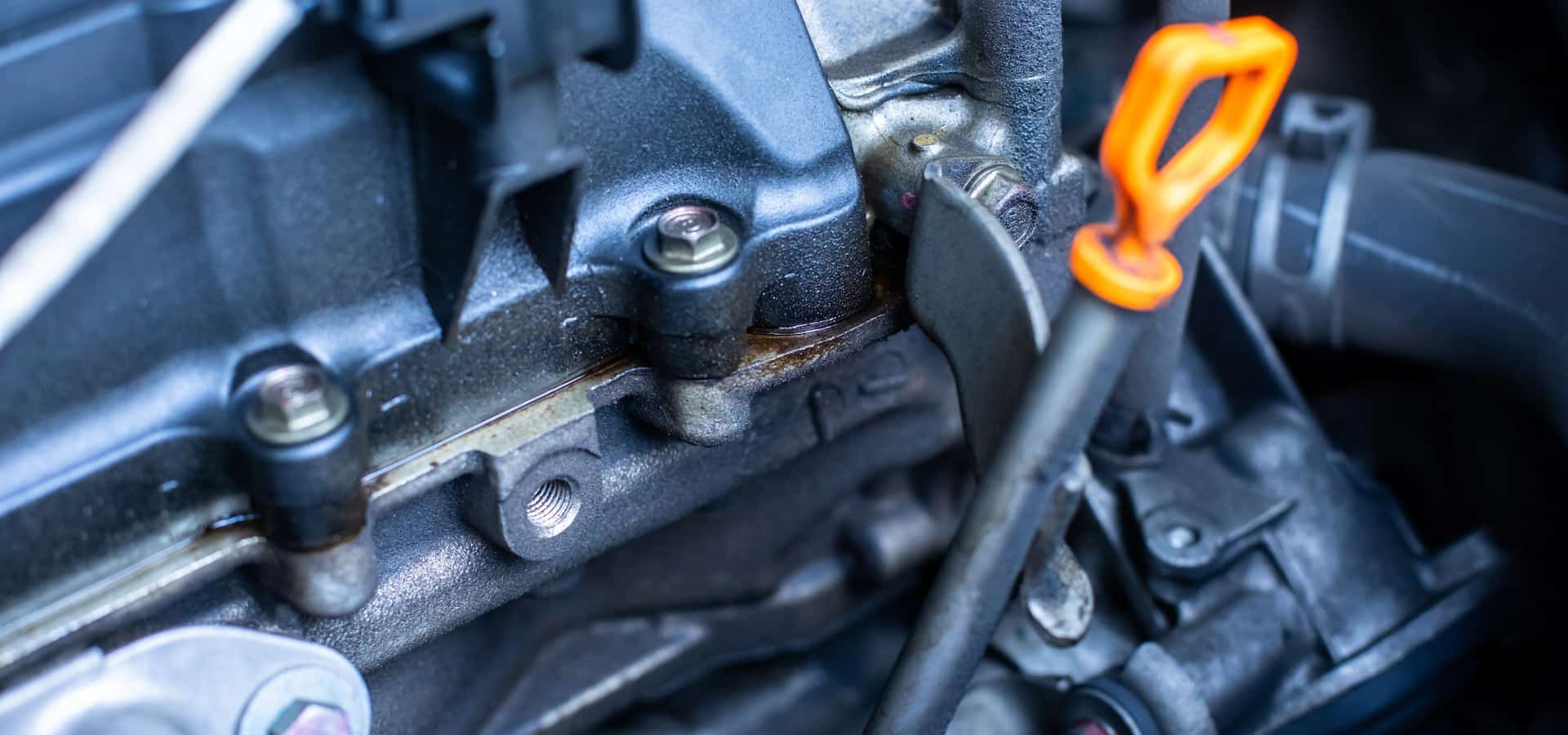
Honda Oil Leak Repair at Elevation Auto Repair
Hondas earn their reputation for going the distance, but high mileage and Colorado's temperature swings put steady stress on the gaskets and seals holding oil where it belongs. Chasing a leak on a Honda is less about wrenching harder and more about knowing exactly where these engines weep first.
An oil leak repair done right starts with confirming the actual source, not just the drip you can see. On K-series and R-series four-cylinders, oil migrating down from a valve cover often looks like a lower-end leak by the time it reaches the ground. We use dye tracing and clean-and-verify inspections to isolate the point of origin before pulling anything apart.
Where a Honda differs from generic work is the details: VTEC solenoid gaskets and spool valve filters that seep on the K24, rear main and oil pan sealing that require correct RTV cure time and torque sequencing, and cam plug seals on the J-series V6. We follow Honda torque specs and use OEM-grade seals rather than parts-store guesses.
- A clear diagnosis that names the leaking component before we quote
- OEM or OEM-equivalent gaskets and seals installed to Honda torque specs
- Transparent pricing with no add-ons you didn't approve
- A post-repair verification so the fix holds long-term
Symptoms – How to Know You Need This Service
Oil leaks rarely announce themselves loudly. You'll usually catch them through small clues that build over time.
- Burning oil smell after driving, especially at stoplights – oil is hitting the hot exhaust manifold
- Dark spots or drips on your driveway under the front or center of the car
- Blue-tinged smoke from under the hood or from the tailpipe
- Oil level dropping between changes with no obvious puddle
- Oily film on the underside of the valve cover, timing cover, or oil pan
- The oil pressure or low-oil warning light flickering or staying on
- A ticking or tapping top-end noise when oil runs low on VTEC engines
Schedule soon if you notice smell, minor drips, or slow consumption – these are usually gasket-level fixes that stay affordable when caught early. Stop driving immediately if the oil pressure light comes on or the level reads critically low, since running a Honda engine oil-starved risks bearing and VTEC system damage far more expensive than the leak itself.
Common Oil Leak Repair Issues on Honda Vehicles
Certain leak paths repeat across specific engine families and model years. Here's what we see most often on Denver-area Hondas:
- VTC actuator and camshaft seal weeping – Common on 2008-2015 K24/R18 four-cylinders (Accord, CR-V, Civic). The front cam area seeps where seals harden with heat cycling.
- Valve cover gasket leaks – Widespread on the K-series and J-series V6 engines. Oil pools in spark plug tubes on 2003-2012 Accord V6 and Pilot, sometimes causing misfires when it reaches the coils.
- VTEC solenoid gasket seepage – The bolt-on VTEC spool valve gasket dries out and leaks down the side of the block on many 2006-2011 Civic and CR-V engines.
- Rear main seal leaks – Seen on higher-mileage J-series V6 platforms, often surfacing as drips near the transmission bellhousing.
- Oil pan and drain plug crush washer leaks – Overtightened plugs and reused washers create slow seeps, especially on aluminum pans found across the lineup.
- Timing chain cover / balancer shaft seals – On earlier K-series builds, front cover seepage develops as gasket sealant fatigues.
Which Honda Models We See for Oil Leak Repair
We work on a wide range of Honda platforms, and certain leak points show up again and again by generation. Find your car below.
- Accord (2008–2017, 8th–9th gen) – K24 valve cover and spool valve gasket seeps; J35 V6 rear cam plug and VTC leaks
- Civic (2006–2015, 8th–9th gen) – R18/R20 valve cover gaskets and oil pan seepage; check timing cover on higher-mileage cars
- Civic Si and Type R (2017+, FK8/FL5) – turbo K20C1 oil feed and drain line seals, which differ from naturally aspirated repairs
- CR-V (2007–2019) – K24 and later 1.5T engines; the turbo 1.5L needs correct oil dilution assessment alongside leak repair
- Pilot / Odyssey / Ridgeline (J35 V6) – common rear main, cam plug, and VTC oil control leaks; these often need intake or timing access
- Fit (2007–2020) – L15 valve cover and oil pan gaskets
Turbocharged 1.5T and K20C engines get extra attention because their oil circuits run under boost and can develop leaks that mimic other issues. We also service older D and B-series Hondas on a case-by-case basis. If you drive something rare or heavily modified, call us first – we'll tell you honestly whether it's a good fit before you make the trip.
Honda engineering leans on tight tolerances, aluminum blocks, and specific gasket materials that behave differently as they age in Colorado's dry, high-altitude climate. That combination means oil leaks on a Civic, Accord, CR-V, or Pilot rarely show up the same way twice. Knowing where a given generation tends to seep saves diagnostic time and keeps the repair honest.
Causes & Risks – What Happens if Ignored
Denver's altitude, temperature swings, and dry air accelerate gasket shrinkage and seal hardening faster than milder coastal climates. Add heat cycling from stop-and-go driving and normal age, and Honda's rubber and cork-composite gaskets lose their seal.
A weep you can wipe away today rarely stays small. A valve cover gasket ignored for months lets oil migrate into spark plug tubes, degrade ignition coils, and trigger misfire codes.
- Minor valve cover seep → oil-soaked coils, misfires, and rough idle
- Unaddressed cam or front seal leak → oil contaminating the accessory belt, leading to belt failure
- Slow rear main seal drip → low oil level, bearing wear, and potential engine damage
- Oil pooling on hot exhaust components → burning smell and fire risk
- Chronic low oil from an unfixed leak → accelerated timing chain and VTC actuator wear
What starts as a straightforward gasket job can grow into coil replacement, belt service, or internal engine work if the oil level drops unnoticed. We'd rather catch it early and tell you exactly what's leaking.
Safety Impact – Why Oil Leak Repair Matters
Oil leaks affect more than engine longevity. Depending on where the oil travels, it can compromise systems you rely on to stay in control.
- Accessory belt failure – Oil on the serpentine belt can cause slippage or breakage, killing power steering assist and alternator charging while driving.
- Fire risk – Oil dripping onto a hot exhaust manifold or catalytic converter can smoke or ignite.
- Misfire-related stalling – Oil-fouled coils can cause a Honda to buck or stall in traffic.
- Sudden power steering loss – A belt failure on electric-hydraulic or belt-driven systems changes steering effort without warning.
Stop driving now if you smell burning oil, see smoke from under the hood, notice the oil pressure light, or feel steering suddenly stiffen. Schedule soon for small spots on the driveway, a faint oil smell after long drives, or slightly low oil at checks. Catching a documented leak early also protects you if a related failure ever becomes a liability question.
How Honda Oil Leak Repair Actually Works
Finding the true source matters more than the repair itself, because oil travels downward and a leak often shows up far from where it starts. We clean the area, run the engine, and in stubborn cases use UV dye to trace the origin before replacing anything.
Honda's aluminum engines and specific gasket designs demand correct torque values and tightening sequences – overtightening a valve cover or oil pan bolt on aluminum warps the mating surface and creates a fresh leak. That's where OEM procedures separate a lasting fix from a repeat visit.
- OEM gaskets and seals – Honda-spec valve cover, cam seal, and VTEC gaskets are formulated for these engines' heat and oil chemistry.
- Torque and sequence specs – Aluminum surfaces require staged tightening in the factory pattern to seal evenly.
- Correct RTV application – Timing cover and oil pan work often uses OEM sealant with specific cure and bead requirements.
- Fresh crush washers and quality oil – Drain plug seals are single-use, and refills match Honda's viscosity spec.
We show you the leak source, explain the fix in plain terms, and give you clear pricing before any work starts – dealership-level expertise without the dealership runaround.
Honda engines have a reputation for going the distance, but oil seepage still shows up on high-mileage K-series and J-series powerplants – and the leak points are predictable once you know where to look. Elevation Auto Repair treats Honda oil leaks as a specific engineering problem, not a mystery, and we tell you exactly what we find and what it costs before any wrench turns.
How We Diagnose Oil Leak Repair Issues on Honda
Finding the true source of a Honda oil leak takes patience – gravity spreads oil far from the origin. Here is our order of operations:
- Scan first. We connect a scan tool compatible with Honda's HDS protocols to pull codes and live data. Oil leaks rarely set a code directly, but low-oil-pressure warnings, VTEC solenoid faults, or misfire history point us toward the affected area.
- Cold visual inspection. We lift the car and trace wet zones – classic culprits include the valve cover gasket on K24 and R18 engines, the crankshaft front seal, the VTEC spool valve gasket, and the rear main seal.
- Degrease and dye. When the source is ambiguous, we clean the block and add UV dye, then road test under load and inspect with a UV light to pinpoint the exact seep.
- Road test and measurement. We watch oil pressure, listen for lifter tick, and check for oil pooling near the timing cover or oil pan gasket, common on J-series V6s.
Once we isolate the leak, you get a plain-language explanation, photos of the failure, and a written quote – no vague estimates, no surprise add-ons.
Oil Leak Repair on Honda: Repair vs. Replacement
Not every Honda oil leak needs major work. We match the fix to the actual condition of the part.
- Straightforward repair: A weeping valve cover gasket on a K24 or R18, a loose oil-filter housing, or a hardened spool valve gasket are usually a clean-and-reseal job with the surrounding assembly untouched.
- Partial replacement: When the crank front seal or camshaft seal fails but the timing chain and tensioner are healthy, we replace the seal and keep the rest of the assembly – often the case on higher-mileage Accords and CR-Vs.
- Full replacement: Rear main seal failure paired with a leaking oil pan, or contamination that has soaked the clutch on manual-transmission Civics, calls for a broader repair. If the labor to open the engine is already committed, replacing adjacent worn seals at once saves you a second teardown.
We lay out the options side by side, explain the trade-offs, and let you decide – we never default to the most expensive path.
How to Make Your Honda Oil Leak Repair Last Longer
A fresh gasket lasts far longer when the engine is cared for after the repair. Small habits protect the seal.
Driving and warm-up habits
- Let the engine reach operating temperature before hard acceleration – thermal shock is rough on fresh gaskets.
- Avoid prolonged idling in Denver's cold snaps, which lets moisture and fuel dilute the oil.
- Ease off heavy towing or roof-loaded highway runs in the first few hundred miles after the repair.
Owner maintenance you can do safely
- Check the driveway for spots and pop the hood for weeping around the valve cover monthly.
- Monitor the oil level on the dipstick and watch the dash for oil-pressure or maintenance-minder lights.
- Listen for new lifter tick or ticking that signals low oil.
Brand-specific care that matters
- Use Honda-spec 0W-20 or the grade your engine calls for – wrong viscosity stresses seals.
- Follow Honda's Maintenance Minder intervals rather than guessing.
- Choose OEM gaskets and seals; aftermarket rubber often shrinks faster.
Topping off oil and visual checks are safe DIY. Leave seal replacement, timing cover work, and anything requiring engine disassembly to us – those jobs demand proper torque specs and clean sealing surfaces to hold up.
What to Expect When You Bring Your Honda In
Honda oil leaks rarely announce themselves clearly. A drip on the driveway could be the VTC actuator area, the crankshaft seal, or the classic valve cover gasket weep seen across K-series and R-series engines. Our job is to find the actual source, not guess.
- Drop-off or appointment – Schedule ahead or leave the car with us. Clear personal items from the cabin; we log anything left behind and secure your keys.
- Initial inspection – We degrease and pressure-test suspect areas, often using UV dye to confirm whether the leak originates at the valve cover, oil pan, VTC solenoid seal, rear main, or the spool valve gasket common on Earth Dreams engines.
- Written estimate – You get a line-itemed breakdown of parts and labor before any wrench turns. No surprise add-ons.
- Communication during the work – We text or call with findings and wait for your approval on any change in scope.
- Pickup walkthrough – We show you the replaced gaskets and explain what we found.
Loaner and shuttle options are available, and after-hours key drop makes pickup flexible. Before your Honda leaves, we run a road test and a scan-tool re-check to confirm no active codes and verify the repair holds under heat cycling. If anything feels off afterward, bring it back and we'll re-inspect it right away.
Why Choose Elevation Auto Repair for Honda Oil Leak Repair
We treat oil leaks as a diagnostic problem first. Many shops throw a valve cover gasket at every Honda drip. We isolate the real source, whether it's the VTC actuator seal on 2.4L K24 engines, oil pan RTV failure, or the front crank seal behind the timing cover.
- TSB and software awareness – We check Honda technical service bulletins and applicable updates that relate to seal and gasket revisions before ordering parts.
- Platform-specific know-how – Familiarity with Civic, Accord, CR-V, Pilot, and Odyssey oil leak patterns across recent generations, including known VTEC solenoid and spool valve gasket weeping.
- OEM-correct fasteners and sealants – We follow Honda torque sequences and use the right RTV and gaskets rather than generic substitutes.
- End-to-end ownership – The same shop diagnoses, repairs, and verifies the work with a road test and re-scan.
You get transparent pricing, clear communication, and a repair built to hold. As your Denver dealership alternative, we keep the work focused on what your Honda actually needs and nothing it doesn't.
Our Honda Services
- Air Conditioning AC Repair
- Battery Repair Replacement
- Brake Repair & Brake Fluid Change
- Check Engine Light Diagnostics
- Clutch Repair & Replacement
- Coolant Leak Repair
- Cooling System Repair
- Drive Shaft Repair
- Engine Repair
- Exhaust & Catalytic Converter Repair
- Head Gasket Repair & Replacement
- Oil Change
- Scheduled Service Maintenance
- Steering Repair
- Suspension Repair
- Cambelt Timing Belt Replacement
- Transmission Repair
- Tune Up
- Wheel Alignment