
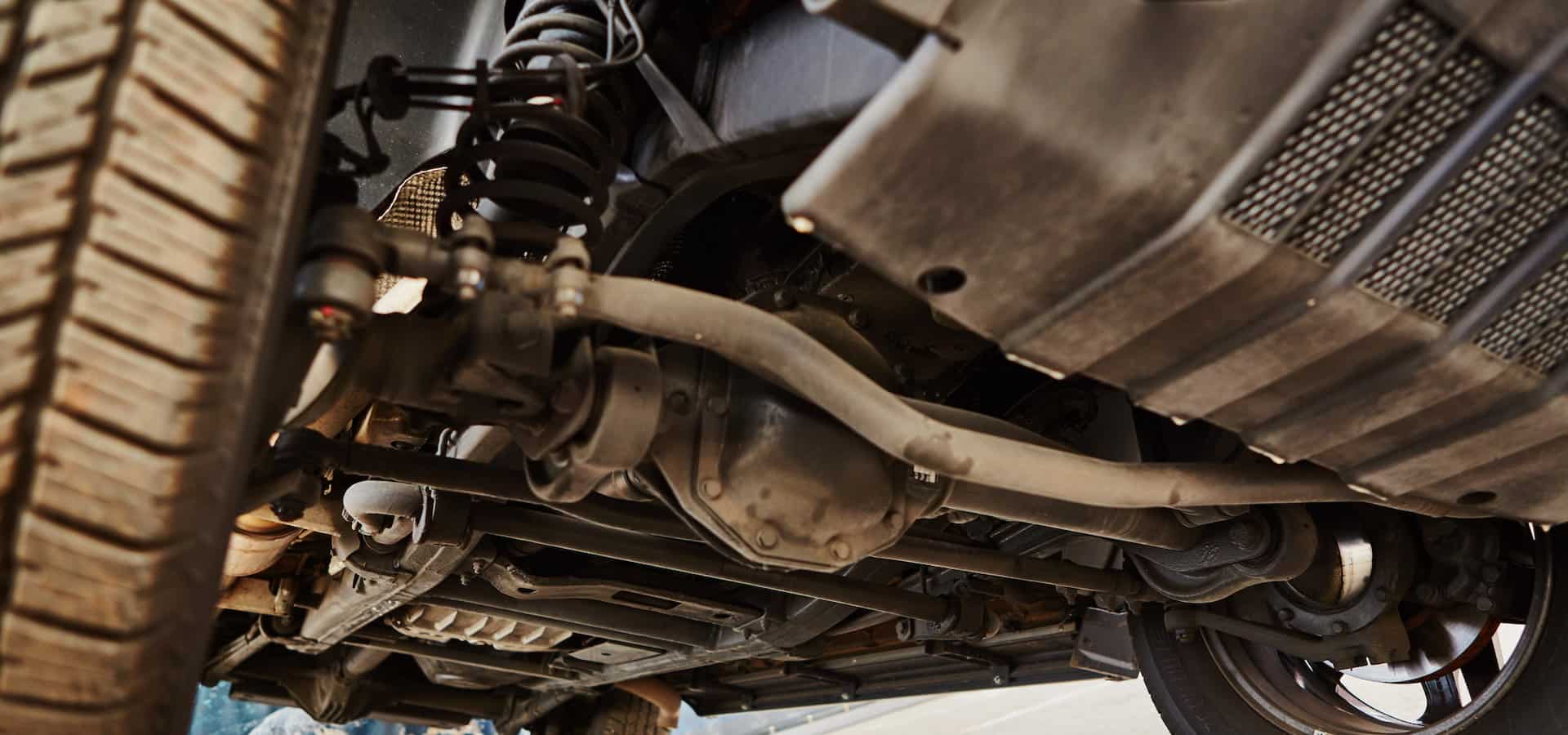
Honda Suspension Repair at Elevation Auto Repair
A customer brought in a 2016 Accord recently, convinced the tires were the problem after replacing them twice in two years. The real culprit was a set of worn front lower control arm bushings and a tired rear trailing arm bushing – a pattern we see constantly on Denver Hondas that log miles on rough pavement and mountain grades.
Honda suspension work rewards precision. These platforms use compliance bushings and fluid-filled mounts tuned for a specific ride quality, and installing a cheap aftermarket part or skipping the post-repair alignment throws off that balance. Front strut assemblies on many Civic and Accord generations require correct spring compression and camber setup, and the multi-link rear ends on later Accords and CR-Vs need careful torque sequencing – bushing bolts should be tightened at ride height, not on a lift, or the rubber preloads and fails early.
We also read the wear story the whole car is telling instead of just swapping the loudest part. That is how a repair holds up long-term.
- Honest diagnostics that separate worn suspension parts from tire or alignment issues
- OEM-grade struts, control arms, and bushings that preserve factory ride feel
- Torque-to-spec assembly with bushings loaded at ride height
- A precision alignment after the repair to protect your new tires
Symptoms – How to Know You Need This Service
Suspension trouble builds gradually, so drivers often adapt without realizing how far things have slipped. Watch for these signs on your Honda:
- Clunking or knocking over bumps and driveway aprons – often worn sway bar end links or control arm bushings
- Uneven or cupped tire wear, especially on the inside edges of the front tires
- The car pulling to one side on a straight, level road
- A floaty or bouncy ride that keeps oscillating after a dip – a classic sign of failing struts or shocks
- Nose-diving hard under braking or excessive body lean in corners
- Steering wander or a loose, vague feel at highway speed
- Creaking or groaning from strut mounts when turning at low speed
Schedule soon for clunks, ride quality changes, and uneven tire wear – they worsen and start eating tires. Stop driving and call us right away if you feel a sudden loss of steering control, hear a loud metallic bang followed by a sagging corner, or notice the wheel visibly leaning. Those point to a failed ball joint or broken spring that can lead to loss of control.
Common Suspension Repair Issues on Honda Vehicles
Hondas earn their reputation for reliability, but the suspension components wear in patterns that repeat across generations. Here are the ones we see most often at Elevation Auto Repair:
- Front compliance (radius arm) bushings on 2008-2012 Accord and 2006-2011 Civic: These softer OEM bushings deteriorate with age and cold cycling, producing a clunk over bumps and vague steering feel.
- Rear trailing arm bushings on 2003-2011 Element and CR-V (RD/RE platforms): Load and off-camber parking accelerate wear, causing rear-end wander and uneven inner tire scrub.
- Front strut mounts and bearing plates on Civic and Accord: A grinding or popping sound when turning at low speed points to a failed upper mount bearing – common once these cross higher mileage.
- Sway bar end links across most FWD Hondas: The ball-and-socket ends dry out and rattle, especially the front links on Odyssey minivans that carry family loads.
- Rear shocks and struts on Pilot and Odyssey: These heavier platforms fade gradually, leaving a bouncy, floaty ride and nose-dive under braking.
- Lower ball joints and control arm bushings on older CR-V and Civic: Play here shows up as a knock over expansion joints and premature outer tire wear.
Which Honda Models We See for Suspension Repair
We service suspension across nearly the full modern Honda lineup. These are the platforms that roll in most often:
- Civic – 8th gen (FA/FG, 2006–2011), 9th gen (FB, 2012–2015), and 10th/11th gen (FC/FK/FE, 2016–present); front strut and rear bushing wear are common
- Accord – 8th gen (CP/CS, 2008–2012), 9th gen (CR, 2013–2017), and 10th gen (CV, 2018–present) with front lower control arm and rear multi-link bushing issues
- CR-V – RE (2007–2011), RM (2012–2016), and RW (2017–present); rear trailing arm bushings and strut mounts wear with age
- Pilot & Ridgeline – higher-mileage examples needing struts, control arms, and stabilizer components
- Odyssey – RL5/RL6 minivans that carry heavy loads and go through struts and sway bar links
- Fit, HR-V, and Passport – common for end links, bushings, and strut service
Performance variants like the Civic Si and Type R (FK8/FL5) use stiffer, model-specific components and adaptive dampers on some trims, so those get parts matched to the exact chassis rather than a generic substitute. For very early Hondas or heavily modified coilover setups, call first – we will tell you honestly whether we are the right shop for that specific build. Every repair finishes with an alignment aimed at long-term reliability and even tire wear.
A Denver customer brought in her 2010 Accord after noticing a clunk every time she pulled out of her driveway. She figured it was just an old car being an old car. The real culprit was a worn front compliance bushing paired with a tired strut mount – a pairing we see constantly on high-mileage Hondas that spend winters on salted Front Range roads. Catching it early kept the repair simple and put her back on the road with tight, predictable steering.
Causes & Risks – What Happens if Ignored
Denver's climate is hard on rubber and hydraulic components. Freeze-thaw cycles, road salt, potholes from winter heaves, and the dry high-altitude air all age bushings and seals faster than in milder regions. Add normal mileage and Honda's comfort-tuned OEM bushings, and wear is simply a matter of time.
Waiting rarely saves money. A worn end link is a quick fix, but the vibration it allows can loosen neighboring fasteners and hammer the sway bar bushings next. Here's how small issues escalate:
- Ignored strut mounts let the strut top pound the tower, eventually scoring the strut body and requiring a full assembly.
- Leaking struts left for months destroy tires with cupping and force an alignment plus new rubber alongside the strut job.
- Failing ball joints can separate at speed – a rare but catastrophic outcome that also damages the knuckle and CV axle.
- Worn control arm bushings throw off alignment geometry, chewing through inner tire edges and stressing wheel bearings.
- Neglected trailing arm bushings on Element and CR-V allow rear toe changes that make the vehicle feel unstable in crosswinds.
A repair that starts as one part frequently drags in tires, alignment, and adjacent components once it's left too long.
Safety Impact – Why Suspension Repair Matters
Suspension isn't just about ride comfort – it keeps your tires planted so braking, steering, and electronic aids can do their jobs. When components wear, the systems that depend on consistent tire contact suffer.
- Braking distance grows when worn struts let the nose dive and unload the rear tires.
- ABS, traction control, and VSA (Honda's stability control) rely on predictable wheel behavior – excessive play can confuse these systems.
- Steering precision drops with failed bushings and mounts, making emergency lane changes less controllable.
Stop driving now if you notice:
- A loud clunk with a sudden change in ride height or a pulling sensation
- Grinding or metal-on-metal noise from a wheel corner
- Steering that feels loose or disconnected
Schedule soon if you notice: a mild bounce, an occasional squeak over bumps, or slightly uneven tire wear. Addressing a known worn component before an incident also keeps you clear of liability questions that can arise after a collision.
How Honda Suspension Repair Actually Works
Most Hondas use a MacPherson strut front setup with a multi-link or control-arm rear, tuned for a compliant ride that hides early wear. That comfort-oriented bushing design is exactly why symptoms creep up gradually rather than announcing themselves. Proper repair means restoring the original geometry, not just swapping parts.
What makes Honda work different from generic bolt-on service:
- Torque and sequence matter: Bushing fasteners must be tightened at ride height, not on a lift, or the rubber preloads wrong and fails early.
- Alignment is not optional: Replacing control arms, struts, or trailing arm bushings shifts camber and toe – a proper alignment protects your new tires.
- Electronic parking brake and VSA-equipped models may require calibration steps and OEM software procedures after related work.
- OEM-grade parts fit the platform: Cheaper aftermarket bushings often change ride feel and wear faster on Denver roads.
Our technicians follow
A customer once brought in a 9th-gen Accord after hearing a rhythmic clunk over Denver's frost-heaved side streets. She'd assumed it was the shocks. It turned out to be a worn front stabilizer link and a tired lower control arm bushing – two very different fixes with very different price tags. That gap is exactly why a careful diagnosis matters before anyone reaches for parts.
How We Diagnose Suspension Repair Issues on Honda
Honda suspensions age in predictable ways, but the symptoms overlap. We separate the real cause from the copycat noises before quoting a repair.
- Interview and history: When the noise or pull started, road conditions, and any recent impacts or curb strikes.
- Road test: We reproduce clunks, wander, and uneven braking on both smooth and broken pavement, which is where worn compliance bushings and strut mounts reveal themselves.
- Scan with the Honda-appropriate tool (HDS or equivalent): On models with electronic stability control, ABS wheel-speed sensors, and steering angle sensors, we pull codes and live data to confirm nothing electronic is mimicking a mechanical fault.
- Lift and visual inspection: Checking front lower control arm bushings, sway bar end links, ball joints, tie rod ends, strut mounts, and rear trailing arm bushings – all common wear points on Civic, Accord, and CR-V platforms.
- Hands-on measurement: Pry-bar checks for play, dust boot condition, ride-height comparison side to side, and a check for leaking strut/shock oil.
- Alignment readings: Camber and toe numbers often point to a bent component or collapsed bushing.
From there you get a plain written plan and quote listing what needs attention now versus what can be monitored – no guesswork, no padded list.
Suspension Repair on Honda: Repair vs. Replacement
Not every worn suspension needs an armful of new parts. We match the fix to the actual condition.
- Genuine repair: Re-torquing loose hardware to Honda spec, replacing a single sway bar end link, or swapping a stabilizer bushing when everything else measures within tolerance.
- Partial replacement: Replacing a leaking strut while keeping a healthy spring and mount, or renewing a torn front lower ball joint on a CR-V without disturbing the whole knuckle. On many Civics and Accords the lower control arm bushings wear well before the arm itself.
- Full replacement: When wear cascades – say a collapsed strut has hammered the mount and upper bearing, or both front lower arms and links are shot – a complete strut assembly or arm often costs less in labor than piecing it together. Safety-critical ball joints and tie rods get replaced, never patched.
We show you the worn part, explain why it failed, and lay out the options side by side. The decision stays with you – our job is honest information, not the biggest invoice.
How to Make Your Honda Suspension Repair Last Longer
Fresh bushings and struts last far longer when driving habits and upkeep work in their favor.
Driving habits that help
- Slow down for Denver's potholes, dips, and unmarked speed humps – impacts are what kill bushings and struts early.
- Avoid riding heavily loaded over rough roads, which overworks rear shocks on CR-V and Odyssey models.
- Brake smoothly to reduce nose-dive stress on strut mounts and control arm bushings.
Owner maintenance you can do
- Listen for new clunks, squeaks, or a returning pull, and report changes early.
- Glance under the front end for cracked dust boots or oily strut bodies.
- Keep tires properly inflated and rotated – uneven wear signals alignment or suspension trouble.
Brand-specific care
- Insist on OEM or OEM-equivalent Honda bushings and links; softer aftermarket rubber often wears out fast.
- Get an alignment after any suspension work and follow Honda's service intervals.
- Keep steering-related software and calibrations current on newer models.
Visual checks and tire care are safe at home. Ball joints, struts, and alignment are safety-critical – bring those to us, and your Honda stays planted for the long haul.
What to Expect When You Bring Your Honda In
A clunk over Denver's frost-heaved streets or a steering wheel that pulls after a pothole usually points at worn suspension components. On high-mileage Accords, Civics, CR-Vs, and Odysseys, we regularly find failed front lower ball joints, tired compliance bushings, and leaking struts that let the ride get vague and floaty.
- Drop-off or appointment – Schedule ahead or leave it after hours. Grab personal items from the cabin; anything left is bagged and set aside.
- Initial inspection – We lift the vehicle and check ball joints, control arm bushings, sway bar end links, tie rods, struts, and mount bearings, noting play and boot condition.
- Written estimate – You get an itemized breakdown of what's worn, what's still serviceable, and what can wait, so nothing gets replaced without reason.
- Updates during the work – We call or text before adding anything, and shuttle or loaner options help you stay mobile.
- Pickup walkthrough – We show you the removed parts and explain what changed in how the car drives.
Every suspension job ends with a road test over varied surfaces and a scan-tool re-check where steering angle or stability systems need it. If anything feels off after you drive it, bring it back and we'll recheck it – no runaround.
Why Choose Elevation Auto Repair for Honda Suspension Repair
Honda suspensions have their own habits. Ninth- and tenth-gen Civics and Accords are known for front lower control arm bushing wear that mimics a bad alignment, while CR-Vs and Odysseys often develop noisy rear trailing arm bushings and worn stabilizer links. We diagnose those patterns instead of throwing parts at the symptom.
- Familiarity with Honda TSBs, steering angle sensor relearns, and EPS behavior after front-end work
- Torque-to-spec fastener procedures and bushings torqued at ride height so they don't preload and fail early
- Precision alignment after component replacement to protect tire life and handling
We own the job start to finish – diagnosis, repair, and post-repair verification all happen under one roof. That end-to-end control is how we keep your Honda planted and predictable for the long haul, not just until you leave the lot.
Our Honda Services
- Air Conditioning AC Repair
- Battery Repair Replacement
- Brake Repair & Brake Fluid Change
- Check Engine Light Diagnostics
- Clutch Repair & Replacement
- Coolant Leak Repair
- Cooling System Repair
- Drive Shaft Repair
- Engine Repair
- Exhaust & Catalytic Converter Repair
- Head Gasket Repair & Replacement
- Oil Change
- Oil Leak Repair
- Scheduled Service Maintenance
- Steering Repair
- Cambelt Timing Belt Replacement
- Transmission Repair
- Tune Up
- Wheel Alignment