
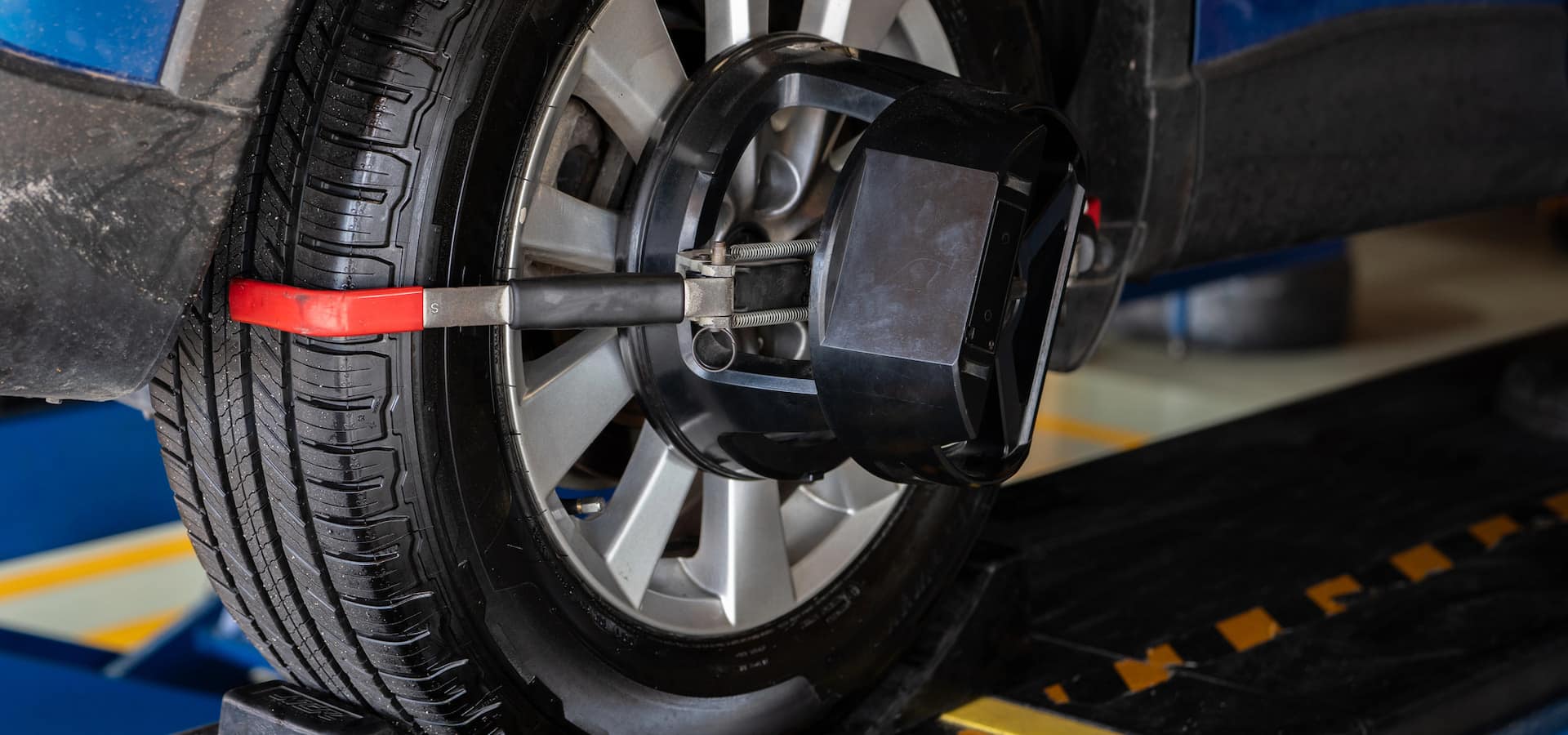
Honda Wheel Alignment at Elevation Auto Repair
Honda's front suspension geometry is more sensitive to setup than most drivers realize. Double-wishbone and MacPherson strut designs across the Accord, Civic, and CR-V lines carry factory alignment tolerances measured in fractions of a degree, and the electric power steering systems on newer models add a layer most quick-lube shops skip.
A wheel alignment corrects the angles at which your tires meet the road – camber, caster, and toe – so your Honda tracks straight, steers cleanly, and wears its tires evenly. Where a generic shop bolts your car to a rack and calls it done, a proper Honda alignment accounts for platform-specific details:
- Rear toe adjustment on independent multi-link setups found on 10th-gen Civic and CR-V models, which are often ignored elsewhere.
- Steering angle sensor recalibration after alignment on Honda Sensing–equipped vehicles, so lane-keep and adaptive cruise read center correctly.
- Factory torque specs on subframe and control-arm hardware, so nothing shifts after you drive away.
Here's what you can expect from us:
- A pre-alignment inspection of tie rods, ball joints, and bushings before we touch the settings.
- Measurements checked against Honda's published specs, not a one-size-fits-all preset.
- Steering sensor recalibration when your model requires it.
- Clear before-and-after numbers so you see exactly what changed.
Symptoms – How to Know You Need This Service
Alignment problems build gradually, so the early signs are easy to write off. On a Honda, you may notice:
- Pulling to one side on a flat, straight road even with a light grip on the wheel.
- An off-center steering wheel when you're driving straight ahead – a classic sign of toe or thrust-angle drift.
- Feathered or one-sided tire wear, often on the inner edge of the front tires on Civics and Accords.
- A steering wheel that doesn't return to center smoothly after a turn.
- A vibration or wander at highway speed that makes the car feel busy in your hands.
- Squealing tires during normal cornering from scrubbing rubber.
- Honda Sensing warnings or lane-keep assist that tugs or nags after new tires or curb contact.
Schedule soon if you notice uneven wear, a mild pull, or an off-center wheel – catching it early protects a fresh set of tires. Stop driving and have the car checked right away if the pull is sudden and strong, the steering feels loose or vague, or you hear clunking over bumps, since those can point to a worn ball joint or tie rod rather than alignment alone.
Common Wheel Alignment Issues on Honda Vehicles
Honda's multi-link rear suspension – found across the Accord, Civic, and CR-V lines – gives these cars sharp handling, but it also means alignment is more sensitive to worn bushings and impact damage than a simple twist-beam setup. Denver's pothole-heavy winters and gravel-treated roads accelerate the wear paths below.
- Rear camber drift on 2013-2017 Accord (9th gen) and 2016+ Civic (FC/FK): The independent multi-link rear develops negative camber as trailing-arm and compensator bushings soften, showing up as inner-edge tire wear well before the fronts.
- Front toe wander after tie rod wear on 2006-2011 Civic (FA/FG): Inner tie rod ends and rack bushings loosen with mileage, letting toe drift and producing a darty, wandering feel on the highway.
- CR-V (2017+ 5th gen) pull and uneven wear: Lower control arm bushings and the electric power steering baseline both influence how the car tracks; a curb strike often needs a full four-wheel reset, not just a toe tweak.
- Ridgeline and Pilot rear thrust-angle issues: The heavier unibody platforms are prone to thrust-angle misalignment after suspension work, causing a crooked steering wheel even when tracking straight.
- Lowered Civic Si / Type R setups: Aftermarket springs and coilovers pull camber and toe out of the OEM window, demanding adjustable camber arms to bring specs back in range.
- Post-collision or curb-strike caster mismatch: Side-to-side caster differences produce a persistent pull that a basic alignment misses without proper measurement.
Which Honda Models We See for Wheel Alignment
We align the full Honda lineup, and certain platforms come through our bays more than others. Find your car below:
- Civic (FC/FK 2016–2021, FL 2022+) – high-mileage inner tire wear is common; the Si and Type R (FK8/FL5) need extra care given their aggressive factory camber and wider tires.
- Accord (2013–2017 9th-gen, 2018+ 10th-gen) – rear multi-link toe often drifts and gets overlooked at other shops.
- CR-V (2017–2022, 2023+) – Denver commuters rack up curb hits and pothole damage that pushes toe and camber out.
- Pilot and Ridgeline – heavier platforms that benefit from a full four-wheel alignment after suspension work.
- Fit, HR-V, and Insight – smaller platforms where even minor toe error shows up quickly in tire wear.
- Odyssey – family-mile minivans that wander when alignment slips.
Honda Sensing–equipped models across these lines need steering angle sensor recalibration as part of the job, so the driver-assist systems stay accurate. We're happy to work on older pre-2012 Hondas as well, though parts availability for worn suspension components on those cars can affect what we recommend. Whatever you drive, our aim is a straight-tracking, even-wearing Honda that stays dialed in for the long haul.
Causes & Risks – What Happens if Ignored
Most Honda alignment problems trace back to a mix of Colorado road conditions and normal component aging. Potholes, curb contact, and worn rubber bushings shift the geometry a little at a time, so many drivers adapt to the slow drift without noticing.
Left alone, a small toe or camber deviation stops being a tire problem and becomes a suspension and safety problem. Ignoring a mild inner-edge wear pattern for a few thousand miles typically ruins an otherwise healthy set of tires and starts loading wheel bearings and CV joints unevenly.
- Tire life: A neglected rear camber issue on a 9th-gen Accord can scrub the inner tread bare while the outer tread still looks new.
- Steering components: Chronic toe misalignment overworks inner tie rod ends and rack bushings, turning an alignment into a parts replacement.
- Wheel bearings and CV joints: Uneven side loading shortens the life of front hub bearings, especially on higher-mileage CR-V and Civic units.
- Handling instability: A car that wanders or pulls forces constant steering correction, which becomes dangerous on icy or wet Denver roads.
- Braking behavior: Misaligned wheels can produce a pull under braking that mimics a caliper problem, driving up diagnostic cost.
Catching drift early keeps the fix in the alignment column instead of the suspension-rebuild column.
Safety Impact – Why Wheel Alignment Matters
Alignment ties directly into every system that keeps a Honda planted. When geometry is off, the wheel-speed sensors feeding ABS and the steering-angle sensor feeding stability control (VSA on Honda) are working against a chassis that doesn't track true, which blunts how those systems respond in an emergency.
- Stop driving now: A sudden hard pull, a steering wheel that fights back, or a shudder that appears after a curb strike or collision.
- Stop driving now: Visible cord or belt showing through worn inner tire edges.
- Schedule soon: Slow drift to one side, off-center steering wheel, or feathered tread you can feel by hand.
- Schedule soon: Mild vibration or the sense that the car "hunts" on the highway.
There's also a liability angle. If a known alignment or worn-suspension condition contributes to a crash, that unaddressed defect can complicate an insurance claim. A documented alignment with printed before-and-after specs protects both the vehicle and the owner. Correcting geometry restores the baseline that VSA, ABS, and traction control were calibrated to trust.
How Honda Wheel Alignment Actually Works
A proper Honda alignment sets three angles – toe, camber, and caster – back into the factory window at all four corners, then confirms the thrust angle so the rear axle points straight ahead. Because most modern Hondas run electric power steering and a VSA steering-angle sensor, the job doesn't always end when the numbers are green.
On many 2016-and-newer Civic, Accord, and CR-V models, moving the steering geometry can require re-centering or relearning the steering-angle sensor so the electric assist and stability system agree on "straight." That step needs the correct scan-tool procedure, not just a mechanical adjustment.
- Rear adjustability: Honda's multi-link rear allows real camber and toe correction – it must be dialed in, not assumed to be fixed.
- Steering-angle relearn: Newer EPS-equipped Hondas need a sensor zero-point reset after alignment so VSA reads true.
- OEM specs and torque: Cam bolts and lock nuts get set to Honda's torque values and re-torqued after adjustment to
How We Diagnose Wheel Alignment Issues on Honda
Honda's multi-link rear suspension and MacPherson strut front setups – found across the Civic, Accord, and CR-V lines – rely on tight camber and toe specs that drift as bushings and control arms age. Late-model Hondas with lane-keep assist and adaptive cruise also require electronic recalibration after alignment work, which is where our process differs from a quick tire-shop adjustment.
- Confirm the complaint with a road test – pulling, wandering, off-center steering wheel, or a whine from the Honda Sensing camera flagging drift.
- Scan for stored codes with the Honda HDS (or an equivalent factory-level tool) to check for steering angle sensor faults, VSA/ABS issues, and camera calibration status.
- Perform a visual inspection of the lower control arm bushings, compliance bushings, tie rod ends, ball joints, and strut mounts – common wear points on higher-mileage Civics and Accords.
- Mount the vehicle on our alignment rack and capture live camber, caster, toe, and thrust-angle readings against Honda's factory specs.
- Check tire wear patterns and inflation, since a feathered edge often points to toe issues rather than a bent component.
Those readings tell us whether we're adjusting an existing part or replacing worn hardware. We translate the findings into a plain-language repair plan and a written quote before any work begins – no surprises, no padding.
Wheel Alignment on Honda: Repair vs. Replacement
Many Honda alignments are a straight adjustment once the underlying parts check out sound.
- Genuine repair (adjust only): Toe and camber fall out of spec from normal settling, curb contact, or new tires. If bushings and joints are tight, we simply reset the alignment to Honda's numbers.
- Partial replacement: A single worn tie rod end or a torn lower control arm bushing – seen on higher-mileage Civics and CR-Vs – gets replaced while the rest of the assembly stays. We then align to spec around the fresh part.
- Full replacement: When wear cascades – ball joint, control arm, and strut mount all loose, or a bent knuckle from impact – replacing the complete control arm assembly is safer and often more cost-effective than piecing it together.
Rear camber on independent-suspension Hondas sometimes needs adjustable cam bolts or a rear camber kit rather than a part swap, and we'll flag that case specifically. We lay out each option with the reasoning, so you choose based on real condition and long-term reliability – not a default push toward the priciest job.
How to Make Your Honda Wheel Alignment Last Longer
A good alignment holds up when the suspension and tires are cared for consistently.
- Avoid slamming into potholes and curbs – impacts knock camber and toe out and stress the control arm bushings.
- Keep loads balanced and avoid chronic overloading, which accelerates rear toe drift on wagons and CR-Vs.
- In Denver's freeze-thaw climate, watch for road-salt corrosion on tie rods and hardware over the winter months.
Owner-friendly habits that protect your investment:
- Rotate tires on Honda's recommended interval and keep them inflated to the door-jamb spec.
- Watch for uneven or feathered tread edges and a steering wheel that sits off-center – early signs alignment has shifted.
- Listen for new clunks over bumps, which often signal a failing bushing or end link.
- Stay current on Honda software and Honda Sensing calibration updates, since camera-based systems interact with steering geometry.
Tire pressure checks, visual tread inspections, and tracking that off-center wheel are all safe DIY. Leave ball joint, control arm, tie rod replacement and the actual alignment to us – these are safety-critical and require factory specs, OEM-grade parts, and proper torque values. Bring it in early and we'll keep your Honda tracking straight for the long haul.
What to Expect When You Bring Your Honda In
Honda's compliance bushings and multi-link rear suspensions on platforms like the 10th-gen Civic and CR-V mean alignment work often reveals worn components before the angles ever hit spec. Here's how a typical visit unfolds:
- Drop-off or scheduled appointment – Reserve a slot online or by phone. Shuttle service and loaner availability can be arranged when you book, so plan ahead if you need a ride.
- Initial inspection – We check tire wear patterns, tie rod ends, ball joints, control arm bushings, and rear trailing arm hardware before touching the alignment rack, since a bent or worn part throws off every reading.
- Written estimate – You get a clear breakdown of camber, caster, and toe corrections needed, plus any parts we recommend replacing first. No surprise add-ons.
- Communication during the work – We call or text with findings and get your approval before proceeding beyond the agreed scope.
- Pickup walkthrough – We show you the before-and-after alignment printout and explain what changed. After-hours pickup can be set up when needed.
Leave personal items in the cabin if you like – we only need access to the driver's seat. Every alignment closes with a road test and a scan-tool re-check to confirm steering angle sensor calibration on VSA-equipped models. If something feels off after you leave, bring it back and we'll re-verify at no hassle.
Why Choose Elevation Auto Repair for Honda Wheel Alignment
Honda alignments aren't just about numbers on a screen. Many Accord and Civic platforms require a steering angle sensor reset after adjustment, and skipping that step leaves the electronic stability system fighting the wheel. We handle that calibration as part of the job.
- Platform-aware adjustments – Familiarity with rear camber quirks on independent-suspension CR-V and Civic models, plus the eccentric bolt tolerances Honda specifies.
- TSB and software awareness – We check for relevant Honda service bulletins and steering software updates that affect alignment behavior before signing off.
- End-to-end ownership – The same shop diagnoses the worn bushing or bent arm, replaces it, resets the angles, and verifies the result with a road test.
The goal is alignment that holds. By correcting the underlying wear – not just chasing toe readings – your tires wear evenly and your Honda tracks straight for the long haul.
Our Honda Services
- Air Conditioning AC Repair
- Battery Repair Replacement
- Brake Repair & Brake Fluid Change
- Check Engine Light Diagnostics
- Clutch Repair & Replacement
- Coolant Leak Repair
- Cooling System Repair
- Drive Shaft Repair
- Engine Repair
- Exhaust & Catalytic Converter Repair
- Head Gasket Repair & Replacement
- Oil Change
- Oil Leak Repair
- Scheduled Service Maintenance
- Steering Repair
- Suspension Repair
- Cambelt Timing Belt Replacement
- Transmission Repair
- Tune Up