
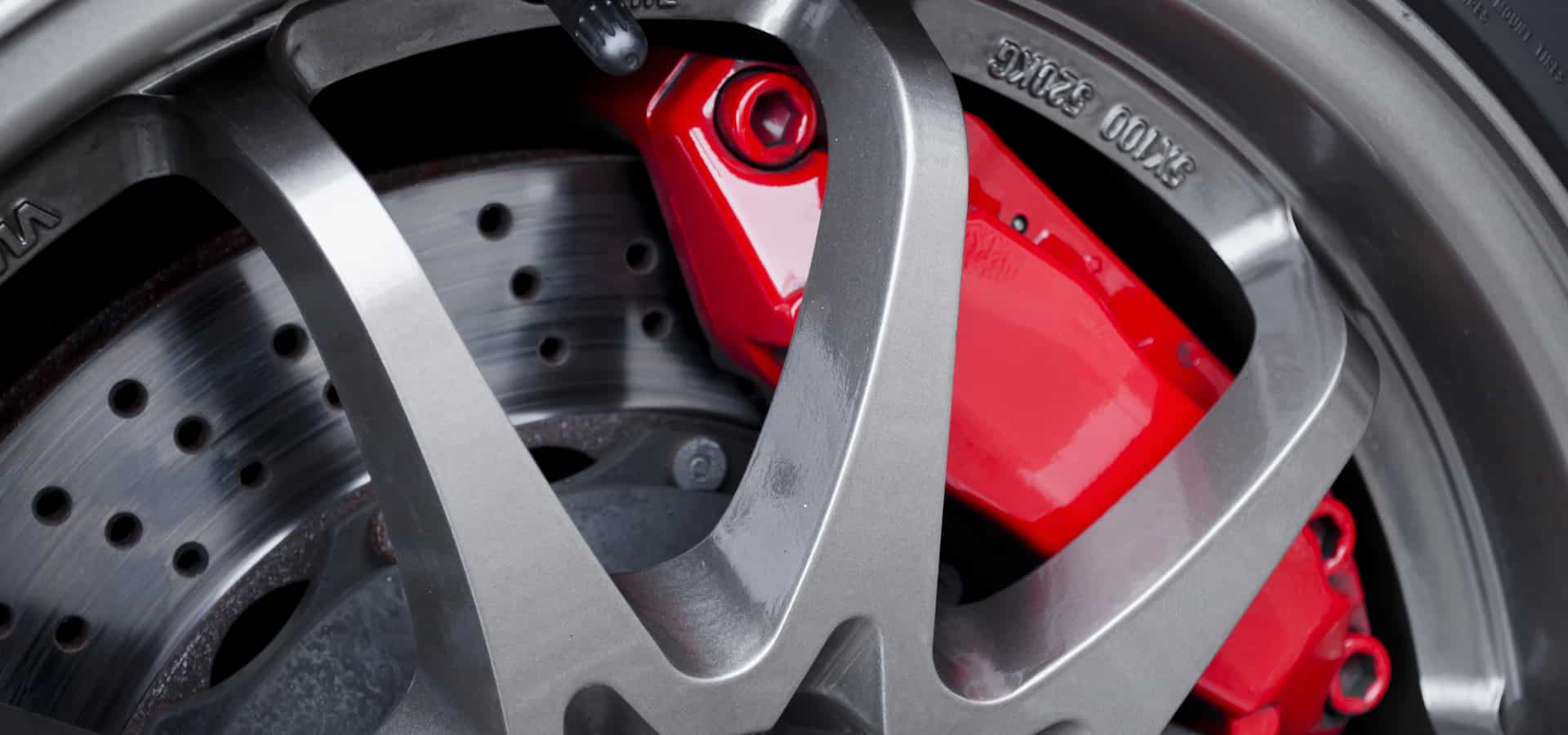
Honda Brake Repair & Brake Fluid Change at Elevation Auto Repair
Honda's brake systems reward precision. Many models pair a compact caliper design with tight rotor tolerances, and later Accords, Civics, and CR-Vs run electronic parking brakes and brake-hold features that need proper handling during service. That's where a Honda-focused approach separates good work from guesswork.
Brake repair covers pads, rotors, calipers, hardware, and hydraulic lines, while a brake fluid change flushes the old moisture-laden fluid that lowers boiling point and corrodes internal components. On Honda platforms, doing it right means following the OEM DOT 3 fluid spec, bleeding in the correct sequence, and using a scan tool to cycle the ABS modulator and retract the electronic parking brake so you don't damage the caliper motor.
We also torque caliper brackets and guide pins to Honda's factory values and clean or replace the slide hardware that causes uneven pad wear on high-mileage CR-Vs and Odysseys. Here's what you can expect:
- OEM-spec DOT 3 fluid and correct ABS bleed procedure with a factory-capable scan tool
- Electronic parking brake retracted properly before pad service on newer models
- Honest measurement of rotor thickness and pad life before any recommendation
- Clear explanation of what needs attention now versus what can wait
Symptoms – How to Know You Need This Service
Honda brakes usually warn you before they fail outright. Pay attention to these driver-side signs:
- Squealing or high-pitched chirp – the wear indicator tab is contacting the rotor; schedule soon.
- Grinding or metallic scraping – pads are worn to backing plate metal-on-metal; stop driving and get it inspected immediately.
- Soft or spongy pedal – often moisture in old fluid or air in the lines; this reduces stopping power and needs prompt attention.
- Pedal that sinks slowly to the floor – possible master cylinder or hydraulic leak; do not drive, arrange a tow.
- Steering wheel or pedal pulsation when braking – warped or unevenly deposited rotors, common on Civics and Accords driven hard downhill.
- Brake or ABS warning light – can indicate low fluid, worn pads, or a wheel-speed sensor fault; have it scanned soon.
- Pulling to one side when braking – a sticking caliper slide or collapsed hose; schedule promptly.
- Burning smell after stops – overheated pads or a dragging caliper; if it persists, stop and let the system cool.
Grinding, a sinking pedal, or a persistent burning smell mean you should stop driving. Squeals, pulsation, and warning lights mean book a visit before they get worse.
Common Brake Repair & Brake Fluid Change Issues on Honda Vehicles
Honda's brake engineering leans toward smaller, cost-effective rotors and single-piston sliding calipers across most of the lineup, which produces a predictable set of wear patterns Denver drivers see again and again. Elevation Auto Repair works on these platforms constantly, so we know where the trouble usually hides.
- Warped or thin front rotors on 2006-2011 Civic (FA/FG) and 2003-2007 Accord – Honda's thinner factory rotors are prone to lateral runout and pedal pulsation, especially after aggressive stops down I-70 grades.
- Sticking rear caliper slide pins on 2008-2012 Accord and CR-V – Colorado road salt and brake dust seize the pins, causing uneven pad wear and a rear brake that drags.
- Premature rear pad wear on 2016+ Civic (FC/FK) with electronic parking brake – The EPB actuator can hold slight tension, wearing inner pads faster than the fronts.
- Moisture-saturated brake fluid on high-mileage Odyssey and Pilot – Neglected DOT 3 absorbs water, dropping boiling point and causing a spongy pedal on long descents.
- ABS modulator and wheel-speed sensor faults on 2007-2013 Acura/Honda platforms – Corroded sensor tips trigger ABS and VSA warning lights.
- Glazed pads and squeal on Fit (GE/GK) – Small brake hardware and light rotors amplify noise when hardware clips aren't replaced.
Which Honda Models We See for Brake Repair & Brake Fluid Change
We service brake systems across the modern Honda lineup and most of the previous two generations. Find your car below:
- Civic – 8th gen (FA/FG/FD), 9th gen (FB), 10th gen (FC/FK), and 11th gen (FE/FL), including Si and Type R (FK8/FL5) which use larger Brembo front calipers requiring different pad and rotor specs.
- Accord – 8th through 11th generations (CP/CU, CR, and newer), with the electronic parking brake on later models handled via scan-tool retraction.
- CR-V – RE, RM, and RW generations; rear caliper slide pins are a frequent uneven-wear point on higher-mileage units.
- Pilot and Odyssey – heavier platforms that go through front pads and rotors faster; we check for rotor runout and hardware corrosion.
- Fit, HR-V, Ridgeline, and Passport – standard and electronic parking brake variants both supported.
Hybrid models such as the Accord Hybrid, CR-V Hybrid, and Insight use regenerative braking that reduces friction wear but still demands correct fluid service and system bleeding. We handle those with the proper hybrid brake procedures. For very old carbureted or pre-2000 Hondas, parts availability can be limited – call first and we'll let you know honestly whether we can source what your car needs.
Causes & Risks – What Happens if Ignored
Most Honda brake problems trace back to a mix of Denver's stop-and-go traffic, steep mountain descents, road-salt corrosion, and the simple fact that brake fluid degrades on a schedule most owners forget. Honda's compact rotor design leaves less material to absorb heat, so wear accelerates once components fall out of spec.
Waiting turns a routine pad-and-fluid service into a much larger job. Ignoring a pulsating pedal for a few thousand miles usually means rotors go from resurfaceable to replace-only, and worn-through pads score the rotor face and can damage the caliper piston.
- Thin pads left too long grind into rotors, adding rotor and sometimes caliper replacement.
- Sticking slide pins that go unaddressed overheat one corner, warping the rotor and cooking the caliper seal.
- Old, moisture-laden fluid corrodes the ABS modulator and caliper bores from the inside – an expensive repair on Odyssey and Pilot.
- Ignored VSA/ABS lights can disable stability and traction assistance without warning.
- A spongy pedal on a mountain grade can fade to almost no braking under sustained heat.
Catching these early keeps the fix simple and gets you back on the road safely.
Safety Impact – Why Brake Repair & Brake Fluid Change Matters
Brakes on a Honda tie directly into more than just stopping distance. Degraded fluid or failing components affect the ABS pump, VSA stability control, traction control, and hill-start assist on EPB-equipped models. When wheel-speed data or hydraulic pressure drops out of range, those systems can shut off exactly when you need them.
- Stop driving now: pedal sinks to the floor, grinding metal-on-metal, brake warning light plus red fluid-level light, or sudden loss of stopping power on a descent.
- Schedule soon: mild pulsation, squeal on light braking, slightly longer stopping distance, or a VSA/ABS light that comes and goes.
There's a liability angle too. If a known worn-brake condition goes unaddressed and contributes to a collision, that can complicate an insurance claim. Keeping documented, honest brake service on record protects you as much as it protects your stopping distance. Our technicians flag what's urgent versus what can wait, so you never pay for work you don't need.
How Honda Brake Repair & Brake Fluid Change Actually Works
A Honda brake system uses hydraulic pressure to clamp pads against rotors, with the ABS modulator pulsing that pressure to prevent lockup and feed data to VSA and traction control. Brake fluid is the medium for all of it, and because DOT 3 is hygroscopic, it absorbs water over time and must be flushed to keep its boiling point high.
What sets Honda apart is the integration of the electronic systems and, on newer models, the electronic parking brake. That changes how the job has to be done.
- Electronic parking brake on most 2016+ Civic, Accord, and CR-V models must be put into service/maintenance mode with a scan tool before rear pads can be compressed – forcing the piston back manually can damage the actuator.
- Torque and sequence specs for caliper bracket and guide-pin bolts follow Honda's published values to prevent runout and uneven clamping.
- Proper fluid flush cycles fresh DOT 3 through each corner and the ABS modulator, not just the reservoir, to remove moisture throughout the system.
- Scan-tool verification confirms no lingering ABS/VSA codes and that the EPB re-calibrates correctly after the work.
Doing it right the first time is why we use OEM-correct procedures on every Honda brake job.
How We Diagnose Brake Repair & Brake Fluid Change Issues on Honda
Honda's electronic brake systems – including the VSA modules on Accord, Civic, CR-V, and Pilot platforms – store fault data that a proper scan reveals long before a pedal pulse becomes obvious. Our process starts with the vehicle's own reporting, then confirms it with hands-on measurement.
- Connect a Honda-capable scan tool to pull VSA/ABS codes and read wheel-speed sensor data, brake pressure sensor values, and any stored DTCs.
- Check brake fluid condition with moisture-content and copper testing – Honda specifies DOT 3 with a typical service interval around every 3 years, and degraded fluid explains a spongy pedal on many CR-V and Odyssey models.
- Perform a road test to feel for pedal fade, pulsation under braking, or pull to one side that points to rotor runout or a sticking caliper slide pin.
- Rack the vehicle for a visual inspection – measure pad thickness, rotor thickness against Honda minimum specs, and inspect the rear caliper actuators on models with electric parking brakes.
- Check for uneven pad wear, seized guide pins, and torn dust boots that are common on higher-mileage Civics and Accords.
Once we've correlated the scan data with physical measurements, we build a clear repair plan and a written quote so you know exactly which parts need attention and why – no guesswork, no surprise add-ons.
Brake Repair & Brake Fluid Change on Honda: Repair vs. Replacement
Not every brake concern means a full corner rebuild. We match the fix to what the components actually need.
- Genuine repair: A brake fluid flush, caliper slide-pin cleaning and re-lubrication, or a bleed to clear air often restores a firm pedal on an Accord or Civic with plenty of pad and rotor left.
- Partial replacement: Replacing worn pads and resurfacing serviceable rotors, or swapping a single seized caliper, keeps costs down while addressing the actual failure – common on CR-V front brakes that wear faster than the rears.
- Full replacement: When rotors are below minimum thickness, calipers are seized, and pads are metal-to-metal, piecemeal repair is false economy. Pilot and Odyssey rear setups with rusted rotors and dragging calipers usually warrant complete corner service.
Safety-critical wear and cascading damage push us toward replacement, but we walk you through each option with the measurements in front of you. You decide what fits your budget and how long you plan to keep the Honda – we never default to the most expensive path.
How to Make Your Honda Brake Repair & Brake Fluid Change Last Longer
Good habits stretch the life of pads, rotors, and fluid on any Honda platform.
- Brake earlier and coast when possible instead of hard, late stops – this reduces heat that warps rotors on Civics and Accords driven in Denver's hilly terrain.
- Avoid riding the brakes on long downhill grades; downshift to let engine braking share the load.
- Lighten cargo loads in the Pilot and Odyssey when you can, since extra weight accelerates pad and rotor wear.
Simple owner checks catch problems early:
- Listen for squeal or grinding and note any pedal pulsation or sponginess.
- Peek through the wheel spokes to eyeball pad thickness.
- Watch the dash for the brake and VSA warning lights and address them promptly.
Brand-specific care matters here:
- Use Honda-spec DOT 3 fluid and follow Honda's roughly 3-year fluid interval – old fluid absorbs moisture and lowers boiling point.
- Choose OEM or OE-quality pads and rotors, since cheap friction material glazes and warps faster.
- Keep VSA/ABS software current during service so the system reads sensor data correctly.
Checking fluid level and listening for changes is safe DIY. Bleeding the ABS module, replacing calipers, or servicing the electric parking brake should be left to our technicians – these are safety-critical jobs where a mistake affects stopping power.
What to Expect When You Bring Your Honda In
Honda's brake systems have their own personality – the sliding-caliper single-piston fronts on Civics and Accords, the electric parking brake actuators on later CR-V and Accord platforms, and the VSA/ABS modulators that need a proper bleed sequence rather than a quick top-off. Here's how a visit flows.
- Drop-off or appointment – Tell us what you're feeling: pedal pulsation, a soft pedal, grinding, or a brake warning light. Leave personal items in the cabin if you like; we note anything left behind.
- Initial inspection – We measure pad thickness, rotor runout and minimum spec, inspect caliper slide pins for the seized-guide-pin issue common on higher-mileage Civics and CR-Vs, and check brake fluid moisture content with a tester.
- Written estimate – You get a clear breakdown of parts and labor before any work starts. No surprise add-ons.
- Communication during the work – We text or call with findings and wait for your approval on anything beyond the original scope.
- Pickup walkthrough – We show you old pads, rotors, and the fluid we pulled, and explain what we did.
Loaner and shuttle options are available, and after-hours pickup can be arranged. Every brake job ends with a road test and a scan-tool re-check of the ABS/VSA system. If the pedal ever feels off afterward, bring it back and we'll make it right.
Why Choose Elevation Auto Repair for Honda Brake Repair & Brake Fluid Change
We handle Honda brake work the way the platform demands, not with a generic pad-slap. That means following Honda's recommended DOT 3 fluid spec, using the correct ABS bleed procedure with factory-level scan tools, and torquing caliper brackets and guide pins to Honda's values so nothing warps or drags.
- Platform-specific knowledge – Familiarity with Honda TSBs and service bulletins covering brake judder, rear caliper drag, and electric parking brake calibration on newer Accord and CR-V models.
- Proper fluid service – Full flush with moisture testing rather than a surface bleed, protecting the ABS modulator from internal corrosion.
- End-to-end ownership – The same shop diagnoses, repairs, and verifies the work, including EPB reset and road testing.
You get one shop for everything from routine brake service to complex drivetrain and engine repair – a real dealership alternative in Denver with honest diagnostics and clear communication at every step. We fix what your Honda actually needs, then confirm it's right before you drive away.
Our Honda Services
- Air Conditioning AC Repair
- Battery Repair Replacement
- Check Engine Light Diagnostics
- Clutch Repair & Replacement
- Coolant Leak Repair
- Cooling System Repair
- Drive Shaft Repair
- Engine Repair
- Exhaust & Catalytic Converter Repair
- Head Gasket Repair & Replacement
- Oil Change
- Oil Leak Repair
- Scheduled Service Maintenance
- Steering Repair
- Suspension Repair
- Cambelt Timing Belt Replacement
- Transmission Repair
- Tune Up
- Wheel Alignment