
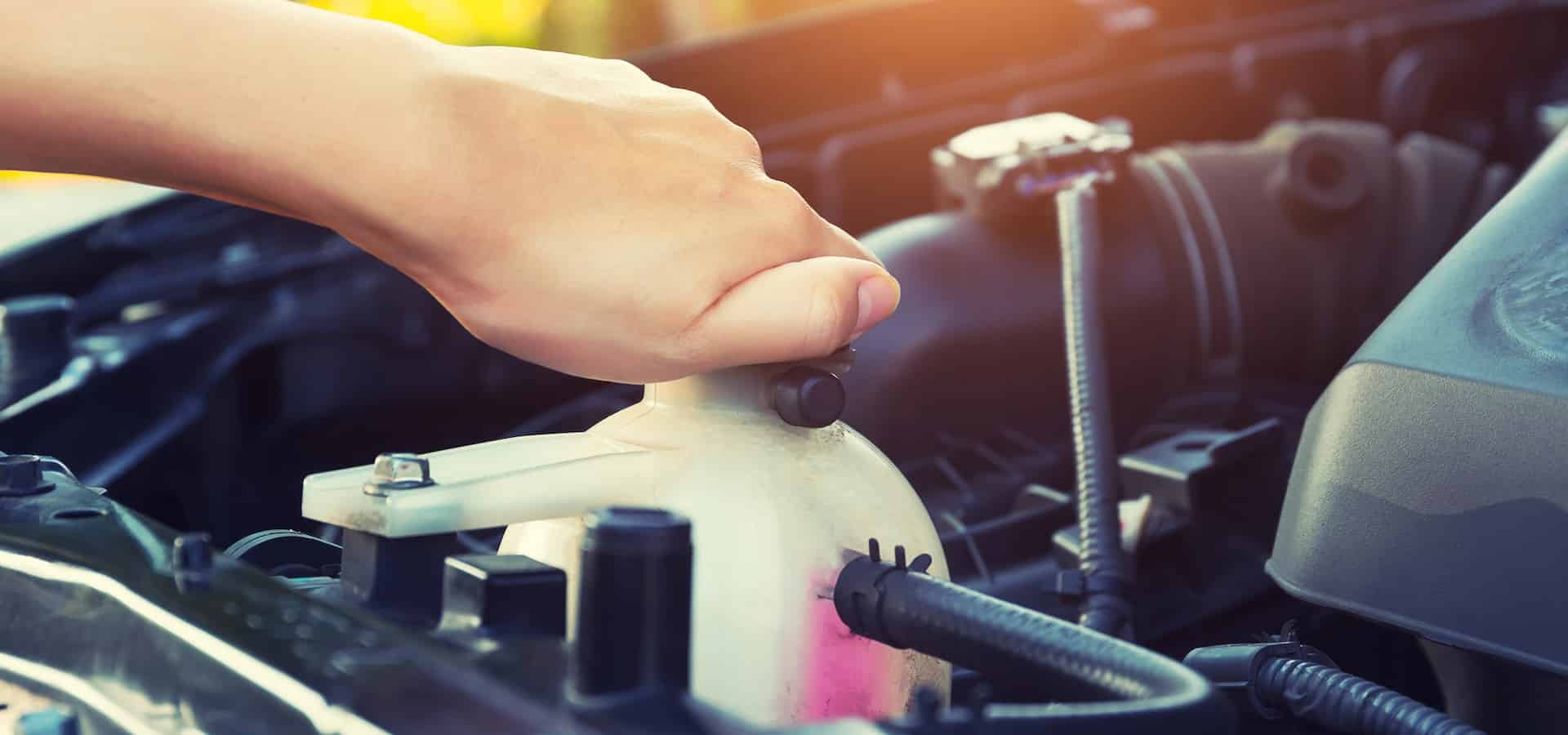
Honda Coolant Leak Repair at Elevation Auto Repair
Honda's cooling systems lean heavily on molded plastic and composite components – and those parts age faster than most owners expect. The pressed-in thermostat housings, plastic radiator end tanks, and integrated water passages on many J-series V6 and K-series four-cylinder engines are known weak points once heat cycling takes its toll.
Coolant leak repair on a Honda is a precision job, not a guess-and-replace routine. We pressure-test the system, trace the actual source, and rebuild with parts that match Honda's spec – including the correct Honda Type 2 blue coolant, which is not interchangeable with universal green fluid.
A few Honda-specific details shape how we approach this work:
- Thermostat housings and water outlets on J35 and R18 engines often crack at the plastic flanges rather than fail at the gasket – replacement, not resealing, is the correct fix.
- Bleeding the system properly matters. Many Hondas trap air at the engine bleeder, and skipping that step leads to overheating and false repeat visits.
- Torque specs on plastic housings are low by design – overtightening cracks them, so we follow OEM values.
What you can expect from us:
- A pressure test that pinpoints the leak instead of throwing parts at it
- OEM or OEM-equivalent components with the correct Honda coolant
- A proper burp and bleed to eliminate air pockets
- Straight answers about what needs fixing now versus what can wait
Symptoms – How to Know You Need This Service
Coolant loss rarely announces itself all at once. You may notice small signs long before the temperature gauge climbs.
- Sweet syrup smell inside or around the car after driving – a classic sign of leaking coolant hitting hot engine parts.
- Green, orange, or blue puddles under the front of the vehicle, often near the passenger-side radiator tank on Accords and Pilots.
- Temperature gauge creeping toward hot or swinging erratically in stop-and-go traffic.
- Low coolant warning or a reservoir that keeps dropping below the MIN line.
- White steam from under the hood or from the exhaust – stop driving immediately if you see this.
- Heater blowing cold air even after the engine warms up, hinting at low coolant or air in the system.
- Crusty white or dried residue around the thermostat housing, water pump, or hose connections.
Schedule soon if you see puddles, smell coolant, or top off the reservoir often. Pull over and shut the engine off if you see steam, the gauge spikes into the red, or a warning light flashes – an overheated Honda aluminum head can warp fast and turn a minor repair into a major one.
Common Coolant Leak Repair Issues on Honda Vehicles
Most Honda coolant leaks trace back to a handful of platform-specific weak spots. Here are the patterns our technicians see most often:
- Cracked plastic thermostat housings – R-series engines (2006-2015 Civic 1.8L) and K-series 2.4L four-cylinders use composite housings that go brittle and split along the seam, usually seeping near the housing-to-block gasket.
- Radiator end-tank failures – Accords, Odysseys, and Pilots run plastic-tank/aluminum-core radiators where the crimped seam and upper tank crack, often after 8-10 years in Denver's dry, temperature-swinging climate.
- Water pump weep-hole seepage – On timing-belt J35 V6s (Pilot, Odyssey, Ridgeline), the pump is buried behind the belt cover, so a slow weep hides until coolant stains the timing area.
- Failed water pump / timing chain-side gaskets – Earth Dreams 1.5L turbo engines (2016+ Civic, CR-V) can develop coolant intrusion issues tied to the block and gasket sealing.
- Bypass and heater hose connectors – Quick-connect fittings and molded hose elbows harden and leak at the crimped ends, common across CR-V and Accord platforms.
- Coolant reservoir and cap – Cracked overflow tanks and worn radiator cap seals cause pressure loss that mimics a larger leak.
Which Honda Models We See for Coolant Leak Repair
We service coolant leaks across nearly the entire modern Honda lineup. These are the platforms and engines we see most often:
- Accord – 8th, 9th, and 10th gen (2008–present), including J35 V6 thermostat housing leaks and K24/1.5T turbo hose weeping.
- Civic – FA/FG/FB and the FC/FK generations (2006–present), with R18 and L15 1.5T water passage and radiator leaks.
- CR-V – 2007–present, commonly the K24 and later 1.5T, often at the radiator end tanks and lower hose.
- Pilot & Ridgeline – J35 V6 (2009–present), where plastic thermostat and water outlet housings crack with age.
- Odyssey – J35 minivans (2005–present), which run hot in Denver traffic and stress the cooling system.
- Fit & HR-V – L15 four-cylinders, typically radiator and hose connection leaks.
Turbocharged 1.5T and 2.0T models add extra coolant lines routed to the turbo, so we inspect those feed and return lines closely. Hybrid Accords and CR-Vs use a separate cooling circuit for the electric drive system – we handle those, and we'll tell you plainly if a specific hybrid concern falls outside routine coolant work so you always know where you stand.
Honda's engineering leans heavily on aluminum blocks paired with plastic-composite cooling components, which keeps weight down but creates predictable failure points as the plastic ages and heat-cycles. That combination shapes almost every coolant leak we see roll into the shop, from high-mileage Civics to J-series V6 Pilots and Odysseys.
Causes & Risks – What Happens if Ignored
Colorado's altitude, dry air, and wide day-night temperature swings accelerate plastic fatigue on cooling parts. Age, high mileage, and stretched coolant-change intervals do the rest, letting old fluid turn acidic and eat at gaskets and pump seals.
A pinhole leak or a slow housing seep rarely stays small on a Honda. Once the system can't hold pressure, coolant temperatures climb fast, and aluminum heads warp under sustained heat.
- Ignoring a thermostat housing seep for a few months typically progresses to a full crack and rapid coolant loss on a hot day.
- A minor radiator end-tank crack that goes unaddressed can dump coolant on the highway, leading to overheating and a warped cylinder head or blown head gasket.
- Chronic low coolant on J-series V6s starves the water pump, and a failing pump behind the timing belt can take the belt and valves with it.
- Air pockets and low fluid overwork the electric radiator fans and reduce heater output in winter.
- What starts as a hose or clamp replacement can grow into a head gasket, machine work, or engine replacement.
We'd rather catch it at the seep stage and keep you in an inexpensive repair. That's the whole point of an honest diagnosis.
Safety Impact – Why Coolant Leak Repair Matters
Overheating is the headline risk, but a coolant problem reaches other systems too. Steam or coolant on the windshield hurts visibility, and a sudden overheat can force a stall in traffic.
- Engine management – The ECU pulls timing and can enter limp mode when coolant temp sensors read high, cutting power unexpectedly.
- Defrost and heater function – A low system leaves you without reliable defog in Denver winters, a real visibility hazard.
- Cabin exposure – Heater core leaks push sweet-smelling steam and coolant film onto the inside of the glass.
- Stalling risk – Severe overheat can seize or stall the engine, killing power steering and brake boost assist.
Stop driving now if: the temp gauge spikes to hot, you see steam from the hood, or the low-coolant warning appears with a burning smell.
Schedule soon if: you notice sweet-smelling puddles, slow coolant loss between fill-ups, or a faint coolant smell after shutdown. Addressing a known leak before it causes a failure also keeps you clear of liability questions if an overheat strands you.
How Honda Coolant Leak Repair Actually Works
A Honda cooling system pushes pressurized coolant from the water pump through the block and head, out to the radiator, and back through a thermostat that regulates flow. Electric fans, temperature sensors, and on turbo models a more complex routing keep everything in a narrow temperature band. Pressure and precision matter more than on older, simpler designs.
What sets Honda work apart is the tight integration and the need to bleed the system correctly – air pockets on these engines cause false overheats and heater failures if the fill procedure is skipped.
- OEM Honda Type 2 coolant – the phosphate-based blue formula protects aluminum; mixing in a generic coolant invites corrosion and gasket failure.
- Proper bleed sequence – Hondas rely on specific bleeder screws and fill steps to purge air; we follow the OEM procedure with a vacuum fill and verify with a scan tool.
- Torque and sequence specs – composite housings and water pump bolts have precise torque values to avoid cracking the plastic or distorting the seal.
- Honda's cooling systems have their own personalities across generations, and knowing where they fail saves guesswork. The plastic thermostat housings on many J-series V6 engines (Accord, Pilot, Odyssey, Ridgeline) crack with heat cycling, while the R-series and K-series four-cylinders often weep from the radiator neck seams and the water pump weep hole. On Earth Dreams 1.5T turbo engines (2016+ Civic, CR-V, Accord), coolant intrusion and gasket weeping bring their own quirks. We work these platforms with OEM-aligned procedures instead of one-size-fits-all repairs.
How We Diagnose Coolant Leak Repair Issues on Honda
A coolant leak on a Honda can hide behind splash shields, wick down hoses, or evaporate off a hot block before you ever see a puddle. We narrow it down methodically.
- Scan first: We connect a factory-capable scan tool to pull codes and live data – coolant temperature sensor readings, thermostat behavior, and any electric water pump commands on hybrid and turbo models.
- Cold visual inspection: We check the radiator seams, upper and lower hoses, thermostat housing, water pump weep hole, and heater core inlets for crust, staining, or wet residue.
- Cooling system pressure test: We pressurize the system to the cap's rated spec and watch for pressure drop, then trace the source under load.
- UV dye and combustion test: When the leak is intermittent, we add dye or run a block test to rule out a head gasket breach.
- Road test and temperature check: We verify the thermostat opens correctly and the fans cycle, watching for hot spots and heater output.
Once we've confirmed the source, you get a clear repair plan and an itemized quote – no vague "it's leaking somewhere" answers, just the actual failed part and what it takes to fix it right.
Coolant Leak Repair on Honda: Repair vs. Replacement
Not every coolant leak means a big parts bill. The right call depends on where the leak is and what's driving it.
- Genuine repair: A weeping hose clamp, a loose bleeder screw, or a degraded O-ring on a coolant crossover pipe can often be re-sealed or swapped with a single small part.
- Partial replacement: A cracked plastic thermostat housing on a J-series V6 is replaced as its own unit while the pump and radiator stay in service. Same logic applies to a leaking radiator with sound hoses – we replace the radiator, not the whole cooling loop.
- Full replacement: When the water pump, timing components, and coolant passages all show wear on higher-mileage K-series engines, or when a leak has led to a compromised head gasket, replacing the related assembly together is smarter than chasing one part at a time.
We lay out each option with the reasoning behind it, so you decide based on your Honda's mileage and how long you plan to keep it – not on whatever costs the most.
How to Make Your Honda Coolant Leak Repair Last Longer
A fresh repair holds up far longer when the system stays healthy around it. A few habits make a real difference.
- Warm up gently: Let the engine reach temperature before hard acceleration – rapid heat cycling is what cracks plastic housings and stresses seams.
- Watch your gauge and lights: Address a rising temperature needle or coolant warning right away instead of topping off and driving on.
- Do a monthly glance: Check the overflow reservoir level cold, and scan the ground for spots. Listen for a gurgling heater core, which hints at air or low coolant.
- Use Honda Type 2 coolant: Honda's blue long-life coolant is formulated for their aluminum components – mixing in generic green coolant invites corrosion and gasket trouble.
- Follow the service interval: Stick to Honda's coolant replacement schedule and keep any powertrain software current on newer turbo and hybrid models.
Topping off the reservoir and checking levels are safe DIY tasks. Leave pressure testing, thermostat replacement, and anything involving the water pump or head gasket to us – these touch safety-critical cooling and are easy to get wrong. Bring it in and we'll keep your Honda running cool and dependable.
What to Expect When You Bring Your Honda In
Honda cooling systems have their own personality – the plastic thermostat housings on J-series V6s, the crossover pipes buried behind the intake, and the water pumps driven off the timing belt on older Odyssey and Pilot models. We build the visit around finding the real leak source, not just topping off the reservoir.
- Drop-off or appointment: Schedule ahead or leave the vehicle with us. Shuttle service and loaner options are available so you're not stranded while we work.
- Initial inspection: We pressure-test the system, inspect the radiator end tanks, upper and lower hoses, thermostat housing, water pump weep hole, and the coolant crossover pipe for seepage.
- Written estimate: You get a clear breakdown of the failed component, the parts we'll use, and the labor involved before anything moves forward.
- Communication during the work: We text or call with findings and wait for your approval before adding anything.
- Pickup walkthrough: We show you the old parts, explain what failed, and cover next steps for related wear items.
Grab personal items from the cabin before drop-off, and ask about after-hours pickup if your schedule runs late. Every coolant repair ends with a road test to confirm full operating temperature, a bleed of trapped air, and a scan-tool re-check for cooling-related codes. If anything feels off afterward, bring it back and we'll recheck it directly.
Why Choose Elevation Auto Repair for Honda Coolant Leak Repair
Coolant leaks on Hondas often trace back to predictable failure points, and knowing where to look saves you money. We've chased down cracked thermostat housings on 3.5L J-series engines, weeping water pumps on timing-belt V6s, and radiator seam leaks on higher-mileage Civic and Accord platforms.
- Honda-specific knowledge: We reference applicable Honda TSBs and software updates so a fix addresses the actual root cause, not just the symptom.
- Proper fill and bleed: Honda cooling systems trap air easily – we follow the correct bleed procedure and use Honda Type 2 coolant specification to avoid overheating and heater-core airlocks.
- End-to-end ownership: The same shop that diagnoses your leak repairs it and verifies the fix with a pressure test and road test.
You get honest diagnostics with no unnecessary add-ons, and a clear explanation of any related wear – belts, hoses, or a tired radiator cap – so a small leak today doesn't turn into a roadside breakdown later.
Our Honda Services
- Air Conditioning AC Repair
- Battery Repair Replacement
- Brake Repair & Brake Fluid Change
- Check Engine Light Diagnostics
- Clutch Repair & Replacement
- Cooling System Repair
- Drive Shaft Repair
- Engine Repair
- Exhaust & Catalytic Converter Repair
- Head Gasket Repair & Replacement
- Oil Change
- Oil Leak Repair
- Scheduled Service Maintenance
- Steering Repair
- Suspension Repair
- Cambelt Timing Belt Replacement
- Transmission Repair
- Tune Up
- Wheel Alignment