
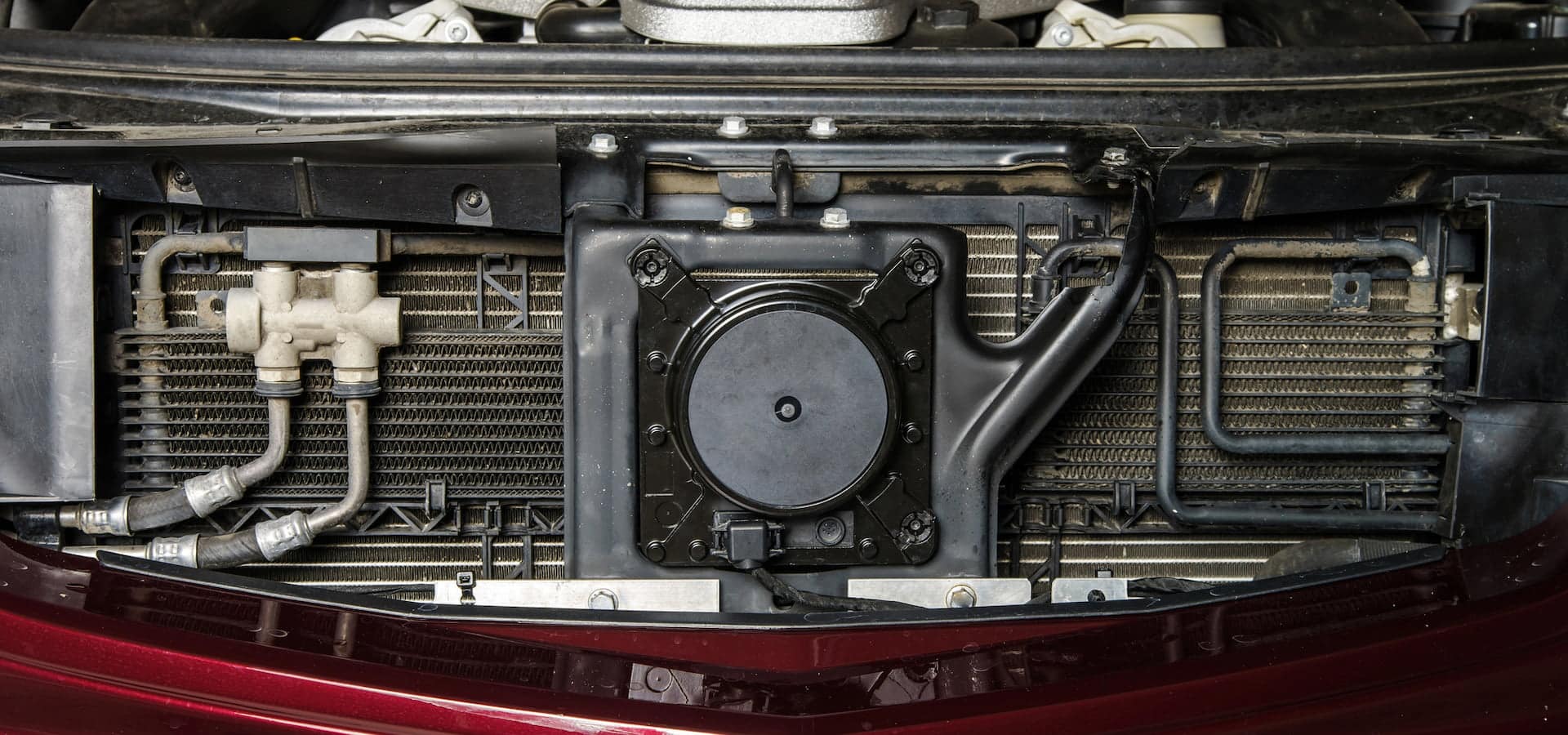
Mazda Cooling System Repair at Elevation Auto Repair
Get a Mazda cooling repair wrong and you risk a warped aluminum cylinder head or a scored bore – the kind of failure that turns a modest coolant leak into an engine rebuild. Mazda's SkyActiv engines run tight thermal tolerances, and Denver's altitude and dry summers push these systems harder than most owners expect.
Cooling system service on a Mazda covers the water pump, thermostat housing, radiator, hoses, coolant reservoir, and the electric cooling fans that many later models rely on. What sets Mazda work apart is the detail: SkyActiv-G and SkyActiv-D engines use specific FL22-type long-life coolant, and mixing the wrong fluid accelerates internal corrosion and seal breakdown. The plastic thermostat housings and integrated coolant crossover pipes on 2.0L and 2.5L engines have precise torque specs – overtighten them and you crack the housing on the spot.
We use factory-correct coolant, proper bleed procedures to clear air pockets from the SkyActiv cooling circuit, and pressure testing to confirm the fix holds before your car leaves.
- Honest diagnostics – no unnecessary parts, only what your Mazda actually needs
- OEM-grade coolant and gaskets matched to your engine
- Full system pressure test and proper air-bleed after every repair
- Repairs focused on long-term reliability, not a quick patch
Symptoms – How to Know You Need This Service
Cooling problems on a Mazda often show early if you know what to watch for. From the driver's seat, you may notice:
- Temperature gauge climbing past center or a red coolant warning light – stop driving immediately and let the engine cool
- Sweet, syrupy smell inside or outside the cabin, a classic sign of a leaking heater core or hose
- Green, orange, or pink puddles under the front of the car, often from the water pump weep hole or thermostat housing
- White steam from under the hood – shut it down right away to avoid head damage
- Heater blowing cold at idle or on the highway, pointing to low coolant or a stuck thermostat
- Cooling fans running constantly or not at all, which strains the electric fan module
- Gurgling or bubbling behind the dash after shutdown, a sign of trapped air or a failing head gasket
- Coolant reservoir dropping repeatedly with no visible leak
Overheating and steam mean stop now. A minor drip, cold heater, or slow coolant loss means schedule soon before it becomes a bigger repair.
Common Cooling System Repair Issues on Mazda Vehicles
Mazda's move to lightweight aluminum architecture across the SkyActiv lineup created reliable engines, but the cooling components around them have predictable wear paths. These are the patterns we see most often in Denver's climate.
- Water pump seepage on SkyActiv-G 2.0L and 2.5L (2012+ Mazda3, CX-5, Mazda6) – The internal timing-chain-driven water pump develops weep-hole seepage as the shaft seal ages, often mistaken for a minor drip until it starts feeding coolant into places it shouldn't.
- Plastic coolant crossover and thermostat housings – Mazda uses composite housings that grow brittle with heat cycling. On higher-mileage CX-5 and Mazda6 units, cracks form at the thermostat housing seams and radiator hose necks.
- Radiator end-tank failures on 2007-2013 Mazda3/Mazdaspeed3 (MZR 2.3L/2.3 DISI turbo) – The turbocharged DISI runs hot, and the plastic radiator end tanks crack where they crimp to the aluminum core.
- Coolant overflow/expansion tank cracking – Translucent reservoirs on many Mazda platforms craze and split at the seams, causing slow pressure loss.
- Thermostat sticking on early SkyActiv engines – A thermostat that hangs open runs the engine cold, throwing efficiency codes; one that sticks closed spikes temperatures fast.
- Electric cooling fan and control module faults on CX-5 and CX-9 – Fan modules degrade, especially on turbocharged 2.5T CX-9 units under high-load stop-and-go driving.
Which Mazda Models We See for Cooling System Repair
We service the full modern Mazda lineup and many earlier platforms. Find your car below:
- Mazda3 (BK, BL, BM/BN, BP) – 2004–present, with SkyActiv-G 2.0L and 2.5L engines commonly needing thermostat housing and water pump work
- Mazda6 (GG, GH, GJ/GL) – 2003–present, including the 2.5L Turbo where charge-air cooling and coolant routing add complexity
- CX-5 (KE, KF) – 2013–present, a frequent visitor for radiator, hose, and coolant service on SkyActiv-G and turbo variants
- CX-30, CX-9 (TB, TC), CX-50, CX-90 – water pump, reservoir, and fan module repairs across these crossover platforms
- MX-5 Miata (NB, NC, ND) – 1999–present, where radiator and hose upgrades matter for spirited and track driving
- SkyActiv-D 2.2L diesel variants – specialized cooling and EGR-related coolant service
Turbocharged CX-5, CX-9, and Mazda6 2.5T models get extra attention because their added heat load and secondary cooling circuits differ from naturally aspirated cars. For rotary RX-8 (SE) cooling, we handle standard radiator and hose work but will tell you honestly if a repair falls outside our scope. Not sure which platform you have? Bring it in and we'll identify it and map out the right fix.
Getting a Mazda cooling system repair wrong doesn't just cost you a coolant flush – it can warp a cylinder head or crack an aluminum block, turning a manageable job into a full engine rebuild. Mazda's SkyActiv engines run tight thermal tolerances, and their aluminum-heavy construction is unforgiving when temperatures climb. At Elevation Auto Repair, we treat cooling work as the foundation of long-term reliability, not a quick top-off.
Causes & Risks – What Happens if Ignored
Denver's altitude and temperature swings put extra stress on Mazda cooling systems. Thinner air reduces cooling efficiency, and the freeze-thaw cycles accelerate plastic fatigue in housings and reservoirs. Age and heat cycling do the rest.
A small seep is cheap to address. Wait too long, and the aluminum components Mazda relies on start paying the price.
- Ignoring water pump seepage for months typically leads to bearing failure – and because the pump is chain-driven on SkyActiv engines, that can pull timing components into the repair.
- Running a cracked thermostat housing lets the system lose pressure, causing localized boiling and hot spots that warp the aluminum head.
- Chronic low coolant on the turbo DISI Mazdaspeed3 risks detonation and head gasket failure once combustion temps climb past design limits.
- A stuck-closed thermostat can spike temperatures fast enough to crack the block or blow the head gasket in a single drive.
- Deferred fan module repair leaves you fine on the highway but overheating in traffic – exactly when you can least afford it.
The pattern is consistent: a repair that starts small becomes a major engine job the longer coolant loss goes unaddressed. We'd rather catch it at the seep stage.
Safety Impact – Why Cooling System Repair Matters
Overheating isn't only an engine problem – it cascades into systems you rely on to control the car. A Mazda in limp mode or losing power on a busy interstate becomes a hazard to everyone around it.
- Sudden power loss – Overheat protection cuts engine output, which can leave you stranded in moving traffic.
- Steam and visibility loss – A burst hose or housing under the hood can obscure the windshield instantly.
- Electronic system faults – Extreme heat and coolant intrusion near wiring can trigger warning cascades affecting stability control and ABS readiness.
- Coolant on the road – Spilled coolant is slick and endangers you and other drivers.
Stop driving now if you see: a temperature gauge in the red, steam from the hood, a coolant warning light, or a sweet-smelling puddle after parking.
Schedule soon if you notice: a slow-dropping coolant reservoir, occasional overheating in traffic only, or a faint coolant smell after driving. Addressing a known cooling defect before a breakdown also keeps you clear of the liability that comes with driving a vehicle you knew was compromised.
How Mazda Cooling System Repair Actually Works
Mazda's cooling system circulates coolant through the block and head, past a thermostat that regulates flow to the radiator, with an electric fan pulling air through the core when airflow drops. On SkyActiv engines, the water pump lives inside the timing cover and is driven by the timing chain – a design choice that improves efficiency but complicates replacement.
That integration is exactly why generic shortcuts cause problems. Doing this work right on a Mazda means respecting how the components tie together.
- Chain-driven water pumps require partial timing cover access and correct sequencing, not a simple belt-side swap.
- Composite housing torque specs matter – overtightening cracks the plast
Cooling system mistakes on a Mazda tend to snowball. A cheap thermostat that fails closed on a SkyActiv-G 2.0 or 2.5 can spike coolant temps fast, and an overheated aluminum head warps, cracks, or blows a head gasket – turning a small fix into major engine work. Getting the diagnosis right the first time protects the long-term reliability of your Mazda3, CX-5, Mazda6, or MX-5.
How We Diagnose Cooling System Repair Issues on Mazda
We start with data, not guesses. Mazda cooling faults often log soft codes long before you see steam under the hood, so we pull them before touching a tool.
- Scan with Mazda-capable diagnostics: We read codes and live data through a scan tool that speaks Mazda's protocols, watching ECT sensor readings, thermostat commanded position, and electric fan duty cycle for values that don't add up.
- Visual inspection: We check the radiator, plastic end tanks, water pump weep hole, hose clamps, and the coolant expansion tank – common leak points on higher-mileage SkyActiv engines.
- Pressure test: A cooling system pressure test finds slow external leaks and reveals internal loss into the combustion chamber.
- Thermal check: We monitor warm-up behavior to confirm the thermostat opens at spec and the fans stage correctly.
- Road test: We drive under load and at idle to reproduce temperature swings and listen for water pump bearing noise or coolant gurgle.
From there we build a clear repair plan and a written quote, so you know exactly what's failing, what's still good, and what it takes to make it right.
Cooling System Repair on Mazda: Repair vs. Replacement
Not every cooling complaint means a big parts bill. The right call depends on what's worn and how far the damage has spread.
- Genuine repair: A leaking hose, a loose clamp, a bad ECT sensor, or a stuck thermostat on a SkyActiv engine is often a single-part fix with a coolant refill and proper bleed.
- Partial replacement: A weeping water pump or a radiator with a cracked plastic end tank gets that component replaced while sound hoses and the reservoir stay in service.
- Full replacement: When overheating has already stressed the system – warped surfaces, multiple failing plastic parts, or a compromised head gasket – replacing hoses, radiator, pump, and thermostat together makes more sense than chasing one leak after another.
On turbocharged models like the CX-9 and Mazdaspeed platforms, heat load is higher, so we're honest when a marginal radiator is worth replacing now versus later. We walk you through each option and the trade-offs – you decide, and we never default to the most expensive path.
How to Make Your Mazda Cooling System Repair Last Longer
A quality repair lasts longer when driving and maintenance habits back it up.
- Let it warm up: Give the engine a gentle first mile instead of full throttle on a cold start – thermal shock is hard on hoses, gaskets, and the thermostat.
- Watch the load: Towing or mountain climbing in Colorado heat pushes coolant temps up, so ease off before the gauge climbs.
- Check it yourself: Peek at the coolant level in the expansion tank when cold, scan for pink or green puddles, and note any sweet smell or gurgling.
- Listen for changes: A whine that rises with RPM can signal an early water pump bearing.
Brand-specific care matters here. Use Mazda's specified FL22 long-life coolant rather than a random universal blend – mixing types can gel and clog passages. Keep up with the coolant service interval, and stay current on ECM software that manages fan and thermostat control.
Topping off a cold reservoir is safe to do yourself. Leave pressure testing, thermostat replacement, bleeding, and anything near an overheating engine to us – those are safety-critical and easy to get wrong. As your Denver dealership alternative, we handle the complex work and keep your Mazda safely on the road.
Getting a Mazda cooling system repair wrong costs more than a second visit – it costs an engine. Mazda's SkyActiv-G engines run tight cooling tolerances, and a mistake like the wrong coolant, an air pocket in the system, or a reused plastic thermostat housing can lead to warped heads or a cracked block. The right repair protects the aluminum block long after you drive away.
What to Expect When You Bring Your Mazda In
We keep the process straightforward so you always know where your Mazda stands.
- Drop-off or appointment – Schedule ahead or drop by. Grab personal items from the cabin; we'll note anything left inside and lock the vehicle.
- Initial inspection – We pressure-test the system, inspect the water pump weep hole, thermostat housing, radiator seams, and hose clamps, and scan for coolant temp and overheating codes common on 2.0L and 2.5L SkyActiv engines.
- Written estimate – You get a clear breakdown of parts and labor before we touch a bolt, including whether we're replacing the electric water pump, plastic housing, or radiator outright.
- Communication during the work – We text or call with findings and wait for your approval on anything beyond the original scope.
- Pickup walkthrough – We show you the old parts, explain the coolant used, and answer questions face to face.
Loaner and shuttle options help you stay mobile, and after-hours pickup is available when your schedule runs tight. Before we hand back the keys, every Mazda gets a proper vacuum-fill to purge air pockets, a road test to confirm normal operating temperature, and a scan-tool re-check for pending codes. If anything feels off afterward, bring it back – we'll re-verify our own work.
Why Choose Elevation Auto Repair for Mazda Cooling System Repair
Cooling work on Mazda platforms rewards attention to detail, and we treat it that way from diagnosis through the final road test.
- Platform-specific knowledge – We know the plastic thermostat housing and coolant crossover pipe weak points on SkyActiv 2.0L and 2.5L engines, and the electric water pump quirks that surface on later Mazda3, CX-5, and Mazda6 models.
- TSB and software awareness – We check for applicable Mazda service bulletins and updated cooling-related components rather than reinstalling the same failure-prone part.
- Correct coolant and fill procedure – We use Mazda-spec coolant and vacuum-fill the system to prevent the air pockets that cause phantom overheating and heater complaints.
We own the job end to end – no farming out diagnosis, no guessing on parts. That means the technician who reads the pressure test is the same one confirming your temp gauge behaves on the road. As your Denver dealership alternative, we back the repair with honest diagnostics and repairs aimed at keeping your Mazda reliable for the long haul.
Our Mazda Services
- Air Conditioning AC Repair
- Battery Repair Replacement
- Brake Repair & Brake Fluid Change
- Check Engine Light Diagnostics
- Clutch Repair & Replacement
- Coolant Leak Repair
- Drive Shaft Repair
- Engine Repair
- Exhaust & Catalytic Converter Repair
- Head Gasket Repair & Replacement
- Oil Change
- Oil Leak Repair
- Scheduled Service Maintenance
- Steering Repair
- Suspension Repair
- Cambelt Timing Belt Replacement
- Transmission Repair
- Tune Up
- Wheel Alignment