
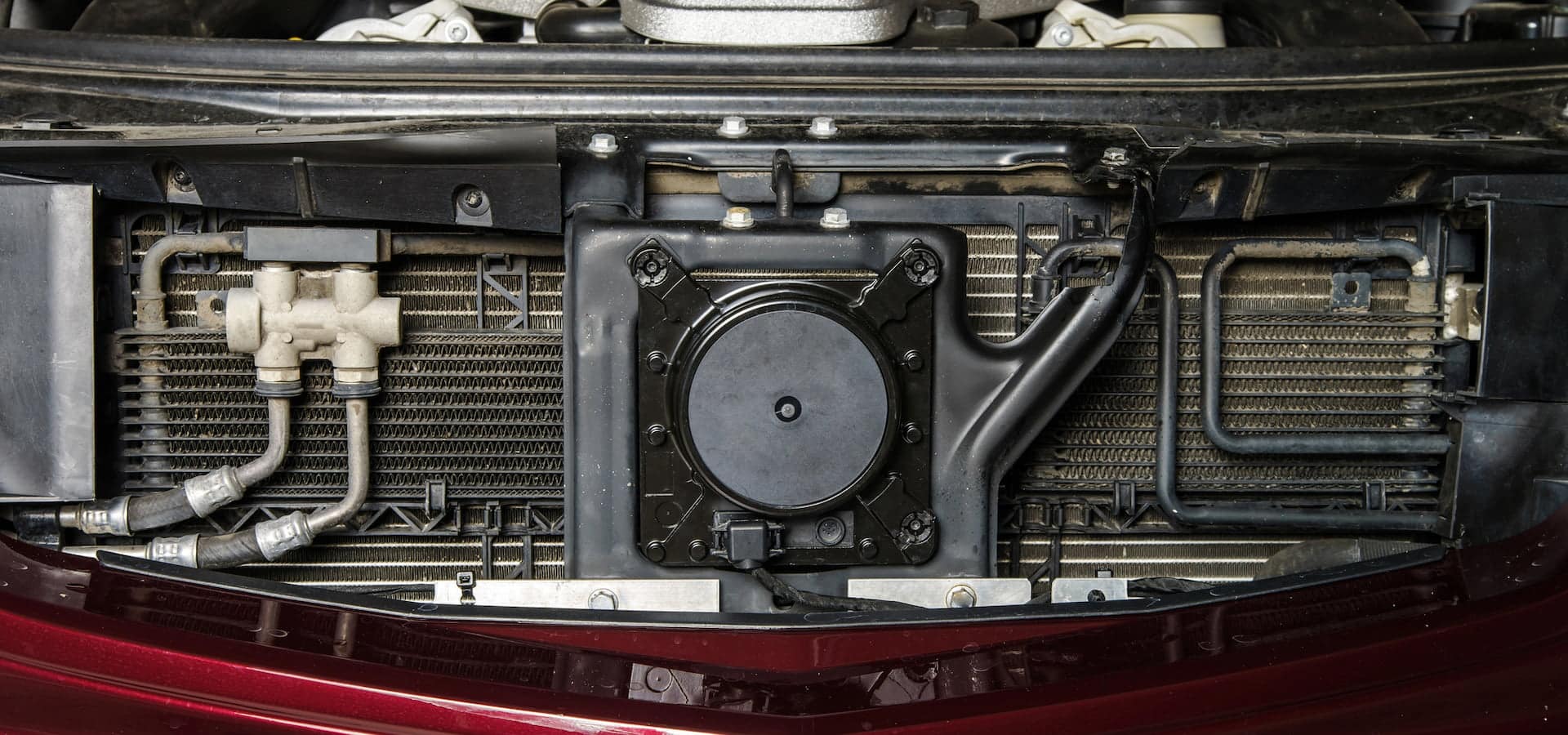
Honda Cooling System Repair at Elevation Auto Repair
Your Honda runs hot in Denver traffic, and the temperature needle just crept past center on your way up I-25. That's the moment a cooling system problem stops being minor. Getting it fixed correctly protects your engine, your warranty, and the resale value you've built up.
Honda cooling systems have their own personality. Many Honda four-cylinders use a timing-belt-driven water pump on older R18 and K24 setups, so a coolant leak often overlaps with belt service timing. Newer Earth Dreams engines run tighter thermostat housings and plastic components that crack with heat cycling. We use Honda's factory-specified Type 2 blue coolant – mixing in the wrong universal fluid corrodes the system and voids the point of doing the job right.
Proper bleeding matters more on Hondas than most drivers realize. The Civic and Accord cooling circuits trap air pockets that a generic shop misses, leaving you with a hot spot and a warped head down the road. We follow the OEM fill-and-burp sequence and verify with a scan of coolant temperature data.
- OEM Honda Type 2 coolant and correct dilution ratios
- Pressure testing to pinpoint the actual leak, not guesswork
- Proper air-bleed procedure verified with live data
- Clear explanation of what needs repair now versus what can wait
Symptoms – How to Know You Need This Service
Cooling trouble usually announces itself before it strands you. Here's what Honda drivers tend to notice first.
- Temperature gauge climbing past center – especially in stop-and-go traffic or climbing grades. Stop driving if it reaches the red zone.
- Sweet syrup smell inside or around the car – a sign of leaking coolant, often from the thermostat housing or radiator seams.
- Green, orange, or blue puddles under the front of the vehicle after parking.
- Steam or a hot metallic smell from under the hood – pull over and shut it down.
- Heater blowing cold when set to hot, which often points to low coolant or a stuck thermostat.
- Low coolant warning or repeatedly topping off the reservoir.
- Gurgling sounds from the dash area, a classic sign of trapped air after a slow leak.
- Cooling fans running constantly or not turning on at all.
Schedule soon if you're only seeing minor drips or occasional warm readings. Stop driving immediately if you see steam, hit the red zone, or notice the gauge spiking fast – continued driving risks a warped head or blown head gasket, a far costlier repair.
Common Cooling System Repair Issues on Honda Vehicles
If your temperature gauge is creeping up in Denver traffic or you smell that sweet coolant odor after a highway run, you're seeing the early signs Honda owners bring us most often. These platforms share a few recurring weak points worth knowing.
- Cracked plastic thermostat housings and coolant necks – Common on 2003-2011 Accord and 2007-2013 CR-V models where the plastic ages and splits at the seam, seeping coolant onto the block.
- Water pump failure on timing-belt engines – The J-series V6 (Odyssey, Pilot, Ridgeline) drives the pump off the timing belt, so a worn pump bearing or weeping seal turns into a belt job if it's ignored.
- Radiator end-tank leaks – The plastic-and-aluminum radiators on 2006-2011 Civic and 2008-2012 Accord tend to crack where the plastic tank crimps to the core after repeated heat cycles.
- Failed radiator fan relays and fan assemblies – Many Honda models rely on dual electric fans; a bad relay or motor lets the engine overheat in stop-and-go driving while running fine on the highway.
- Head gasket weep on high-mileage engines – Older Preludes, Accords, and CR-Vs can show coolant loss into the cooling passages, sometimes flagged by combustion gases in the coolant.
- Clogged or air-locked systems after past service – Honda cooling systems are sensitive to trapped air, and an improper bleed leaves hot spots that mimic a bigger failure.
Catching any of these early keeps the repair small and protects your engine's long-term health.
Which Honda Models We See for Cooling System Repair
We service the full Honda lineup Denver drivers actually own. These are the platforms that come through our bays most for cooling work.
- Civic (2006–2015, 8th–9th gen; 2016+ 10th gen) – R18 and 2.0L/1.5L turbo engines. Turbo variants add intercooler and charge-air considerations.
- Accord (2008–2017, K24/J35; 2018+ 1.5T/2.0T) – thermostat housing and water pump leaks are common on higher-mileage examples.
- CR-V (2007–2016; 2017+ 1.5T) – radiator and hose failures show up with Colorado heat cycling.
- Pilot and Odyssey (J35 V6) – these V6s need careful bleeding due to the rear bank routing.
- Fit (GE/GK) – compact packaging makes proper fluid fill and burp important.
- Ridgeline (J35) – shares V6 cooling traits with Pilot and Odyssey.
- Acura crossovers (MDX, RDX) – closely related J-series and turbo platforms we also handle.
Turbocharged 1.5T and 2.0T models involve extra charge-air cooling components, so we account for those when diagnosing overheating complaints. If you're driving something older than the mid-2000s or a rare import variant, call first – we'll tell you honestly whether it's a fit for our shop before you drive over.
Causes & Risks – What Happens if Ignored
Denver's elevation, dry heat, and mountain grade climbs push cooling systems harder than sea-level driving. Add age, hard water deposits, and Honda's use of plastic housings, and small seeps become a pattern. The good news is that early attention keeps these problems inexpensive and predictable.
Waiting is where the trouble compounds. A minor coolant weep that could be a housing or hose becomes a chain reaction once the system loses enough fluid to overheat.
- Ignoring a small coolant leak for a few weeks often drops the level enough to overheat the engine on a hot climb.
- A weeping J-series water pump left alone can seize and take the timing belt with it – turning a routine pump job into major engine work.
- Chronic overheating warps aluminum cylinder heads and cooks the head gasket, adding expensive machining and gasket labor.
- A neglected radiator crack can dump coolant suddenly, stranding you and risking heat damage in seconds.
- Old, acidic coolant corrodes the water pump, heater core, and radiator from the inside, spreading the failure to multiple parts.
Driving becomes unsafe the moment the gauge climbs into the red. Our honest diagnostics catch the small stuff first, so you avoid the costly cascade.
Safety Impact – Why Cooling System Repair Matters
An overheating Honda isn't only an engine problem – it affects how safely the whole vehicle behaves. Heat-related failures can force a limp mode that cuts power, and a sudden coolant loss can produce steam that blocks visibility or scalds during a roadside check.
Severe overheating can trigger stored fault codes that idle power-assist behavior and leave warning lights active, undermining your confidence in the dash. Losing engine power in Denver traffic or on I-70 grades is a real hazard for you and drivers around you.
- Stop driving now: temperature gauge in the red, steam from the hood, coolant smell with rising heat, or sudden loss of cabin heat combined with a hot gauge.
- Schedule soon: slow coolant loss, occasional gauge fluctuation, sweet smell after parking, or a fan that never seems to cycle on.
There's also a liability angle: a known coolant leak left unaddressed before a breakdown or fire can complicate an insurance claim. Fixing it promptly protects both your safety and your coverage.
How Honda Cooling System Repair Actually Works
Your Honda's cooling system circulates coolant through the block and head, out to the radiator, and back – with a thermostat controlling flow and electric fans pulling air when you're not moving. Simple in theory, but Honda's execution has details that change how the work must be done.
The biggest one is bleeding. Honda engines trap air easily, so we follow the OEM fill-and-bleed sequence – often using the bleeder bolt on the thermostat housing and a specific procedure to purge air pockets that would otherwise cause hot spots and false overheating.
- Correct coolant: Honda Type 2 blue long-life coolant is designed for these systems – mixing generic green coolant can accelerate corrosion.
- Timing-belt-driven pumps: on J-series V6 engines we replace the water pump with the timing belt and tensioner as a set, at proper torque specs.
- Proper bleed procedure: following the factory air-purge steps to prevent trapped-air overheating.
- Pressure and system testing: we verify the cap, radiator, and housings hold spec before returning the car.
Using OEM-grade parts and the right procedures keeps your warranty intact and your Honda's resale value strong. One trusted Denver shop handles it all – from coolant flush to full repair.
How We Diagnose Cooling System Repair Issues on Honda
Maybe your temperature gauge is climbing in stop-and-go Denver traffic, or you spotted a sweet smell and green puddle in the driveway. Honda cooling problems rarely announce themselves clearly, so we work through a defined sequence to find the real cause – not just the symptom.
- Scan and data review: We pull codes with a Honda-capable scan tool (HDS-level access) to read ECT sensor values, fan command status, and any stored P0128, P0217, or thermostat-related codes common on K-series and Earth Dreams engines.
- Pressure test: A cooling system pressure test finds slow leaks at the radiator end tanks, water pump weep hole, and thermostat housing – a frequent seepage point on 2003-2011 Accord and CR-V 2.4L engines.
- Visual inspection: We check hoses for swelling, the radiator plastic tanks for cracking, and coolant color for oil contamination that can hint at a failing head gasket on early V6 J-series motors.
- Component testing: Radiator fan operation, fan relay, and the electric water pump on hybrid models get verified under load.
- Road test: We confirm the thermostat opens at spec and watch for heat soak after shutdown.
Once we know exactly what failed and why, you get a clear repair plan and quote before any work begins – no guesswork, no unnecessary parts.
Cooling System Repair on Honda: Repair vs. Replacement
Not every overheating Honda needs a full cooling overhaul. We match the fix to the failure.
- Genuine repair: A stuck thermostat, a single cracked hose, a loose clamp, or a failed fan relay is a straightforward replacement of one small part. A coolant flush and refill often resolves a system that's simply overdue.
- Partial replacement: When the water pump weeps but the timing components are sound, we replace the pump and gasket alone. On many Civic and Accord four-cylinders, we'll swap the radiator while keeping serviceable hoses and the fan assembly.
- Full replacement: Cascading wear – a cracked radiator tank, degraded hoses, and a tired water pump all at once – makes piecemeal repair a false economy. On timing-belt J-series V6 engines, we recommend replacing the water pump alongside the belt since labor overlaps heavily.
We lay out each option with the tradeoffs, so you decide based on your Honda's mileage and how long you plan to keep it – never a push toward the priciest route.
How to Make Your Honda Cooling System Repair Last Longer
Good habits keep a fresh cooling repair working for years, especially at Denver's altitude where cooling margins run thin on long grades.
Driving Habits That Help
- Let the engine reach operating temperature before hard acceleration, particularly on cold mountain mornings.
- Avoid heavy towing or sustained climbing with the A/C maxed – it loads the fans and pump hardest.
- Watch the gauge on I-70 grades and back off if temperatures creep up.
Owner Maintenance
- Check the overflow reservoir level monthly and look under the car for fresh coolant spots.
- Listen for a whining water pump or a fan that runs constantly.
- Take any coolant temperature warning light seriously and pull over if it turns red.
Brand-Specific Care
- Use Honda Type 2 blue coolant – mixing in universal green fluid can cause premature corrosion and gel buildup.
- Follow Honda's coolant replacement intervals and keep ECU software current on newer models.
- Using OEM thermostats and radiator caps protects your warranty and resale value.
Topping off fluid and visual checks are safe to do yourself. Leave pressure testing, bleeding air from the system, and water pump work to us – trapped air pockets and a mis-bled Honda system can overheat within minutes.
What to Expect When You Bring Your Honda In
Maybe your temperature gauge is creeping up in Denver traffic, or you spotted pink coolant pooling under the front bumper. Honda cooling problems rarely fix themselves, so here's how we handle your visit start to finish.
- Drop-off or appointment: Schedule ahead or bring it by. Let us know the symptoms – overheating on the highway, a sweet smell from the vents, or a low-coolant light on your Accord or CR-V.
- Initial inspection: We pressure-test the system, inspect the radiator, water pump, thermostat housing, and check for the plastic coolant fitting failures common on many Honda platforms.
- Written estimate: You get a clear breakdown of what's needed and what can wait – no surprise add-ons.
- Communication during work: We text or call before starting any additional repair, so you approve everything.
- Pickup walkthrough: We show you the replaced parts and explain what we found.
Practical details matter. Grab your personal items before drop-off, and ask about shuttle or loaner options when you book. After-hours pickup can be arranged when your schedule is tight.
Before you leave, we run a road test and a scan-tool re-check to confirm the system holds pressure and reaches proper operating temperature. If anything feels off afterward, bring it back and we'll make it right.
Why Choose Elevation Auto Repair for Honda Cooling System Repair
Honda cooling systems have predictable weak points, and we've seen them across the lineup – from the plastic thermostat housings that crack with age to water pump seepage on high-mileage J-series V6 engines and the radiator neck failures that show up on older Civics and Accords.
We stay current on Honda TSBs and software updates, so we don't just swap parts and hope. We chase the actual cause – a stuck thermostat, a failing water pump bearing, a leaking heater core, or a head gasket showing early symptoms.
- OEM or OEM-equivalent coolant to Honda spec – no universal fluid that gels or corrodes aluminum passages
- Proper bleed procedure so you don't end up with trapped air pockets and false overheating
- End-to-end ownership – the same shop diagnoses, repairs, and verifies the fix
- Correct torque on housings and fittings to protect the plastic components Honda uses
Doing the job right the first time keeps your factory warranty intact and protects your Honda's resale value. You're the Denver dealership alternative choice for repairs done with dealer-level knowledge and straight answers.
Our Honda Services
- Air Conditioning AC Repair
- Battery Repair Replacement
- Brake Repair & Brake Fluid Change
- Check Engine Light Diagnostics
- Clutch Repair & Replacement
- Coolant Leak Repair
- Drive Shaft Repair
- Engine Repair
- Exhaust & Catalytic Converter Repair
- Head Gasket Repair & Replacement
- Oil Change
- Oil Leak Repair
- Scheduled Service Maintenance
- Steering Repair
- Suspension Repair
- Cambelt Timing Belt Replacement
- Transmission Repair
- Tune Up
- Wheel Alignment