
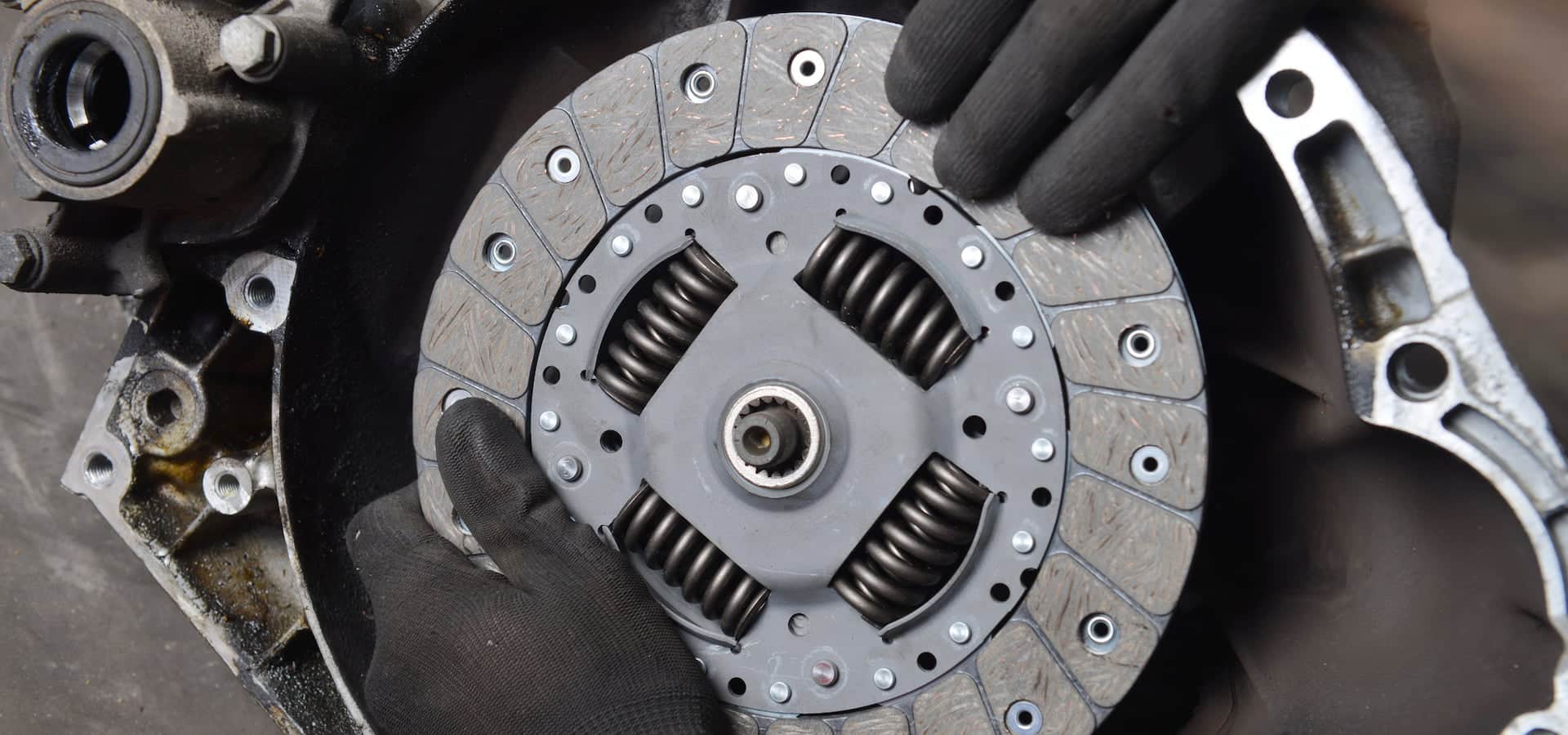
Honda Clutch Repair & Replacement at Elevation Auto Repair
That grabbing pedal, the smell of hot friction material, the rev-flare when you accelerate – your Honda is telling you the clutch is near the end. Getting it fixed right the first time is what keeps you off the tow truck.
Clutch replacement on a Honda means pulling the transaxle, swapping the friction disc, pressure plate, and release bearing, and reinstalling everything to spec. Honda's transverse layout and hydraulic release systems make sloppy shortcuts costly. Doing it right matters more here than on many platforms.
A few Honda-specific details separate our work from a generic shop:
- Slave and master cylinder condition – the concentric slave on many K-series and R-series setups fails alongside the clutch, so we inspect it while the box is out.
- Dual-mass and single-mass flywheels – we measure runout and resurface or replace to Honda's tolerances rather than reusing a glazed flywheel.
- Torque and fluid specs – axle nut, pressure plate bolt sequence, and the correct DOT hydraulic fluid all follow OEM values.
What you can expect from us:
- Honest diagnosis that confirms the clutch is actually the problem before any parts come off
- Inspection of flywheel, rear main seal, and hydraulics while access is open
- Quality OEM-grade or upgraded components matched to your driving
- Clear communication at every step, with no surprise add-ons
Symptoms – How to Know You Need This Service
Your Honda usually warns you well before the clutch quits entirely. Watch for these signs:
- Slipping – engine RPM climbs but speed lags, especially in 3rd or 4th gear or up a Denver grade. Schedule soon.
- Burning smell – a hot, acrid odor after stop-and-go traffic points to a glazing disc.
- Soft or sinking pedal – often a failing master or slave cylinder rather than the disc itself.
- Grinding or hard shifts into 1st or reverse – the clutch may not fully disengage.
- Chatter or shudder on takeoff – contaminated disc or a warped flywheel.
- High or vague engagement point – the friction material is worn thin.
- Rattle at idle that quiets when you press the pedal – a worn release bearing.
If the pedal drops to the floor and won't return, or you can't get the car into gear at all, stop driving and have it towed – that's usually a hydraulic failure that can leave you stranded. Slipping and shudder are safe to drive on briefly, but delaying only wears the flywheel and raises the repair scope. Bring it in while it's still just the clutch.
Common Clutch Repair & Replacement Issues on Honda Vehicles
You feel it first through your left foot – a clutch that grabs high, slips under throttle, or shudders as you pull away. Honda manual transmissions are durable, but specific models wear in predictable ways.
- Slave cylinder failure on Civic Si (8th/9th gen, 2006-2015): The concentric slave cylinder integrated with the release bearing tends to lose hydraulic pressure, giving a soft pedal and hard-to-find gears. Because it lives inside the bellhousing, replacement means pulling the transaxle.
- Flywheel chatter on early Accord/Prelude platforms: Dual-mass and lightweight single-mass flywheels develop hot spots and glazing, producing takeoff shudder that a clutch disc alone won't fix.
- Premature disc wear on K-series (RSX Type-S, Civic Si K20/K24): Enthusiast driving and aggressive launches thin the friction material fast, and worn discs contaminate the pressure plate.
- Master cylinder seal leaks: Older Honda hydraulic clutches lose fluid past internal seals, causing an inconsistent bite point that comes and goes with temperature.
- Fluid contamination on high-mileage cars: Neglected clutch fluid absorbs moisture, corroding cylinder bores and dropping engagement quality.
- Fit S2000 (AP1/AP2) high-rpm abuse: The lightweight setup shows disc spline wear and throw-out bearing noise when the car sees track duty.
Which Honda Models We See for Clutch Repair & Replacement
We handle manual-transmission Hondas across most modern generations. Common ones through our bay:
- Civic (EK, EP3, FA/FG, FB, FC, FK/FL) – from the D-series and B-series era through K20/K24 and the current L15 turbo. Si and Type R (FK8/FL5) get performance-clutch attention.
- Accord – 6MT models with K24 and earlier F/H-series four-cylinders; V6 manual coupes are less common but supported.
- CR-V and Element – earlier manual K-series applications.
- Fit/Jazz (GD, GE, GK) – L15 five- and six-speed manuals.
- S2000 (AP1/AP2) – F20C/F22C rear-drive setups needing careful flywheel and pilot bearing work.
- Prelude and Integra (DC2/DC5) – enthusiast B-series and K-series builds, including Type R.
Work varies by variant. Type R and Si cars often warrant upgraded pressure plates for tuned engines, while the S2000's rear-drive layout follows a different removal procedure than the transverse front-drivers. Concentric slave-cylinder cars require the full assembly to be replaced together.
One honest limit: automatic and CVT-equipped Hondas don't use a clutch in the same sense – those come to us for transmission service instead. If you're unsure which your car has, we'll confirm it during diagnosis.
Causes & Risks – What Happens if Ignored
Most Honda clutch problems trace back to normal wear accelerated by Denver's stop-and-go traffic, hilly grades, and the extra slipping drivers use on steep on-ramps. Heat is the enemy, and altitude driving keeps the clutch working harder than flatland commuting.
A slipping clutch or leaking slave cylinder rarely fixes itself. Small symptoms compound into failures that pull in parts that were still healthy.
- Ignoring a slipping disc glazes the flywheel, turning a disc-and-pressure-plate job into a flywheel resurface or replacement.
- A leaking slave cylinder that runs low on fluid can strand you with a pedal that goes to the floor and no gear engagement.
- Riding a worn clutch overheats the pressure plate springs, weakening clamp force and shortening the life of the new parts.
- Delaying repair on a chattering flywheel spreads vibration into the input shaft bearings and transaxle synchros.
- A failing throw-out bearing left unaddressed can seize and score the pressure plate fingers.
The safety line gets crossed when the pedal becomes unpredictable – losing engagement in traffic or on a grade is when a schedule-soon job becomes a stop-now situation.
Safety Impact – Why Clutch Repair & Replacement Matters
A clutch that won't fully engage or disengage changes how your Honda behaves in exactly the moments you need control. Hill starts, merging, and low-speed maneuvers all depend on predictable power delivery.
When the hydraulic system fails or the disc slips, you lose the ability to modulate drive to the wheels, which affects vehicle stability and your ability to react. On manual Hondas the clutch interlock also ties into the starter circuit – a failing switch can leave you unable to start or, in worst cases, allow unexpected engagement.
- Stop driving now: pedal drops to the floor, no gear engagement, burning smell with loss of drive, or clutch won't release at a stop.
- Schedule soon: high bite point, mild slip under hard acceleration, occasional gear grind, or intermittent soft pedal.
A known slipping clutch that fails during a merge or hill start creates real liability if it contributes to an incident. Addressing it early keeps you safely on the road and removes the guesswork from every launch.
How Honda Clutch Repair & Replacement Actually Works
Your Honda's clutch is a friction disc squeezed between the flywheel and pressure plate. Press the pedal and hydraulic pressure moves the release bearing, separating those surfaces so you can shift. Release it and clamp force sends engine power to the transaxle.
Hondas favor hydraulic actuation with either a traditional external slave cylinder or, on many sport models, a concentric slave built around the input shaft. That design choice matters because the concentric unit sits inside the bellhousing, so replacement happens with the transaxle out – it's not a bolt-on-the-outside fix.
- Correct release bearing and slave cylinder matched to the exact chassis and transmission code, since Civic Si, RSX, and S2000 setups differ.
- Flywheel inspection and resurfacing or replacement to Honda's minimum thickness spec before new friction parts go on.
- Torque-to-spec pressure plate bolts in the proper crossing sequence to seat the disc evenly.
- Full hydraulic bleed to Honda fluid specification – trapped air is the top cause of comeback soft pedals.
- Verification of the clutch interlock switch and pedal free play after reassembly.
We handle the whole job under one roof, from diagnosis to the road test that confirms clean engagement – honest work with no unnecessary parts added to the ticket.
How We Diagnose Clutch Repair & Replacement Issues on Honda
If your Civic, Accord, or Fit is slipping under acceleration, chattering off the line, or the pedal feels spongy and vague, you're already picking up on the earliest signs of clutch trouble. Our job is to pin down exactly which component is failing before anything comes apart.
- Interview and symptom capture: We ask when the slip or grab happens – cold starts, highway pulls, or stop-and-go – since a 6MT K-series behaves differently than a hydraulic clutch on a 2006-2011 Civic Si.
- Scan tool inspection: Using the Honda HDS (or a compatible J2534 interface), we pull stored and pending codes, check for gear position and clutch switch faults, and verify no drivetrain sensor is masking the real issue.
- Hydraulic system check: On hydraulic-clutch Hondas we inspect the master and slave cylinder (the concentric slave on newer Fit/Civic platforms is a known wear point), watching for internal fluid bypass and low pedal.
- Road test: We measure engine RPM against road speed in a high gear to confirm slip, and listen for release-bearing whine and pilot-bearing noise.
- Physical measurement: Free play, pedal travel, and fluid condition all get logged.
From there you get a straight explanation of what's worn, what's still good, and a clear written repair plan and quote – no surprises.
Clutch Repair & Replacement on Honda: Repair vs. Replacement
Not every Honda clutch complaint means dropping the transmission. We separate genuine repairs from full replacements based on what the teardown actually shows.
- True repair: A soft pedal or dragging clutch on a hydraulic Honda often traces to a failing master or slave cylinder or old, moisture-laden fluid. Bleeding the system or replacing one cylinder restores normal operation while the disc stays serviceable.
- Partial replacement: If the friction disc is glazed but the flywheel and pressure plate measure within spec, we replace the disc and release bearing and keep the rest. A dual-mass or single-mass flywheel that's still flat can be reused on many K20 and R18 setups.
- Full replacement: Once the friction material is down to the rivets, the pressure plate fingers are heat-blued, or the flywheel is scored, we replace the complete kit. On high-mileage Si and Type R clutches, cascading wear usually makes a full kit the smarter long-term call.
Because access requires the transmission out either way, we lay out both paths with honest tradeoffs and let you decide – we never default to the priciest option.
How to Make Your Honda Clutch Repair & Replacement Last Longer
A fresh Honda clutch can last well past a hundred thousand miles when it's treated right. Your habits behind the wheel matter more than anything.
Driving habits that protect the clutch
- Keep your foot off the pedal between shifts – riding it wears the release bearing early.
- Avoid slipping the clutch to hold position on Denver's hills; use the brake instead.
- Give the drivetrain a gentle warm-up on cold mornings before hard launches.
- Don't tow or overload beyond your Honda's rating, which cooks friction material fast.
Maintenance you can handle
- Listen for new chatter, whine, or grabbing and note when it happens.
- Check clutch fluid level and color on hydraulic models, and watch for warning lights.
- Confirm pedal feel stays firm and consistent trip to trip.
Brand-specific care
- Use Honda-spec clutch fluid – DOT 3/4 that meets the OEM standard – and change it on schedule to prevent internal seal wear.
- Insist on OEM or OE-equivalent clutch kits; budget discs often glaze and slip early on K-series torque.
- Keep your Honda's software current, since some models tie clutch switches into start and safety logic.
Fluid checks and listening are fine to do yourself. Hydraulic bleeding, flywheel measurement, and anything inside the bellhousing should stay with our technicians – it's safety-critical work that rewards precision.
What to Expect When You Bring Your Honda In
That grinding pedal, the burnt smell after a hard shift, or a clutch that slips on the on-ramp – you want answers, not a runaround. Here's how a visit unfolds:
- Drop-off or scheduled appointment – Tell us what you're feeling: high engagement point, chatter, difficulty getting into gear, or a hydraulic pedal that sinks to the floor.
- Initial inspection – We check clutch engagement, master and slave cylinder function, flywheel condition, and – on models like the Civic Si and Accord – the concentric slave cylinder that lives inside the bell housing.
- Written estimate – You get a clear breakdown of parts and labor before anything comes apart, including whether the flywheel needs resurfacing or replacement.
- Communication during the work – We call or text with findings, and we won't proceed on added items without your okay.
- Pickup walkthrough – We show you the worn parts and explain what caused the failure.
Loaner and shuttle options help you stay mobile, and after-hours pickup is available if your schedule runs tight. Clear out personal items from the cabin before drop-off. Every job ends with a road test to verify smooth engagement and a scan-tool re-check for any related codes. If anything feels off after you leave, bring it back – we'll re-inspect it.
Why Choose Elevation Auto Repair for Honda Clutch Repair & Replacement
Honda clutches have their own personalities across generations, and we work on them constantly. We know the 8th and 9th gen Civic Si (K20/K24) can eat concentric slave cylinders and show early third-gear synchro wear, and that dual-mass and single-mass flywheel choices matter on hydraulic-clutch platforms like the Accord and TSX.
- TSB and software awareness – We check for relevant Honda service bulletins and any clutch or shift-related updates before signing off.
- Correct specs – Proper bleeding of the hydraulic system, factory torque values on pressure plate and flywheel bolts, and the right OEM-grade fluids.
- End-to-end ownership – The same shop diagnoses, replaces, and verifies the work, so nothing falls through the cracks.
As your Denver dealership alternative, we handle everything from the clutch job to the alignment and cooling system under one roof – honest diagnostics, no unnecessary repairs, and clear communication at every step.
Our Honda Services
- Air Conditioning AC Repair
- Battery Repair Replacement
- Brake Repair & Brake Fluid Change
- Check Engine Light Diagnostics
- Coolant Leak Repair
- Cooling System Repair
- Drive Shaft Repair
- Engine Repair
- Exhaust & Catalytic Converter Repair
- Head Gasket Repair & Replacement
- Oil Change
- Oil Leak Repair
- Scheduled Service Maintenance
- Steering Repair
- Suspension Repair
- Cambelt Timing Belt Replacement
- Transmission Repair
- Tune Up
- Wheel Alignment