GMC Wheel Alignment at Elevation Auto Repair
GMC trucks and SUVs ride on heavy-duty platforms where suspension geometry carries real weight – literally. A Sierra 1500 or 2500HD hauling a trailer puts far more load through the control arms and steering linkage than a passenger car, which is why alignment angles drift faster and matter more.
Getting a GMC alignment right means more than clamping sensors to the wheels. Many GMC platforms use torque-sensitive adjustment points, and later trucks with electric power steering and lane-keep systems require a steering angle sensor recalibration after alignment. Skip that step and the ADAS cameras fight the wheel.
- Setting caster, camber, and toe to GMC factory specs for your exact trim and ride height
- Checking cam bolts, tie rod ends, and the T-bar or coil geometry before touching adjustments
- Steering angle sensor recalibration on trucks equipped with lane keep and stability control
- Straightforward findings and clear pricing before any work begins
We treat GMC alignment as a chassis diagnostic, not a quick tweak. Worn parts get flagged first so the numbers actually hold.
Symptoms – How to Know You Need This Service
Alignment problems on a GMC usually show up in how the truck tracks and how your tires wear. You may notice:
- The steering wheel sits off-center while driving straight down a level road
- The truck drifts or pulls to one side, forcing constant correction
- Uneven tire wear – feathered edges or the inner shoulders scrubbing bald on Sierra and Yukon models
- A vibration through the wheel that worsens at highway speed
- Squealing or chirping from tires during normal cornering
- Lane-keep or stability warnings appearing after a curb hit or pothole
- The steering feeling loose or wandering, especially when loaded or towing
Schedule soon if you see off-center steering or a mild pull – those are correctable and save your tires. Stop driving and call us right away if the pull is severe, the wheel shakes hard, or you feel clunking over bumps, since that points to a failing tie rod, ball joint, or wheel bearing that needs immediate attention.
Common Wheel Alignment Issues on GMC Vehicles
GMC's truck and SUV lineup leans heavily on independent front suspension with torsion bars or coil-over setups, and the sheer weight up front means alignment angles drift faster than most owners expect. The heavier the trim and the bigger the tires, the more aggressively those specs move.
- Sierra 1500 (T1XX platform, 2019+) camber drift – The aluminum-intensive front end and larger wheel packages accelerate uneven inner-edge tire wear when camber and caster fall out of factory range, especially on lifted or leveled trucks.
- Sierra/Yukon HD (2011-2019 GMT K2XX) torsion-bar sag – As torsion keys age, front ride height drops, pulling caster and camber off spec and producing that classic "wandering" feel on the highway.
- Acadia/Terrain (C1XX crossovers) toe wear – These unibody GMCs are sensitive to rear toe, and neglected rear alignment shows up as feathered rear tires long before the front looks bad.
- Denali packages with adaptive dampers – Larger diameter wheels and lower-profile tires amplify any toe or camber error, so small deviations cause quick, visible tread cupping.
- Worn idler and pitman arms on older GMT platforms – Play in these components mimics an alignment problem but must be corrected before angles are set.
- Post-lift or leveling-kit installs – Any suspension height change on a Sierra or Canyon shifts alignment geometry and demands a fresh setup.
Which GMC Models We See for Wheel Alignment
We align the full modern GMC lineup, from half-tons to heavy-duty and the SUV range. Find your platform below:
- Sierra 1500 (GMT900, K2XX, T1XX) – 2007 through current; independent front suspension with cam-bolt camber and caster adjustment
- Sierra 2500HD / 3500HD – torsion-bar and later coil-over front ends; ride-height verification is key before setting angles
- Yukon and Yukon XL (GMT900, K2XX, T1XX) – 2007 to present, including Denali trims with adaptive dampers
- Acadia (Lambda and C1XX) – 2007 forward, unibody crossover with different toe and camber targets than the trucks
- Terrain – 2010 forward compact SUV; commonly seen for toe correction and tire-wear complaints
- Canyon (GMT31XX, 31XX-2) – 2004 to present midsize; ZR2 off-road variants use unique lifted geometry specs
- Savana vans – full-size work vans that often need alignment after heavy service loads
Denali, AT4, and ZR2 packages get their own attention because raised ride height and adaptive suspension shift the target angles – we set them to the correct trim spec, not a generic number. We focus on 2004-and-newer GMC platforms; if you have an older classic-era truck, call first so we can confirm we have the right specs and parts availability for your setup.
Causes & Risks – What Happens if Ignored
Colorado roads are hard on alignment. Potholes after freeze-thaw cycles, washboard dirt roads, and heavy towing all knock GMC suspension angles out of range faster than smooth-highway driving would. Age plays a role too as bushings, ball joints, and tie-rod ends wear.
Waiting rarely makes it cheaper. A minor toe correction handled early costs far less than replacing a set of tires shredded by months of misalignment, and a pull that started as a nuisance often signals a worn steering or suspension part that keeps degrading.
- Ignoring inner-edge camber wear on a Sierra 1500 for a season typically ruins a tire set that could have lasted years.
- Untreated toe error on an Acadia leads to feathered tread, road noise, and premature wheel-bearing stress.
- A steady pull left unaddressed accelerates ball-joint and tie-rod wear, turning a simple alignment into a suspension repair.
- Sagging torsion keys on HD trucks push angles further out over time, adding driveline vibration and steering slop.
- Chronic vibration transfers into hub bearings and CV components, pulling more expensive parts into the job.
Driving becomes genuinely unsafe once the truck wanders, darts on grooved pavement, or the steering feels disconnected. We check the underlying parts first, then set the angles, so you pay to fix the real cause once.
Safety Impact – Why Wheel Alignment Matters
Alignment is not just about tire life. On a heavy GMC, off-spec angles change how the truck responds during hard braking and evasive steering, and they can quietly interfere with the systems designed to keep you pointed straight.
- StabiliTrak and traction control – A vehicle that constantly pulls forces these systems to work harder and can mask early warning signs of a suspension fault.
- Braking balance – Poor alignment causes uneven tire contact, extending stopping distance and increasing brake pull.
- Steering response – Excess toe or worn tie-rods create dead spots and delayed reaction during emergency maneuvers.
- Tire blowout risk – Severe inner-edge wear can expose belts and fail at highway speed.
Stop driving and call now if the steering wheel shakes hard, the truck darts unpredictably, or you feel looseness in the wheel. Schedule soon if you notice a gentle pull, off-center steering wheel, or uneven tread starting to appear. Addressing a known handling issue before an incident also keeps you on the right side of any liability question.
How GMC Wheel Alignment Actually Works
A proper alignment sets three core angles – camber, caster, and toe – so all four tires track true and share the load evenly. On GMC trucks and SUVs, the front-end geometry and adjustment points differ enough from a passenger car that guesswork does not cut it.
Many GMC platforms need more than turning a tie-rod sleeve. Height-adjustable torsion setups on HD trucks, ADAS-equipped Denali and Sierra models with forward cameras, and electronic stability sensors all factor into the procedure.
- Ride height first – Torsion or coil ride height must be verified and set before angles, since geometry changes with height.
- ADAS calibration – GMCs with lane-keep and forward-collision cameras require a steering-angle sensor reset and camera recalibration after the thrust angle is corrected.
- Torque-to-spec fasteners – Cam bolts and adjuster hardware are set to OEM torque so settings hold under load and towing.
- Rear thrust angle – Crossover platforms get a four-wheel measurement so the rear does not steer the truck.
We use factory alignment targets and OEM-level tooling, then confirm the electronic steering-angle sensor reads zero on a straight wheel. That combination of accurate geometry and
How We Diagnose Wheel Alignment Issues on GMC
GMC trucks and SUVs like the Sierra 1500, Yukon, and Acadia carry heavy front-end loads, and their steering geometry drifts as bushings, tie rods, and ball joints wear. A pull to one side or feathered tire edges usually points to alignment angles that have moved out of the factory window. Here's how we track it down.
- Road test first – We drive the vehicle to feel for pulling, wandering, a crooked steering wheel, or vibration under braking on the K2XX and T1XX platform trucks.
- Visual suspension inspection – We check the outer and inner tie rod ends, upper and lower control arm bushings, and the pitman/idler arm on older Sierra HD models known for play.
- Tire wear reading – Inner-edge scrubbing signals camber or toe issues common on lowered or heavily loaded Denali trims.
- Scan and calibration check – On newer GMCs with lane-keep and forward cameras, we scan for steering angle sensor faults and confirm the SAS is centered before measuring.
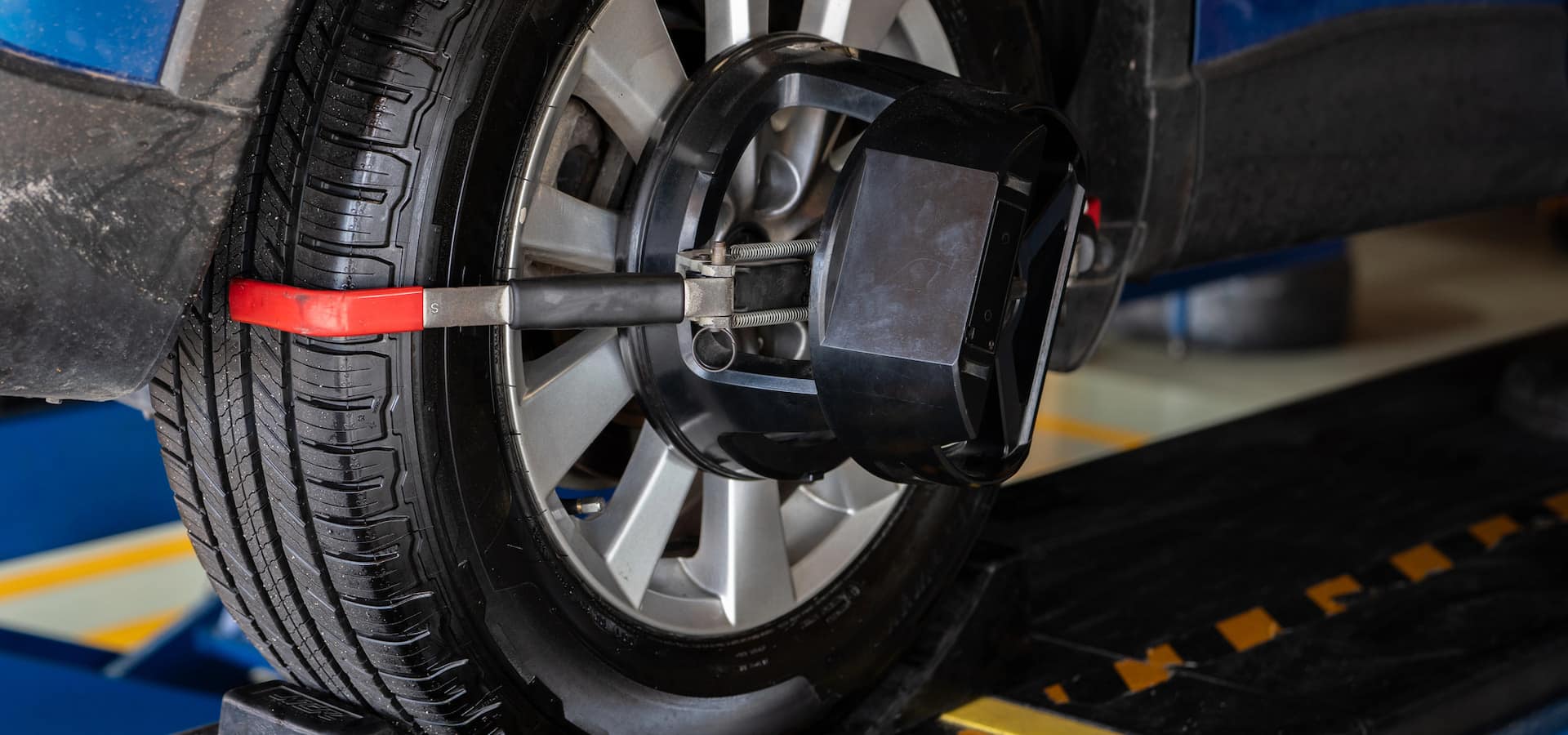
- Digital alignment rack – We measure camber, caster, toe, and thrust angle against GMC factory specs.
Once the numbers are in front of us, we translate them into a clear repair plan with transparent pricing – no guesswork, and no work you didn't approve.
Wheel Alignment on GMC: Repair vs. Replacement
An alignment itself is an adjustment, but the parts underneath decide whether adjusting is even worthwhile. We sort each GMC into one of three paths.
- Adjustment only (true repair) – When bushings and tie rods are tight, we simply reset toe, camber, and caster to spec. Common after new tires, curb strikes, or minor drift on a well-kept Sierra.
- Partial replacement – A single worn outer tie rod end or a sloppy idler arm on an older Yukon gets replaced, then we align around the fresh part while keeping the sound components.
- Full front-end work – Cascading wear on high-mileage HD trucks – control arm bushings, ball joints, and tie rods all loose – means an alignment alone won't hold. Replacing the assembly restores the geometry and the safety margin.
Once camber or caster can't be brought into spec because a component is worn, adjusting is throwing money away. We show you the measurements and the play we found, then walk you through the options so you choose the fix that fits – not the priciest one on the shelf.
How to Make Your GMC Wheel Alignment Last Longer
Good alignment holds far longer when the suspension isn't fighting bad habits and rough roads. A few things keep your GMC tracking straight.
- Ease off potholes and curbs – Denver's freeze-thaw roads knock toe and camber out fast on stiff HD suspensions.
- Manage load – Constant heavy payloads in the bed change ride height and angles; distribute weight and avoid overloading.
- Rotate tires on schedule – Even wear keeps the contact patch honest and highlights alignment drift early.
- Keep proper tire pressure – Underinflation on a loaded Sierra accelerates edge wear that mimics misalignment.
Owner checks you can safely do:
- Watch for a steering wheel that sits off-center on a straight road.
- Run your hand across the tire tread to feel for feathering or inner-edge wear.
- Listen for new clunks over bumps that hint at worn bushings.
Stick with OEM-grade suspension parts and GMC's recommended service intervals, and let calibration – like resetting the steering angle sensor after alignment work – stay with the shop. Tie rods, ball joints, and camera calibration are safety-critical and belong on the rack, not the driveway. Bring it in when something feels off and we'll catch it early.
What to Expect When You Bring Your GMC In
GMC trucks and SUVs on the K2XX and T1XX platforms (Sierra 1500, Yukon, Acadia) carry front geometry that shifts as ride height sags or control arm bushings wear. Our alignment visit is built around catching those changes before they eat your tires.
- Drop-off or appointment – Schedule ahead or use after-hours drop when the shop offers it. Leave keys in the drop box and pull any valuables from the console and glove box.
- Initial inspection – We check tie rod ends, upper and lower ball joints, wheel bearings, and the rack before touching the alignment rack. On lifted or leveled Sierras, we measure ride height first since it drives caster and camber numbers.
- Written estimate – You get a clear breakdown of what needs correction versus what can wait, with transparent pricing and no surprise add-ons.
- During the work – We text or call with findings before proceeding. Loaner or shuttle options help you keep your day moving.
- Pickup walkthrough – We show you before-and-after alignment specs and explain what we adjusted.
Every alignment ends with a road test and a scan-tool re-check on vehicles with steering angle sensors, so the electronic power steering and StabiliTrak read center. If the wheel feels off or the truck pulls after you leave, bring it back and we'll re-verify.
Why Choose Elevation Auto Repair for GMC Wheel Alignment
Alignment on modern GMC vehicles is more than turning tie rods. Trucks with electric power steering need a steering angle sensor relearn after adjustment, and we handle that in-house rather than sending you to the dealer.
- Platform knowledge – Familiarity with T1XX front-end wear patterns, Acadia (C1XX) camber drift, and how leveling kits change factory caster targets.
- TSB and software awareness – We check for GMC service bulletins and steering calibration updates that affect pull complaints and off-center wheels.
- End-to-end ownership – Diagnosis, worn-part replacement, alignment, and post-repair verification all happen under one roof.
We diagnose the cause of uneven tire wear or a crooked wheel instead of just resetting numbers on a truck with a bad ball joint. That's the difference between a lasting fix and a repeat visit – and it's how we keep your GMC tracking straight and your tires wearing evenly.
Our GMC Services
- Air Conditioning AC Repair
- Battery Repair Replacement
- Brake Repair & Brake Fluid Change
- Check Engine Light Diagnostics
- Clutch Repair & Replacement
- Coolant Leak Repair
- Cooling System Repair
- Drive Shaft Repair
- Engine Repair
- Exhaust & Catalytic Converter Repair
- Head Gasket Repair & Replacement
- Oil Change
- Oil Leak Repair
- Scheduled Service Maintenance
- Steering Repair
- Suspension Repair
- Cambelt Timing Belt Replacement
- Transmission Repair
- Tune Up