Acura Wheel Alignment at Elevation Auto Repair
Acura builds double-wishbone and multi-link suspensions that reward precision – and punish sloppy setup. The TL, TSX, and MDX in particular carry tighter factory alignment windows than the mass-market cars a quick-lube shop is used to, and Honda's Super Handling All-Wheel Drive (SH-AWD) on the RL, TL SH-AWD, and MDX adds rear geometry that must be dialed in correctly to keep the rear torque-vectoring behaving.
A proper Acura alignment starts with checking ride height and worn components before touching a single adjuster. Front camber on many Acura platforms isn't adjustable from the factory without dropping in camber bolts, and the rear toe and camber on the multi-link cars require setting to Honda's exact spec – not a generic "green screen" pass. We reference OEM specifications and torque suspension fasteners to factory values so the settings hold.
What you can expect from us:
- A pre-alignment inspection of tie rods, ball joints, bushings, and wheel bearings
- Camber, caster, and toe set to Acura factory specifications, not generic ranges
- Attention to SH-AWD rear geometry on equipped models
- Clear before-and-after readings so you see exactly what changed
Symptoms – How to Know You Need This Service
Alignment problems show up in how the car tracks, how the tires wear, and what you feel through the wheel. On an Acura you may notice:
- The car pulling left or right on a flat, straight road
- A steering wheel that sits off-center when you're driving straight
- Uneven or feathered tire wear – especially inner-edge wear common on rear multi-link Acuras
- A vibration through the wheel that changes with speed
- Squealing tires on gentle turns
- The car feeling "darty" or wandering, requiring constant small corrections
- Steering that feels heavier on one side than the other
Schedule soon if you notice pulling, an off-center wheel, or early tire wear – these get more expensive the longer they run. Stop driving and have the car towed if the pull is sudden and severe, the steering feels loose or disconnected, or you hear clunking over bumps, since that points to a broken suspension or steering component rather than a simple alignment.
Common Wheel Alignment Issues on Acura Vehicles
Alignment problems on Acura platforms often trace back to specific suspension design choices and the wear paths that come with them.
- Inner tire wear on 2004-2008 TL (UA6/UA7): The independent rear suspension runs slightly negative camber from the factory, and worn trailing-arm and compensator bushings push rear toe out of spec, chewing the inner tread.
- Front camber drift on 2009-2014 TSX (CU2): The double-wishbone front end shifts camber as lower control-arm bushings age, producing a subtle pull and uneven shoulder wear.
- SH-AWD platforms (MDX, RDX, RL): Rear alignment matters more than owners expect – Super Handling All-Wheel Drive torque-vectoring works best with rear toe and camber tightly in spec, and drift here shows up as tramlining.
- Steering pull after curb or pothole strikes: Denver potholes bend lower control arms and knock front toe out on ILX and Integra platforms, often without visible damage.
- Post-lowering geometry on modified Integra/TLX: Aftermarket springs change camber and toe dramatically because of the wishbone arc, requiring adjustable arms to correct.
- Electric power steering recentering: Newer TLX and RDX models may hold a slightly off-center wheel after strut or tie-rod work until the steering angle sensor is recalibrated.
Which Acura Models We See for Wheel Alignment
We align the full modern Acura lineup and most earlier platforms. Bring us your car by name or chassis code:
- TL (UA6/UA7, 2004–2008 and UA8/UA9, 2009–2014) – front-wheel drive and SH-AWD variants; rear toe/camber setting is key on these
- TSX (CL9, 2004–2008 and CU2, 2009–2014) – sedan and wagon, sharp-handling platforms that show inner-edge wear when out of spec
- TLX (2015–2020 and 2021+ Type S) – the Type S with its adaptive dampers benefits from precise setup
- ILX (2013–2022) – shares Civic-era geometry; straightforward alignments
- MDX (2001–2006, 2007–2013 YD2, 2014–2020 YD3, and 2022+) – SH-AWD rear geometry matters here
- RDX (2007–2012, 2013–2018, and 2019+) – turbo and SH-AWD versions
- RL and RLX – SH-AWD flagships with rear steering considerations on the RLX Sport Hybrid
- Integra (DC/DB earlier cars and the 2023+ DE4, including Type S)
- RSX (DC5, 2002–2006) and TSX/CL-era coupes
SH-AWD and Type S models get extra attention to rear settings because incorrect geometry affects how the system distributes torque. If you have a rare early Legend or a heavily modified track car with aftermarket coilovers, tell us up front so we can confirm we have the right specs before you drop it off.
Acura's double-wishbone and multi-link front suspension designs – used across generations from the TL and TSX to the RDX and MDX – give these cars sharp handling, but they also make alignment angles sensitive to worn bushings and ride-height changes. Getting the geometry right on an Acura takes more than a quick toe adjustment.
Causes & Risks – What Happens if Ignored
Most Acura alignment drift comes from a mix of Colorado's rough roads, temperature swings, and the natural aging of rubber suspension bushings. Curb strikes, pothole impacts, and worn compliance bushings all nudge toe and camber out of the tight factory windows these cars rely on.
Waiting turns a simple correction into a parts job. Ignoring inner-edge wear on a TL rear for a few months typically means new tires long before their tread life is up, and a pull left unaddressed accelerates wear on wheel bearings and tie-rod ends.
- Feathered or inner-edge tire wear that ruins otherwise good tires
- Worn tie-rod ends and ball joints from constant steering correction
- Premature wheel bearing wear driven by sustained camber error
- SH-AWD driveline strain when rear geometry is off spec
- A minor bushing replacement growing into full control-arm assemblies
- Reduced stability at highway speed as drift worsens
We catch these early, correct the root cause, and keep a small alignment issue from becoming a suspension rebuild.
Safety Impact – Why Wheel Alignment Matters
Alignment isn't just about tire life – it feeds directly into the systems that keep an Acura planted. When geometry drifts, the steering angle sensor, VSA stability control, ABS, and traction control all work off skewed reference points, which blunts how quickly the car reacts in an emergency.
On SH-AWD models, incorrect rear toe can make the torque-vectoring system fight the driver during hard cornering. Uneven tire wear also lengthens braking distances and can trigger unpredictable pull under heavy braking.
- Stop driving now: sudden strong pull, clunking over bumps, or a steering wheel that won't stay centered
- Schedule soon: slow drift, mild vibration, or uneven tread you can feel with your hand
There's also a liability angle – if a known worn suspension component contributes to a crash, an unaddressed problem can complicate an insurance claim. Correcting alignment and calibrating the safety sensors keeps those systems honest.
How Acura Wheel Alignment Actually Works
A proper Acura alignment sets three angles – camber, caster, and toe – at all four corners so the tires sit exactly as Honda's engineers intended. On the double-wishbone and multi-link setups Acura favors, these angles interact, so adjusting one affects the others and the work has to follow a specific sequence.
What makes Acura different from a generic four-wheel alignment is the electronics tied to the steering and stability systems. Many TLX, RDX, and MDX models require recalibrating the steering angle sensor and verifying VSA readings after alignment or steering-component work, using OEM-level scan procedures.
- Rear toe and camber are adjustable on most independent-rear Acuras and must be set first
- SH-AWD models need rear geometry precisely in spec for torque vectoring to work correctly
- Steering angle sensor recalibration after tie-rod or strut work on newer platforms
- OEM torque and sequence specs on control-arm and subframe fasteners to hold the setting
- Factory alignment specs referenced per model year rather than a generic baseline
We align to Acura's factory targets, then confirm the electronic systems agree – so the car drives straight and every assist system reads true. Bring your Acura in and we'll dial it in right.
How We Diagnose Wheel Alignment Issues on Acura
Acura's double-wishbone front geometry (older TL, TSX, and RL platforms) and the multi-link rear on models like the RDX and MDX are sensitive to small changes in camber and toe. A pothole or a worn compliance bushing shows up fast as uneven tread wear.
- Owner interview and road test – We confirm pulling, off-center steering wheel, or a wandering feel, and note when it started (curb strike, tire replacement, suspension work).
- Scan for steering and stability data – On newer Acura models with LKAS and VSA, we pull codes and check steering angle sensor readings, since a bad alignment can trigger lane-keep drift or a VSA light.
- Visual chassis inspection – We check for torn control arm and compliance bushings, worn tie rod ends, loose ball joints, and bent components – common after impacts on the TSX and TL.
- Tire and ride-height measurement – Uneven inner or outer shoulder wear, cupping, and a sagging spring all skew alignment numbers.
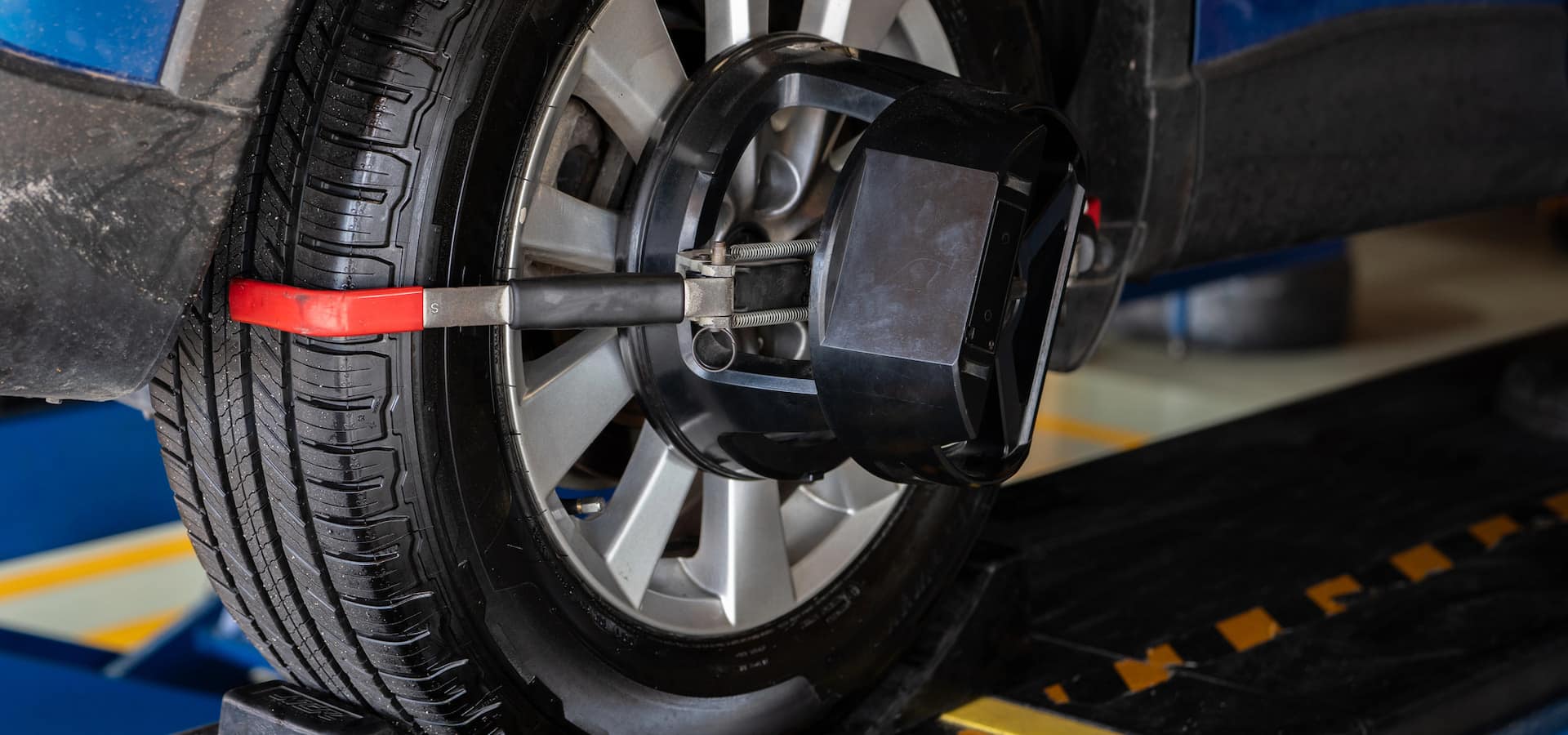
- Rack-mounted alignment read – We measure camber, caster, toe, and thrust angle against Acura factory specs before adjusting anything.
After the read, we recalibrate the steering angle sensor when required and provide before-and-after numbers with a clear repair plan and quote – no guesswork, no surprise add-ons.
Wheel Alignment on Acura: Repair vs. Replacement
Most alignments are a straightforward adjustment. The decision point comes when a worn part is throwing the geometry off.
- True repair (adjust only) – Toe, camber, and caster are set on the rack. Common on Acuras after new tires or minor curb contact where every joint still measures tight.
- Partial replacement – Replace the single worn item, then align. Think outer tie rod ends on higher-mileage TSX/TL, or a torn front lower control arm compliance bushing that lets caster drift under braking.
- Full assembly replacement – Warranted when wear cascades: a control arm with an integrated ball joint that's both loose and cracked, or rear multi-link arms on an MDX/RDX where several bushings are perished at once. When repair cost approaches the cost of a complete arm, replacing the assembly is the safer, longer-lasting call.
We show you the worn part, explain what's serviceable versus what's failing, and let you choose. Safety-critical items get flagged clearly, but we never push a full assembly when a single part solves it.
How to Make Your Acura Wheel Alignment Last Longer
Alignment holds far longer when the suspension isn't taking repeated hits. A few habits go a long way on Denver's rough winter roads.
Driving habits that protect your alignment
- Slow down for potholes and broken pavement – curb strikes are the top cause of knocked-out toe and camber.
- Avoid heavy loads that sag the rear and change rear thrust angle.
- Ease off aggressive braking into dips, which stresses control arm bushings.
Owner maintenance you can do
- Check tire pressure to Acura's door-jamb spec and rotate on schedule to spot uneven wear early.
- Watch for a steering wheel that drifts off-center or a new pull, and listen for clunks over bumps.
- Keep tread even – cupping or feathered edges are early warning signs.
Brand-specific care
- Use OEM-grade or matched replacement tires; mismatched sizes strain the drivetrain and skew handling on SH-AWD models.
- Keep software current so steering angle and VSA calibrations stay accurate after service.
- Follow Acura's suspension inspection intervals and use quality bushings and tie rods.
Pressure checks, tire rotation, and visual monitoring are safe to do yourself. Leave bushing, ball joint, and tie rod work – plus the alignment itself – to the shop, since these are safety-critical.
What to Expect When You Bring Your Acura In
Acura's double-wishbone and multi-link setups on models like the TL, TSX, and RDX are sensitive to camber and toe changes after pothole hits or worn compliance bushings. Small deviations show up fast as inside-edge tire wear and a steering wheel that won't center.
- Drop-off or appointment – Tell us what you're feeling: a pull, off-center wheel, or uneven tread. Leave personal items in the console or take them with you; we'll note anything left in the cabin.
- Initial inspection – We put the vehicle on the alignment rack and check tie rod ends, ball joints, control arm bushings, and wheel bearings before touching any adjustment, since a worn part throws off every reading.
- Written estimate – You get a clear breakdown of the alignment plus any suspension parts that need attention first. Nothing gets approved without your OK.
- During the work – We text or call with findings and before/after angle readings. Loaner and shuttle options are available so you're not stuck waiting.
- Pickup walkthrough – We show you the printed alignment sheet and explain what changed. After-hours key pickup can be arranged when your schedule is tight.
Every alignment ends with a road test to confirm the wheel sits straight and the pull is gone, plus a scan-tool check on models with steering angle sensors. If anything feels off afterward, bring it back and we'll recheck it – no runaround.
Why Choose Elevation Auto Repair for Acura Wheel Alignment
Acura alignments aren't a one-size job. Several platforms need a steering angle sensor reset after adjustment, and skipping it leaves the lane-keep and stability systems reading a false center. We handle that step on-site.
- Acura-specific know-how – We reference factory alignment specs and relevant TSBs for pull complaints and rear toe drift on TL, TSX, MDX, and RDX platforms rather than eyeballing generic numbers.
- Root-cause first – Worn front compliance bushings and rear trailing-arm bushings are common culprits behind repeat alignment problems, so we address the hardware before setting angles.
- End-to-end ownership – Diagnosis, any suspension repair, the alignment itself, and post-repair verification all happen under one roof.
You get honest diagnostics with no padded work, printed proof of the results, and a shop that stands behind the road test. That's the dealership-level attention to detail without the dealership runaround, right here in Denver.
Our Acura Services
- Air Conditioning AC Repair
- Battery Repair Replacement
- Brake Repair & Brake Fluid Change
- Check Engine Light Diagnostics
- Clutch Repair & Replacement
- Coolant Leak Repair
- Cooling System Repair
- Drive Shaft Repair
- Engine Repair
- Exhaust & Catalytic Converter Repair
- Head Gasket Repair & Replacement
- Oil Change
- Oil Leak Repair
- Scheduled Service Maintenance
- Steering Repair
- Suspension Repair
- Cambelt Timing Belt Replacement
- Transmission Repair
- Tune Up