
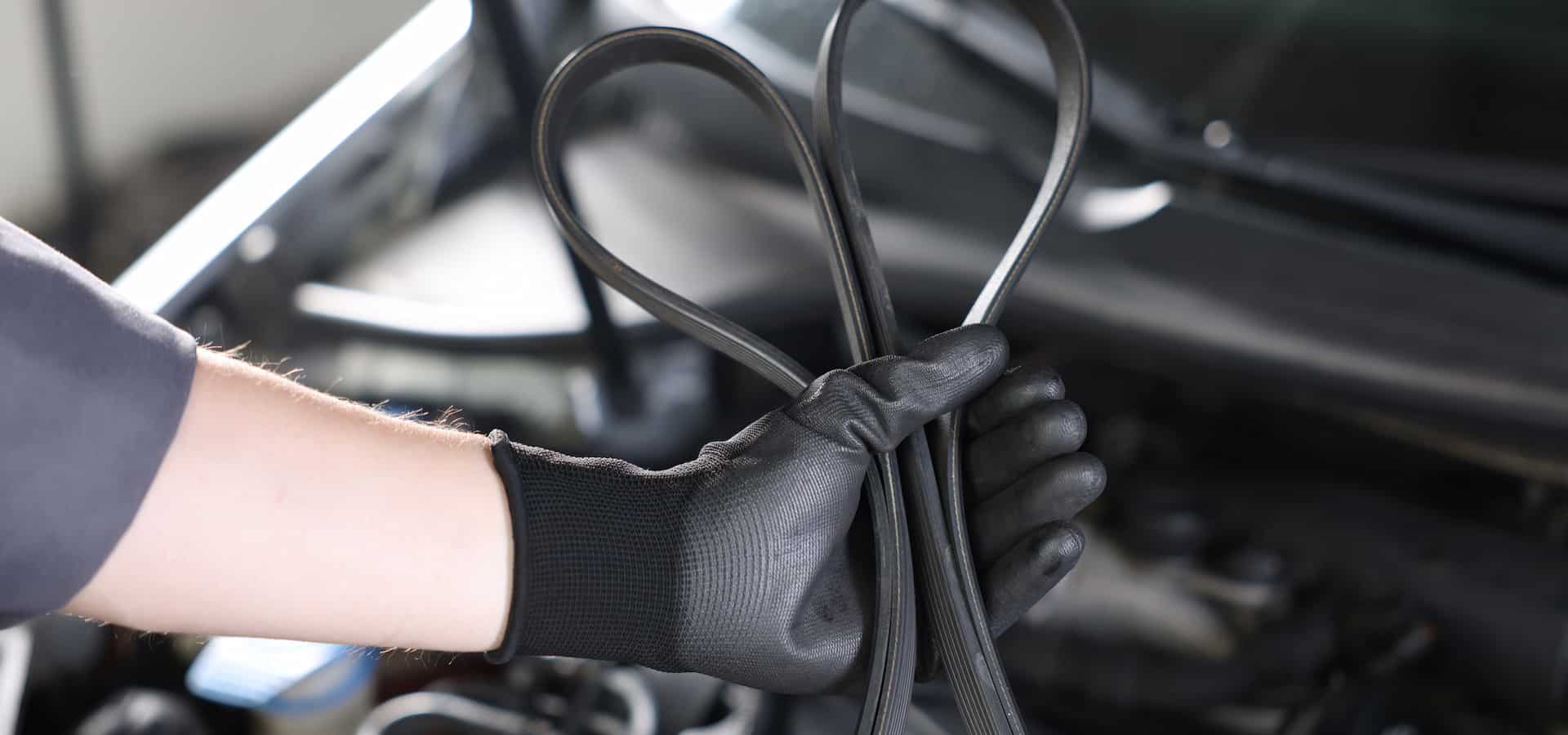
Acura Cambelt Timing Belt Replacement at Elevation Auto Repair
The older Acura V6 engines – the J-series 3.2L and 3.5L found in the TL, MDX, RL, and TSX V6 – are interference designs. If the belt lets go, the pistons meet the valves and a routine maintenance job becomes a bent-valve engine rebuild. That is why the timing belt interval on these Acuras isn't a suggestion; it's a hard deadline.
Doing this correctly on an Acura means more than swapping the belt. The water pump, tensioner, idler pulleys, and drive belts share the same labor space, and skipping them invites a repeat teardown. On the J-series we also inspect the crank and cam seals while access is open, and we set tensioner spring pressure and cam timing marks to factory specification rather than eyeballing it. Getting the harmonic balancer bolt torque and thread prep right matters – these bolts are notorious for backing off when reused improperly.
Here's what you can expect when you bring your Acura to us:
- Full timing kit replacement – belt, tensioner, idlers, and water pump together
- Cam and crank seal inspection with replacement if seepage is found
- Timing verified against OEM marks and correct balancer bolt torque applied
- Honest assessment with no add-ons you don't actually need
Symptoms – How to Know You Need This Service
Timing belts rarely give a loud warning before they fail, but the surrounding components often do. On your Acura you may notice:
- A high-pitched squeal or chirp from the front of the engine, often the tensioner or idler bearing
- A slapping or ticking noise that changes with engine RPM
- Coolant seeping near the timing cover – a common sign the water pump seal is failing behind the belt
- Visible cracks, glazing, or missing teeth if you can peek at the belt through the cover
- Rough idle or a hard, extended crank when starting
- Oil residue around the cam seals, which contaminates and shortens belt life
- Your Acura is at or past the mileage/time interval, even with no symptoms yet
Stop driving immediately if you hear a sudden rattle from the timing area or the engine begins to run rough and lose power – continuing risks catastrophic valve damage on these interference engines. A faint squeal or minor coolant weep means schedule soon rather than panic, but don't let it slide.
Common Cambelt Timing Belt Replacement Issues on Acura Vehicles
Acura's belt-driven engines earned a reputation for durability, but the interference design means a worn belt is never something to gamble on. The gotcha most generic shops miss: many Acura timing belt jobs share the same cavity as the water pump and front seals, and skipping those companion parts almost guarantees a repeat teardown.
- J-series V6 belts (3.2L/3.5L/3.7L in TL, MDX, RL, RDX): These SOHC VTEC V6s are interference engines. A snapped belt drops valves into pistons, so mileage/age intervals matter more than how the car "feels."
- Water pump seepage on 1999-2014 J-series: The pump is belt-driven and buried behind the timing cover. Coolant weeping onto the belt accelerates cracking and contaminates the front crank seal.
- Hydraulic tensioner and idler pulley wear: Older tensioners lose damping and let the belt whip; bearing noise from idlers is common on higher-mileage 3.2 TL and MDX platforms.
- Front crank and cam seal leaks: Oil migrating onto the belt softens the rubber. Once oil-soaked, a belt can shed teeth well before its rated life.
- K-series 4-cylinder chain confusion (TSX, ILX, some RDX): These use a timing chain, not a belt – misdiagnosis at generic shops leads to wasted labor. We verify the actual system before quoting.
- Balance shaft belt neglect on 3.2/3.5 V6: Some Acura V6s route a separate belt to the balancer that shops forget, causing vibration and premature failure.
Which Acura Models We See for Cambelt Timing Belt Replacement
Timing belts apply to Acura's belt-driven V6 lineup. Newer four-cylinder and many later V6 models use timing chains and don't need this service. The belt-equipped Acuras we regularly work on include:
- TL (2004–2008, UA6/UA7) – J32A3 3.2L V6, one of the most common we see
- TL Type-S (2007–2008) – J35 3.5L, same belt procedure with higher output
- MDX (2001–2006, YD1) – J35A5 3.5L V6
- RL (2005–2008, KB1) – J37 3.7L V6 with SH-AWD
- TSX V6 (2010–2014) – J35Z6 3.5L; the four-cylinder K24 TSX uses a chain and is not included
- CL and earlier 3.2 TL (late 1990s–early 2000s) – J-series V6, commonly seen on these earlier platforms
Variants with SH-AWD, like the RL and later MDX, don't change the belt job itself but require extra care during accessory reassembly. If you drive a chain-equipped Acura – most ILX, RDX, and current-generation models – we'll tell you straight that you don't need this service and check the chain condition instead.
Causes & Risks – What Happens if Ignored
Colorado's dry air, altitude heat cycling, and stop-and-go Denver traffic age timing belts faster than the odometer suggests. Rubber hardens with time whether the car is driven or parked, which is why age-based intervals matter as much as mileage on older TL, MDX, and RL models.
The real danger with an interference J-series engine is that there's no warning shot – the belt holds until it doesn't. Ignoring a whining tensioner or coolant seep for a season often turns a straightforward belt job into a valve replacement.
- A cracking or oil-soaked belt left alone can shear teeth, causing instant loss of valve timing.
- A snapped belt on a J-series V6 typically bends intake and exhaust valves, sometimes damaging pistons and guides.
- A weeping water pump ignored past its interval contaminates the fresh belt, forcing a second teardown.
- A failing tensioner or idler bearing can seize and throw the belt, mimicking a belt failure with the same catastrophic result.
- What starts as a routine belt-and-pump service escalates into cylinder head removal, machine work, and far more labor.
Once the belt slips, the car will strand you – and roadside failures at highway speed add real safety exposure beyond the repair bill.
Safety Impact – Why Cambelt Timing Belt Replacement Matters
A timing belt failure on an interference Acura engine doesn't just cost money – it kills power instantly. When the engine dies mid-drive, you lose the systems that depend on it running.
- Power steering assist drops the moment the engine stalls, making the wheel heavy during an emergency maneuver.
- Brake booster vacuum fades after a pump or two, so the pedal goes hard when you need it most.
- Stability control, ABS, and traction systems depend on a running engine and can drop offline with the stall.
- Sudden stall in traffic leaves you a stationary obstacle on I-25 or a mountain grade.
Stop driving now if you notice:
- Loud slapping, rattling, or grinding from the front of the engine.
- Coolant or oil pooling behind the timing cover area.
- Engine cranking but not starting after a noise event.
Schedule soon if: you're near the age/mileage interval, hear a faint pulley squeal, or bought a used Acura with no belt service history. On a documented interference engine, a belt failure tied to a skipped interval can also complicate liability and insurance conversations after an incident.
How Acura Cambelt Timing Belt Replacement Actually Works
The timing belt synchronizes the crankshaft and camshafts so valves open and close in step with the pistons. On Acura's SOHC VTEC V6s, that timing is tight by design, and getting cam-to-crank alignment off by even one tooth causes rough running or a no-start. The job is as much about precision as it is about parts.
Because the belt cavity also houses the water pump, tensioner, and seals, we do the service as a complete package using OEM-grade components and factory alignment marks.
- Set the engine to top dead center and verify crank and cam timing marks against factory reference points.
- Remove accessory belts, covers, and the harmonic balancer using the correct crank-holding procedure.
- Replace the belt, tensioner, idlers, and water pump together, plus front seals if seeping.
- Torque the crank bolt and tensioner to Acura's spec sequence – overtightening or reusing stretch bolts causes trouble.
- Rotate the engine by hand through several cycles to confirm timing before startup.
What sets Acura work apart:
- Interference geometry leaves no margin for a mistimed belt
How We Diagnose Cambelt Timing Belt Replacement Issues on Acura
The gotcha most Denver shops miss on Acura is that not every Acura even uses a belt anymore. The older J-series V6 engines (3.2 TL, 3.5 RL, MDX, and the 3.7 in the RL/TL SH-AWD) run an interference timing belt with a hydraulic tensioner, while the K-series four-cylinders in the TSX and ILX moved to a timing chain. Diagnosing the right service starts with knowing exactly what's under the cover.
- Confirm the platform and interval – We decode the VIN to pin down engine family (J32, J35, J37) and check the Acura maintenance minder history for the belt service flag.
- HDS scan – We connect the Honda Diagnostic System to pull VTC/cam-crank correlation codes (P0341, P0344) and confirm no cam timing drift on chain-equipped models.
- Visual inspection – Cover comes off for a look at belt glazing, cracking, tooth loss, and any oil contamination from a weeping cam or crank seal.
- Tensioner and water pump check – The hydraulic tensioner and belt-driven water pump are inspected for leaks, play, and bearing noise.
- Road test and cold start listen – We listen for tick, whine, or rattle that points to a failing idler or tensioner.
From there we build a clear repair plan and a written quote so you know exactly what's being replaced and why.
Cambelt Timing Belt Replacement on Acura: Repair vs. Replacement
Because J-series Acura engines are interference designs, a snapped belt bends valves – so this is one job where "wait and see" isn't a strategy.
- True minor repair – Rare here. A fresh belt with clean seals and a quiet tensioner may only need a re-torque or a single accessory belt swap if the timing belt itself checks out.
- Partial replacement – If the belt is fine but the crank or cam seal is weeping, we address the leak and inspect the belt for oil damage rather than replacing everything.
- Full timing belt service – The right call on J32/J35/J37 engines at interval or when contamination, cracking, or tensioner wear appears. We replace belt, tensioner, idler pulleys, water pump, and cam/crank seals together since the labor overlap makes piecemeal work false economy.
The water pump is belt-driven on these engines, so replacing it during the belt job is standard practice rather than upselling. We walk you through each component's condition and let you decide – no pressure toward the biggest invoice.
How to Make Your Acura Cambelt Timing Belt Replacement Last Longer
A quality timing belt service on an Acura should comfortably reach the next factory interval when the surrounding parts are cared for.
- Let it warm up briefly in cold Denver mornings – Gentle warm-up reduces stress on cold tensioner hydraulics and seals.
- Fix oil leaks quickly – Oil from a cam or crank seal degrades rubber belts fast; a small leak shortens belt life dramatically.
- Stick to the Acura maintenance minder – Don't stretch the belt interval on mileage or years, whichever comes first.
Owner-friendly checks you can safely handle:
- Listen for new ticking, whining, or squealing at cold start.
- Watch for oil spots on the driveway near the front of the engine.
- Keep the check engine light and maintenance minder honest – don't reset it without service.
- Use OEM-spec fluids and genuine or OE-quality belt kits when service is due.
Leave the actual belt inspection and replacement to the shop – setting cam and crank timing to spec and torquing the tensioner correctly on an interference engine is not a driveway job. Bring it in and we'll handle the precision work.
What to Expect When You Bring Your Acura In
The mistake most shops make on an Acura timing belt is treating it like a simple belt swap. On the J-series V6 (the 3.2 in the TL/CL, the 3.5 in the MDX/RL, and the 3.7 in later TL/ZDX/MDX), the water pump, tensioner, and both cam seals live behind the same cover – and skipping them means going back in far sooner than you should.
- Drop-off and appointment – We confirm the exact engine and model year, since interference J-series engines demand precise cam-to-crank alignment on reassembly.
- Initial inspection – We check for front cover oil weeping, tensioner condition, and any prior belt-mark evidence before committing to parts.
- Written estimate – You get a clear line-item breakdown covering the belt, water pump, tensioner, idler, and crank/cam seals.
- Communication during the job – We call before adding anything, so there are no surprises when you arrive.
- Pickup walkthrough – We show you the old parts and explain what we found.
Loaner and shuttle options are available – just ask when you book, and after-hours pickup can be arranged. Clear out personal items from the cabin beforehand; we keep everything secured but prefer valuables travel with you. Before your Acura goes back to you, we road test it and re-scan with factory-aligned tooling to verify timing correlation and confirm no fault codes have set. If anything feels off afterward, bring it straight back and we'll recheck it.
Why Choose Elevation Auto Repair for Acura Cambelt Timing Belt Replacement
Acura's J-series V6 is an interference design, so a belt that jumps a tooth can bend valves. We set cam and crank alignment to Honda/Acura specifications and torque the crank pulley bolt to spec – a fastener notorious for backing off when reused or under-torqued.
- Platform-specific knowledge – We account for VTEC/VCM quirks, front seal weeping on higher-mileage MDX and TL models, and known tensioner wear patterns.
- OEM-aligned parts and procedure – Water pump, tensioner, and idler go in together, following Acura service intervals rather than partial repairs.
- TSB and software awareness – We check for relevant Acura service bulletins and post-repair scan-tool verification.
You get one shop that owns the entire job – diagnosis, teardown, reassembly, and verification – with honest recommendations and no unnecessary add-ons. As your Denver dealership alternative, we handle your Acura's timing service with the tooling and precision it needs, then back it with a road test and re-scan so you leave confident it's done right.
Our Acura Services
- Air Conditioning AC Repair
- Battery Repair Replacement
- Brake Repair & Brake Fluid Change
- Check Engine Light Diagnostics
- Clutch Repair & Replacement
- Coolant Leak Repair
- Cooling System Repair
- Drive Shaft Repair
- Engine Repair
- Exhaust & Catalytic Converter Repair
- Head Gasket Repair & Replacement
- Oil Change
- Oil Leak Repair
- Scheduled Service Maintenance
- Steering Repair
- Suspension Repair
- Transmission Repair
- Tune Up
- Wheel Alignment