
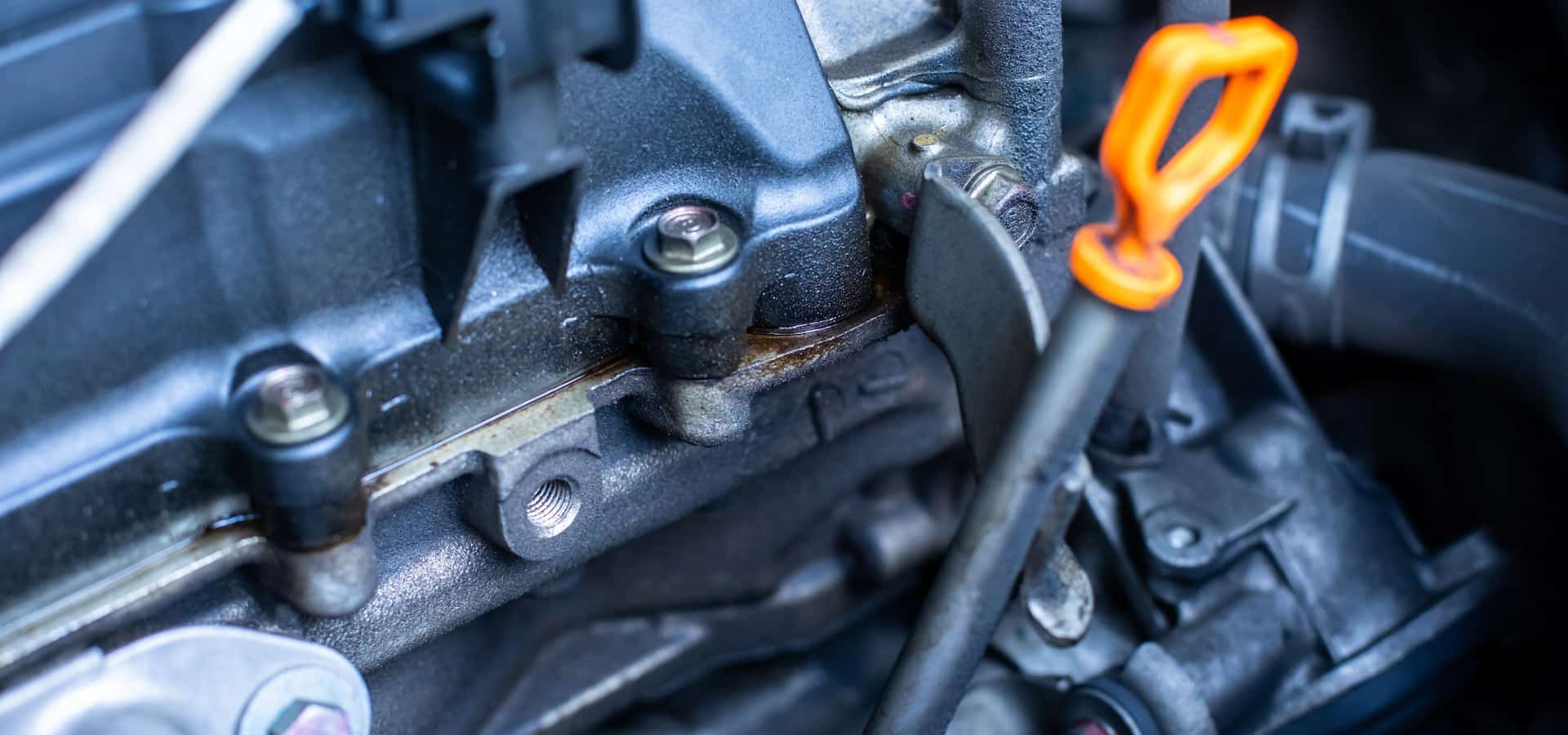
Acura Oil Leak Repair at Elevation Auto Repair
Acura engineering rewards a technician who knows where these engines actually weep – and Honda/Acura powertrains have specific leak paths that a generic shop tends to chase in the wrong order. Oil leak repair isn't just wiping down a valve cover and hoping; it's tracing the source under pressure, confirming it with UV dye, and rebuilding the joint to factory spec so it stays dry.
On the J-series V6 (MDX, TL, RL) the rear bank valve cover and the VTEC solenoid gasket hide behind the intake, and rushing that job means oil dripping onto the exhaust and a burning smell that keeps coming back. The K-series four-cylinder in the TSX and ILX has its own habits at the cam plug and crankshaft seals. We follow OEM torque sequences on aluminum covers – over-torquing warps the flange and creates the next leak. Denver's temperature swings and altitude harden seals faster, so a proper reseal matters more here than at sea level.
Here's what you can expect when you bring your Acura in:
- A dye-and-pressure diagnosis that pinpoints the true source, not a guess
- OEM or OEM-equivalent gaskets and seals installed to factory torque specs
- A clear explanation of what leaked, why, and what we did about it
- A post-repair verification drive to confirm the engine stays dry
Symptoms – How to Know You Need This Service
Acura oil leaks often announce themselves before the dash does. Watch and smell for these:
- Burning oil smell after shutdown – usually oil hitting a hot exhaust manifold from a valve cover or spool valve gasket
- Dark spots on your driveway under the front or center of the car
- Blue-tinged smoke from the engine bay at idle
- Low oil warning light or a dropping dipstick level between changes
- Oily residue around the valve covers, oil pan, or timing cover when you pop the hood
- Rough idle or a stored misfire code if oil seeps into the spark plug tubes on K-series engines
- Whiff of oil through the vents while the A/C or heat runs
If you see the low oil pressure light (not just the level light) or smoke pouring from the bay, stop driving and shut the engine off – running low on oil pressure risks bearing and cam damage. A faint smell, small drips, or slow level loss means schedule soon rather than panic, but don't let it ride for months. Oil that reaches the serpentine belt or a hot manifold turns a small repair into a bigger one.
Common Oil Leak Repair Issues on Acura Vehicles
Acura's J-series V6 and K-series four-cylinder engines each have well-known leak paths that show up with mileage and Denver's temperature swings. Here are the patterns we see most often:
- Valve cover gasket seepage on J-series V6s (TL, TSX V6, MDX, RL) – The rear bank sits against the firewall, so oil drips onto the exhaust and produces that burning smell before you ever spot a puddle.
- VTC/VTEC solenoid and spool valve gaskets on K24 engines (2004-2008 TSX) – The bolt-on solenoid housings use thin gaskets that harden and weep, often mistaken for a larger leak.
- Rear main seal leaks on higher-mileage 3.2L and 3.5L V6s – Common wear path where the crankshaft seal shrinks with age, dropping oil near the bellhousing.
- Timing cover and crank seal leaks – On timing-belt J-series engines, cover gaskets frequently seep and are best addressed during a timing belt/water pump service.
- Oil pan gasket and drain-related leaks – Stripped drain threads and hardened pan seals on older RSX, TSX, and TL platforms.
- Turbocharger oil feed/return line leaks on newer turbo Acuras (RDX, TLX 2.0T) – Higher heat cycles the line seals harder than on naturally aspirated models.
Which Acura Models We See for Oil Leak Repair
We regularly seal up leaks across the modern Acura lineup. Find your car below:
- MDX (2001–present, YD1/YD2/YD3) – J-series V6 rear valve cover and VTEC spool valve gaskets are the usual suspects
- TL / TL Type-S (2004–2014, UA6/UA7) – J32/J37 V6 valve cover and rear main seal weeps
- TSX (2004–2014, CL9/CU2) – K24 four-cylinder cam plug, valve cover, and spark plug tube seals; V6 variants share J-series leak points
- TLX (2015–present) – both four-cylinder and V6 versions, oil pan and cover gaskets
- RDX (2007–present) – early turbo K23 and later J-series V6; watch timing cover and VTC areas
- ILX (2013–2022) – K-series four, cam plug and valve cover gaskets
- RL (2005–2012, KB1/KB2) – J35 V6 rear bank access requires intake removal for a proper reseal
Type-S and A-Spec turbocharged variants add turbo oil feed and return lines to the inspection list, so those get extra attention around the turbo drain seals. We're honest about our limits: pre-2000 Integra and Legend platforms are less common in our bays, and if your car needs something outside our wheelhouse we'll tell you upfront rather than guess. For everything from a quick valve cover reseal to a full rear main job, we've got the tooling and the OEM procedures to do it once and do it right.
Acura sits in an interesting spot – Honda reliability engineering paired with higher-output V6 and turbocharged four-cylinder platforms that run hotter and pack their seals into tighter spaces. That combination means oil leaks on an Acura rarely announce themselves early, and the fixes often demand OEM gasket sets, updated hardware, and correct torque sequences to hold. Our shop treats these as platform-specific jobs, not one-size-fits-all reseals.
Causes & Risks – What Happens if Ignored
Most Acura oil leaks trace back to gasket and seal material that hardens over time, accelerated by Denver's heat cycling, high-altitude engine loads, and extended intervals on the wrong oil weight. Age and mileage do the rest.
Waiting turns a simple reseal into a chain of larger repairs. Oil that lands on hot exhaust components, drips onto belts, or starves a bearing does damage well beyond the original gasket.
- Ignoring valve cover seepage that reaches the rear-bank exhaust leads to persistent smoke and, over time, degraded ignition coils and plug tubes filling with oil.
- Letting a rear main or timing cover leak run for months drops oil level unnoticed, risking bearing and VTEC actuator wear on J-series and K-series engines.
- Oil contaminating a timing belt on a J-series V6 raises the chance of belt failure – an interference engine, meaning bent valves.
- Turbo oil line leaks left unaddressed can starve the turbo bearing, turning a seal job into a turbo replacement.
- Continuous low oil level compromises hydraulic lifters and VTC actuators, producing rattle and cam timing faults.
The cheaper repair is almost always the early one. We'll pinpoint the exact source so you're not paying to reseal parts that aren't leaking.
Safety Impact – Why Oil Leak Repair Matters
An oil leak is a safety issue once it reaches other systems or drops engine oil below safe levels. On Acura platforms, the risks tend to cluster around fire, sudden power loss, and slick-surface hazards.
- Fire risk – Oil pooling on hot exhaust manifolds or catalytic converters, common with rear-bank valve cover leaks.
- Sudden engine failure – Oil-fouled timing belt or a starved bearing can leave you stranded in traffic.
- Traction loss – Oil dripping onto tires or the road from a pan or rear main leak.
- Smoke in the cabin – Burning oil odor reaching the HVAC intake distracts and impairs the driver.
Stop driving now if you see smoke from the engine bay, smell burning oil while stopped, or your oil pressure light comes on. Schedule soon for a small drip on the driveway, a faint oil smell after highway drives, or slightly low oil at checks. A documented, addressed leak also protects you if a known issue ever contributes to an incident.
How Acura Oil Leak Repair Actually Works
Sealing an Acura engine properly is about matching the right gasket to the right surface and torquing it in the correct pattern – Honda/Acura specs are precise, and overtightening a valve cover or pan bolt warps the flange and guarantees a repeat leak. We clean every mating surface to bare metal, use OEM or OEM-equivalent gaskets, and follow the factory torque sequence and cure requirements for any RTV-sealed joints.
Diagnosis comes first. We use UV dye and targeted cleaning to confirm the true source before opening anything, since one leak often hides behind another.
- OEM gasket materials – J-series and K-series flanges are designed around specific gasket profiles; generic substitutes often weep again.
- Torque and sequence specs – Valve covers, oil pans, and timing covers each have staged torque patterns that prevent leaks and cracked covers.
- RTV application and cure – Rear main and timing cover work requires correct sealant beads and proper cure time before oil contact.
Acura's engineering leans on tight-tolerance VTEC and i-VTEC engines, aluminum blocks, and multi-piece gasket assemblies that behave differently than a typical import when oil starts weeping. Older J-series V6s and K-series four-cylinders each have their own predictable leak points, and the newer earth dreams direct-injection engines add timing chain covers and VTC solenoids into the mix. Pinpointing the true source on an Acura means knowing where these platforms actually fail, not guessing.
How We Diagnose Oil Leak Repair Issues on Acura
An oil leak on an Acura is rarely where the drip lands. We trace it back to the origin before quoting a single part.
- Scan for related codes and data: We connect a factory-aligned scan tool to read oil pressure sensor data, VTC solenoid activity, and any pending codes on TL, TSX, MDX, RDX, and TLX platforms that hint at pressure or seal issues.
- Cold and warm visual inspection: Many J-series V6 leaks at the valve cover gaskets and rear main seal only show clearly once the engine reaches operating temperature and pressure builds.
- UV dye and pressure testing: When a leak hides behind the timing cover or VTC actuator on earth dreams engines, we add UV dye and revisit under a black light after a road test.
- Road test and load check: Driving the car reveals leaks that only appear under throttle load or heat cycling – common with variable valve timing components.
- Measurement and confirmation: We check torque on suspect covers and inspect the PCV system, since a clogged PCV valve on K-series engines drives up crankcase pressure and forces oil past gaskets.
Once we know the exact source, you get a clear written repair plan and quote – no vague "it's leaking somewhere" answers.
Oil Leak Repair on Acura: Repair vs. Replacement
Not every Acura oil leak needs a big teardown. The right call depends on which component is failing and how far the wear has spread.
- Genuine repair: A weeping valve cover gasket on a TSX or TL, a leaking VTC solenoid o-ring, or a loose oil pan bolt often needs cleaning, resealing, and a fresh gasket – the surrounding assembly stays.
- Partial replacement: When the rear main seal or crankshaft seal fails but the block and mating surfaces are healthy, we replace the seal alone. Same logic applies to a single cam seal or the VTC actuator gasket on earth dreams engines.
- Full replacement: Cascading wear – a failed timing chain cover gasket paired with a worn tensioner, or a leak that has contaminated the clutch or drenched electrical connectors – can push repair cost near the value of replacing the whole assembly. That is when a complete cover or seal package makes more sense.
We lay out both paths with the trade-offs so you decide – we never default to the most expensive option to pad a ticket.
How to Make Your Acura Oil Leak Repair Last Longer
Fresh gaskets and seals last far longer when the engine runs clean and cool. A few habits protect the work we do.
- Warm up before hard driving: Let the engine reach temperature before heavy throttle so seals expand evenly instead of taking sudden pressure spikes.
- Avoid overfilling oil: Excess oil raises crankcase pressure and pushes past new gaskets, especially on high-mileage J-series V6s.
- Watch for early signs: Check your driveway for spots, glance at the oil level monthly, and note any burning smell after highway runs.
- Keep the PCV system healthy: A stuck PCV valve is a leading cause of repeat leaks on K-series engines – replace it on schedule.
Brand-specific care matters here:
- Use the correct oil spec and OEM or OEM-equivalent gaskets – Acura seals are formulated for specific oil grades.
- Stay current on service intervals and let updated software manage VTC timing correctly.
Checking oil level, spotting drips, and swapping a PCV valve are safe DIY tasks. Rear main seals, timing cover work, and anything requiring engine or transmission separation should stay with our technicians.
What to Expect When You Bring Your Acura In
Acura's VTEC engines and their variable timing hardware create pressure points that generic shops miss – think spool valve gaskets, VTC solenoid seals, and rear main leaks on high-mileage J-series V6s. Here's how a visit flows:
- Drop-off or appointment – Schedule ahead or drop off after hours using our key box. Tell us what you're seeing: drips on the driveway, burning smell, or low-oil warnings on the MID.
- Initial inspection – We degrease the engine bay and use UV dye tracing to pinpoint the true source, since oil migrates and the visible wet spot is rarely the origin.
- Written estimate – You get a clear, itemized breakdown of the failed gasket or seal, parts, and labor before anything moves forward.
- Communication during the work – We check in with updates and call before adding anything not in the original estimate.
- Pickup walkthrough – We show you the old parts and explain what caused the leak so it doesn't repeat.
Loaner and shuttle options are available – ask when you book. Remove valuables before drop-off; anything left behind stays secured. Every Acura gets a post-repair road test and a scan-tool re-check to confirm no oil-pressure or VTEC-related codes remain. If something feels off after pickup, bring it back and we'll re-verify our work.
Why Choose Elevation Auto Repair for Acura Oil Leak Repair
Acura oil leaks follow patterns, and we know them. Timing cover and VTC solenoid seepage on 3.5L J-series V6s, valve cover and spool valve gasket weeping on K-series four-cylinders, and rear main seal seepage on higher-mileage TL, TSX, MDX, and RDX platforms all get diagnosed the right way the first time.
- TSB and software awareness – We cross-reference Acura service bulletins and applicable updates that affect gasket revisions and torque procedures.
- Correct sealants and specs – We follow OEM-aligned torque sequences and use the proper anaerobic or RTV sealant where Acura specifies it, not a one-size-fits-all approach.
- Root-cause focus – A leaking valve cover can be a symptom of a clogged PCV path building crankcase pressure; we address the cause, not just the drip.
We own the whole job in one shop – diagnosis, repair, and verification – so nothing gets handed off or guessed at. That's how your Acura leaves dry, holds oil pressure, and stays reliable for the long haul.
Our Acura Services
- Air Conditioning AC Repair
- Battery Repair Replacement
- Brake Repair & Brake Fluid Change
- Check Engine Light Diagnostics
- Clutch Repair & Replacement
- Coolant Leak Repair
- Cooling System Repair
- Drive Shaft Repair
- Engine Repair
- Exhaust & Catalytic Converter Repair
- Head Gasket Repair & Replacement
- Oil Change
- Scheduled Service Maintenance
- Steering Repair
- Suspension Repair
- Cambelt Timing Belt Replacement
- Transmission Repair
- Tune Up
- Wheel Alignment