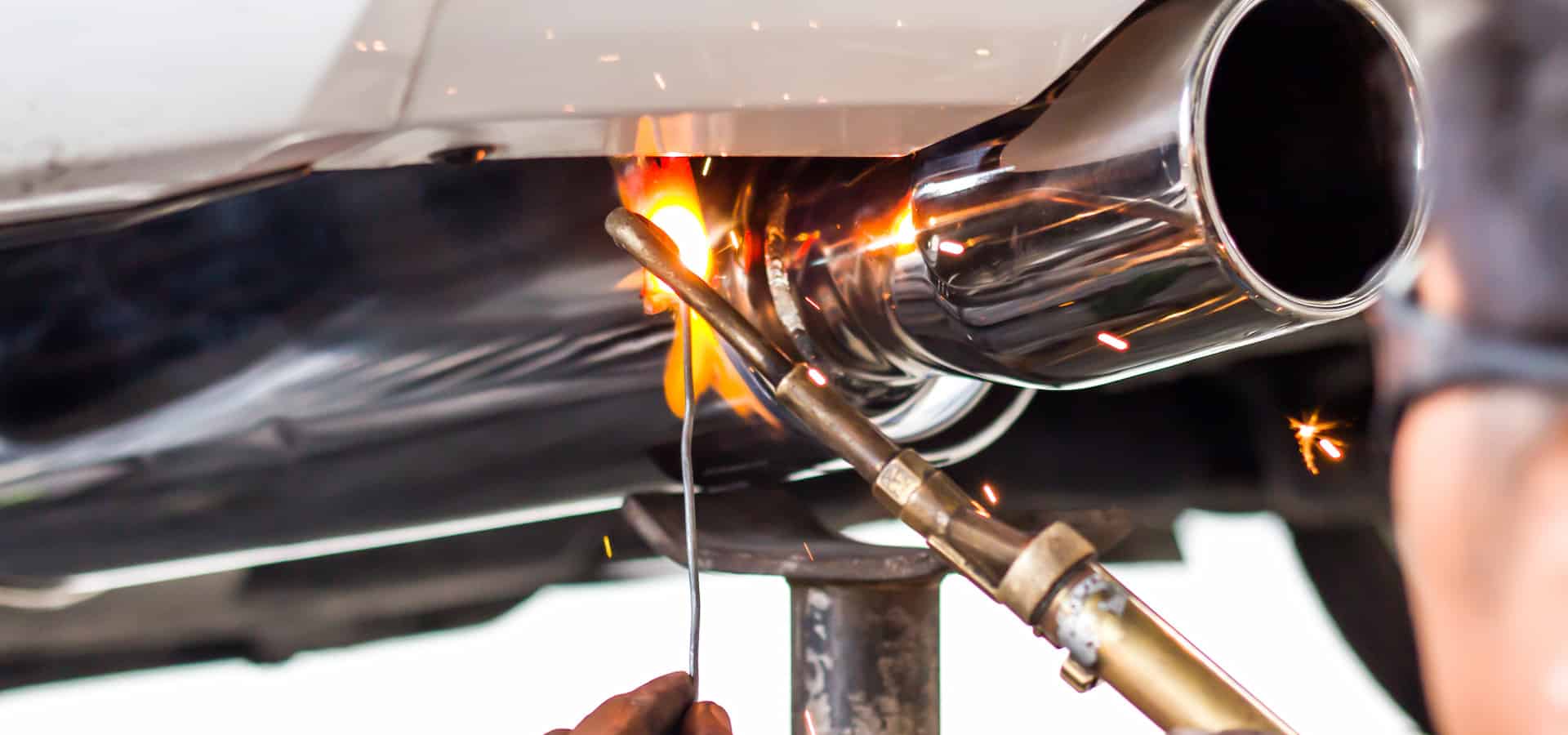
Acura Exhaust & Catalytic Converter Repair at Elevation Auto Repair
Your Acura runs quiet and refined – until a droning exhaust note or a stubborn P0420 code interrupts the drive. That change in character usually points back to the exhaust system or a failing catalytic converter, and both deserve more than a one-size-fits-all bolt-on fix.
Acura exhaust work rewards attention to detail. Many models pack close-coupled catalytic converters bolted directly to the cylinder heads, so heat cycling, cracked flex pipes, and rusted rear-cat flanges are common on higher-mileage cars here in Denver's dry, salted-winter climate. Getting it right means honoring OEM front and rear oxygen sensor data, correct flange torque, and proper gasket seating so a repaired system stays leak-free.
We diagnose with factory-level scan tools to read catalyst efficiency, fuel trims, and rear O2 sensor switching before we condemn a converter – because a rich condition or a lazy sensor often mimics a bad cat. On the J-Series V6 and K-Series four-cylinder platforms, we also check for exhaust manifold cracks that throw the same codes.
- Honest diagnostics that separate a true bad converter from sensor or fueling faults
- Proper OEM-spec gaskets, hardware, and torque on every flange
- Verification of catalyst efficiency after repair, not just a cleared light
- Clear communication about what needs replacing now versus later
Symptoms – How to Know You Need This Service
Acura exhaust problems tend to announce themselves gradually, then all at once. Watch for these signs:
- A deep drone or rumble that grows louder under acceleration – often a cracked flex pipe or rotted muffler section
- A rattling or clunking under the floor at idle – a loose heat shield or a broken-up catalyst substrate
- Check engine light with P0420 or P0430 catalyst efficiency codes
- Sulfur or "rotten egg" smell, especially on TL, MDX, and RDX models
- Noticeably weaker acceleration or reduced fuel economy from a clogged converter
- A ticking or puffing sound near the engine on cold start – a leaking exhaust manifold gasket
- Vibration through the floor or seat that changes with engine speed
If you smell exhaust fumes inside the cabin or notice raw exhaust odor with lightheadedness, stop driving and have it towed – that points to a leak upstream of the cabin. A rattling heat shield or a mild droning note can be scheduled soon, but a clogged converter causing hard stalling shouldn't wait.
Common Exhaust & Catalytic Converter Repair Issues on Acura Vehicles
Acura's lineup shares much of its exhaust engineering with Honda, and that means specific, repeatable failure patterns show up across generations. Here's what we see most often on Denver-area Acuras:
- P0420/P0430 catalyst efficiency codes on the J-series V6 (TL, TSX V6, MDX, RL): The rear (downstream) oxygen sensor reports the converter is no longer scrubbing efficiently. On 2007-2013 MDX and TL, high-mileage cats simply lose their coating.
- Flex pipe cracking on 2004-2008 TL and TSX: The braided flex coupling behind the manifold fatigues from engine rock and Colorado thermal cycling, producing an exhaust leak and a ticking or hissing sound at idle.
- Front manifold/warm-up converter failure on K24-powered TSX (CL9/CU2): The integrated close-coupled catalyst can clog or crack, throwing a catalyst code even when the main cat is fine.
- Rusted mid-pipe and rear muffler seams: Road salt on I-70 and mountain routes eats through flanges and resonator welds on older RSX, TL, and MDX platforms.
- Failed oxygen and air-fuel ratio sensors: A lazy upstream AFR sensor mimics a bad converter, so accurate diagnosis matters before anyone replaces a cat.
- Loose heat shields: A rattling shield over the converter is common on aging MDX and RDX models and is often mistaken for a serious internal failure.
Which Acura Models We See for Exhaust & Catalytic Converter Repair
We regularly service exhaust and catalytic converter jobs across the Acura lineup. Find your car below:
- Acura TL (2004–2014, UA6/UA7/UA8/UB) – J-Series V6; front cat efficiency codes and rear cat rust are common on higher-mileage examples
- Acura TSX (2004–2014, CL9/CU2) – K24 four-cylinder and later J35 V6; check for manifold cracks throwing P0420
- Acura MDX (2007–2013 YD2, 2014–2020 YD3) – J37/J35 V6; rear flange corrosion and heat shield rattle
- Acura RDX (2013–2018 TB3/TB4, 2019+ TC1) – V6 and later 2.0T turbo; turbo models have unique down-pipe and cat routing
- Acura TLX (2015–2020 UB1/UB2, 2021+ TC1) – 2.4L K24 and 3.5L J35; SH-AWD variants have tighter clearances
- Acura ILX (2013–2022 DE) – K-Series four-cylinder; cost-effective converter and flex pipe repairs
- Acura RL / RLX – V6 platforms; hybrid RLX Sport Hybrid needs careful handling around high-voltage components
Turbocharged RDX and TLX models, plus SH-AWD variants, take extra care because of packaging around driveline components – we account for that in every repair. If you drive an older Legend or a rare Sport Hybrid, reach out and we'll confirm parts availability before scheduling.
You start the car in your Denver driveway and hear a low rasp under the floor that wasn't there last week. Maybe the check engine light is on with a P0420, or the whole cabin drones on the highway. On an Acura, exhaust and catalytic converter trouble tends to show up in predictable ways, and catching it early keeps a small repair from turning into a major one.
Causes & Risks – What Happens if Ignored
Most Acura exhaust problems trace back to age, heat cycling, and Colorado's road salt combined with high-altitude engine loads. A converter rarely fails on its own – it usually degrades because of an upstream issue like a slow oxygen sensor, an oil-burning engine, or a rich fuel condition dumping raw fuel into the catalyst.
When a P0420 sits unaddressed, the underlying cause keeps working against the new parts, and the damage spreads.
- Ignoring a rich-running condition can overheat and melt the catalyst substrate, turning a sensor repair into a full converter replacement.
- A small flex-pipe crack widens over months, eventually breaking free and letting exhaust leak near the cabin.
- A partially clogged converter chokes airflow, hurting fuel economy and power, and can trigger overheating that stresses the head and valves.
- Rust at a flange left alone spreads until the pipe must be replaced rather than resealed.
- Exhaust leaks upstream of the AFR sensor confuse fuel trims, which piles on more codes and rougher running.
The safety line gets crossed once exhaust escapes before the cabin's fresh-air intake, or when droning masks other warning sounds. That's the point to stop waiting.
Safety Impact – Why Exhaust & Catalytic Converter Repair Matters
A leaking exhaust system on an Acura isn't only about noise and emissions. Carbon monoxide can work its way into the cabin through the firewall or floor, especially in stop-and-go traffic or when idling. A clogged converter also puts the engine under abnormal load, which affects drivability and can leave you stranded.
- Stop driving now: strong exhaust smell inside the cabin, headaches or drowsiness while driving, loud roaring under the floor, or a sudden major power loss.
- Schedule soon: a steady P0420/P0430 light, a light rasp at cold start, mild highway drone, or a rattle over bumps from a loose heat shield.
There's a practical liability angle too. A known, un-repaired exhaust defect that contributes to a carbon monoxide incident, or a converter failure that fails Colorado emissions, becomes your responsibility once it's documented. We give you honest diagnostics so you know exactly where your Acura stands and what genuinely needs attention.
How Acura Exhaust & Catalytic Converter Repair Actually Works
Your Acura's exhaust runs hot gases from the manifold through one or more catalytic converters, where a precious-metal coating converts harmful compounds before they reach the tailpipe. Upstream and downstream oxygen or air-fuel ratio sensors constantly compare readings – the ECU decides converter health by how closely the rear sensor tracks the front. That's why a real diagnosis looks at live sensor data, not just the trouble code.
Acura's implementation adds a few wrinkles that separate this from generic exhaust work:
- Wide-band AFR sensors on the upstream side need correct part numbers and sometimes ECU relearn after replacement, not a universal screw-in sensor.
- Close-coupled converters on K-series engines are integrated with the manifold, so replacement follows OEM torque sequences to avoid warped flanges and repeat leaks.
- Fuel-trim data must be read to confirm the converter failed on its own versus being poisoned by an upstream problem.
- Post-repair, the readiness monitors have to complete a specific drive cycle before the car will pass Colorado emissions.
We confirm the true cause first, use parts that match Acura's specifications, and verify the fix with live data before you
How We Diagnose Exhaust & Catalytic Converter Repair Issues on Acura
You start the car and hear a low drone that wasn't there yesterday, or a P0420 lights up the dash on your TL or MDX. That's the moment we like to catch things – before a partial exhaust failure turns into a full assembly swap.
- Full scan and freeze-frame pull: We connect a scan tool capable of reading Acura-specific PIDs, pulling codes like P0420/P0430 (catalyst efficiency below threshold) and P0139/P0141 (downstream O2 sensor faults) common on J-series V6 platforms such as the TL, TSX, and MDX.
- Live data review: We watch upstream and downstream oxygen sensor waveforms. A lazy or mirrored downstream signal tells us whether the converter is actually failing or whether a sensor is feeding bad data.
- Fuel trim analysis: Skewed long-term fuel trims often point to an upstream cause – a leaking gasket or exhaust manifold crack – that damaged the converter, which matters on high-mileage K24 four-cylinder TSX and Accord-based Acuras.
- Visual and physical inspection: We inspect flex pipes, manifold flanges, and the mid-pipe for rust perforation, cracked welds, and rattling heat shields – a frequent complaint on older RL and TL models.
- Road test and backpressure check: We drive under load and, when warranted, measure exhaust backpressure to confirm a clogged or melted substrate versus a false efficiency code.
From there you get a clear written plan and quote that separates what must be fixed now from what can wait – no guessing, no padded parts list.
Exhaust & Catalytic Converter Repair on Acura: Repair vs. Replacement
Not every exhaust code means a new converter. We match the fix to the actual failure.
- Genuine repair: A cracked flange gasket, a loose heat shield, a failed downstream O2 sensor, or a small rusted-through section of pipe can often be welded, re-sealed, or replaced individually while the converter stays. Many P0420 codes on Acura V6s trace back to a bad sensor rather than the catalyst itself.
- Partial replacement: When only the flex pipe or a rusted mid-pipe section has failed but the converter substrate tests healthy, we replace the worn segment and preserve the rest of the assembly. This is common on Denver-area Acuras where road salt attacks the pipes before the cat degrades.
- Full replacement: A melted or contaminated substrate, a converter damaged by an upstream misfire or oil consumption, or repair costs creeping toward replacement all point to a new unit. On J-series engines with a manifold-integrated converter, replacing the whole assembly is often the durable answer.
We lay out each option side by side, explain what OEM versus aftermarket parts mean for your emissions warranty, and let you choose – we never default to the priciest route.
How to Make Your Acura Exhaust & Catalytic Converter Repair Last Longer
A little attention keeps a fresh exhaust and converter healthy for years – especially in Colorado's temperature swings and road-salt winters.
- Drive habits: Let the engine reach operating temperature before hard acceleration, avoid repeated very short trips that leave moisture in the system, and address any misfire or rough idle quickly so raw fuel never reaches the converter.
- Owner checks: Listen for new rattles, drones, or hissing; peek underneath for orange surface rust turning into perforation; and never ignore a check engine light or flashing MIL, which can signal converter-damaging misfires.
- Fluids and parts: Fix oil and coolant consumption promptly – contaminants poison catalyst material. Use OEM-spec Acura oxygen sensors and gaskets, since off-brand sensors frequently trigger false efficiency codes on J-series and K-series engines.
- Software and intervals: Keep PCM calibrations current and follow Acura's maintenance schedule, including spark plugs and air filters, so combustion stays clean.
Safe DIY includes visual checks, listening, and topping off fluids. Leave welding, sensor diagnosis, and any work near the hot exhaust or emissions hardware to our technicians – it's a safety-critical system, and we'll keep your Acura running clean and quiet.
What to Expect When You Bring Your Acura In
That drone under the floorpan, a sulfur smell, or a P0420 code lighting up the dash usually means your Acura's exhaust or catalytic converter needs attention. Here's how a visit with us plays out from start to finish.
- Drop-off or scheduled appointment – Grab a shuttle ride or ask about loaner availability so you're not stuck waiting. Personal items can stay in the cabin; we only work where the job requires.
- Initial inspection – We lift the vehicle, trace the exhaust from the manifold back, and check flex pipes, hangers, oxygen and air-fuel ratio sensors, and converter substrate condition.
- Written estimate – You get a clear breakdown of what's failing and why before any wrench turns, including whether the converter itself is the culprit or an upstream fuel-trim problem faking the code.
- Communication during the work – We text or call with findings and wait for your go-ahead on anything beyond the approved scope.
- Pickup walkthrough – We show you the replaced parts and explain what changed. After-hours pickup can be arranged when your schedule is tight.
Every job ends with a road test and a scan-tool re-check to confirm readiness monitors set and fuel trims fall back in line. If anything feels off afterward, bring it back and we'll re-scan and re-inspect.
Why Choose Elevation Auto Repair for Acura Exhaust & Catalytic Converter Repair
Acura exhaust problems are rarely just a rusted pipe. The J-series V6 in TL, TSX, MDX, and RDX models is known for downstream converter and O2 sensor faults that trigger P0420 or P0430, and the K-series four-cylinder platforms often throw catalyst-efficiency codes tied to aging sensors rather than a bad converter. We diagnose the difference before recommending parts.
- We check for applicable Acura TSBs and PCM software updates that address false catalyst codes on 2004–2014 platforms before condemning a converter.
- We verify fuel trims, upstream sensor response, and exhaust leaks so a cracked flex pipe or lazy sensor isn't misdiagnosed as a converter failure.
- We use factory-appropriate torque specs on manifold and flange hardware to prevent repeat leaks and manifold warping on VTEC engines.
You get one shop that owns the whole process – diagnosis, repair, and post-repair verification – as your Denver dealership alternative. Honest diagnostics mean we won't sell you a converter your Acura doesn't need.
Our Acura Services
- Air Conditioning AC Repair
- Battery Repair Replacement
- Brake Repair & Brake Fluid Change
- Check Engine Light Diagnostics
- Clutch Repair & Replacement
- Coolant Leak Repair
- Cooling System Repair
- Drive Shaft Repair
- Engine Repair
- Head Gasket Repair & Replacement
- Oil Change
- Oil Leak Repair
- Scheduled Service Maintenance
- Steering Repair
- Suspension Repair
- Cambelt Timing Belt Replacement
- Transmission Repair
- Tune Up
- Wheel Alignment