
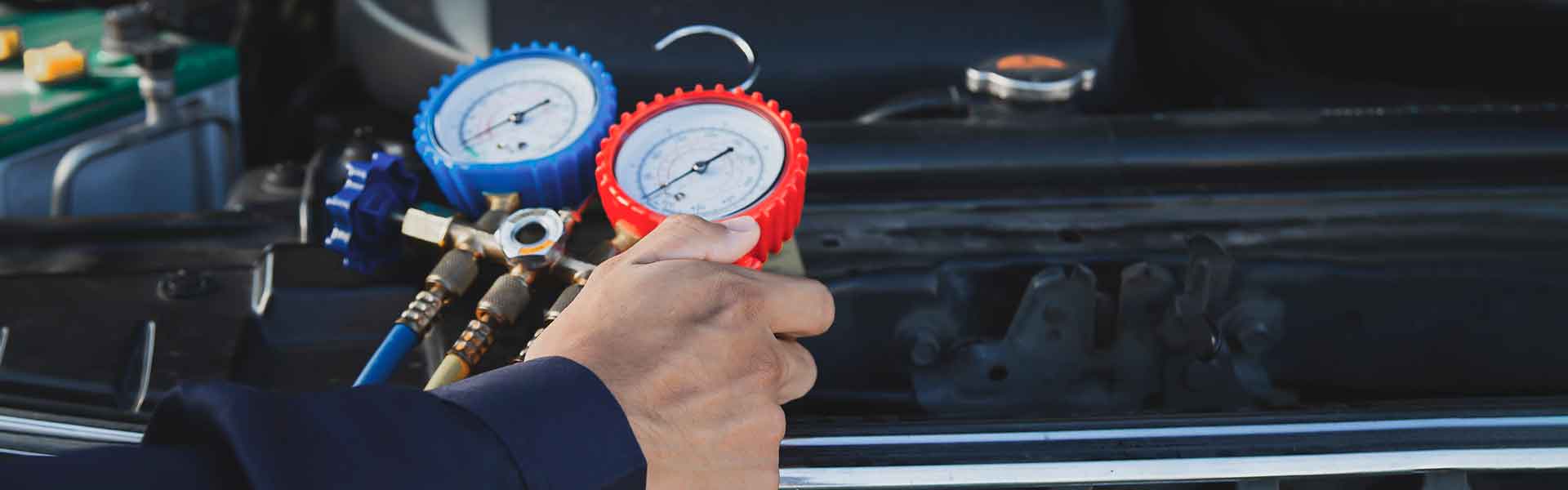
Acura Air Conditioning AC Repair at Elevation Auto Repair
Acura builds its climate systems around dual-zone automatic controls that talk to the ECU through the CAN bus, which means an AC problem often shows up as a fault code long before you feel warm air. That's why cooling work on a TL, MDX, or RDX isn't just a "recharge and go" job – it's a diagnostic exercise.
Many Acura models share Honda's compressor architecture, and we see specific patterns worth naming. The compressor clutch relay and the AC pressure sensor are common failure points, and the condensers on 2007-2013 MDX (YD2) and 2009-2014 TL are prone to road-debris punctures behind the lower grille. Getting the refrigerant charge exactly right matters too – Acura specifies precise R-134a (and R-1234yf on newer models) weights and PAG oil volumes that a guess-and-fill approach won't match.
We use proper recovery and recharge equipment plus factory-level scan tools to read climate control actuator data and blend-door faults, not just gauge pressures. That's the difference between fixing the cause and masking a symptom.
- Accurate electronic leak detection and evacuation to OEM refrigerant specs
- Diagnostics that read climate module and blend-actuator data, not just pressures
- Repairs that protect your factory warranty coverage and resale value
- Clear explanation of what failed and what it will take to fix it
Symptoms – How to Know You Need This Service
Acura climate systems tend to warn you gradually. Here's what you may notice before the AC quits entirely.
- Air that starts cool then turns warm during longer drives – often a low charge or failing compressor clutch
- A clicking or rapid cycling sound from the engine bay when the AC engages
- Weak airflow even at high fan speeds, pointing to a blower motor or cabin filter issue
- One side blowing cold while the other blows warm on dual-zone models – a blend-door actuator fault
- A sweet or musty smell from the vents, suggesting evaporator or drain problems
- Fogging on the windshield that the defroster struggles to clear
- Grinding or squealing tied to compressor bearing wear
Schedule soon if you notice weak cooling, odd smells, or uneven temperatures – these rarely fix themselves. Stop driving and get it looked at right away if you hear grinding from the compressor or smell burning rubber, since a seized clutch can damage the serpentine belt and leave you stranded.
Common Air Conditioning AC Repair Issues on Acura Vehicles
Acura climate systems share plenty of DNA with Honda, but the luxury-tier dual-zone and tri-zone setups introduce their own weak points. These are the patterns we see most often across the lineup.
- Compressor clutch and relay failure on 2004-2008 TL and TSX – The clutch air gap widens with age, causing intermittent cooling before the compressor stops engaging entirely. A worn clutch that keeps cycling can seize and send debris through the system.
- Blend door actuator faults on 2007-2013 MDX and RDX – Owners report a clicking behind the dash and one side blowing warm while the other stays cold. The plastic actuator gears strip under repeated commands from the climate control module.
- Condenser leaks on 2009-2014 TL and TSX – The front-mounted condenser sits exposed to road debris on Denver highways. Small punctures bleed refrigerant slowly, mimicking a lazy compressor.
- Evaporator core leaks on higher-mileage RL and TL platforms – A sweet smell and gradual loss of cooling point to a slow evaporator seep that requires dash disassembly to reach.
- Climate control display and A/C button failures on 2004-2008 TL – The infamous dim or dead display can disable A/C engagement from the head unit.
- Cabin air filter neglect across MDX and RDX – Restricted airflow strains the blower motor and masks early cooling loss.
Which Acura Models We See for Air Conditioning AC Repair
We work on the full modern Acura lineup, and a few platforms come through the shop more than others for cooling work.
- MDX (YD1 2001-2006, YD2 2007-2013, YD3 2014-2020) – condenser punctures and compressor clutch wear are the usual culprits
- RDX (TB1/TB2 2007-2012, TB3/TB4 2013-2018, TC1/TC2 2019+) – blower and blend-actuator faults, plus R-1234yf handling on newer units
- TL (UA6/UA7 2004-2008, UA8/UA9 2009-2014) – condenser and pressure-sensor issues on the third and fourth gen
- TSX (CL9 2004-2008, CU2 2009-2014) – compressor and evaporator service
- TLX (UB1-UB4 2015-2020, current generation 2021+) – electronic climate diagnostics
- ILX (2013-2022) – shares Honda Civic platform components for straightforward repairs
- RL, RLX, ZDX, and Integra (DE4) – full diagnostic and refrigerant service
SH-AWD variants use the same climate hardware as front-drive models, so cooling repairs don't change between them. Newer TLX and RDX Type S models run more integrated software, and we handle those with factory-level tooling. On very early Legend and pre-2000 models, some discontinued components can be harder to source – we'll tell you up front if parts availability affects the repair.
Acura built its reputation on the smooth, refined climate systems it borrows from Honda's engineering while adding its own electronic control layers. That refinement means A/C faults on a TL, MDX, RDX, or TLX often trace back to specific parts rather than generic wear. Getting the repair right the first time protects your factory warranty coverage and keeps resale value where it belongs.
Causes & Risks – What Happens if Ignored
Colorado's dry air, altitude swings, and dust-heavy summers push A/C components harder than mild coastal climates do. Combine that with the age of many Acura platforms on the road and small leaks turn into system-wide problems.
Most failures start small – a low refrigerant charge, a sticky actuator, a clutch that hesitates. Left alone, the low side loses lubrication and the compressor pays the price.
- Ignoring a slow condenser leak for a season typically drops oil circulation, which starves and burns up the compressor.
- A cycling compressor clutch that keeps chattering eventually seizes, contaminating the entire refrigerant loop with metal debris.
- A stripped blend door actuator left unaddressed forces the climate module to keep hunting, which can damage the control head.
- A clogged cabin filter overworks the blower motor resistor and shortens motor life.
- Moisture entering a leaking system corrodes the expansion valve and dryer, turning a simple recharge into a full teardown.
The cost jump is steep – a refrigerant service and small part is minor compared to a full compressor, condenser, and dryer replacement after contamination. We catch these early so a small repair stays a small repair.
Safety Impact – Why Air Conditioning AC Repair Matters
A/C on an Acura does more than cool the cabin. The system feeds the defrost function that clears fog and ice from the windshield, and the compressor shares belt and electrical load with other systems.
- Defrost and defog performance – A dead A/C compressor means the defrost cycle can't remove interior humidity quickly, cutting visibility in Denver's cold, damp mornings.
- Driver alertness – A hot cabin on long summer drives dulls focus and reaction time.
- Electrical load – A seized compressor can throw the serpentine belt or stress the charging system, affecting power steering and other belt-driven components.
Stop driving soon and schedule right away if you notice:
- A loud grinding or squealing from the compressor area
- Burning smells or smoke near the belt
- Windshield fog that won't clear with defrost
Schedule at your convenience for: gradual cooling loss, one-sided temperature differences, or mild odors. Addressing a known component issue before it contributes to an incident also keeps your maintenance record clean and supports resale documentation.
How Acura Air Conditioning AC Repair Actually Works
Your Acura's A/C is a sealed loop that moves heat out of the cabin. The compressor pressurizes refrigerant, the condenser sheds heat up front, the expansion valve drops the pressure, and the evaporator behind the dash absorbs cabin heat while the blend doors mix the airflow. On dual-zone and tri-zone Acuras, a climate control module commands electronic actuators to hit the exact temperature each zone requests.
What sets Acura apart is the level of electronic control and the model-specific refrigerant specs. Newer models use R-1234yf refrigerant, which requires different handling and dedicated recovery equipment than older R-134a systems.
- Refrigerant type matters – Mixing R-1234yf and R-134a service equipment contaminates the system and voids proper charging.
- Actuator calibration – Replacement blend door actuators often need a relearn cycle so the climate module knows the door end-stops.
- Precise charge weights – Acura specifies exact refrigerant and PAG oil amounts by model; overcharging kills cooling performance.
- OEM diagnostics – Re
Acura's air conditioning systems lean on a variable-displacement compressor and electronically controlled climate systems that carried across the TL, TSX, MDX, RDX, and TLX lines. These setups deliver strong cooling, but they also depend on precise refrigerant charge and healthy electrical control – small deviations show up fast as weak vents or intermittent cold air. Getting the diagnosis right the first time protects your warranty position and keeps resale value intact.
How We Diagnose Air Conditioning AC Repair Issues on Acura
A proper A/C diagnosis on an Acura starts with data, not guesswork. Here's how our technicians work through it:
- Pull HVAC and climate control codes with an OEM-level scan tool that reads Acura's body and HVAC modules, not just generic powertrain data.
- Command the compressor clutch, blend door actuators, and blower on live data to confirm the control side is responding.
- Connect manifold gauges to read high- and low-side pressures against Acura's specified charge for that model year.
- Perform an electronic leak check and UV dye inspection at the condenser, compressor shaft seal, and evaporator drain – common leak points on higher-mileage MDX and TL platforms.
- Measure vent temperature at idle and during a short road test, since airflow and cooling can shift under load.
- Inspect the cabin air filter, condenser fins, and cooling fan operation, which quietly starve the system on Denver's dusty summer days.
Once we know whether the fault is refrigerant, electrical, or mechanical, we translate it into a clear written repair plan and up-front quote – no surprises, no unnecessary parts.
Air Conditioning AC Repair on Acura: Repair vs. Replacement
Not every weak-A/C complaint needs a big-ticket fix. We match the repair to the actual failure.
- Genuine repair: A low charge from a slow O-ring or Schrader valve leak, a clogged cabin filter, or a sticking blend door actuator often means a small part, a recharge, and a system evacuation – nothing more.
- Partial replacement: A failed condenser (frequent on front-impact-prone MDX and RDX models) or a leaking evaporator can be swapped while keeping the compressor and lines. A single failed climate actuator gets replaced without touching the rest of the dash.
- Full replacement: When a compressor grenades internally, it sheds metal debris throughout the system. On those Acuras, replacing the compressor, condenser, orifice/expansion device, and flushing the lines is the only way to prevent repeat failure.
We lay out each option with its trade-offs so you decide – protecting both your budget and your Acura's long-term reliability instead of defaulting to the priciest job.
How to Make Your Acura Air Conditioning AC Repair Last Longer
A few habits keep your Acura's A/C cold long after the repair is done.
- Run the A/C for a few minutes regularly, even in winter, to keep compressor seals lubricated and prevent them from drying out.
- Use the fresh-air setting periodically to clear humidity and discourage mold at the evaporator.
- Ease off maximum cooling immediately after start on brutally hot days – let airflow build before demanding full load.
Owner-friendly maintenance you can handle yourself:
- Swap the cabin air filter on Acura's recommended interval – a clogged filter is the most common cause of weak airflow.
- Keep the condenser and grille clear of leaves and road grit.
- Listen for new clicking, squealing, or cycling sounds and note when cooling weakens, so problems get caught early.
Leave the technical work to the shop: refrigerant handling, compressor service, and evaporator jobs require recovery equipment and OEM-correct PAG oil and refrigerant volumes. Sticking with genuine Acura-spec parts and keeping HVAC software current preserves both your warranty and resale value. Bring it to us for anything beyond filters and visual checks.
What to Expect When You Bring Your Acura In
Acura A/C systems have their own personalities. The TL and TSX are known for compressor clutch relay failures and condenser leaks from road debris, while the MDX and RDX often show evaporator odor issues and blend-door actuator faults that mimic refrigerant loss. We start by pinning down which problem you actually have.
- Drop-off or appointment – Schedule ahead or bring it by. Leave personal items in the cabin; we only access what the repair requires and note anything in the console or trunk.
- Initial inspection – We check static and high/low side pressures, inspect the condenser and lines for oil residue, and dye-test for leaks at the O-rings, condenser, and evaporator case.
- Written estimate – You get a clear breakdown of parts, labor, and any refrigerant or PAG oil needs before we touch a component.
- Communication during the work – We call or text with findings. Nothing extra gets done without your approval.
- Pickup walkthrough – We explain what we found, what we replaced, and vent-temperature results.
Loaner and shuttle options are available, and after-hours pickup can be arranged. Every A/C job ends with a road test and scan-tool re-check of climate control data. If something feels off after you leave, bring it back and we'll re-verify our work.
Why Choose Elevation Auto Repair for Acura Air Conditioning AC Repair
We treat Acura climate systems as their own discipline, not a generic recharge-and-go. Simply topping off refrigerant hides leaks and can void protection on newer systems – we diagnose the root cause first.
- TSB awareness – We reference Acura service bulletins on compressor and condenser updates, plus HVAC control software revisions that resolve blend-door and airflow complaints without unneeded parts.
- Platform-specific knowledge – Evaporator odor treatment on MDX/RDX, condenser replacement on TL/TSX, and actuator diagnosis across the lineup.
- End-to-end ownership – The same shop diagnoses, repairs, evacuates, recharges to spec, and verifies vent temps under load.
Using OEM-grade components and correct PAG oil charge keeps your system sealed and your factory or extended warranty coverage intact – the kind of documented, proper repair that supports resale value down the road. You get dealership-level Acura expertise with straightforward communication and no unnecessary work.
Our Acura Services
- Battery Repair Replacement
- Brake Repair & Brake Fluid Change
- Check Engine Light Diagnostics
- Clutch Repair & Replacement
- Coolant Leak Repair
- Cooling System Repair
- Drive Shaft Repair
- Engine Repair
- Exhaust & Catalytic Converter Repair
- Head Gasket Repair & Replacement
- Oil Change
- Oil Leak Repair
- Scheduled Service Maintenance
- Steering Repair
- Suspension Repair
- Cambelt Timing Belt Replacement
- Transmission Repair
- Tune Up
- Wheel Alignment