Ram Suspension Repair at Elevation Auto Repair
You back your loaded Ram 1500 out of the driveway and hear a clunk over the first speed bump, or the truck wanders on the highway even after fresh tires. That's your suspension asking for attention, and on a heavy-duty pickup those parts work harder than almost anything else on the road.
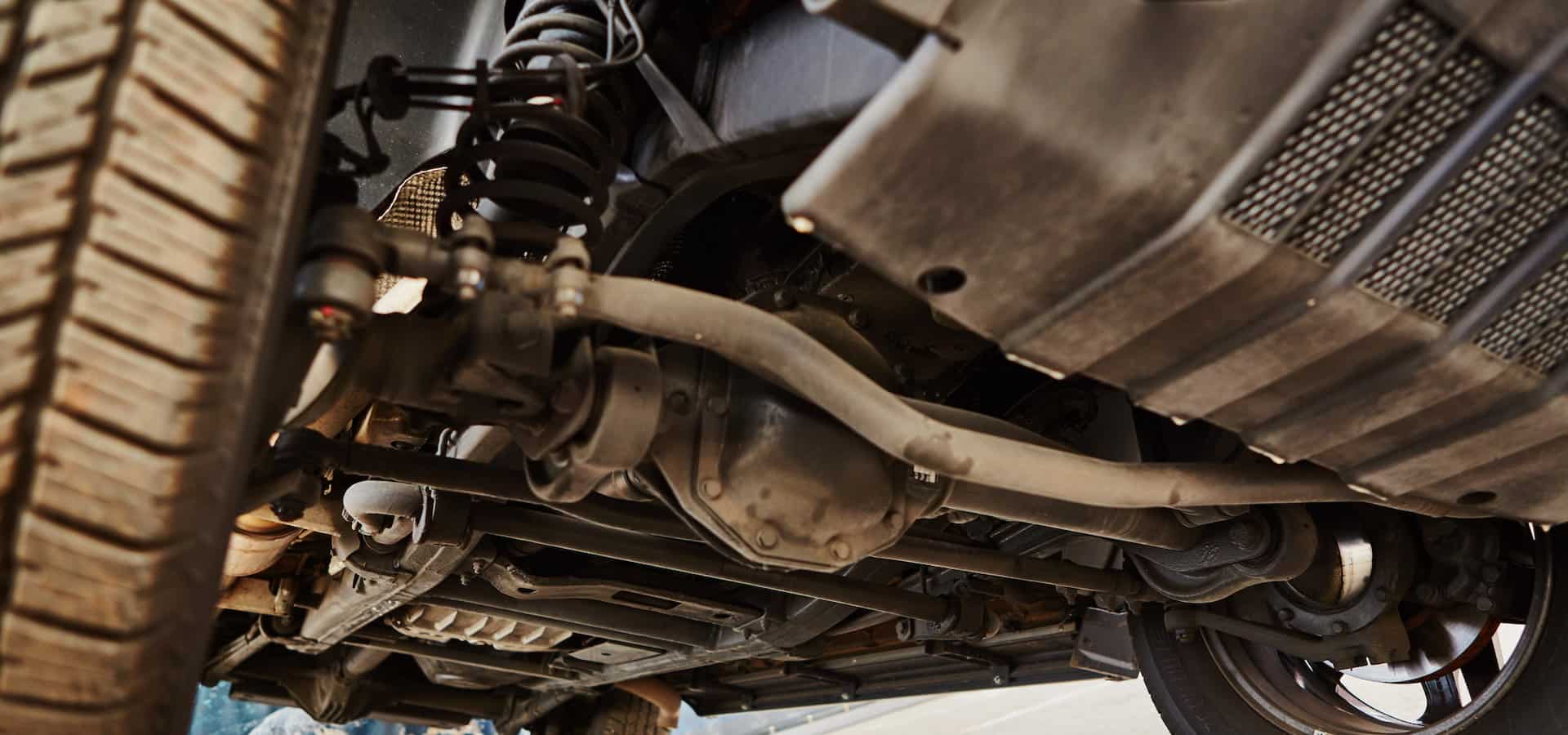
Ram suspension repair covers the control arms, ball joints, tie rods, track bars, shocks, and coil or air springs that keep the truck planted and the steering honest. Doing it right on a Ram isn't the same as a generic shop swapping parts.
- The track bar and its frame-side bushing on DS/DJ Ram 2500/3500 trucks is a known wander source and demands correct torque plus a proper alignment afterward.
- Ram 1500 models with the optional rear air suspension (Active-Level system) need factory-level scan tools to calibrate ride height, bleed the reservoir, and clear stored fault codes.
Here's what you can expect when you bring your Ram in:
- An honest inspection that separates worn parts from parts with plenty of life left
- OEM-grade components chosen for towing and payload duty, not the cheapest box on the shelf
- Post-repair alignment to protect tire life and handling
- Clear communication so nothing gets done without your say-so
Symptoms – How to Know You Need This Service
Suspension trouble rarely appears overnight, so watch for the small changes before they turn into safety issues.
- You may notice a clunk or knock over bumps – often worn ball joints, sway bar links, or a loose track bar.
- Steering wander or death wobble at highway speed – frequent on solid-axle 2500/3500 Rams and a reason to schedule right away.
- Uneven or cupped tire wear that returns quickly after an alignment.
- A rear that sags or won't hold ride height – a common sign of failing air springs or a leaking compressor on Active-Level trucks.
- Vibration through the steering wheel that changes with speed.
- Nose-diving under braking or excessive body roll in corners – tired shocks.
- A service or air suspension warning light on the dash.
Stop driving immediately if you feel death wobble, a ball joint separating, or a sudden loss of steering control. Softer symptoms like light clunks or gradual sagging mean you should schedule soon before they cascade into bigger repairs.
Common Suspension Repair Issues on Ram Vehicles
You hit a familiar dip on I-70, and the front end shudders or the steering wheel wanders. On a heavy half-ton or three-quarter-ton truck, that feeling usually points to specific, well-documented wear paths. Here's what we see roll into the shop most often on Ram platforms.
- Front ball joints on 2003-2018 Ram 2500/3500 (solid front axle) – The heavy-duty coil-spring live axle rides on upper and lower ball joints that carry serious load. They develop play early, especially on trucks that tow or plow, producing a clunk over bumps and uneven inner tire wear.
- Track bar wear on 2003+ Ram HD 4x4 – The forged track bar and its bushing/ball stud locate the front axle laterally. Worn ends cause "death wobble," a violent front-end oscillation triggered by a bump at highway speed.
- Upper control arm bushings on 2009-2018 Ram 1500 (DS/coil-spring rear) – The independent front short/long-arm setup wears its control arm bushings and sway bar end links, leading to clunks, alignment drift, and outer-edge tire wear.
- Rear coil-spring isolators and lower links on 2009+ Ram 1500 – Ram moved to a coil-spring five-link rear, and the rubber isolators and link bushings deteriorate, causing rear-end clunk and ride harshness.
- Air suspension failures on 2013+ Ram 1500 (optional Active-Level four-corner air) – Air spring bags develop cracks and leaks, and the compressor overworks itself into failure, leaving the truck sagging or throwing ride-height faults.
- Steering gearbox and drag link slop on Ram 2500/3500 – Play stacks with worn tie-rod ends and track bar to amplify wobble and reduce steering precision.
Which Ram Models We See for Suspension Repair
We work on the full Ram lineup, and knowing your platform helps us stock the right parts before you arrive.
- Ram 1500 (DS/DT, 2009–present) – coil-sprung rear on light-duty models; the DT generation's optional Active-Level four-corner air suspension needs specialized calibration for ride-height sensors and the compressor.
- Ram 2500/3500 (DJ/D2, 2010–present) – solid front axle trucks where track bars, steering dampers, and ball joints drive most repairs, and where death wobble diagnosis matters most.
- Older Dodge Ram (BR/BE and DR/DH, mid-1990s–2008) – we still service these, focusing on worn control arm bushings, tie rods, and leaf spring hardware.
- Ram diesel variants (6.7L Cummins) – the added front-end weight accelerates ball joint and track bar wear, so we inspect these components closely.
- Ram ProMaster and Chassis Cab – we handle routine suspension service on these, though heavily upfit or custom-modified builds may need a separate look.
If your Ram has aftermarket lift kits or leveling components, let us know ahead of time – geometry changes affect how we align and what parts we recommend. We're upfront if a specialized modification falls outside what we service so you never waste a trip.
Causes & Risks – What Happens if Ignored
Colorado roads punish suspension components. Frost-heaved pavement, mountain washboard, road salt, and heavy towing loads all accelerate wear on Ram front-end parts. Age and mileage do the rest, and the solid-axle HD design concentrates stress on a handful of joints.
Waiting rarely saves money on a Ram. A worn track bar end that's cheap to address today can, once death wobble sets in, hammer adjacent tie-rod ends, ball joints, and steering stabilizer into failure within weeks of hard driving.
- Ignoring a single worn ball joint often destroys the matching one and chews through a set of tires from bad alignment angles.
- A leaking air spring on a 1500 forces the compressor to run constantly, burning out an expensive compressor and dryer assembly.
- Neglected track bar and tie-rod wear feeds death wobble, which stresses the steering gearbox and can loosen wheel-end hardware.
- Collapsed rear coil isolators let metal-to-metal contact wear the spring seats and body mounts.
- Sloppy front-end geometry drags alignment out of spec, wearing tires unevenly and inflating the eventual repair bill.
Driving becomes genuinely unsafe once wobble appears or a ball joint develops noticeable vertical play – that's the point where a modest repair turns into a full front-end rebuild.
Safety Impact – Why Suspension Repair Matters
Suspension isn't just ride comfort on a truck this heavy – it directly governs braking, steering, and stability control behavior. Worn components change wheel geometry under load, which the ABS and electronic stability program rely on to work correctly.
- Steering control – Death wobble from a worn track bar can momentarily reduce your ability to steer at highway speed.
- Braking distance – Loose control arm bushings and ball joints let the axle shift under hard braking, extending stopping distance and unsettling ABS response.
- Stability and traction control – Ram's ESP/traction systems assume a wheel stays where the geometry places it; excess play can trigger false interventions or delayed ones.
- Tire contact – Bad alignment and worn joints shrink the contact patch, cutting grip in rain and snow.
Stop driving now if you feel violent front-end wobble, hear a sharp clunk with vertical wheel movement, or the truck sags to one corner. Schedule soon for occasional clunks over bumps, slow steering wander, or uneven tire wear. On top of the safety math, a known, unaddressed defect that contributes to a crash can complicate insurance and liability – another reason to document and fix wear before it escalates.
How Ram Suspension Repair Actually Works
Ram splits its lineup into two very different suspension philosophies, and the repair approach follows that split. HD trucks (2500/3500) use a solid front axle with coil springs, a track bar, and heavy ball joints, while the 1500 uses independent front geometry with either coil springs or the optional Active-Level four-corner air setup.
That difference drives how we work. A track bar and ball joint job on an HD demands correct torque sequence and a fresh alignment to kill wobble, while an air-equipped 1500 needs the ride-height sensors and compressor logic addressed through factory software, not just a mechanical swap.
- Ride-height calibration – Active-Level air suspension stores ride-height targets that require a scan tool to reset after component replacement.
- Alignment specs – Solid-axle Rams are sensitive to caster; we set it to factory spec to prevent wobble and wander.
-
You back out of the driveway in your Ram 1500 and hear a dull clunk over the first pothole, or the steering wheel wanders on the highway and the front tires are wearing on the inside edge. On the heavier 2500 and 3500 trucks, a shimmy after hitting a bump – the classic "death wobble" that plagues solid front axle Rams – is enough to make anyone grip the wheel harder. Whatever brought you in, the goal is the same: pinpoint the worn part and get you back on the road with a truck that tracks straight and rides tight.
How We Diagnose Suspension Repair Issues on Ram
A rattle or wander can trace back to several parts, so we work through Ram suspension complaints in a set order rather than guessing.
- Interview and history – We ask when the noise or wander shows up: cold starts, braking, cornering, or over bumps. This narrows the search fast.
- Scan for stored data – Using a wiTECH-compatible platform scanner, we pull codes and live data from modules like the ABS, steering angle sensor, and on air-ride 1500s, the ride-height and compressor system that often logs faults before symptoms appear.
- Lift and visual inspection – We check ball joints, track bar bushings, tie rod ends, sway bar links, and control arm bushings. On 2013+ solid-axle 2500/3500 trucks, a loose track bar and worn steering damper are prime death-wobble suspects.
- Play and load test – With the truck on the hoist, we lever each joint to feel for slop and check the coil or air spring seats.
- Road test – We confirm the concern under real load and note behavior on rough pavement and during braking.
- Alignment measurement – Camber, caster, and toe readings reveal worn components and uneven tire wear patterns.
Once we know exactly which parts are worn, you get a plain-language repair plan and a clear quote before any work begins – no surprises, no guesswork.
Suspension Repair on Ram: Repair vs. Replacement
Not every suspension complaint means a big parts bill. We match the fix to what the truck actually needs.
- True repair – Re-torquing a loose track bar bolt to Ram spec, adjusting alignment, or cleaning and lubricating serviceable components. A single sway bar end link that has failed is often a small, quick fix.
- Partial replacement – Swapping one worn part while keeping the rest of the assembly. Common on Rams: a single tie rod end, one lower ball joint, or a failed air-ride spring on a 1500 while the compressor stays.
- Full replacement – When wear cascades or safety is on the line. Death wobble on solid-axle 2500/3500 trucks usually calls for the track bar, steering damper, and ball joints together, since replacing one masks the others. If repair cost creeps toward the price of a complete strut or control arm assembly, replacement is the smarter long-term call.
We show you the worn parts, explain what each option means for reliability and resale, and let you choose – we never default to the most expensive path.
How to Make Your Ram Suspension Repair Last Longer
How you drive and maintain a Ram has a big effect on how long fresh suspension parts hold up, especially on trucks that tow and haul.
- Driving habits – Ease off before potholes and expansion joints, avoid overloading past the payload rating, and distribute cargo evenly. Denver's freeze-thaw roads are hard on bushings and ball joint boots.
- Owner checks – Listen for new clunks over bumps, watch for uneven tire wear, and keep an eye on the ride-height warning on air-equipped 1500s. Check tire pressure regularly to reduce stress on steering components.
- Brand-specific care – Use OEM or equivalent ball joints and track bars, since off-brand parts often loosen early on solid-axle trucks. Keep the truck's software current so the alignment and air-suspension calibrations stay accurate, and follow Ram's recommended inspection intervals.
Safe DIY includes visual checks, watching for warning lights, and monitoring tire wear. Leave ball joint work, track bar service, alignments, and anything involving the air-suspension system to the shop – these are safety-critical and need proper torque specs and calibration to protect your warranty and your family.
What to Expect When You Bring Your Ram In
That clunk over Denver's frost-heaved pavement or the wandering steering on I-25 usually points to worn front-end components – and on a Ram, that story often starts with the upper ball joints or track bar. Here's how a visit with us goes.
- Drop-off or scheduled appointment: Grab a spot online or by phone. Shuttle and loaner options are available so you're not stranded, and after-hours key drop is there if your day runs long.
- Initial inspection: We put your Ram on the lift and check ball joints, tie rod ends, the track bar and bushings, sway bar links, shocks, and – on 2500/3500 4x4s – the steering damper and drag link for the death wobble complaints these trucks are known for.
- Written estimate: You get a clear breakdown of what's worn, what's still good, and what's optional. We separate safety items from maintenance items so you decide with full information.
- During the work: We text or call with updates and never add parts without your say-so. Leave personal items in the cab – we work around them or bag them safely.
- Pickup walkthrough: We show you the replaced components and explain what changed in how the truck drives.
Every suspension job ends with a road test and a scan-tool re-check for any related steering angle or ABS codes. If something feels off after you leave, bring it back – we make it right.
Why Choose Elevation Auto Repair for Ram Suspension Repair
Ram trucks have their own front-end personality, and we've done enough of them to know where the trouble hides. The DS/DJ-generation 2500 and 3500 4x4s are famous for death wobble traced to a worn track bar or steering damper, while half-ton 1500s (DS and DT platforms) tend to show tie rod and control arm bushing wear as mileage climbs.
- We reference current Ram TSBs and steering-related service updates rather than guessing, including track bar and damper revisions issued for wobble complaints.
- We use OEM torque specs on ball joints, track bar bolts, and control arm fasteners – critical, since under-torqued suspension hardware is a repeat-failure cause on these trucks.
- We follow the diagnosis, repair, and post-repair alignment through under one roof, so nobody's pointing fingers between shops.
Sticking with correct parts and factory procedures protects your factory or powertrain-adjacent coverage and keeps resale strong when a buyer sees a documented, properly done front end. You get dealership-level know-how without the dealership runaround.
Our Ram Services
- Air Conditioning AC Repair
- Battery Repair Replacement
- Brake Repair & Brake Fluid Change
- Check Engine Light Diagnostics
- Clutch Repair & Replacement
- Coolant Leak Repair
- Cooling System Repair
- Drive Shaft Repair
- Engine Repair
- Exhaust & Catalytic Converter Repair
- Head Gasket Repair & Replacement
- Oil Change
- Oil Leak Repair
- Scheduled Service Maintenance
- Steering Repair
- Cambelt Timing Belt Replacement
- Transmission Repair
- Tune Up
- Wheel Alignment