Ram Wheel Alignment at Elevation Auto Repair
A Ram truck rides higher, carries more, and puts different loads through its steering and suspension than the average car – which is exactly why alignment on these platforms rewards a specialist. Getting the geometry right on a heavy-duty Ram is not a "set the toe and send it" job.
The DT-generation 1500 (2019 and newer) uses a coil-spring or optional air suspension rear that changes ride height and demands attention to camber and thrust angle. The 2500/3500 heavy-duty trucks run a solid front axle with track bar and steering damper components that must be checked before any alignment number matters. On air-ride trucks, we set the suspension to the correct calibrated ride height first, then align to Ram's factory specs – skip that step and every angle is wrong.
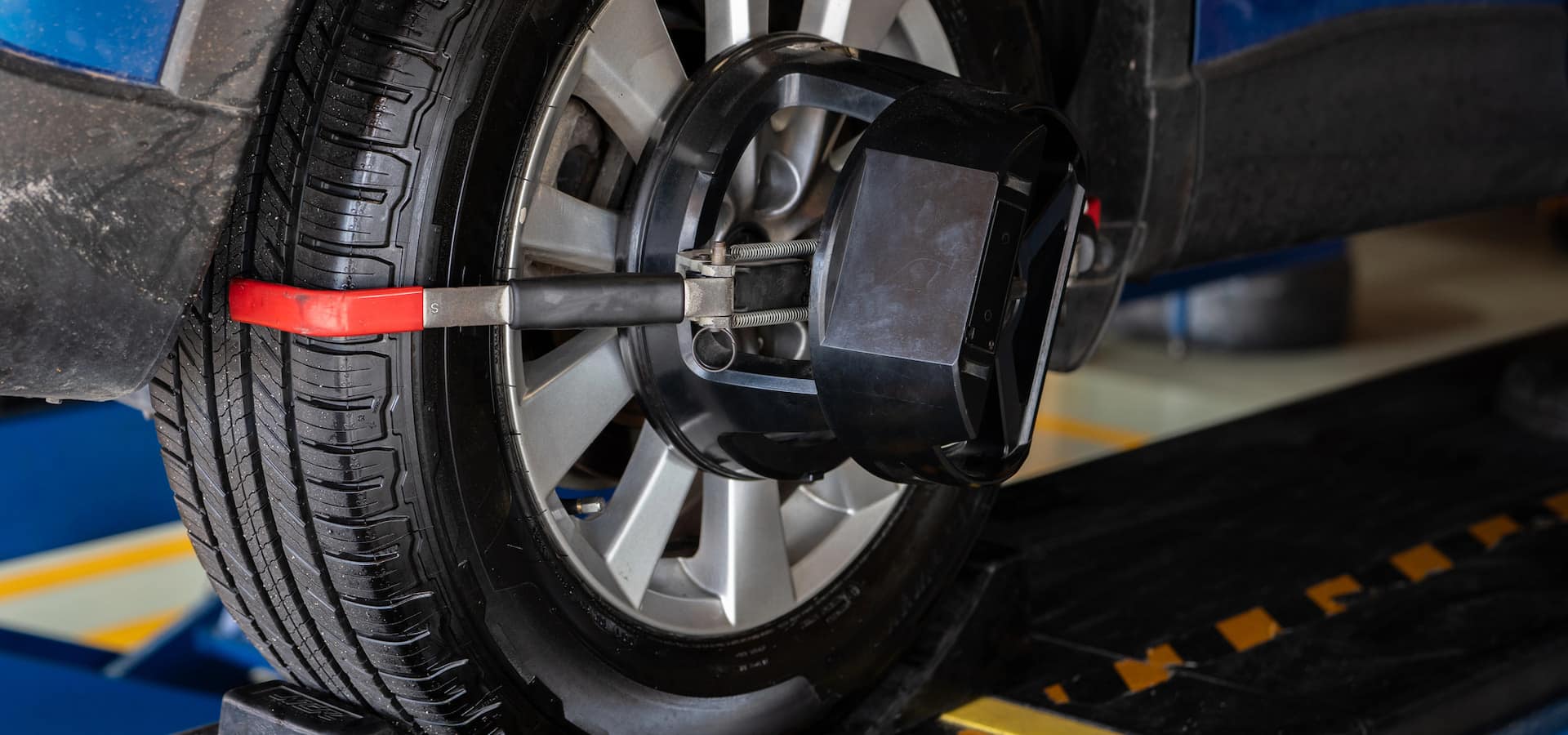
We align on equipment that reads live camber, caster, toe, and thrust angle, and we torque steering and suspension fasteners to Ram specifications so nothing shifts after you leave. Doing it this way protects your warranty position and keeps resale value intact by preventing uneven tire wear.
- A pre-alignment inspection of ball joints, tie rods, and the track bar
- Ride-height verification on air-suspension models before adjustment
- Alignment set to Ram factory camber, caster, and toe specs
- A clear before-and-after readout so you see what changed
Symptoms – How to Know You Need This Service
Alignment trouble on a Ram usually shows up in how the truck tracks and how the tires wear. You may notice one or more of these:
- Pulling to one side on a level road, forcing constant steering correction
- Off-center steering wheel when driving straight
- Uneven or feathered tire wear – inner or outer edges going bald faster
- Steering wander or "death wobble" on 2500/3500 solid-axle trucks, often felt after hitting a bump
- Vibration through the wheel that gets worse with speed
- Squealing or scrubbing from tires in turns
- Clunk or looseness from the front end over rough pavement
Schedule soon if you feel a mild pull or spot early tire wear. Stop driving and have the truck towed if you experience violent front-end shimmy or wobble that only settles when you slow down – on heavy-duty Rams that points to worn track bar or steering components that must be corrected before an alignment holds.
Common Wheel Alignment Issues on Ram Vehicles
Ram alignment problems tend to follow predictable patterns tied to how each platform is engineered and how these trucks get used.
- Positive camber wear on 2500/3500 solid front axles – The Heavy Duty trucks use a live front axle with track bar and ball joints. As ball joints and the track bar bushing wear, camber and toe drift, showing up as inner-edge tire feathering.
- Death wobble on 4x4 HD models – A well-known concern on solid-axle Rams, often traced to worn track bar ends, steering damper failure, or loose control arm bushings that let alignment settings shift under load.
- Toe drift on 1500 DT (2019+) independent front suspension – The lighter coil-over front end is sensitive to worn tie rod ends and lower control arm bushings, producing off-center steering and uneven tread wear.
- Rear thrust angle issues on classic 1500 (DS) leaf-spring trucks – Sagging or shifted rear leaf packs push the rear axle out of square, causing a crooked steering wheel even after a front alignment.
- Lift kit and leveling kit misalignment – Many Rams run leveling kits that alter caster and camber. Without adjustable control arms or cam bolts, factory specs become hard to hit.
- Caster loss after heavy towing or curb strikes – Loaded trucks and pothole impacts commonly knock caster out, leaving vague straight-line tracking.
Which Ram Models We See for Wheel Alignment
We align the full Ram lineup and adjust our approach to each platform. Find your truck below:
- Ram 1500 (DT, 2019–present) – independent front, coil or air rear suspension; air-ride models need ride-height calibration first
- Ram 1500 Classic / (DS, 2009–2018) – coil-spring five-link rear, straightforward four-wheel alignment
- Ram 1500 TRX (2021–2024) – wide-track high-performance variant with unique caster and camber targets
- Ram 2500 / 3500 Heavy Duty (2010–present, 6.4L HEMI and 6.7L Cummins) – solid front axle with track bar, drag link, and steering damper checks before alignment
- Ram 3500 dually and chassis-cab – aligned with attention to load and thrust angle
- Older Dodge Ram 1500/2500/3500 (2002–2008) – aging tie rods and ball joints often need attention alongside the alignment
Lifted or leveled Rams are common here, and we set correction angles appropriate to the added height. If your truck sits on a large lift kit that exceeds factory adjustment range, we will tell you honestly what can and cannot be dialed in before we start.
Ram trucks carry weight and work harder than most vehicles on the road, and their suspension geometry reflects that. From the solid front axle on Heavy Duty 2500 and 3500 models to the independent coil-spring front end on the 1500 DT platform, each configuration puts different demands on alignment. Getting it right means understanding how each Ram is actually built – and that is where specialist attention pays off in tire life, handling, and long-term value.
Causes & Risks – What Happens if Ignored
Colorado roads, winter freeze-thaw potholes, and the heavy loads these trucks haul all accelerate alignment wear. Add lift kits, high mileage, and worn suspension bushings, and small deviations become steering and tire problems fast.
Ignoring a mild pull or a slightly off-center wheel for a few thousand miles usually snowballs. A worn track bar bushing left alone on an HD Ram can progress into full death wobble, and inner-edge tire wear from bad toe can ruin an expensive set of LT tires long before their tread life is up.
- Uneven toe wear scrubs tread away and forces early tire replacement.
- Worn ball joints tied to camber drift can eventually seize or separate.
- Neglected track bar and steering damper wear feeds into unstable, wandering steering.
- A crooked thrust angle keeps eating tires even after new rubber goes on.
- Chronic misalignment stresses wheel bearings and CV components on 1500 IFS trucks.
What starts as a quick alignment can turn into ball joints, tie rods, or a new tire set – and correcting problems early helps preserve both your warranty coverage and resale value.
Safety Impact – Why Wheel Alignment Matters
Alignment is a foundation for how your Ram steers, stops, and stays planted. When it drifts, the effects ripple into systems drivers depend on every day.
- Steering response – Off-center or wandering steering makes lane corrections slower and less predictable.
- Braking stability – Uneven tire contact and pull affect straight-line stopping.
- Electronic Stability Control and traction control – These rely on consistent tire grip; badly worn or scrubbed tires undercut what the system can do.
- Tire failure risk – Feathered or cupped tread from misalignment raises the chance of a blowout under heavy load.
Stop driving and get service now if you notice:
- Violent front-end shaking after hitting a bump (death wobble on HD trucks).
- Steering that suddenly pulls hard or feels disconnected.
- Visible cord or metal showing on inner tire edges.
Schedule soon if you see: a slightly crooked steering wheel, mild pull, or the start of uneven tread wear. Addressing a known suspension issue before an incident also matters from a liability standpoint.
How Ram Wheel Alignment Actually Works
Alignment sets three key angles – camber, caster, and toe – so all four tires point where they should and share the load evenly. On a Ram, how those angles get adjusted depends heavily on which platform you are driving.
Heavy Duty 2500/3500 solid-axle trucks adjust caster and camber through the track bar, control arm cams, and adjustable ball joint sleeves, while the 1500 DT independent front end uses cam bolts and tie rod adjustment. Getting factory specs right means measuring on a proper rack, checking suspension components first, and torquing everything to Ram sequence.
- Platform-specific specs – HD solid axle and 1500 IFS carry very different target angles and adjustment points.
- Lift and leveling corrections – Modified Rams often need adjustable control arms or cam bolts to bring caster and camber back into range.
- Ride-height verification – Alignment specs assume correct ride height, so sagging springs must be checked first.
- Steering angle sensor relearn – Newer Rams with electronic
Ram trucks carry heavy front ends, tow hard, and ride on suspension geometry that shifts as loads change – which makes alignment a different job than it is on a compact sedan. Whether you drive a light-duty 1500 (DT or DS body) or a heavy-duty 2500/3500 with a solid front axle, the way a Ram wears tires and pulls tells us exactly where the geometry has drifted. Getting it right protects your factory warranty, your tires, and the resale value of a truck that's built to work.
How We Diagnose Wheel Alignment Issues on Ram
Alignment trouble on a Ram usually shows up as a pull, off-center steering wheel, or feathered tire edges. We confirm the root cause before touching an adjustment.
- Road test first – we drive the truck to feel pulls, wander, and steering-wheel offset, noting behavior under braking and light throttle.
- Symptom scan – on newer 1500 DT models with electronic power steering and forward-facing cameras, we pull codes with a factory-capable scan tool to catch steering-angle sensor faults or ADAS calibration flags that mimic alignment problems.
- Lift and inspect – visual check of ball joints, tie rod ends, track bar (a known wear point on solid-front-axle 2500/3500 trucks), control arm bushings, and steering damper for play.
- Tire wear reading – feathering points to toe issues; inside-edge wear points to camber; cupping suggests worn dampers or bearings.
- Rack measurement – we put the Ram on the alignment rack and compare camber, caster, and toe against Ram's factory specs for your exact configuration and ride height.
Those readings translate into a clear plan – what needs adjustment, what's worn, and a straightforward quote before any work begins.
Wheel Alignment on Ram: Repair vs. Replacement
Not every alignment problem means new parts. We sort it into three buckets and show you the wear so the choice is yours.
- Straight adjustment (repair): When suspension components are tight and only the geometry has drifted, we simply reset toe, and adjust caster/camber via cam bolts or eccentrics. Common after new tires, spring settling, or a leveling kit on a 1500.
- Partial replacement: When one worn part throws off the rest – a loose outer tie rod end, a sloppy track bar on a 2500/3500, or a failing ball joint – we replace that piece, then align. Solid-front-axle Rams frequently need a track bar before alignment will hold.
- Full component replacement: When wear cascades – multiple ball joints, control arm bushings, and steering linkage all loose – or when safety is at stake, replacing the assembly is the honest call rather than aligning worn parts that won't stay in spec.
We walk you through the measurements and let you weigh the options. Preserving your Ram's handling and tire life rarely requires the most expensive path.
How to Make Your Ram Wheel Alignment Last Longer
An alignment holds far longer when the truck is loaded, driven, and maintained with a little care.
Driving habits that protect your geometry
- Avoid slamming potholes and curbs – impacts knock toe and camber out fast on heavy Rams.
- Distribute payload and trailer tongue weight evenly instead of overloading one side.
- Ease into braking and cornering, especially on cold mornings in Denver's freeze-thaw climate.
Maintenance you can handle
- Rotate tires on schedule and eyeball tread edges for feathering or inside-edge wear.
- Check tire pressure to Ram's door-jamb spec – uneven pressure fakes an alignment pull.
- Listen for new clunks over bumps, which often signal a loose track bar or worn end link.
Brand-specific care worth the effort
- Use OEM-grade steering and suspension parts where fitment and durability matter.
- Keep steering and ADAS software current so camera calibration stays accurate on 1500 DT models.
- Follow Ram's service intervals and have suspension inspected during routine visits.
Tire rotations and pressure checks are safe DIY. Leave ball joints, track bars, and any steering-linkage work to us – these are safety-critical, and a fresh alignment on the rack confirms the fix.
Ram trucks put alignment hardware through more stress than the average vehicle, and that changes how the job should be approached. The heavy-duty solid front axle on 2500 and 3500 models (DJ/D2 platform), the coil-link geometry that replaced leaf springs on the 2013-and-later 1500 (DS/DT), and the constant load cycling from towing and payload all pull toe, camber, and caster out of spec in ways a passenger-car setup never sees. Getting it right takes equipment and knowledge built for that platform.
What to Expect When You Bring Your Ram In
We keep the process straightforward so you always know where your truck stands.
- Drop-off or appointment – Schedule ahead or leave the truck with us. Grab personal items from the cab; we'll note anything left behind.
- Initial inspection – Before touching alignment specs, we check tie rods, drag link, ball joints, track bar bushings, and wheel bearings, since worn parts on the solid front axle throw off any reading.
- Written estimate – You get a clear breakdown of what the truck needs and what it doesn't. Nothing gets done without your approval.
- Communication during the work – We reach out if the inspection turns up a worn track bar or sagging coil that would undo a fresh alignment.
- Pickup walkthrough – We show you the before-and-after alignment sheet and explain what changed.
Loaner and shuttle options are available, and after-hours pickup can be arranged when you need it. Every alignment ends with a road test and a scan-tool re-check on trucks with electronic steering assist. If the wheel feels off-center or the truck wanders after you leave, bring it back and we'll recheck it – no runaround.
Why Choose Elevation Auto Repair for Ram Wheel Alignment
Ram alignment isn't one-size-fits-all. The camber and caster adjustment method on a solid-axle 2500/3500 differs completely from the independent front setup on the 1500, and we set specs to the correct factory ranges for each platform and model year.
- Familiarity with Ram steering TSBs and the "death wobble" complaints tied to worn track bar bushings and steering dampers on HD models
- Awareness of software and calibration updates that affect electronic power steering and any related driver-assist sensors
- Adjustable cam bolts and eccentrics installed correctly where the factory setup limits camber correction
We own the work start to finish – diagnosis of the parts that cause the misalignment, the repair itself, and the post-alignment verification that confirms it held. Correct alignment protects your tire investment and keeps steering components within warranty tolerances, which matters for resale on a truck this expensive. As your Denver dealership alternative, we handle it under one roof with clear communication throughout.
Our Ram Services
- Air Conditioning AC Repair
- Battery Repair Replacement
- Brake Repair & Brake Fluid Change
- Check Engine Light Diagnostics
- Clutch Repair & Replacement
- Coolant Leak Repair
- Cooling System Repair
- Drive Shaft Repair
- Engine Repair
- Exhaust & Catalytic Converter Repair
- Head Gasket Repair & Replacement
- Oil Change
- Oil Leak Repair
- Scheduled Service Maintenance
- Steering Repair
- Suspension Repair
- Cambelt Timing Belt Replacement
- Transmission Repair
- Tune Up