Ram Air Conditioning AC Repair at Elevation Auto Repair
It's July in Denver, you're loaded up for a job site run in your 1500, and the vents are blowing warm air no matter how far you crank the temperature down. A Ram cabin heats up fast, and the fix is rarely as simple as a can of refrigerant.
Air conditioning work on a Ram involves more than topping off R-134a or R-1234yf. Later DS/DT platform trucks route climate control through the body control module and CAN network, so a failed blend-door actuator, a stuck expansion valve, or a compressor clutch that won't engage can all mimic the same "no cold air" complaint. We pull live data and actuator commands with proper scan tooling instead of guessing, then pressure-test the system and check for the dye trails that point to leaking condensers, O-rings, or the notorious compressor front seal seen on higher-mileage HEMI trucks.
Getting the charge right matters too. Overfilling a Ram evaporator system by even a few ounces kills cooling performance, which is why we recover, evacuate, and recharge by weight to factory spec.
- Honest diagnostics that identify the actual failed component before any parts go on
- Electronic leak detection and machine recharge to Ram's exact refrigerant capacity
- Repairs focused on long-term reliability, not a temporary top-off
- Clear communication on what's failing and what can wait
Symptoms – How to Know You Need This Service
Ram climate problems tend to announce themselves gradually, then all at once. Watch for these signs:
- Air blows warm or only cools at highway speed – often a low charge or failing compressor clutch
- A clicking or rapid cycling sound from under the hood when the A/C is switched on
- Temperature that won't change from one side to the other, pointing to a stuck blend-door actuator (a common tapping noise behind the dash)
- Weak airflow even on high fan speed, hinting at a failing blower motor or resistor
- A sweet or musty smell from the vents, often mold on the evaporator or a coolant heater-core weep
- Visible oily residue near the condenser or compressor, a telltale refrigerant leak
- Fogging on the inside of the windshield that won't clear
Warm air alone means schedule soon. If you smell sweet coolant with fog on the glass, or see the temperature gauge climbing alongside A/C trouble, stop driving and have it checked – that can signal a heater core or cooling-system issue that affects more than comfort.
Common Air Conditioning AC Repair Issues on Ram Vehicles
You climb into your Ram on a hot Denver afternoon, crank the fan, and get nothing but warm air blowing across the cabin. That scenario plays out often, and the causes tend to follow patterns specific to Ram's platforms. Here's what we see roll through the shop most:
- Compressor clutch and control valve failure (2009-2018 DS/DJ 1500-3500): The variable-displacement compressors used on many later Rams fail internally, spraying metal debris through the system and contaminating the condenser and lines. A locked clutch or noisy compressor usually points here.
- Condenser damage on 4th-gen and 5th-gen (DT) 1500 trucks: The front-mounted condenser sits directly in the airstream and takes rock strikes, road debris, and corrosion. Small punctures bleed refrigerant slowly, so cooling fades over weeks.
- Evaporator core leaks: Buried in the HVAC housing, evaporator cores develop pinhole leaks over time. On Ram, this often shows as a slow loss of cold air with a faint sweet smell from the vents.
- Blend door actuator failures (common on 2013+ Ram 1500): A clicking sound behind the dash and one side blowing warm while the other blows cold typically means a failed actuator, not a refrigerant problem.
- Heavy-duty (2500/3500 Cummins) A/C load strain: Diesel Rams run larger condensers and dual systems on some configurations, where fan clutch and controller issues starve airflow at idle.
- O-ring and line seal leaks: Denver's dry air and temperature swings dry out seals at fitting points, causing gradual undercharge.
Which Ram Models We See for Air Conditioning AC Repair
We service the full range of Ram trucks and the model-year quirks that come with each generation. Find yours below:
- Ram 1500 (DS, 2009–2018) – 3.6L Pentastar and 5.7L HEMI trucks, frequently in for compressor clutch and condenser leaks
- Ram 1500 (DT, 2019–present) – newer platform with R-1234yf refrigerant and CAN-controlled climate; blend-door and expansion-valve concerns show up here
- Ram 1500 Classic (2019–2023) – carryover DS body sold alongside the DT, still on R-134a
- Ram 2500 / 3500 Heavy Duty – gas HEMI and 6.7L Cummins diesel; dual-zone and rear A/C systems on crew cabs add extra evaporators and lines to check
- Ram ProMaster and ProMaster City vans – cargo and passenger builds where blower and evaporator access differs from the trucks
- Earlier Dodge Ram (2002–2008, DR/DH) – we service these, though some parts availability varies by trim
Diesel Cummins trucks and rear-A/C crew cabs take longer to evacuate and recharge correctly because of the added system volume, and we account for that when we spec the job. If you're unsure which generation you have, tell us the year and cab configuration and we'll confirm the right procedure.
Causes & Risks – What Happens if Ignored
Most Ram A/C trouble traces back to a mix of Colorado's climate and simple age. Altitude and dry heat stress seals, road debris on I-70 pits condensers, and high-mileage compressors wear from the inside out. A slow leak feels minor at first, but the failure path rarely stops where it starts.
Ignoring a low charge for a season usually means running a compressor with inadequate lubrication, since refrigerant carries the oil. That's how a $150 seal repair becomes a full system job.
- Low refrigerant ignored for weeks: Compressor runs starved of oil, overheats, and seizes – now you're replacing the compressor, condenser, and flushing the whole system.
- Failed compressor debris: Metal shavings migrate downstream, contaminating the condenser, orifice tube, and expansion valve, turning one part into four.
- Neglected condenser leak: Moisture enters the system, damages the desiccant in the receiver-drier, and promotes internal corrosion.
- Blend door actuator left clicking: The plastic gears strip fully, sometimes jamming the door and requiring dash disassembly.
- Clogged cabin airflow: A restricted evaporator can freeze, then drip water into cabin electronics under the carpet.
Waiting rarely saves money on Ram A/C – it moves the repair from one component to an entire system.
Safety Impact – Why Air Conditioning AC Repair Matters
A/C isn't just comfort on a Ram. The system shares components with defrost and cabin ventilation, and a failure can compromise visibility and driver alertness on long hauls.
- Defrost failure: The A/C compressor dehumidifies air for defrost. A dead system means a fogged windshield you can't clear quickly in a Denver storm.
- Driver fatigue: A hot cabin on a towing run through the mountains dulls reaction time and focus.
- Electrical fault risk: A leaking evaporator dripping onto under-dash modules can trigger warning lights or affect body control functions.
- Belt and pulley strain: A seizing compressor can throw or bind the serpentine belt, killing power steering and charging on the spot.
Stop driving soon and schedule now if:
- You hear grinding or squealing when A/C engages – a compressor is failing.
- The serpentine belt smells burnt or is slipping.
- Defrost no longer clears the windshield.
Schedule at your convenience if: cooling is weak but steady, or one vent side runs warmer than the other. We'll pin down the fault before it grows.
How Ram Air Conditioning AC Repair Actually Works
Your Ram's A/C moves heat out of the cabin using a closed refrigerant loop. The compressor pressurizes refrigerant, the condenser sheds that heat up front, and the evaporator inside the dash absorbs cabin heat while the blend and mode doors route the cold air. On modern Rams, much of this is controlled electronically rather than by cable.
What makes Ram work different from generic A/C service comes down to the electronics and the specifics of each platform:
- Electronic climate control: Many 2013+ Ram 1500 and 2500/3500 trucks use actuator-driven blend doors that need proper initialization after replacement, done through factory-level scan tools.
- Variable-displacement compressors: These require exact refrigerant and PAG oil charge specs – overfilling or using the wrong oil viscosity shortens compressor life.
- System evacuation and recharge: Ram systems demand a proper vacuum pull
You climb into your Ram on a hot Denver afternoon, crank the A/C, and get nothing but warm air blowing through the vents. Maybe it worked yesterday. Maybe it's been slowly fading for weeks. Either way, a truck cab that won't cool down turns errands and job sites miserable fast – and the fix usually starts with a proper diagnosis, not a guess.
How We Diagnose Air Conditioning AC Repair Issues on Ram
Ram A/C problems rarely announce themselves clearly. A weak compressor, a leaking condenser, or a failed blend door actuator can all feel like "the A/C is broken." We work through a structured process to find the real cause.
- Scan the HVAC and body control modules with a factory-capable tool to pull stored codes – on many 2013+ 1500 and 2500 models, this reveals blend door actuator faults, evaporator sensor readings, and clutch relay commands.
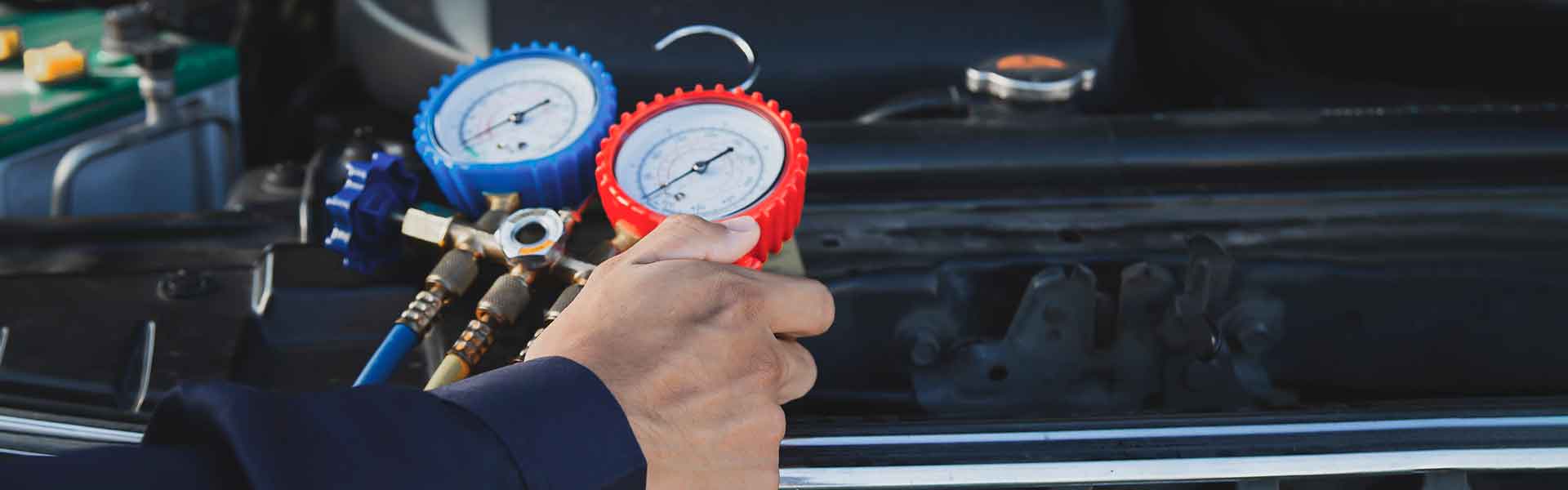
- Check refrigerant charge and system pressures on both high and low sides to distinguish a low charge from a compressor or expansion valve issue.
- Inspect for leaks using UV dye and an electronic sniffer, focusing on condenser fittings, the compressor shaft seal, and the notoriously exposed condenser on later DS/DT trucks.
- Perform a visual check of the belt, clutch engagement, cabin filter, and cooling fan operation.
- Run a road test and measure vent temperatures at idle and highway speed to confirm real-world performance.
Common culprits on Ram trucks include failed blend door actuators that click behind the dash, compressor clutch failures, and rock-damaged condensers. Once we know what's actually wrong, you get a clear repair plan and a straightforward quote before any work begins.
Air Conditioning AC Repair on Ram: Repair vs. Replacement
Not every A/C problem means a full system overhaul. The right call depends on what's worn and how the rest of the system looks.
- Genuine repair: A single blend door actuator, a leaking O-ring or Schrader valve, a low charge with no active leak, or a stuck clutch relay. On many 1500 and 2500 trucks, replacing one actuator restores full temperature control.
- Partial replacement: A leaking condenser or a failed compressor where the rest of the system is healthy. We replace the damaged component, flush the lines, and add the correct volume of PAG oil and R-134a or R-1234yf depending on your model year.
- Full replacement: When a compressor grenades and sends metal debris through the system, cascading contamination usually means replacing the compressor, condenser, orifice/expansion valve, accumulator, and flushing everything to prevent repeat failure.
We walk you through what we found and why, then let you choose. Our goal is a lasting fix – not the biggest invoice.
How to Make Your Ram Air Conditioning AC Repair Last Longer
Good habits after a repair keep your Ram cooling reliably through Colorado summers.
- Run the A/C briefly even in cooler months to keep the compressor seals lubricated and prevent them from drying out.
- Roll windows down for a minute on scorching days before blasting the A/C to reduce the initial load on the compressor.
- Replace the cabin air filter on schedule – a clogged filter strangles airflow and makes the system work harder.
- Listen for new clicking, whining, or hissing and note any drop in cooling early, before a small issue spreads.
Brand-specific care matters too. Use the correct refrigerant type for your model year – newer Ram trucks shifted to R-1234yf – and stick to OEM-spec PAG oil and components rather than universal parts that can undercharge or seal poorly. Keeping HVAC-related software current also helps actuators calibrate correctly after a repair.
Checking the filter and listening for changes are safe to do yourself. Anything involving refrigerant handling, pressurized lines, or compressor work should be left to the shop – those systems are sealed under high pressure and require proper recovery equipment. Bring it in and we'll keep your Ram running cold for the long haul.
What to Expect When You Bring Your Ram In
You climb into your Ram on a hot Denver afternoon, crank the A/C, and get nothing but warm air rolling out of the vents. Here's how we move from that frustration to cold air again.
- Drop-off or scheduled appointment – Tell us what you're noticing: weak airflow, warm output, a clicking compressor clutch, or a musty smell. Grab your garage opener and personal items from the console; we'll keep the cabin as you left it.
- Initial inspection – We check refrigerant charge, system pressures on both sides, compressor engagement, and cabin blower operation. On many 1500, 2500, and 3500 trucks we scan HVAC actuator and blend-door data to catch electrical faults that mimic a low charge.
- Written estimate – You get a clear breakdown of what's failing and what it takes to fix it before any work starts. No surprise add-ons.
- Repair with updates – We keep you posted as parts and testing progress. Shuttle and loaner options help you stay on schedule.
- Pickup walkthrough – We explain what we found, what we replaced, and how the system tested afterward. After-hours pickup is available when your day runs long.
Before you leave, we road-test the truck and re-check vent temperatures with the scan tool. If anything feels off later, bring it back and we'll make it right.
Why Choose Elevation Auto Repair for Ram Air Conditioning AC Repair
Ram A/C problems tend to cluster around a handful of known weak points, and we've seen them repeatedly on Denver trucks. We diagnose the actual failure instead of just topping off refrigerant and sending you out the door.
- Platform-specific knowledge – Blend-door actuator failures and clunky HVAC behavior on 2013+ 1500 (DS/DT) trucks, compressor clutch and condenser issues on 4th-gen models, and dual-zone control glitches that call for a software update rather than parts.
- Real leak diagnosis – UV dye and electronic sniffer testing to pinpoint leaks at the condenser, evaporator, and O-ring connections before we recharge.
- TSB awareness – We check for applicable Ram service bulletins and HVAC control module reflashes so a fix actually holds.
We own the job end to end – diagnosis, repair, evacuation and recharge to factory refrigerant spec, then post-repair verification. That focus on getting it right the first time is how we keep your Ram cold season after season, and it's the same standard we bring to every system under one roof.
Our Ram Services
- Battery Repair Replacement
- Brake Repair & Brake Fluid Change
- Check Engine Light Diagnostics
- Clutch Repair & Replacement
- Coolant Leak Repair
- Cooling System Repair
- Drive Shaft Repair
- Engine Repair
- Exhaust & Catalytic Converter Repair
- Head Gasket Repair & Replacement
- Oil Change
- Oil Leak Repair
- Scheduled Service Maintenance
- Steering Repair
- Suspension Repair
- Cambelt Timing Belt Replacement
- Transmission Repair
- Tune Up
- Wheel Alignment