
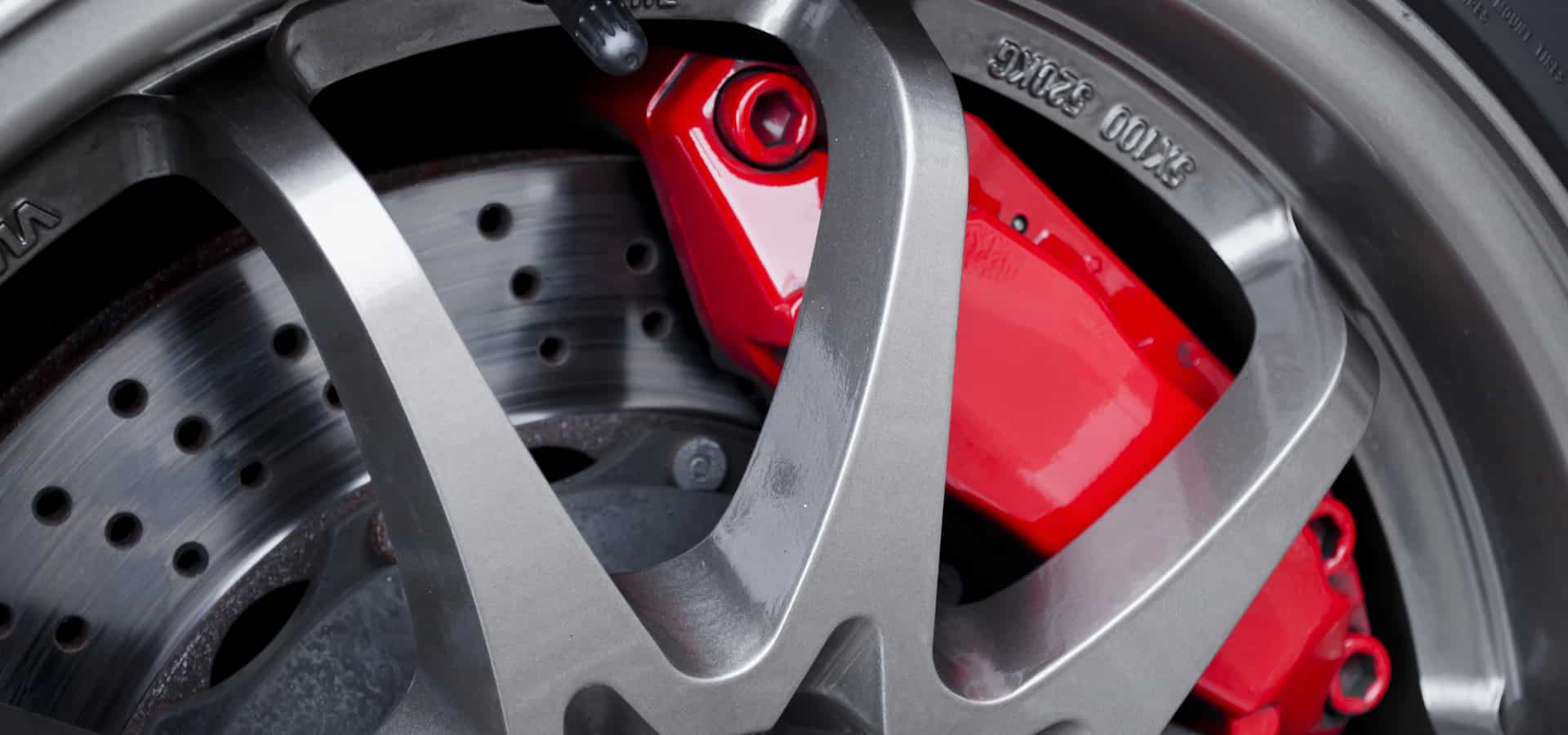
Ram Brake Repair & Brake Fluid Change at Elevation Auto Repair
Ram trucks earn their keep hauling, towing, and grinding through Colorado grades, and that workload punishes brake systems harder than a commuter car ever sees. A half-ton on the plains and a 3500 dually pulling a fifth-wheel down I-70 need very different pad compounds, rotor specs, and fluid maintenance – and treating them the same is how shops get it wrong.
Doing this right on a Ram means respecting the platform. The 2013-2018 DS/DJ trucks use a fluid-driven ABS/ESC hydraulic control unit that needs a proper scan-tool bleed to purge air from the module, not just a manual two-person bleed. Newer 2019+ DT 1500 trucks carry electronic parking brakes that must be retracted with a bidirectional scan tool before rear pad service, then recalibrated afterward. We follow Mopar torque specs on caliper bracket and guide-pin hardware and use DOT 3/DOT 4 fluid to spec, because moisture-saturated brake fluid on a heavy tow rig fades fast under heat.
- Scan-tool ABS module bleeding on trucks that require it
- Electronic parking brake retraction and recalibration on DT platforms
- Fluid moisture testing before we recommend a flush
- Honest inspection – we only replace pads, rotors, or fluid that actually need it
Symptoms – How to Know You Need This Service
Ram brakes rarely fail without warning. Here's what drivers report before they roll into the shop:
- A high-pitched squeal or metallic grinding when you press the pedal – grinding means metal-on-metal, so schedule right away.
- A soft, spongy, or sinking pedal that goes closer to the floor – often air or moisture-saturated fluid. Stop driving and get it inspected immediately.
- Pulsation or shudder through the pedal and steering wheel when braking, common with warped or heat-checked rotors on tow rigs.
- The truck pulling left or right under braking, pointing to a sticking caliper or collapsed guide pin.
- ABS, brake, or electronic parking brake warning lights on the dash.
- A burning smell after a long grade downhill, a sign of overheated fluid and fading pads.
- Longer stopping distances or a pedal that feels harder than usual on 2019+ DT trucks.
Any grinding noise or a pedal that drops means stop driving now. Squeaks, mild pulsation, or a warning light without pedal loss can wait for a scheduled visit – but don't put it off, because pad wear turns into rotor damage quickly on a heavy truck.
Common Brake Repair & Brake Fluid Change Issues on Ram Vehicles
Ram brake wear follows patterns tied to weight, drivetrain, and how the truck gets used around Denver's grades and winter salt.
- Warped or heat-checked front rotors on 2019+ DT 1500s – heavy curb weight plus mountain descents cook the front rotors, showing up as steering-wheel shimmy under braking.
- Rear caliper slide pin seizure on 2009-2018 DS 1500s – road salt and moisture bind the guide pins, causing uneven pad wear and dragging brakes.
- Overheated and glazed pads on 2500/3500 Cummins trucks used for towing – exhaust brake or not, sustained loads bake the friction material and reduce bite.
- Moisture-contaminated DOT 3/DOT 4 brake fluid – hygroscopic fluid absorbs water over the years, dropping the boiling point and producing a spongy pedal on long grades.
- ABS tone ring and wheel-speed sensor faults – corrosion on the front hub sensors triggers ABS and stability-control warnings on higher-mileage trucks.
- Sticky or noisy electronic parking brake on newer 1500s – the EPB actuator and cabling need proper service-mode retraction before any rear pad job.
Which Ram Models We See for Brake Repair & Brake Fluid Change
We service the full modern Ram lineup and identify your platform by generation before we quote any work:
- Ram 1500 (DS, 2009-2018) – the "classic" body, still sold alongside the DT through 2019. Common rear rotor scoring and moisture-heavy fluid on high-mile trucks.
- Ram 1500 (DT, 2019-present) – electronic parking brake requires scan-tool retraction; some early DT trucks came in for front pad wear when used for towing.
- Ram 2500/3500 (DJ/D2, 2013-2018 and 2019+) – heavy-duty trucks with larger rotors and exhaust-brake integration on the 6.7L Cummins; fluid endures more heat and needs closer flush intervals.
- Ram 1500 Classic (2019-2023) – shares the DS brake hardware; easy to confuse with the DT at the counter, so we verify by VIN.
- Ram ProMaster / ProMaster City – front-drive vans with their own caliper and rotor specs; we handle these but treat them as a separate platform from the pickups.
Diesel and gas Cummins/Hemi variants get the same careful inspection, but tow-package trucks and duallies see faster pad and fluid wear, so we adjust our recommendations to how you actually use the truck. If you're driving an older pre-2009 Ram or a fleet vehicle with aftermarket brake conversions, let us know up front so we can confirm we have the right parts before your appointment.
Ram trucks earn their keep hauling, towing, and covering serious mileage – and that workload puts real demand on the braking system. From the light-duty 1500 (DT and DS platforms) to the heavy-duty 2500/3500 diesels, the brake hardware, hydraulic layout, and electronic controls vary enough that a one-size-fits-all approach falls short. Elevation Auto Repair works these platforms with OEM-aligned procedures and factory-level scan tools, so the fix matches the truck rather than a generic template.
Causes & Risks – What Happens if Ignored
Most Ram brake problems trace back to heat, load, moisture, and Colorado's mix of mountain grades and winter chemicals. A truck that tows regularly or lives on I-70 sees far more thermal cycling than a commuter, and that accelerates rotor and fluid degradation.
Small symptoms rarely stay small on a vehicle this heavy. Ignoring a light pulsation for a few thousand miles often turns a pad-and-rotor job into caliper and hydraulic work.
- Worn pads left too long score the rotors, adding rotor replacement to a job that started as a pad swap.
- Seized slide pins drag pads constantly, overheating the caliper and cooking the fluid at that corner.
- Old, water-laden fluid can boil during a long descent, producing brake fade exactly when you need stopping power most.
- Ignored wheel-speed sensor faults disable ABS and stability assistance, which matters most on wet or snow-covered roads.
- Contaminated fluid also corrodes ABS module valves and caliper bores, turning a routine flush into component replacement.
The pattern is consistent: a modest, planned repair beats an emergency one every time.
Safety Impact – Why Brake Repair & Brake Fluid Change Matters
On a Ram, the brake system ties directly into ABS, electronic stability control, traction control, trailer sway control, and the hill-descent features on equipped trucks. Degraded fluid or worn hardware compromises all of it – a truck that can't modulate braking can't correct a skid or damp trailer sway.
- Stop driving now: pedal goes to the floor, sudden loss of assist, grinding metal-on-metal, brake warning plus ABS light together, or visible fluid leaking at a wheel.
- Schedule soon: mild pulsation, light squeal, slightly longer stops, or a brake-fluid-service reminder.
Fade from boiled fluid during a mountain descent is one of the most dangerous failure modes on heavy trucks, because it appears exactly when demand peaks. There's also a liability angle – if a known, deferred brake condition contributes to a collision, that neglect can surface in an insurance or fault review. Keeping documented, OEM-aligned service closes that gap.
How Ram Brake Repair & Brake Fluid Change Actually Works
A Ram brake system uses hydraulic pressure from the master cylinder to squeeze pads against rotors, with the ABS module metering that pressure wheel-by-wheel during hard stops. Brake fluid is the messenger – if it absorbs water, it compresses and boils instead of transmitting force cleanly. That's why a periodic fluid change protects both the pedal feel and the electronics.
Ram's newer implementations add steps a generic brake job skips.
- Electronic parking brake: most current 1500s require the EPB be placed in service mode via a scan tool before rear pads can be retracted safely.
- ABS module bleeding: proper fluid changes often need a factory-level tool to cycle the module valves and purge trapped air and old fluid.
- Correct fluid spec: using the DOT rating Ram specifies keeps the boiling point and seal compatibility right.
- Torque and sequence: caliper bracket and guide-pin torque specs matter on heavy trucks to prevent warping and pull.
- System relearn: after service, wheel-speed and stability functions get verified so no warning lights linger.
We handle those calibration and coding steps in-house, so your Ram le
Ram trucks put serious weight and towing loads through their braking systems, which changes how pads, rotors, and hydraulics wear compared to a passenger car. Whether you drive a light-duty 1500 (DS or newer DT platform) or a heavy-duty 2500/3500 with the larger front rotors and dual-piston calipers, the brake work demands attention to load-specific torque specs and the right fluid. That truck-focused approach is what sets specialist service apart from a quick-lube pad slap.
How We Diagnose Brake Repair & Brake Fluid Change Issues on Ram
Ram brake complaints usually show up as a soft pedal, pulsation under braking, or an ABS/BRAKE warning. We work through a repeatable process to separate a simple fluid issue from worn hardware.
- Scan the modules: We connect a scan tool capable of reading the ABS/ESC controller for wheel-speed sensor faults, stored DTCs, and any brake system codes – common on DT-platform 1500s with sensitive electronic stability inputs.
- Test moisture in the fluid: A brake fluid tester measures water content, since Ram's DOT 3/DOT 4 systems absorb moisture over time and drop the boiling point.
- Visual inspection: We measure pad thickness, check rotor scoring, inspect flex lines and caliper slide pins for the sticking that plagues heavy-duty models, and look for leaks at the master cylinder.
- Measure runout and rotor thickness: A dial indicator and micrometer confirm whether pulsation comes from warped rotors or a hub issue.
- Road test: We verify pedal feel, stopping distance, and whether pull or noise changes under load.
From there we build a clear repair plan and quote so you know exactly what's needed and what can wait.
Brake Repair & Brake Fluid Change on Ram: Repair vs. Replacement
Not every brake job means new everything. The right call depends on what the measurements show.
- Genuine repair: A brake fluid flush and bleed, cleaning and lubricating caliper slide pins, or replacing a single seized bleeder valve when pads and rotors still measure within spec.
- Partial replacement: New pads and a rotor resurface or replacement when rotors remain above minimum thickness, keeping serviceable calipers and hardware in place – typical on a 1500 caught before metal-on-metal.
- Full replacement: Pads, rotors, and calipers together when a stuck caliper has overheated a rotor, when heavy-duty 2500/3500 towing has cascaded wear across an axle, or when repair cost approaches the price of fresh components. Safety-critical parts like a leaking master cylinder always get replaced, not patched.
We walk you through what each option costs and lasts, then let you decide – no pressure toward the most expensive path when a smaller fix does the job.
How to Make Your Ram Brake Repair & Brake Fluid Change Last Longer
A little attention goes a long way toward stretching brake life on a truck that hauls and tows.
- Drive smart: Coast to slow when possible, use engine braking or tow/haul mode on grades, and avoid riding the pedal downhill with a loaded bed or trailer.
- Manage heat: Denver's mountain descents cook brake fluid – give the system time to cool on long downhill runs instead of dragging the brakes.
- Listen and look: Check pad thickness through the wheel spokes, watch for a low or spongy pedal, and act on any squeal, grind, or dashboard brake light quickly.
- Use the right fluid and parts: Stick with Ram-spec DOT 3/DOT 4 fluid and quality pads matched to your truck's duty rating, and keep ABS/ESC software current to avoid false faults.
- Follow the interval: Have the fluid flushed on Ram's recommended schedule to keep moisture and corrosion out of the ABS unit.
Topping off fluid and visual checks are safe DIY tasks. Bleeding brakes, replacing calipers, or servicing the ABS system should be left to the shop – these are safety-critical and easy to get wrong.
What to Expect When You Bring Your Ram In
Ram brake systems have their own personality, from the heavy-duty rotors on 2500/3500 Cummins trucks to the electronic parking brake and adaptive braking on later 1500 DT models. That platform range shapes how we handle every visit.
- Drop-off or scheduled appointment – tell us what you're feeling: pulsation through the pedal, a low or spongy pedal, grinding, or an ABS light. Grab personal items from the cab; we'll note anything left inside.
- Initial inspection – we measure pad thickness and rotor runout, check caliper slides and hydraulic lines, and pull codes with a scan tool to catch wheel-speed sensor or brake booster faults common on the DS and DT platforms.
- Written estimate – a clear line-item breakdown before any work begins, with worn parts and healthy parts identified so you only pay for what your Ram actually needs.
- During the work – we call or text with updates, and shuttle service or a loaner can be arranged so you're not stranded.
- Pickup walkthrough – we show you the old components and explain the fresh brake fluid moisture readings.
Every job ends with a road test and a scan-tool re-check to confirm proper ABS and pedal feel. After-hours pickup is available, and if anything feels off once you're back on the road, bring it in and we'll make it right.
Why Choose Elevation Auto Repair for Ram Brake Repair & Brake Fluid Change
We treat Ram brake work as a system, not just a pad swap. That means we track Ram TSBs and software updates that affect braking – including electronic parking brake recalibration on 2019+ DT 1500s and known ABS module and wheel-speed sensor concerns on earlier DS trucks.
- Platform-aware service – heavy-duty 2500/3500 rotors and calipers get the correct torque specs and hardware, not one-size-fits-all parts.
- Proper fluid procedure – we flush to factory DOT spec, measure moisture content, and bleed in the correct sequence, including scan-tool-assisted bleeding on ABS-equipped models.
- End-to-end ownership – the same shop diagnoses, repairs, and verifies the work, so nothing falls through the cracks.
As a Denver dealership alternative, we give you honest diagnostics with no unnecessary repairs and clear communication at every step. Whether your Ram tows daily or handles the commute, we focus on brakes that stay quiet, firm, and reliable for the long haul.
Our Ram Services
- Air Conditioning AC Repair
- Battery Repair Replacement
- Check Engine Light Diagnostics
- Clutch Repair & Replacement
- Coolant Leak Repair
- Cooling System Repair
- Drive Shaft Repair
- Engine Repair
- Exhaust & Catalytic Converter Repair
- Head Gasket Repair & Replacement
- Oil Change
- Oil Leak Repair
- Scheduled Service Maintenance
- Steering Repair
- Suspension Repair
- Cambelt Timing Belt Replacement
- Transmission Repair
- Tune Up
- Wheel Alignment