Ram Oil Leak Repair at Elevation Auto Repair
The 5.7L HEMI that powers so many Ram 1500s has a well-documented habit of weeping from the valve cover gaskets and the exhaust manifold area, while the 6.7L Cummins in the 2500/3500 trucks fights leaks at the front cover, rear main, and turbo oil feed lines. Tracking a Ram oil leak to its true source takes more than glancing under the truck – it takes knowing where these platforms actually fail.
Getting this right on a Ram is different from a generic oil change bay. The HEMI's valve cover bolts have specific torque sequences, and overtightening warps the aluminum covers into fresh leaks. The Cummins front cover and rear main seals demand clean sealing surfaces and correct RTV cure procedures, not a bead of silicone and a prayer. We use dye tracing and factory-style diagnostics to isolate the real leak before any part comes off.
Here is what you can expect when you bring your Ram to us:
- A UV dye test and thorough inspection to pinpoint the exact source, not a guess
- OEM or OE-equivalent gaskets and seals torqued to Mopar specifications
- Clear explanation of what is leaking, what is not, and what actually needs attention
- Proper cleanup and a follow-up check so you know the repair held
Symptoms – How to Know You Need This Service
Ram oil leaks rarely announce themselves all at once. You may notice small signs long before a puddle shows up in the driveway.
- Oil spots or drips under the front or center of the truck after parking overnight
- A burning-oil smell, especially after highway driving, as oil hits the hot exhaust manifold – common on the HEMI
- Blue-tinged smoke from the engine bay or tailpipe area at idle
- Oil pooling in the spark plug wells on 5.7L HEMI engines, often causing misfires
- A dropping oil level between changes with no obvious external cause
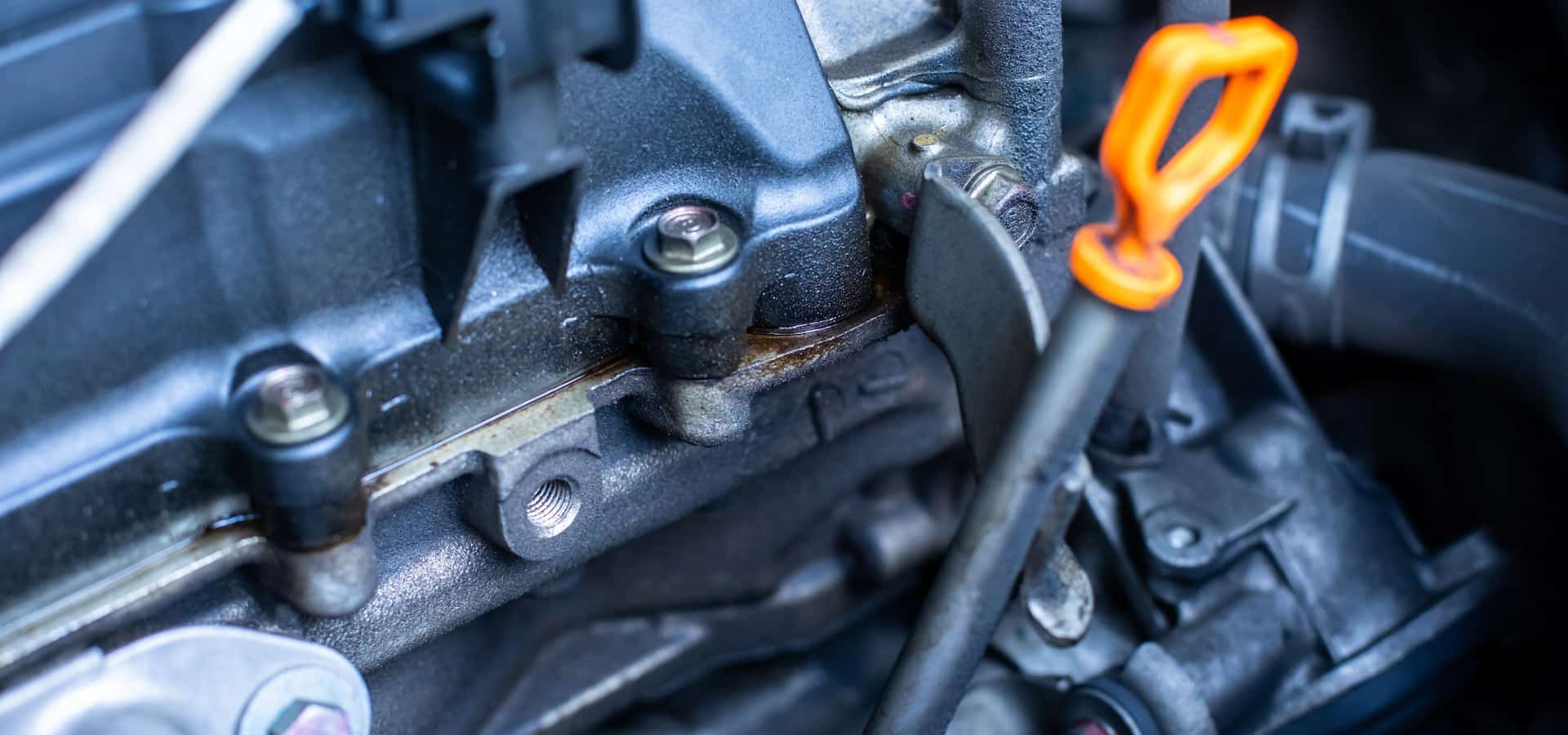
- Wet, oily residue on the valve covers, front cover, or bellhousing area
- An illuminated oil pressure warning light or a gauge reading lower than normal
Stop driving immediately if the oil pressure light comes on or the level drops fast – running a HEMI or Cummins low on oil risks bearing and turbo damage. A faint smell or slow seep is safe to schedule soon, before it turns into a bigger repair.
Common Oil Leak Repair Issues on Ram Vehicles
Ram trucks stack the miles quickly, and the HEMI, Cummins, and EcoDiesel platforms each develop distinct leak paths as gaskets age and heat cycles take their toll. Here are the patterns we see most often across the Denver fleet:
- 5.7L HEMI valve cover gasket seepage – 2009-present Ram 1500 HEMIs develop weeping cover gaskets that drip onto the exhaust manifolds, producing that burning-oil smell after highway drives.
- 6.7L Cummins front crank seal and timing cover leaks – higher-mileage 2007.5-2018 Cummins trucks lose the front main seal, throwing oil onto the serpentine belt and vibration damper.
- 3.0L EcoDiesel oil cooler and turbo feed lines – 2014-2019 EcoDiesel V6 units are prone to oil cooler housing leaks and weeping turbo oil supply/return lines that mimic other failures.
- HEMI oil pan gasket and rear main seal – flex from towing loads works the pan gasket loose on 1500 and 2500 models, while the rear main shows up as spotting near the bellhousing.
- Oil filter housing / adapter leaks – the filter adapter O-rings on 5.7L and 6.4L engines harden and leak down the block, often mistaken for a pan issue.
- Cummins turbo drain tube gasket – a small, cheap gasket that leaves a telltale drip under the turbo when neglected.
Pinpointing the true source matters more than chasing the puddle. We trace leaks to the actual gasket or seal rather than throwing parts at the problem.
Which Ram Models We See for Oil Leak Repair
Oil leaks span nearly every Ram platform and engine we service. Find yours below to see where these trucks typically leak.
- Ram 1500 (DS/DT, 2009–present) – 5.7L HEMI valve cover gaskets, oil pan gaskets, and spark plug tube seals are frequent culprits
- Ram 1500 Classic – same DS-platform HEMI leak points carried into recent model years
- Ram 2500/3500 (2013–present) with the 6.7L Cummins – front cover, rear main seal, and turbo oil supply/return line leaks
- Older Dodge Ram 1500/2500/3500 (2002–2008) – 4.7L and early HEMI valve cover and oil pan seepage
- 3.6L Pentastar-equipped 1500s – oil filter housing and cooler leaks, a known weak point on this V6
- 3.0L EcoDiesel (2014–2019) – oil cooler and turbo line leaks that need careful diagnosis
The work varies noticeably between engines. The Cummins rear main and front cover jobs are labor-intensive and demand specific sealing procedures, while the Pentastar oil filter housing is a comparatively straightforward but commonly overlooked source. Diesel variants also involve turbo and cooler lines that gas trucks simply do not have.
We handle the full Ram lineup from these generations. If you have an uncommon fleet configuration or a heavily modified truck, let us know up front so we can confirm parts and approach before you drop it off.
Causes & Risks – What Happens if Ignored
Most Ram oil leaks trace back to heat cycling, hard towing duty, and Colorado's swing between summer heat and winter cold that shrinks and hardens rubber seals. Age, high mileage, and extended oil change intervals accelerate the process on both gas and diesel platforms.
A small seep rarely stays small. A valve cover drip on a HEMI eventually cooks onto the exhaust, and a Cummins front seal leak can soak the accessory belt until it slips or shreds.
- Belt contamination: A front crank seal leak on a Cummins that saturates the serpentine belt often leads to a snapped belt and immediate loss of power steering and charging.
- Low oil damage: Ignoring a steady oil cooler leak on the EcoDiesel for a few thousand miles can drop levels enough to starve bearings and the turbo.
- Fire risk: Oil pooling on hot exhaust manifolds is a real smoke-and-fire hazard, especially under towing loads.
- Cascading gasket failure: One weeping gasket raises crankcase pressure paths and stresses neighboring seals, turning a single repair into several.
- Cost creep: A minor oil filter adapter O-ring left alone can coat sensors and connectors, adding electrical diagnosis to the bill.
Catching a leak early keeps it a straightforward gasket job. We'll show you exactly where it's coming from before anything gets replaced.
Safety Impact – Why Oil Leak Repair Matters
Oil leaks on a Ram do more than stain the driveway. When oil reaches the wrong components, safety systems suffer.
- Steering and braking assist: A belt lost to an oil-soaked front seal kills power steering and can affect the hydraulic boost systems, making the truck harder to control.
- Engine failure while towing: Sudden oil starvation on a mountain grade can seize the engine at the worst possible moment.
- Fire hazard: Oil on hot exhaust or turbo housings can ignite under heavy load.
- Sensor interference: Oil creeping into connectors can trigger warning lights and disable traction or stability functions.
Stop driving now if you notice:
- Smoke from under the hood or a strong burning-oil odor
- A squealing or missing serpentine belt after an oil leak
- Rapidly dropping oil pressure or the oil light coming on
Schedule soon if you see: minor spotting on the ground, a faint oil smell after highway runs, or slight residue around a valve cover or filter housing. Addressing a known leak before it causes an incident also keeps you clear of the liability that comes with a neglected, avoidable failure.
How Ram Oil Leak Repair Actually Works
Sealing a Ram engine correctly comes down to identifying the true source, prepping surfaces properly, and following the platform's specific torque and sequence specs. HEMI and Cummins engines use different fastener patterns, and RTV-sealed joints like the oil pan and timing cover demand exact bead placement and cure timing to hold up under load and vibration.
- Clean the engine and use dye or UV tracing to confirm the exact leak origin.
- Remove the affected component, then clean and inspect the sealing surfaces for warpage or scoring.
- Install the correct OEM-grade gasket or seal and apply RTV only where the factory procedure calls for it.
- Torque fasteners to Ram spec in the proper sequence, then verify with a road test and re-inspection.
What makes Ram work distinct:
- Cumm
How We Diagnose Oil Leak Repair Issues on Ram
Ram trucks running the 5.7L HEMI and the 6.7L Cummins share a few predictable leak points, and pinning down the actual source matters more than chasing the drip you can see. Oil migrates along the block, so the visible puddle rarely marks the origin.
- Connect a scan tool that speaks Ram's CAN-bus – we pull PCM and body module codes, check oil pressure sensor data, and review any stored temperature or crankcase-related faults.
- Verify oil level and condition, then clean the suspected area and apply UV dye to trace the leak back to its true source under load.
- Perform a lift inspection of the usual HEMI and Cummins suspects – valve cover gaskets, oil pan and rear main seal, the front timing cover, and on Cummins the turbo drain and rocker housing.
- Road test to bring the engine to operating temperature and confirm the leak behaves the same under real driving conditions and vacuum.
- Re-inspect with the UV light and measure seepage severity to separate an active leak from old, dried residue.
Valve cover gasket weeping is common on high-mileage HEMIs, while Cummins owners often see leaks at the front cover or oil cooler. Once we confirm the source, you get a clear written repair plan and quote – no guesswork, no piling on parts you don't need.
Oil Leak Repair on Ram: Repair vs. Replacement
Not every Ram oil leak needs a big teardown. The right call depends on where the leak lives and how far the wear has spread.
- Genuine repair: A weeping valve cover gasket, a loose oil filter housing, or a leaking sensor O-ring often just needs a fresh seal and proper re-torque to factory spec – the surrounding parts stay in service.
- Partial replacement: When one component fails but the assembly is sound, we replace only what's worn. A leaking oil cooler gasket on a HEMI or a front crank seal on a Cummins gets swapped without disturbing the whole cover.
- Full replacement: Rear main seal failure, cascading gasket damage from prolonged seepage, or a warped cover sealing surface may justify replacing the larger assembly – especially when repeated small fixes would approach the cost of doing it once, correctly.
We lay out each option with the trade-offs so you decide with real information. Our aim is a leak that stays fixed, not the biggest invoice we can write.
How to Make Your Ram Oil Leak Repair Last Longer
A fresh seal lasts longest when the engine that surrounds it is treated well. A few habits protect the work on both HEMI and Cummins platforms.
- Let the engine warm gently before hard acceleration – cold, thick oil stresses fresh gaskets, and Colorado winters make this especially relevant.
- Avoid chronic overloading or towing beyond your Ram's rating, which raises crankcase pressure and pushes oil past seals.
- Do quick visual checks – glance under the truck for spots, watch the oil level, and note any oil light or pressure change.
- Listen for new ticking or hissing that can point to blow-by or a PCV issue driving up pressure.
Brand-specific care matters here:
- Use the correct oil spec – MS-6395 for the HEMI, the proper Cummins-approved grade for the diesel – and keep to Ram's service intervals.
- Stick with OEM or quality gaskets and a functioning PCV system, since a clogged PCV is a frequent cause of repeat leaks.
- Keep PCM software current so oil temperature and pressure management stay accurate.
Checking levels and looking for drips is safe DIY. Rear main seals, timing covers, and anything requiring exact torque should stay with the shop – proper sealing surfaces and spec are what make the repair last.
What to Expect When You Bring Your Ram In
Ram oil leaks tend to follow the platform. The 5.7L HEMI often weeps from the valve cover gaskets and the oil filter housing adapter, while the 6.7L Cummins is known for front and rear main seal seepage and turbo drain tube leaks. We start by pinning down the source before touching a wrench.
- Drop-off or appointment – Schedule ahead or leave your truck with us. Shuttle and loaner options are available so you're not stranded.
- Initial inspection – We clean the suspect area, apply UV dye where needed, and trace the leak to its true origin rather than chasing the mess it leaves behind.
- Written estimate – You get a clear breakdown of parts and labor, including any related gaskets worth replacing while the area is open.
- Communication during the work – We check in with updates and call before doing anything beyond the approved scope.
- Pickup walkthrough – We show you the replaced parts and explain what we found.
Please remove valuables from the cab before drop-off. After-hours pickup can be arranged when your schedule is tight. Every repair ends with a road test and a scan-tool re-check for related codes, and if anything feels off afterward, bring it back and we'll re-inspect it right away.
Why Choose Elevation Auto Repair for Ram Oil Leak Repair
Oil leak work on a Ram rewards experience with the specific platform. We stay current on Ram TSBs and software updates that affect these trucks, including known HEMI oil filter housing adapter revisions and Cummins front cover sealing procedures.
- Correct root-cause diagnosis – We separate a leaking valve cover from a cam position sensor seal or an oil cooler adapter before quoting a repair.
- OEM-grade seals and torque specs – Aluminum covers and adapters need proper fastener sequence and values to seal and stay sealed.
- End-to-end ownership – The same shop handles diagnosis, repair, and post-repair verification, so nothing gets lost in a handoff.
As your Denver dealership alternative, we handle everything from a simple valve cover gasket to a rear main seal that requires transmission removal – all under one roof, with straight answers about what your Ram actually needs.
Our Ram Services
- Air Conditioning AC Repair
- Battery Repair Replacement
- Brake Repair & Brake Fluid Change
- Check Engine Light Diagnostics
- Clutch Repair & Replacement
- Coolant Leak Repair
- Cooling System Repair
- Drive Shaft Repair
- Engine Repair
- Exhaust & Catalytic Converter Repair
- Head Gasket Repair & Replacement
- Oil Change
- Scheduled Service Maintenance
- Steering Repair
- Suspension Repair
- Cambelt Timing Belt Replacement
- Transmission Repair
- Tune Up
- Wheel Alignment