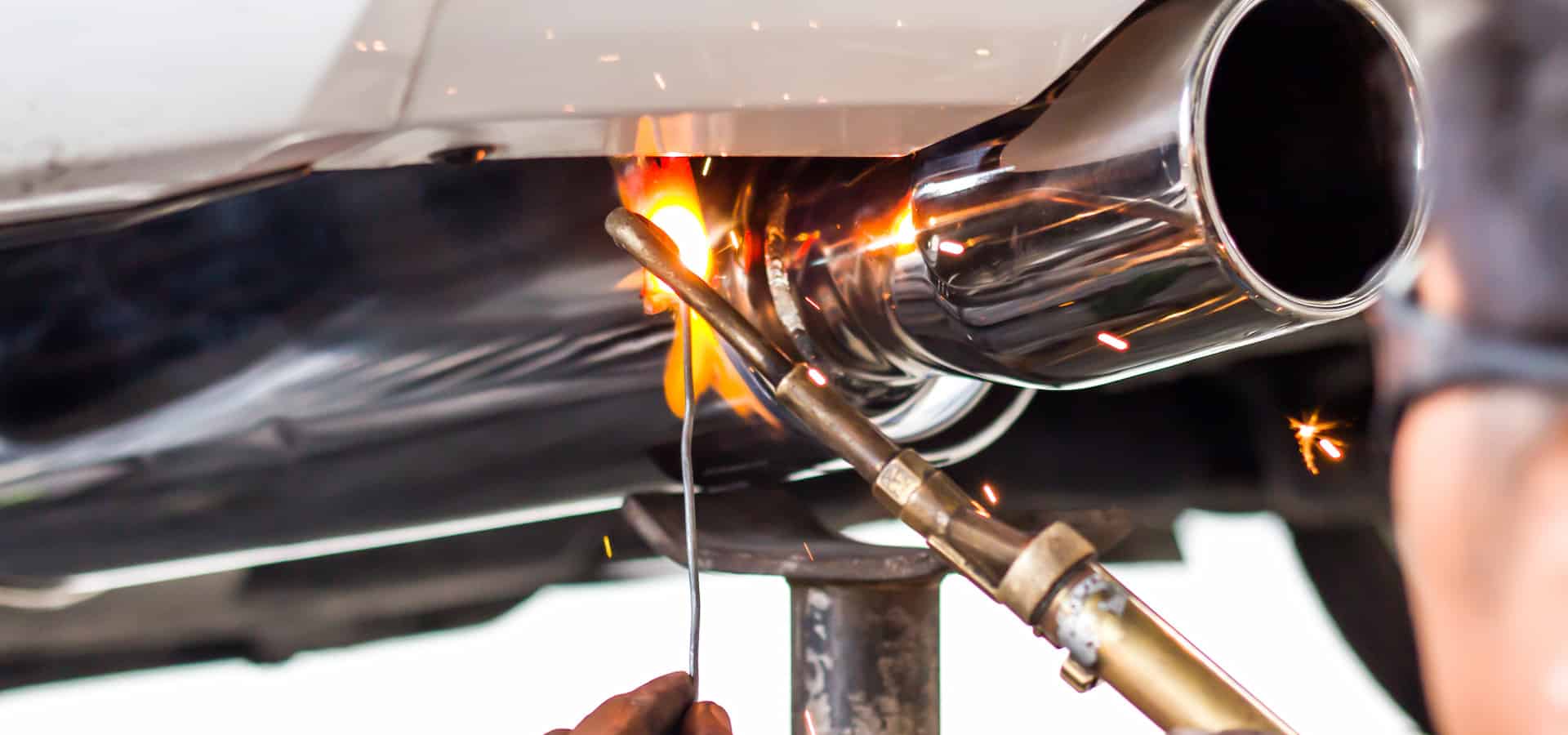
Ram Exhaust & Catalytic Converter Repair at Elevation Auto Repair
A Ram 1500 owner rolled into our Denver shop with a P0420 code and a rasp that sounded like a coffee can full of gravel under the truck. The culprit wasn't a failed catalytic converter at all – it was a cracked flex pipe feeding false readings to the downstream sensor. That's the difference specialization makes.
Exhaust and catalytic converter work on a Ram covers everything from manifold-to-tailpipe repairs to converter replacement and O2 sensor diagnosis. Getting it right matters because Ram platforms have their own personality.
- The 5.7L HEMI uses dual catalytic converters and four upstream/downstream sensors, so guessing which cat is failing wastes money – we verify with live data.
- EcoDiesel 3.0L V6 trucks add a DPF and SCR system that must be scanned with a factory-capable tool to avoid triggering derate or limp mode.
- Manifold bolt torque and heat-shield fitment on these trucks demand OEM specs, not a generic torque chart.
Here's what you can expect from us:
- Honest diagnosis that separates a bad sensor from a truly failed converter
- OEM-grade or CARB-compliant parts matched to your truck
- Proper torque and gasket work so leaks don't come back
- Clear communication before any repair moves forward
Symptoms – How to Know You Need This Service
Your Ram usually warns you before an exhaust problem becomes a roadside headache. Watch for these signs:
- A ticking or hissing near the engine on cold start – often a cracked HEMI exhaust manifold or a leaking manifold bolt.
- A deep rasp or roar that grows louder under acceleration, pointing to a failed flex pipe or rusted mid-pipe.
- Check Engine light with P0420 or P0430 – catalytic converter efficiency below threshold.
- A rotten-egg or sulfur smell, a classic sign of a converter that's no longer working correctly.
- Sluggish throttle response or reduced fuel economy from restricted flow.
- On EcoDiesel trucks, a warning about regeneration, DEF, or exhaust system service.
- Rattling from underneath, which can mean a broken internal converter substrate.
Schedule soon for ticking, mild rasp, or a steady Check Engine light. Stop driving and call us if you smell strong exhaust inside the cabin, see the light flashing, or your diesel enters limp mode – those point to conditions that can damage the engine or put fumes where you breathe them.
Common Exhaust & Catalytic Converter Repair Issues on Ram Vehicles
Ram trucks and vans have their own signature exhaust wear patterns, shaped by heavy towing loads, the HEMI's exhaust temperatures, and Colorado's road salt and altitude. Here's what we see regularly:
- P0420/P0430 catalyst efficiency codes on 5.7L HEMI (2009–2018 DS/DJ platforms) – heat cycling and occasional MDS (cylinder deactivation) oil consumption contaminate the catalyst, dropping efficiency below threshold.
- Rusted exhaust manifolds and broken manifold bolts on HEMI-powered 1500s – the cast manifolds crack and the studs seize, producing an exhaust tick that worsens under load.
- 6.7L Cummins DPF and EGT sensor faults (2007.5+ Ram 2500/3500) – clogged diesel particulate filters, failed regen cycles, and P2463 soot accumulation codes from short-trip driving.
- Failed downstream O2 sensors – heater circuit failures throw P0141/P0161 codes and mimic catalyst failure on 3.6L Pentastar ProMaster and 1500 applications.
- Flex pipe and mid-pipe corrosion – the braided flex joint splits with age and salt exposure, causing an exhaust leak ahead of the cat and false readings.
- Cracked resonators and rusted muffler seams on high-mileage trucks that create the classic highway drone.
Which Ram Models We See for Exhaust & Catalytic Converter Repair
We work on the full Ram lineup, and exhaust issues show up in predictable places across generations. Find your truck below:
- Ram 1500 (DS, 2009-2018 and DT, 2019-present) – 5.7L HEMI trucks are the most common visitors for exhaust manifold cracks and downstream converter faults.
- Ram 1500 Classic (DS, 2019-2024) – shares the older platform, so the same manifold and dual-cat concerns apply.
- Ram 1500 EcoDiesel (3.0L V6) – DPF, SCR, and DEF-related work that requires diesel-specific diagnostics.
- Ram 2500 / 3500 Heavy Duty – gas 6.4L HEMI and 6.7L Cummins turbodiesel trucks with aftertreatment systems that need careful, code-verified service.
- Older Ram / Dodge Ram (BR/BE, 1994-2010) – 3.7L, 4.7L, and 5.9L Cummins trucks where rust and aging mid-pipes are typical.
Diesel aftertreatment work differs sharply from gas exhaust repair – we keep those jobs emissions-compliant and never delete or defeat factory systems. If you're chasing a heavily modified straight-pipe setup or off-road-only tuning, that's outside what we do. For street-legal repair that keeps your Ram running clean and quiet, we're your Denver dealership alternative.
A Ram 1500 rolls into the shop with a droning cabin at highway speed and a check engine light that's been on for weeks. The owner assumed it was just a loose muffler. What we found was a partially melted catalytic converter substrate starving the 5.7L HEMI of exhaust flow – a repair that could have stayed small if it had been caught earlier. That's the story we hear often, and it's exactly why exhaust and catalytic converter work on Ram trucks deserves a technician who knows these platforms.
Causes & Risks – What Happens if Ignored
Most Ram exhaust problems trace back to a mix of heat, load, and environment. Towing raises exhaust gas temperatures, MDS oil burn coats the catalyst, and Denver's salt-and-moisture winters accelerate rust on manifolds, flex pipes, and hangers. Short-trip diesel driving prevents proper DPF regeneration.
Waiting rarely makes any of this cheaper. A small leak becomes a large one, and a slightly restricted cat becomes a dead one.
- Ignoring a P0420 code for months lets the failing catalyst restrict flow, robbing the HEMI of power and fuel economy.
- A cracked exhaust manifold left alone warps the mating surface, turning a gasket-and-stud job into manifold replacement.
- Skipping DPF service on a Cummins triggers forced limp-mode and can require professional forced regen or filter replacement.
- A split flex pipe leaks exhaust into the undercarriage and skews O2 readings, so the ECU runs the engine incorrectly.
- Rusted hangers eventually let the exhaust drop and drag – a safety hazard and body damage risk.
The safety side matters too – an exhaust leak forward of the cabin can push fumes toward occupants, and that's when a repair stops being optional.
Safety Impact – Why Exhaust & Catalytic Converter Repair Matters
A compromised exhaust system on a Ram is more than a noise complaint. Leaks upstream of the catalytic converter can introduce carbon monoxide near the cabin, and a dropped or dragging pipe becomes a road hazard. On diesel Rams, a plugged DPF that forces limp mode limits power exactly when you may need it while towing or merging.
Neglected exhaust faults also confuse the engine management system, which can affect throttle response and stability under load.
- Stop driving now: strong exhaust smell in the cabin, a pipe dragging on the ground, or sudden loss of power with a flashing check engine light.
- Schedule soon: persistent P0420/P0430 codes, a growing exhaust tick on cold start, or highway drone that keeps getting louder.
There's also a liability angle – a known, unaddressed exhaust defect that contributes to an incident can complicate insurance claims. Getting it documented and repaired protects you on the road and on paper.
How Ram Exhaust & Catalytic Converter Repair Actually Works
The exhaust system on a modern Ram routes gases from the manifolds through the catalytic converter (or DPF on diesels), past upstream and downstream oxygen sensors, and out through the muffler. The ECU compares the O2 sensor readings before and after the cat to judge efficiency – that comparison is what sets a P0420 code. On Cummins diesels, EGT and pressure sensors manage regeneration cycles that burn off trapped soot.
What sets Ram work apart from generic muffler-shop repair:
- OEM-grade catalysts and sensors – aftermarket cats often fail to satisfy the HEMI's efficiency thresholds, re-triggering the code.
- Proper torque and heat-cycle sequencing on manifold bolts to prevent the repeat cracking these engines are known for.
- Diesel DPF forced regeneration using factory-level scan tools to clear soot and reset counters correctly.
- Post-repair drive-cycle verification so readiness monitors complete and the ECU confirms the fix. </
A Ram 1500 owner rolled in last month with a rattle that sounded like marbles in a coffee can under the floorboard, plus a stubborn P0420 that kept coming back after a parts-store converter swap. That combination – heat-shield rattle plus a low-efficiency code – is a story we see often, and it starts with figuring out what's actually failing before anyone spends money.
How We Diagnose Exhaust & Catalytic Converter Repair Issues on Ram
Guessing at exhaust problems wastes parts and money. We follow a repeatable process built around Ram-specific data.
- Full scan with factory-level tooling: Using wiTECH-equivalent diagnostics, we pull live and stored codes – P0420/P0430 catalyst efficiency, P0300-series misfires, and O2/A/F sensor faults common on 5.7L HEMI and 3.6L Pentastar Rams.
- Upstream vs. downstream O2 data: We compare sensor switching rates and voltage. A lazy downstream sensor mimicking the upstream signal confirms a genuinely spent converter versus a sensor problem.
- Fuel trim review: Long-term fuel trims flag upstream leaks, MDS-related quirks on the HEMI, or an exhaust manifold leak feeding false air to the sensors.
- Cold visual inspection: We check manifold-to-pipe flanges, the notorious cracked exhaust manifolds and broken manifold bolts on 5.7L Rams, plus loose or missing heat shields.
- Road test and backpressure check: We listen for the marble rattle of a collapsed substrate and measure backpressure to confirm a clogged converter.
Findings translate directly into a written repair plan and quote, so you see exactly which parts are failing and why before we touch a wrench.
Exhaust & Catalytic Converter Repair on Ram: Repair vs. Replacement
Not every exhaust complaint means a new converter. We sort each Ram into one of three buckets.
- Genuine repair: Reweld a cracked flange, replace a rusted hanger or clamp, tighten or fabricate a heat shield, or swap a single failed O2 sensor. Many P0420 codes on higher-mileage HEMIs trace back to a sensor, not the cat.
- Partial replacement: Replace just the failed section – a rotted mid-pipe or one catalytic converter on a dual-exhaust Ram – while keeping the muffler and healthy piping. This is common when road-salt corrosion attacks one section on Denver-area trucks.
- Full replacement: Warranted when a broken exhaust manifold has cracked the converter, when the substrate has melted from a long-running misfire, or when cumulative repair cost approaches a complete assembly. Safety-critical exhaust leaks near the cab also push toward full replacement.
We lay out each option with its trade-offs and let you choose – no defaulting to the priciest fix. Our job is honest guidance, not upselling.
How to Make Your Ram Exhaust & Catalytic Converter Repair Last Longer
A fresh converter can outlast the truck if the conditions that killed the first one are addressed.
- Fix root causes first: Unburned fuel from a misfire or leaking injector overheats and destroys catalysts. Chase down misfires and rough idle promptly instead of clearing the code.
- Let it warm and run it: Short trips in cold Colorado weather leave moisture in the exhaust and accelerate internal rust. Occasional highway drives burn that off.
- Watch loads and towing: Sustained heavy towing runs the HEMI hot – keep cooling and fuel systems healthy so the converter isn't cooking.
Owner-friendly habits that help:
- Glance under the truck for hanging pipes or rust flaking at the flanges.
- Listen for new rattles or a deeper drone and report changes early.
- Address a check-engine light quickly instead of driving on it.
- Use OEM-spec oil and follow Ram's service intervals; keep the PCM software current, since updated calibrations refine fuel trims and MDS behavior.
Safe DIY stops at visual checks and listening. Sensor replacement, welding, and anything involving hot exhaust or emissions components belongs in the shop – bring it to us and we'll keep your Ram safely on the road.
A 2014 Ram 1500 rolled in with a droning exhaust note and a P0420 code that kept coming back after a parts-store converter swap. The owner had already spent money twice on the wrong fix. That kind of story is common on late-model Ram trucks, where downstream O2 sensor readings and factory calibration play a bigger role than most people expect. Getting it right the first time starts with understanding how these platforms actually behave.
What to Expect When You Bring Your Ram In
From the moment you schedule, the process is built around clear communication and no surprises. Here is how a typical visit flows:
- Drop-off or appointment – Schedule ahead or drop the truck off. Shuttle and loaner options are available so you stay mobile while we work.
- Initial inspection – We lift the truck and inspect the full exhaust path: manifolds, flex pipes, catalytic converters, resonators, mufflers, hangers, and O2 sensor wiring. On Ram trucks we pay attention to leaking manifold-to-pipe joints and cracked flex couplers.
- Written estimate – You get a line-item estimate before any work begins, with photos of what we found.
- Repair with updates – We keep you posted as parts come in and work progresses. If we find something like a failing upstream sensor while the exhaust is apart, we call before proceeding.
- Pickup walkthrough – We show you the replaced components and explain what was done.
Grab any personal items before drop-off, and ask about after-hours pickup if your schedule is tight. Every job ends with a road test and a scan-tool re-check to confirm codes are cleared and readiness monitors set. If anything feels off after you leave, bring it back and we will re-verify.
Why Choose Elevation Auto Repair for Ram Exhaust & Catalytic Converter Repair
Ram exhaust problems often come down to details generic shops skip. We diagnose the root cause instead of throwing converters at a check engine light.
- Platform familiarity – We know the P0420 and P0430 patterns on 5.7L HEMI trucks, cracked exhaust manifold studs on older Ram HEMIs, and the DPF and NOx sensor quirks on 6.7L Cummins diesels.
- Software and TSB awareness – Some converter-related codes trace back to PCM calibration or O2 sensor updates. We check for applicable Ram TSBs and reflashes before condemning hardware.
- Correct sensor and readiness verification – We confirm downstream O2 behavior and drive the truck through its monitor cycle so the fix actually sticks.
We own the work start to finish – diagnosis, repair, and post-repair confirmation under one roof. That means honest recommendations, no unnecessary parts, and repairs done with fitment and fastener torque that match how Ram built the truck. When the light stays off and the exhaust is quiet, you know it was done right.
Our Ram Services
- Air Conditioning AC Repair
- Battery Repair Replacement
- Brake Repair & Brake Fluid Change
- Check Engine Light Diagnostics
- Clutch Repair & Replacement
- Coolant Leak Repair
- Cooling System Repair
- Drive Shaft Repair
- Engine Repair
- Head Gasket Repair & Replacement
- Oil Change
- Oil Leak Repair
- Scheduled Service Maintenance
- Steering Repair
- Suspension Repair
- Cambelt Timing Belt Replacement
- Transmission Repair
- Tune Up
- Wheel Alignment