Kia Exhaust & Catalytic Converter Repair at Elevation Auto Repair
A Denver Optima owner rolled in with a persistent rotten-egg smell and a flashing check engine light after a road trip through the mountains. What looked like a simple muffler complaint turned out to be a failed catalytic converter tripping a P0420 code – a pattern we see often on certain Kia platforms. Getting exhaust and catalytic converter work right on a Kia takes more than bolting on a universal part.
Kia's Theta II and Gamma engine families run tight air-fuel and downstream oxygen sensor logic, so a mismatched converter or ignored upstream misfire will set codes again within days. We read live O2 sensor switching data and freeze-frame values with factory-level scan tools before condemning a converter, because internal engine problems – oil consumption on some 2.0T and 2.4L Theta II engines, for example – can destroy a fresh cat if left unaddressed.
Here's what you can expect when you bring your Kia to us:
- Accurate root-cause diagnosis before any part is replaced
- OEM-grade converters and gaskets matched to your exact engine and emissions calibration
- Proper flange torque and heat-shield reassembly to prevent leaks and rattles
- Post-repair drive cycle verification so monitors set and the light stays off
Symptoms – How to Know You Need This Service
Kia exhaust problems tend to announce themselves. From the driver's seat, you may notice:
- A check engine light with P0420 or P0430 – catalyst efficiency below threshold, often on higher-mileage Theta II and Gamma engines
- Rotten-egg or sulfur smell from the tailpipe, pointing to a saturated or failing converter
- A loud droning or rattling under the floor, common when internal ceramic substrate breaks apart
- Sluggish acceleration and poor fuel economy as a clogged converter restricts flow
- A hissing or ticking near the manifold that grows louder cold – a sign of a cracked flex pipe or leaking gasket
- Vibration through the floor or seat at idle from a loose or broken hanger
- Failed Colorado emissions test tied to converter performance
Schedule soon for smells, rattles, or a steady check engine light. Stop driving and call us if the light is flashing, you smell strong exhaust inside the cabin, or you feel a sudden power loss with heat under the car – these point to raw fuel entering the converter or an overheating exhaust that risks further damage.
Common Exhaust & Catalytic Converter Repair Issues on Kia Vehicles
Kia exhaust problems tend to follow predictable paths depending on engine family and model year. Here are the patterns we see most often on Colorado roads:
- Theta II (2.0T/2.4L) engine oil consumption fouling the cat – On 2011-2019 Sorento, Sportage, and Optima models with the Theta II GDI engines, high oil consumption and known long-block issues can send oil and unburned fuel into the catalytic converter, killing it prematurely and setting P0420/P0430 codes.
- Gamma 1.6L GDI carbon and cat efficiency codes – Soul and Forte owners with the 1.6L Gamma engine often see P0420 as the converter substrate ages, sometimes tied to misfires from carbon buildup on the intake valves.
- Flex pipe and mid-pipe corrosion – Denver's road salt and freeze-thaw cycles eat through the flexible coupling and mid-pipe weld seams, producing an exhaust leak and a distinctive ticking or droning tone.
- Rattling heat shields – Loose or rusted heat shield hardware on the Sorento and Sedona creates a metallic buzz that mimics a more serious internal failure.
- Upstream and downstream O2 sensor failure – Aging wideband and switching oxygen sensors throw efficiency and fuel-trim codes that get misread as a bad converter.
- Turbo-model downpipe cracks – On 2.0T Optima and Stinger platforms, thermal cycling stresses the downpipe near the turbo flange.
Which Kia Models We See for Exhaust & Catalytic Converter Repair
We service exhaust and catalytic converter work across most of the modern Kia lineup. The models we see most often:
- Optima (TF 2011-2015, JF 2016-2020) – 2.4L Theta II and 2.0T; frequent P0420 and downstream sensor concerns
- Sorento (XM 2011-2015, UM 2016-2020) – 2.4L and 3.3L V6; converter and mid-pipe repairs
- Sportage (SL 2011-2016, QL 2017-2022) – Nu 2.0L, Theta 2.4L, and 2.0T variants
- Soul (AM 2010-2013, PS 2014-2019) – 1.6L and 2.0L Gamma/Nu; small-displacement cats prone to substrate breakdown
- Forte (2014-2018, 2019-present) – Nu 2.0L and 1.6T; flex-pipe and gasket leaks
- Sedona / Telluride – 3.3L and 3.8L V6; dual converter and Y-pipe service
- Stinger (2018-present) – 2.0T and 3.3L twin-turbo; the twin-turbo exhaust routing needs careful reassembly
Turbocharged GDI engines and V6 dual-bank layouts take extra diagnostic time because both banks and turbo hardware factor in. If you drive an older pre-2010 Kia or an EV like the Niro EV or EV6, exhaust repair may not apply – give us a call and we'll point you the right direction. Whatever your Kia needs, we keep the diagnosis honest and the repair built to last.
A Denver Optima owner rolled in recently with a low, droning hum that got louder on the highway and a check engine light that had been on for weeks. What started as a small leak at a corroded flex pipe had grown into a failing catalytic converter and a rattling heat shield. That progression is exactly why we treat exhaust work as a system, not a single part swap – and why we chase every symptom down before we quote a fix.
Causes & Risks – What Happens if Ignored
Most Kia exhaust failures trace back to a mix of Front Range climate, GDI engine design, and age. Road salt accelerates corrosion, altitude changes fuel mixture demands, and GDI engines run hotter and dirtier at the cat than older port-injection setups. Left alone, a minor issue snowballs fast.
Ignoring a small exhaust leak or a P0420 for a few months often turns a straightforward repair into a much larger one.
- A leaking flex pipe skews O2 sensor readings, which pushes bad fuel trims and can foul a still-good catalytic converter.
- A converter failing from Theta II oil consumption will keep dying on repeat if the underlying oil-burning problem is not addressed first.
- Unburned fuel reaching an overloaded cat can overheat it, melting the internal substrate and sometimes clogging it enough to choke engine power.
- A rattling heat shield left loose can crack fully and contact rotating driveline or brake components.
- Exhaust fumes leaking upstream of the cabin raise carbon monoxide risk – a safety issue, not just a repair cost.
We diagnose the root cause first so you are not paying for a converter twice.
Safety Impact – Why Exhaust & Catalytic Converter Repair Matters
Exhaust problems reach further than noise and emissions. On modern Kias, oxygen sensor and catalyst data feed the engine control module, and a clogged converter can trigger limp mode that cuts power in traffic. The most direct danger is carbon monoxide entering the cabin through an upstream leak, especially with the HVAC set to recirculate.
- Stop driving now: exhaust smell inside the cabin, sudden severe power loss, a red-glowing or overheating converter, or loud roaring with rapid overheating.
- Schedule soon: steady check engine light with a P0420/P0430, a growing droning hum, a light rattle over bumps, or a fuel-economy drop.
There is also a liability angle. A converter is a federally monitored emissions component, and a known unresolved leak that contributes to a health or safety incident becomes a documentation problem. Addressing it promptly keeps your Kia legal, safe, and predictable to drive.
How Kia Exhaust & Catalytic Converter Repair Actually Works
Your Kia's exhaust system routes gases from the manifold through the catalytic converter, where precious-metal coatings convert harmful compounds before they exit the tailpipe. Upstream and downstream oxygen sensors let the ECM compare readings across the converter – if the downstream sensor mirrors the upstream one too closely, the computer logs an efficiency code. That feedback loop is why a real repair involves more than bolting on a new part.
Kia's implementation adds a few wrinkles that shape how the work has to be done correctly:
- GDI engines run tighter fuel-trim windows, so O2 sensor accuracy and clean data matter more than on older port-injected designs.
- Correct converter selection has to match the specific engine and emissions calibration for that model year – a generic cat often re-triggers the efficiency code.
- Flange and manifold hardware require proper torque sequences and fresh gaskets to seal against Kia's thermal cycling.
- After a repair, drive-cycle completion and monitor readiness verification confirm the fix using factory-aligned scan data.
We diagnose with the right tooling, confirm the actual failure, and repair the whole system so the light stays off and your Kia runs clean.
A Denver driver rolled into the shop with a 2014 Kia Optima that had started droning like a boat below 40 mph, then triggered a P0420 code on the highway. The owner assumed the worst. What we found was more nuanced – and that story plays out weekly with Kia exhaust and catalytic converter work. Getting it right starts with a real diagnosis, not a parts-cannon guess.
How We Diagnose Exhaust & Catalytic Converter Repair Issues on Kia
Kia exhaust problems throw a wide net of symptoms, so we work through a repeatable sequence before recommending a single part.
- Full scan with Kia-capable tooling – We pull codes using a scanner that reads Kia-specific PIDs, not just generic OBD-II. Codes like P0420 / P0430 (catalyst efficiency) or P0141 (heater circuit) on Theta II 2.4L and Gamma 1.6L engines point us in different directions.
- Live upstream and downstream O2 sensor data – We compare pre-cat and post-cat oxygen sensor waveforms. A lazy or mirrored downstream signal tells us whether the converter is actually degraded or a sensor is lying.
- Fuel trim review – Skewed long-term fuel trims on GDI Kia engines often reveal an upstream cause, like a leaking injector or vacuum leak, that would kill a new converter prematurely.
- Cold visual inspection – We look for cracked flex pipes, rusted-through resonators (common on older Sportage and Sorento in Colorado's road-salt winters), and loose heat shields that mimic exhaust rattles.
- Road test and backpressure check – We listen for droning and rattling under load, then measure exhaust backpressure to confirm a clogged or collapsed substrate.
Those findings turn into a plain-language repair plan and an itemized quote, so you know exactly which parts are involved and why before any work begins.
Exhaust & Catalytic Converter Repair on Kia: Repair vs. Replacement
Not every P0420 means a new converter. The right answer depends on what the data and inspection actually show.
- Genuine repair: A loose heat shield, a single failed O2 sensor, or a leaking gasket at the exhaust manifold flange. On many Kia models a rattling converter is just a broken heat shield tack weld – secured, not replaced.
- Partial replacement: A rusted mid-pipe or resonator on a Colorado-winter Sorento while the catalytic converter itself still passes efficiency testing. We replace the corroded section and preserve the good hardware.
- Full replacement: A physically clogged or contaminated converter – often caused by an unaddressed misfire or oil consumption on higher-mileage Theta II engines. Once the substrate is melted or coated, cleaning won't restore it, and safety and emissions demand a proper OEM-grade unit.
We walk you through what we measured, show the options side by side, and let you choose. Honest diagnostics mean we never push a full assembly when a targeted repair solves the problem.
How to Make Your Kia Exhaust & Catalytic Converter Repair Last Longer
A new converter or repaired exhaust lasts far longer when the root cause is fixed and the vehicle is driven and maintained with the system in mind.
- Drive to let it reach temperature – Frequent short trips in Denver's cold keep the converter from reaching operating temp, accelerating carbon and moisture buildup. Combine errands when you can.
- Address misfires and warning lights early – A neglected misfire or rich condition dumps raw fuel into the converter and destroys it. Don't ignore a flashing check engine light.
- Use the correct spark plugs and oil – Oil-burning from worn components contaminates the catalyst. Stick to Kia's specified oil grade and service intervals.
- Keep software current – Kia issues powertrain calibration updates that affect fuel and emissions behavior; an up-to-date ECU protects the exhaust system.
Safe DIY includes visual rust checks, listening for new rattles or drone, and monitoring your dash lights and oil level. Leave anything involving cutting, welding, converter replacement, or O2 sensor diagnosis to the shop – these are hot, emissions-critical systems where a mistake gets expensive fast. We're glad to handle the heavy work while you stay safely on the road.
What to Expect When You Bring Your Kia In
A customer with a 2013 Optima once rolled in with a loud rasp under the floor and a P0420 flashing on the dash. That combination – catalyst efficiency codes paired with a rattling heat shield or a failing converter substrate – is a story we hear often on Kia's Theta II and Gamma engines. Here's how a visit moves along.
- Drop-off or scheduled appointment – Tell us the symptoms you've noticed: droning at cruise, a check engine light, sulfur smell, or a rattle over bumps. Clear personal items from the trunk and cabin so we have room to work.
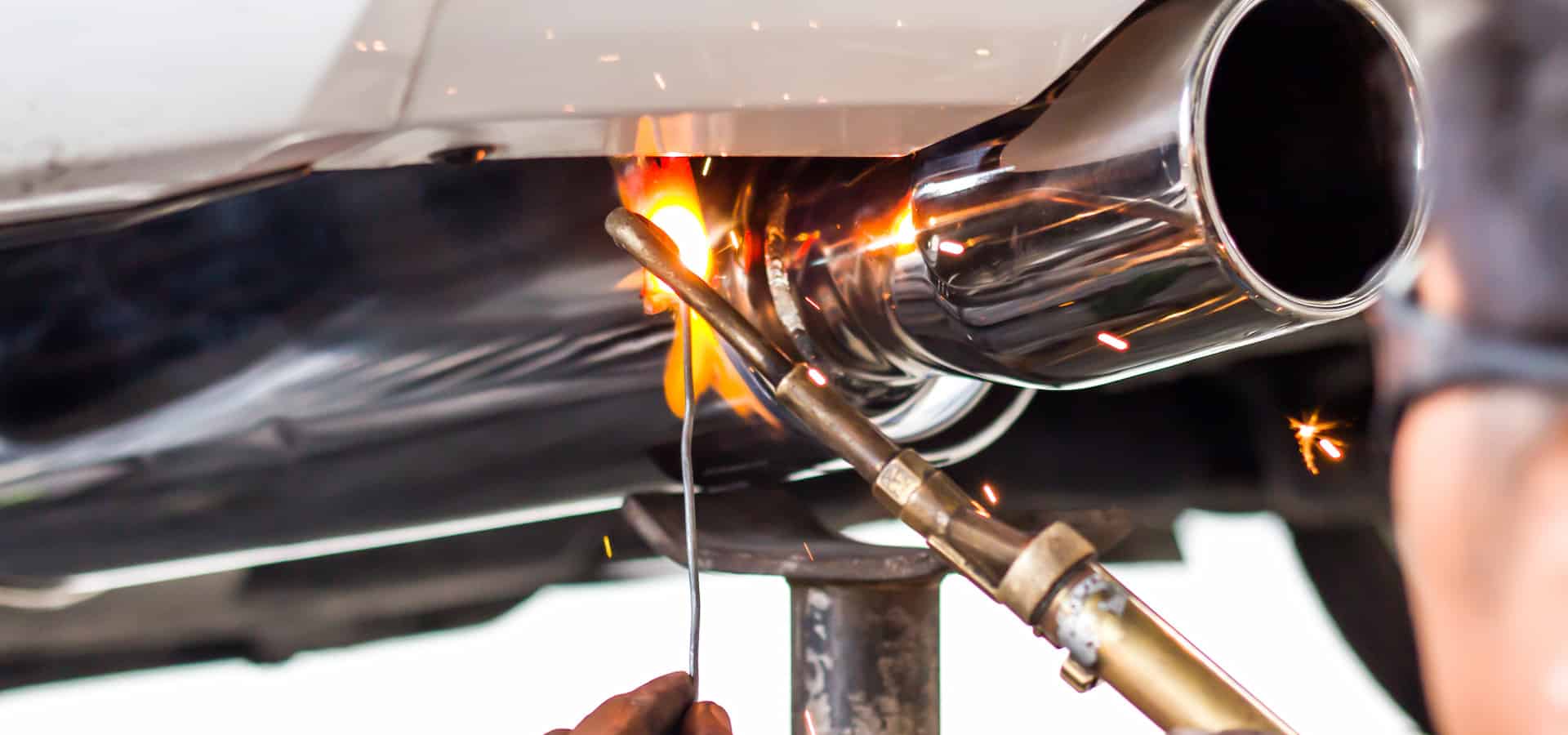
- Initial inspection – We lift the vehicle, inspect the manifold, flex pipe, oxygen sensors, and converter for cracks, rust-through, or internal breakdown, then pull codes and live data with factory-level scan tools.
- Written estimate – You get a plain-language breakdown of what's failing, whether it's a sensor, a gasket, or the converter itself, plus any related Kia software updates worth applying.
- Repair updates – We call or text before doing additional work – no surprises.
- Pickup walkthrough – We show you the old parts and explain the fix.
Loaner and shuttle options help you keep your day moving, and after-hours pickup is available when scheduling is tight. Before your Kia leaves, we road test it and re-scan to confirm the fault has cleared and readiness monitors are set. If anything feels off afterward, bring it back and we'll re-verify our work.
Why Choose Elevation Auto Repair for Kia Exhaust & Catalytic Converter Repair
Converter faults on Kia are rarely just the converter. On Theta II 2.4L engines (Optima, Sorento, Sportage) and Gamma 1.6L platforms, we check for upstream causes – oil consumption or misfires that contaminate the substrate – so a new part doesn't fail early. We also cross-reference Kia TSBs and available ECM calibration updates, since a software fix sometimes resolves a borderline P0420 without unnecessary hardware.
- Root-cause diagnosis – We separate a genuinely dead converter from a lazy downstream O2 sensor or an exhaust leak fooling the readings.
- Kia-specific knowledge – Familiarity with common heat shield rattles, flex-pipe cracking near the manifold, and engine-related contamination patterns.
- End-to-end ownership – The same shop diagnoses, repairs, and verifies with a road test and scan-tool re-check.
As your Denver dealership alternative, we handle everything from the sensors to the exhaust to any engine issue feeding the problem – all under one roof, with clear communication and no repairs you don't need.
Our Kia Services
- Air Conditioning AC Repair
- Battery Repair Replacement
- Brake Repair & Brake Fluid Change
- Check Engine Light Diagnostics
- Clutch Repair & Replacement
- Coolant Leak Repair
- Cooling System Repair
- Drive Shaft Repair
- Engine Repair
- Head Gasket Repair & Replacement
- Oil Change
- Oil Leak Repair
- Scheduled Service Maintenance
- Steering Repair
- Suspension Repair
- Cambelt Timing Belt Replacement
- Transmission Repair
- Tune Up
- Wheel Alignment