
Kia Air Conditioning AC Repair at Elevation Auto Repair
Kia's air conditioning systems have evolved fast over the last decade, and that evolution is exactly why they benefit from a technician who knows the platform. Late-model Kias like the Optima, Sorento, and Telluride run electronically controlled variable-displacement compressors and refrigerant charges measured to the gram, so a "top it off and hope" approach rarely holds up in Denver's heat.
Doing this job right on a Kia means more than adding refrigerant. Many models moved to R-1234yf refrigerant, which requires a dedicated recovery machine and specific PAG oil – mixing that up with R-134a service equipment causes contamination and premature compressor failure. On models with Auto Climate Control, we also read live data through Kia's diagnostic interface to check compressor duty cycle, evaporator temperature sensors, and blend door actuator commands before condemning parts.
We focus on honest diagnostics so you pay for the failure you actually have – not a parts-swap guessing game.
- Accurate refrigerant identification and evacuation using the correct R-134a or R-1234yf equipment
- Electronic leak detection and dye testing rather than blind recharges
- Live-data compressor and sensor checks through OEM-level scan tools
- Clear, transparent pricing and an explanation of what we found before work begins
Symptoms – How to Know You Need This Service
AC trouble on a Kia usually shows up gradually, then all at once on the hottest day. Watch for these signs:
- Air that blows warm or only cools at highway speed – often a low charge from a slow leak at the condenser or O-rings
- A clicking or rapid cycling sound from the compressor clutch that comes and goes
- Weak airflow even on high fan – a clogged cabin filter or failing blower motor resistor
- A musty or mildew smell when the AC first turns on, pointing to a dirty evaporator or drain issue
- Grinding or squealing from the front of the engine when AC engages – a seizing compressor bearing
- Fog or oily residue near the condenser after a front-end impact
- Blend door actuator clicking behind the dash with temperature that won't change sides
A loud grinding compressor means you should stop using the AC and schedule right away, since a failing compressor can shed debris throughout the system. Warm air, odors, or weak airflow are safe to drive on – just book service soon before a small leak empties the system.
Common Air Conditioning AC Repair Issues on Kia Vehicles
Across the Optima, Sorento, Sportage, Soul, and Forte lines, a handful of A/C failure patterns show up repeatedly. Each tends to tie back to a specific design choice or wear path.
- Compressor clutch and coil failure – Common on 2011-2015 Optima (TF) and Sorento (XM) with the belt-driven compressor, where the clutch cycles hard and the coil eventually burns out, leaving you with air but no cold.
- Condenser leaks from road debris – The front-mounted condenser on Sportage (SL/QL) sits exposed; a small stone strike creates a slow refrigerant leak that mimics a low charge for months.
- Evaporator core leaks – Seen on higher-mileage Soul and Forte platforms, where the evaporator seeps refrigerant and oil inside the HVAC box, often paired with a faint sweet smell at the vents.
- Electric compressor faults on hybrids/EVs – Niro, Soul EV, and EV6 use a high-voltage electric compressor; contamination or the wrong POE oil during service can trigger insulation faults and compressor shutdown.
- Blend door actuator failure – A clicking behind the dash and air stuck on one temperature points to a failed actuator, frequent across Sorento and Sportage.
- Cabin blower resistor / final-stage unit failure – Fan works only on high speed, a well-known wear item on several Kia platforms.
Which Kia Models We See for Air Conditioning AC Repair
We service AC systems across nearly the full Kia lineup, and certain platforms come through our bays more than others:
- Optima (TF and JF generations, 2011–2020) – condenser leaks and compressor clutch complaints are common on higher-mileage examples
- Sorento (XM, UM, and MQ4 generations) – rear AC line and evaporator concerns on models with dual-zone climate
- Sportage (SL, QL, and NQ5) – R-1234yf systems on newer QL/NQ5 requiring dedicated service equipment
- Soul (PS and SK3) – blower motor and cabin airflow issues
- Telluride (2020+) – tri-zone systems where correct charge and sensor data matter most
- Forte (2014+) and Rio – smaller displacement compressors and blend door actuators
- Stinger (CK) and K5 – performance and newer models with variable-displacement compressors
Hybrid and plug-in variants like the Niro and Sorento Hybrid use electric AC compressors with high-voltage components, which we handle with the proper safety procedures and specific electrically isolated PAG oil. If you drive one of these, mention it when you book so we prep the right equipment. Older pre-2010 Kias are less common but still welcome – we'll confirm parts availability up front.
Kia's climate systems have shifted quickly across recent generations, from the earlier belt-driven compressors on gas Optimas and Sorentos to the electric compressors found in Niro, Soul EV, and EV6 hybrids and battery vehicles. That split matters – servicing an electric A/C system with the wrong tooling or refrigerant oil can cause real damage. Working on these platforms correctly means knowing which generation you're touching before a hose ever comes off.
Causes & Risks – What Happens if Ignored
Denver's dry air, altitude, and big temperature swings push A/C components harder than mild coastal climates. Age, UV exposure on hoses, and debris off I-25 accelerate condenser and seal wear. Kia's compact underhood packaging also concentrates heat around the compressor and lines.
Small leaks and weak cooling rarely stay small. Waiting turns an inexpensive fix into a system-wide job.
- Ignoring a low charge for a season lets the compressor run undersupplied on oil, wearing internal components and often killing the compressor itself.
- A leaking compressor that seizes can spread metal debris through the entire system, forcing condenser, orifice, and line replacement plus a full flush.
- Unaddressed evaporator leaks let moisture and mold build inside the HVAC box, fouling the cabin and requiring dash disassembly.
- On hybrids and EVs, running a contaminated electric compressor risks high-voltage fault codes and a far more expensive component.
- A failed blend door actuator left alone can jam the door and damage the housing.
The cost jump between recharging a healthy system and replacing a seized compressor with full contamination cleanup is dramatic – catching it early keeps it simple.
Safety Impact – Why Air Conditioning AC Repair Matters
A/C affects more than comfort. The same system defrosts and defogs your windshield, so a dead compressor or clogged evaporator directly reduces visibility in cold or humid conditions.
- Stop driving soon: heavy fogging that won't clear, a burning smell from the vents, or a squealing/grinding compressor that could throw a serpentine belt and take out power steering and charging.
- Schedule promptly: weak cooling, intermittent cold air, or a blower stuck on one speed.
- Watch closely: faint odors or slow-to-cool startups that suggest an early leak.
On belt-driven Kia models, a compressor that locks up can shred the accessory belt, disabling systems tied to that belt and creating a stalling hazard. On hybrids and EVs, high-voltage A/C faults should always be handled with proper isolation. If a known defect goes unaddressed and contributes to an incident, that can complicate a liability or insurance claim – another reason to document repairs clearly.
How Kia Air Conditioning AC Repair Actually Works
A Kia A/C system moves refrigerant through a cycle: the compressor pressurizes it, the condenser sheds heat, an expansion device drops the pressure, and the evaporator absorbs cabin heat before the blower pushes cool air out. What separates Kia work from generic service is the split between conventional and high-voltage systems and the software steps behind them.
- Many newer Kias require GDS/KDS diagnostic access to read HVAC actuator data, run self-tests, and confirm blend door calibration after replacement.
- Electric compressors on Niro, Soul EV, and EV6 use specific POE oil – mixing in standard PAG oil damages high-voltage insulation, so tooling must be dedicated to EV service.
- Proper evacuation to a deep vacuum and charging to Kia's exact refrigerant weight spec matters; overcharging even slightly hurts cooling and compressor life.
- Torque specs on condenser lines and manifold fittings prevent slow leaks that generic tightening often misses.
We diagnose the actual failure before quoting, explain what your system needs in plain terms, and give you transparent pricing so you know exactly what you're paying for – handled under one roof by technicians who know these platforms.
Kia air conditioning systems have their own personality across generations – the Optima and Sorento platforms use different compressor and clutch designs than the Soul or Sportage, and later models running R-1234yf refrigerant demand equipment and handling that older R-134a cars don't. Weak cooling on a Kia often traces back to specific, recognizable failure points, and knowing the platform is half the battle.
How We Diagnose Air Conditioning AC Repair Issues on Kia
A Kia that blows warm on one side, cools only at highway speed, or cycles the compressor rapidly is telling a story. We read it methodically rather than throwing parts at the symptom.
- Interview and symptom capture – When does it fail? Idle only, one temperature zone, or intermittent? Dual-zone Optima and Sorento units frequently mask a blend-door actuator fault as an "AC problem."
- Factory-level scan – We pull HVAC and body control module codes using OEM-capable scan tools that read Kia's climate control data, actuator positions, and pressure sensor values a generic code reader misses.
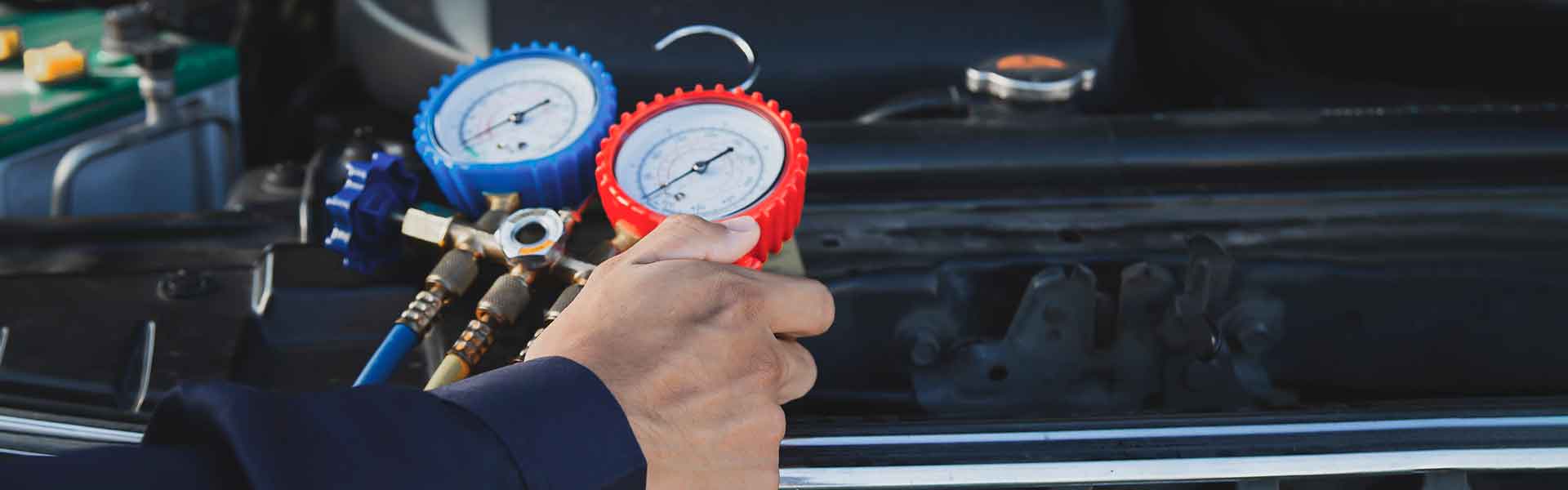
- System pressure test – Manifold gauges (or machine readings) on the high and low sides reveal undercharge, a stuck expansion valve, or compressor that isn't building pressure.
- Visual and dye inspection – We check the condenser (vulnerable to road debris on Sportage and Sorento front ends), hose fittings, and the compressor shaft seal for oily residue signaling refrigerant leaks.
- Electrical checks – Compressor clutch engagement, relay, and cooling fan operation, since a lazy condenser fan mimics a refrigerant shortage.
- Road and vent test – Measuring actual vent temperature at idle and under load confirms the fix target.
From there you get a plain-language explanation of what failed, what it will take to correct it, and an itemized quote before any work begins.
Air Conditioning AC Repair on Kia: Repair vs. Replacement
Not every warm-air complaint means a new compressor. We match the repair to the actual condition of the parts.
- Genuine repair – A refrigerant recharge after fixing a minor O-ring leak, a failed pressure switch, a stuck blend-door actuator, or a cabin air filter and evaporator cleaning to restore airflow. The system is otherwise healthy.
- Partial replacement – Replace the worn component and keep the rest. A common example is a leaking condenser on Sorento and Sportage models from stone impact, or a compressor clutch bearing that's noisy while the compressor body is still sound.
- Full replacement – When a Kia compressor fails internally and sheds metal debris, that contamination spreads through the lines, so replacing the compressor, receiver-drier, orifice/expansion valve, and flushing the system is the right call to prevent a repeat failure.
We show you the pressure readings and the failed part, then lay out the options with transparent pricing. If a targeted repair will serve you well, that's what we recommend – we don't default to the biggest ticket.
How to Make Your Kia Air Conditioning AC Repair Last Longer
Once your Kia is cooling properly again, a few habits keep it that way and protect the compressor you paid to fix.
- Run the AC year-round – Even in Denver winters, running it briefly on defrost keeps the compressor seals lubricated and prevents them from drying out.
- Pre-cool smart in summer – Crack the windows for a moment before blasting AC into a heat-soaked cabin to reduce compressor strain.
- Keep the condenser clear – Rinse road salt, bugs, and debris off the front condenser, a weak point on Sportage and Sorento front ends.
- Change the cabin air filter on schedule – A clogged filter chokes airflow and makes the system work harder. This one is genuinely DIY-friendly on most Kia models.
- Listen and watch – New rattles when the AC engages, weaker cooling, or foggy vent output are early warnings worth reporting.
Leave refrigerant handling, compressor work, and system evacuation to the shop – R-1234yf systems require certified equipment and correct charge weights. Use OEM-spec refrigerant oil and parts, and keep climate control software current, since Kia occasionally updates HVAC control logic. When something feels off, bring it in early and we'll catch it before it becomes a bigger repair.
Kia's air conditioning systems have their own personality across generations – from the Sportage and Sorento to the Optima, Soul, and Telluride. Some platforms are prone to condenser leaks at the front-facing core, others to compressor clutch failures or evaporator seepage that hides behind the dash. On many 2011-2016 Optima and Sorento models, the R-134a compressor and its internal control valve can fail, while newer Kia platforms running R-1234yf refrigerant demand different tooling and charging discipline. Getting the diagnosis right the first time is what separates a lasting fix from a repeat visit.
What to Expect When You Bring Your Kia In
We keep the process clear from the moment you arrive so you always know what's happening with your Kia and why.
- Drop-off or scheduled appointment – Tell us your symptoms: weak airflow, warm air on one side, hissing, or a cabin that never cools on the highway. Grab personal items from the console; we'll note anything left behind.
- Initial inspection – We check refrigerant charge with proper R-134a or R-1234yf equipment, pressure-test for leaks, inspect the condenser, compressor clutch engagement, and blend-door actuator operation.
- Written estimate – You get a plain-language breakdown of what's failing, what it needs, and transparent pricing before any work begins.
- Repair updates – We call or text as we confirm findings, and we ask before adding anything. Shuttle and loaner options are available to keep your day moving.
- Pickup walkthrough – We show you what we replaced, explain the results, and offer after-hours pickup when your schedule is tight.
Before your Kia leaves, we road-test it and re-check vent temperatures and system pressures with a scan tool. If anything feels off afterward, bring it back – we'll recheck it and stand behind the work.
Why Choose Elevation Auto Repair for Kia Air Conditioning AC Repair
Kia A/C problems are rarely one-size-fits-all, and we treat them that way. We reference Kia TSBs and software updates that affect climate control – including HVAC actuator recalibration and control-module updates that resolve blend-door faults without throwing new parts at the car.
- Correct refrigerant handling – Separate, properly maintained equipment for R-134a and R-1234yf systems so charge weights match Kia spec.
- Real diagnosis – Leak dye, nitrogen or electronic leak detection, and pressure testing instead of a quick top-off that fails again in weeks.
- Platform awareness – Familiarity with condenser leaks, compressor clutch wear, and evaporator seepage common across Sorento, Optima, Sportage, and Soul models.
We own the job start to finish – diagnosis, repair, evacuation and recharge, then post-repair verification. As your Denver dealership alternative, you get honest answers, no unnecessary parts, and a cabin that stays cold when the heat kicks in.
Our Kia Services
- Battery Repair Replacement
- Brake Repair & Brake Fluid Change
- Check Engine Light Diagnostics
- Clutch Repair & Replacement
- Coolant Leak Repair
- Cooling System Repair
- Drive Shaft Repair
- Engine Repair
- Exhaust & Catalytic Converter Repair
- Head Gasket Repair & Replacement
- Oil Change
- Oil Leak Repair
- Scheduled Service Maintenance
- Steering Repair
- Suspension Repair
- Cambelt Timing Belt Replacement
- Transmission Repair
- Tune Up
- Wheel Alignment