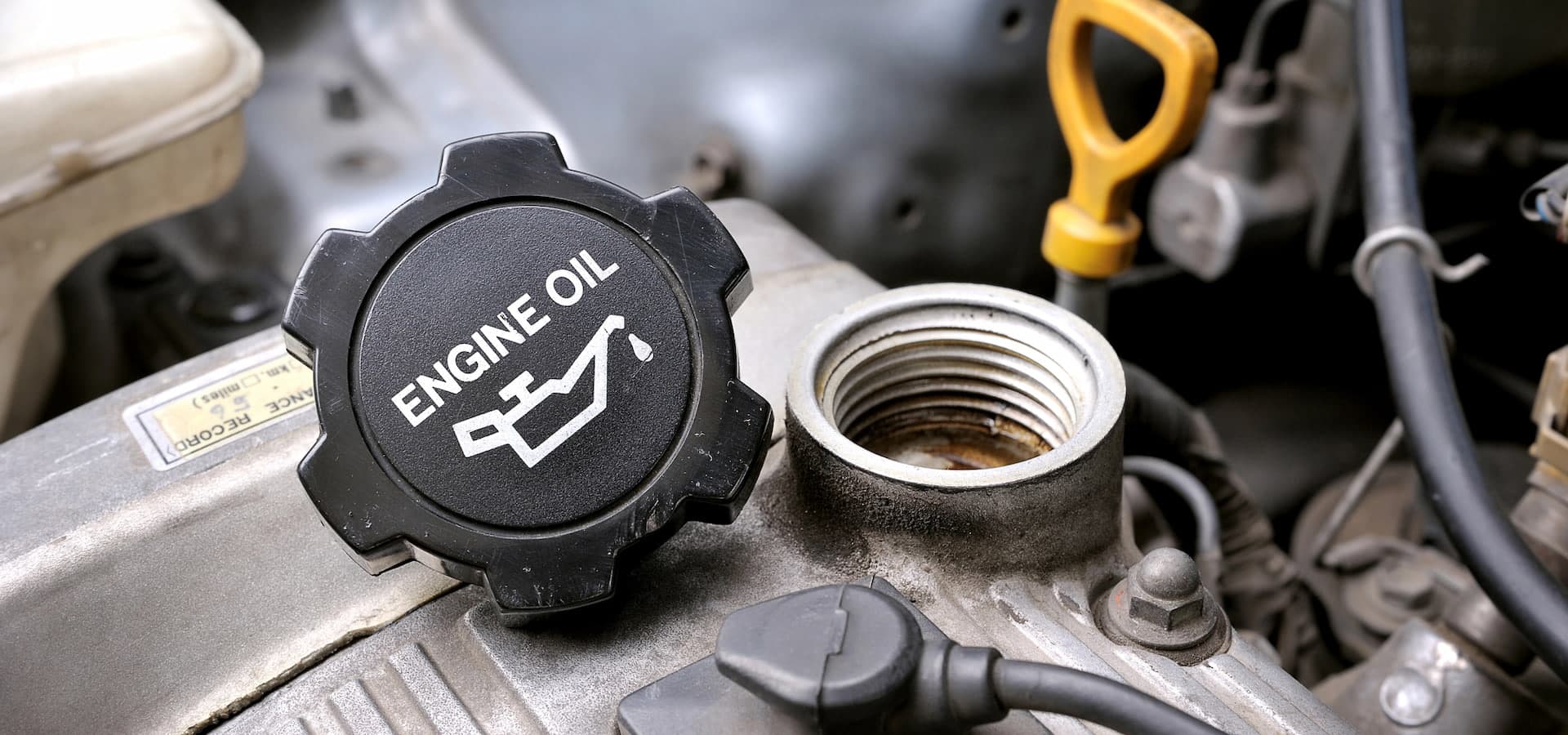
Kia Oil Change at Elevation Auto Repair
Skimp on a Kia oil change and the bill shows up later. The 2.0T and 2.4L Theta II engines (2011–2019 Optima, Sorento, Sportage) built a reputation for oil consumption and bearing wear, and clean, correct-viscosity oil on schedule is one of the few things that keeps those problems at bay. This isn't a splash-and-dash service.
Doing it right on a Kia means matching the exact spec, not a "close enough" bulk oil. Many modern Kia engines call for a specific full-synthetic grade – often 5W-20 or 5W-30 depending on the powertrain – and the GDI and turbo variants are especially sensitive to the wrong weight. We reset the oil life monitor properly and check for the technical service campaigns tied to these engines rather than ignoring them.
Our technicians know where these platforms hide trouble, and a quick, accurate service keeps you out of the dealership waiting room. Here's what you get:
- Correct OEM-spec full-synthetic oil and a quality filter matched to your engine
- Drain plug and filter housing torqued to Kia spec, no overtightening or crush-washer reuse
- Oil life monitor reset and a quick scan for open Kia campaigns or recalls
- A fast turnaround with a courtesy look at leaks, levels, and oil consumption history
Symptoms – How to Know You Need This Service
Kia engines usually warn you before things get expensive. You may notice one or more of these:
- Oil maintenance light or "Service Required" message – schedule soon; the monitor is tracking mileage and engine load.
- Dropping oil level between changes – common on Theta II 2.0T/2.4L engines; check the dipstick and book service promptly.
- Ticking or knocking on cold start that fades as oil pressure builds – have it looked at quickly.
- Burnt oil smell in the cabin or around the engine bay after a drive.
- Dark, gritty oil on the dipstick instead of a translucent amber.
- Reduced throttle response or rougher idle, especially on turbo GDI engines running dirty oil.
- Blue-tinged exhaust smoke pointing to oil burning – get it inspected right away.
Stop driving immediately if the red oil pressure light comes on – that means low pressure, and running the engine risks bearing damage. A steady low level or an amber reminder means schedule soon rather than panic. Either way, catching it early is far cheaper than an engine replacement.
Common Oil Change Issues on Kia Vehicles
Get the oil service wrong on a Kia and the fallout goes well past a dirty dipstick. Several Kia engine families have documented oil-consumption behavior that makes correct fill level, viscosity, and interval non-negotiable. Here's what we see roll through the bay most often.
- Theta II 2.0T and 2.4L GDI (2011-2019 Sorento, Sportage, Optima) – These engines are known for elevated oil consumption and bearing-related failures. Running them low on oil accelerates the exact wear path that turns into rod knock, so tight interval control matters here more than on most cars.
- Nu and Gamma GDI engines (Soul, Forte, Rio) – Direct injection runs oil dirtier and hotter. Stretched intervals build sludge that clogs the pickup screen and starves the top end.
- Smartstream 1.6T and 2.5L (2021+ Sorento, K5, Sportage) – Tighter tolerances and continuously variable valve duration hardware demand the correct low-viscosity spec; wrong oil affects timing components.
- Lambda II V6 (Telluride, Sorento, Cadenza) – Generally durable, but the oil filter housing and cartridge design invites cross-threading and improper torque if rushed.
- Stripped drain plugs and warped filter caps – Aluminum oil pans and plastic cartridge caps are easy to over-torque, a common leftover from quick-lube visits.
- Ignored oil-life reset – Kia's maintenance minder needs a proper reset, or the next interval gets miscalculated.
Which Kia Models We See for Oil Change
We service the full modern Kia lineup. Find your platform below:
- Optima / K5 (2011–present) – TF and JF Optima with the 2.4L Theta II and 2.0T; DN K5 with the Smartstream 1.6T and 2.5L. Theta II cars get extra attention on oil consumption.
- Sorento (2011–present) – XM, UM, and MQ4 generations, including 2.4L, 2.0T, and 3.3L V6 Lambda engines.
- Sportage (2011–present) – SL, QL, and NQ5, with 2.4L Theta II, 2.0T, and newer 2.5L Smartstream units.
- Soul (2010–present) – AM, PS, and SK3 with 1.6L and 2.0L Nu engines.
- Forte (2010–present) – 1.8L, 2.0L Nu GDI, and 1.6T variants.
- Telluride (2020–present) – 3.8L Lambda II V6, a straightforward but oil-hungry engine that benefits from strict intervals.
- Stinger (2018–2023) – 2.0T and 3.3L twin-turbo GT; the twin-turbo especially depends on clean, correct-spec oil.
- Carnival, Seltos, Niro – newer Smartstream and hybrid drivetrains welcome.
Turbo GDI and V6 Lambda engines get slightly different filter and viscosity handling than the base Nu four-cylinders, and hybrid Niro service differs from the gas models. If you drive an older pre-2010 Kia, ask us first – we'll confirm the right spec before you come in.
Causes & Risks – What Happens if Ignored
Denver's altitude, temperature swings, and stop-and-go traffic push oil harder than a mild coastal climate. Add short trips that never fully warm the oil, and contaminants stay suspended longer. On GDI engines like the Theta II and Nu families, that combination speeds up sludge and consumption.
Waiting compounds the problem fast. A quart low today becomes bearing damage in a few thousand miles on consumption-prone Kia engines.
- Skipping an interval on a Theta II 2.4 lets oil drop below safe level between checks, and sustained low oil is the leading cause of spun rod bearings on this platform.
- Old, acidic oil breaks down its film strength, scoring cam lobes and accelerating timing chain stretch on Gamma and Smartstream engines.
- A slow drain-plug or filter-housing leak that goes unwatched can drop the level enough to trigger the oil pressure light – often the first warning before catastrophic damage.
- Sludge migrates to the VVT solenoids and oil control valves, causing rough idle, timing codes, and eventual driveability failures.
- What starts as a routine oil change turns into a filter housing replacement, valve cover reseal, or full engine job.
Our approach is honest diagnostics – we check consumption trends and catch the small leak before it becomes an engine bill.
Safety Impact – Why Oil Change Matters
Neglected oil doesn't just cost you an engine – it affects how the whole vehicle behaves on the road. Modern Kias tie engine health to systems drivers rely on every mile.
- Sudden power loss – A seizing or knocking engine can stall in traffic, taking power steering assist and brake boost with it.
- Stability and traction control – Rough running from oil-starved VVT hardware can throw codes that disable ESC and traction features.
- Turbo failure – On 1.6T and 2.0T engines, dirty oil coking the turbo bearing can send debris downstream and cause abrupt boost loss.
- Overheating cascade – Degraded oil raises engine temps, stressing cooling components that keep the vehicle drivable.
Stop driving now if you see: oil pressure warning light, knocking noise, or blue smoke from the exhaust. Schedule soon if you notice: darkened oil on the dipstick, a faint burning smell, or a slow drip on the driveway.
There's also a liability angle – a documented, well-known consumption issue left unaddressed before a breakdown weakens any goodwill or warranty conversation. Staying current on service protects you on that front too.
How Kia Oil Change Actually Works
A Kia oil change looks simple, but the newer platforms build in more than draining and refilling. Most current Kias run a maintenance minder that estimates oil life from driving data, and many use cartridge-style filters housed in the engine rather than a spin-on can. Both details change how the job has to be done.
Get the viscosity or reset wrong and the car miscalculates its own service needs, which matters most on consumption-sensitive GDI engines.
- Spec-correct oil – Smartstream engines call for specific low-viscosity synthetic; using a heavier grade affects variable valve timing response.
- Cartridge filter torque – The plastic housing caps need exact torque and a fresh O-ring to avoid leaks and cracking.
- Drain plug and crush washer – Aluminum pans demand proper torque and a new washer to prevent stripped threads.
- Oil-life reset – Done through the instrument cluster menu or with OEM scan tooling so the next interval calculates correctly.
- Consumption check – On Theta II and Nu engines, we verify level and note trends so a developing issue gets flagged early.
That precision is the difference between a quick-lube
A rushed oil change on a Kia can cost you an engine. The 2.0L and 2.4L Theta II GDI engines found in many 2011-2019 Optima, Sorento, and Sportage models are sensitive to oil starvation, and running low or dirty oil accelerates the connecting-rod bearing wear these platforms are known for. Get the fluid type, level, and interval wrong and a routine service turns into a short block. We treat every Kia oil change as a chance to catch problems early and get you back on the road quickly.
How We Diagnose Oil Change Issues on Kia
Speed matters, but only when the diagnosis is right. Here's how we work through a Kia before and during service.
- Pull codes and live data with a Kia-capable scan tool (GDS-compatible), checking for oil pressure warnings, misfire counts, and any stored engine data on Theta II and Nu/Gamma engines.
- Verify oil level and condition on the dipstick or electronic reading – looking for fuel dilution common on GDI engines, metallic sheen, or coolant contamination.
- Inspect the drain plug, oil pan gasket, valve cover, and filter housing for seepage, plus the oil filter for debris.
- Listen for cold-start knock or bearing rattle on 2.0T and 2.4 GDI engines – an early warning of rod bearing wear.
- Confirm the correct viscosity against Kia's spec (many require 5W-20 or 5W-30 ILSAC GF-6) before refilling.
- Road test to confirm oil pressure holds and no new warnings appear.
Once we know exactly what the engine is telling us, we give you a clear plan and an upfront quote – no guessing, no surprise add-ons.
Oil Change on Kia: Repair vs. Replacement
Not every oil-related finding means major work. We match the fix to the actual condition.
- Simple service (repair): Fresh OEM-spec oil and a new filter, plus a fresh drain plug crush washer. If the only issue is overdue fluid, that's all it takes.
- Partial replacement: A weeping oil pan gasket, valve cover gasket, or leaking filter housing on Nu and Theta engines can be replaced while the rest of the assembly stays. Same for a worn drain plug thread that needs a repair insert.
- Full replacement territory: When cold-start knock, low oil pressure, and metal in the oil point to rod bearing failure on a 2.0T or 2.4 GDI, patching won't hold – that's an engine or short-block conversation.
We lay out each option with the trade-offs so you decide. If a gasket buys you years, we'll say so rather than pushing the biggest ticket.
How to Make Your Kia Oil Change Last Longer
Good habits protect these engines between visits – especially the GDI platforms that don't forgive neglect.
- Let the engine warm briefly before hard acceleration, and avoid sustained high-RPM loads on a cold start.
- Skip the extreme short-trip cycle when you can – repeated cold runs cause fuel dilution that thins the oil.
- Check your dipstick monthly and watch for consumption, a known trait on some Theta II engines.
- Respond to the oil pressure light immediately – shut down and call, don't drive it in.
- Listen for new tapping or knock at cold start and mention it early.
Brand-specific care pays off:
- Use OEM-spec oil in the correct viscosity and a genuine or quality filter – Kia designed the intervals around them.
- Keep ECM software current; updates have addressed engine protection logic on affected models.
- Follow Kia's severe-service interval if you tow, idle, or drive dusty Denver-area routes.
Topping off oil and checking levels is safe DIY. Leave oil pressure diagnosis, gasket work, and any knock investigation to us – catching those early is what keeps a Kia reliable for the long haul.
What to Expect When You Bring Your Kia In
The wrong oil viscosity or a skipped filter update can turn a routine service into an engine problem on Kia's Theta II and Nu engines. We treat every oil change as a quick health check, not a rushed pit stop.
- Drop-off or appointment – Schedule ahead or leave your Optima, Sorento, Sportage, or Telluride with us. Leave personal items where they are; we log the mileage and note any dashboard alerts before we start.
- Initial inspection – We verify the correct oil spec for your engine (GDI Theta II, Nu, Lambda V6, or Smartstream) and check for the oil consumption and gasket seepage patterns that show up on certain 2011-2019 Theta II builds.
- Written estimate – You get a clear breakdown before we touch a bolt, including any filter, drain plug gasket, or service-interval item we spot.
- During the work – We text or call with anything we find. No surprise add-ons.
- Pickup walkthrough – We show you what we did, reset the oil life monitor, and answer questions.
Shuttle and loaner options help you stay on schedule, and after-hours pickup is available when you need it. Every Kia gets a short road test and a scan-tool re-check to confirm no codes remain. If something feels off afterward, bring it back and we'll make it right.
Why Choose Elevation Auto Repair for Kia Oil Change
A Denver dealership alternative that knows Kia platforms end to end – that's what sets our oil service apart. We don't just drain and fill.
- Correct spec, every time – GDI Theta II engines are sensitive to viscosity and oil quality; we match the factory requirement instead of guessing.
- TSB and software awareness – We track Kia service bulletins, including oil consumption and knock-sensor software updates tied to certain 2011-2019 model years, and flag them when relevant.
- Consumption monitoring – On engines prone to burning oil, we document levels between visits so a small issue never becomes a rod-bearing failure.
We own the work from inspection through post-service verification, using scan-tool checks to confirm your Kia leaves clean. When our technicians catch an early leak or a maintenance item you didn't know about, you hear about it straight – no unnecessary repairs, just honest guidance that keeps your Kia reliable for the long haul.
Our Kia Services
- Air Conditioning AC Repair
- Battery Repair Replacement
- Brake Repair & Brake Fluid Change
- Check Engine Light Diagnostics
- Clutch Repair & Replacement
- Coolant Leak Repair
- Cooling System Repair
- Drive Shaft Repair
- Engine Repair
- Exhaust & Catalytic Converter Repair
- Head Gasket Repair & Replacement
- Oil Leak Repair
- Scheduled Service Maintenance
- Steering Repair
- Suspension Repair
- Cambelt Timing Belt Replacement
- Transmission Repair
- Tune Up
- Wheel Alignment