
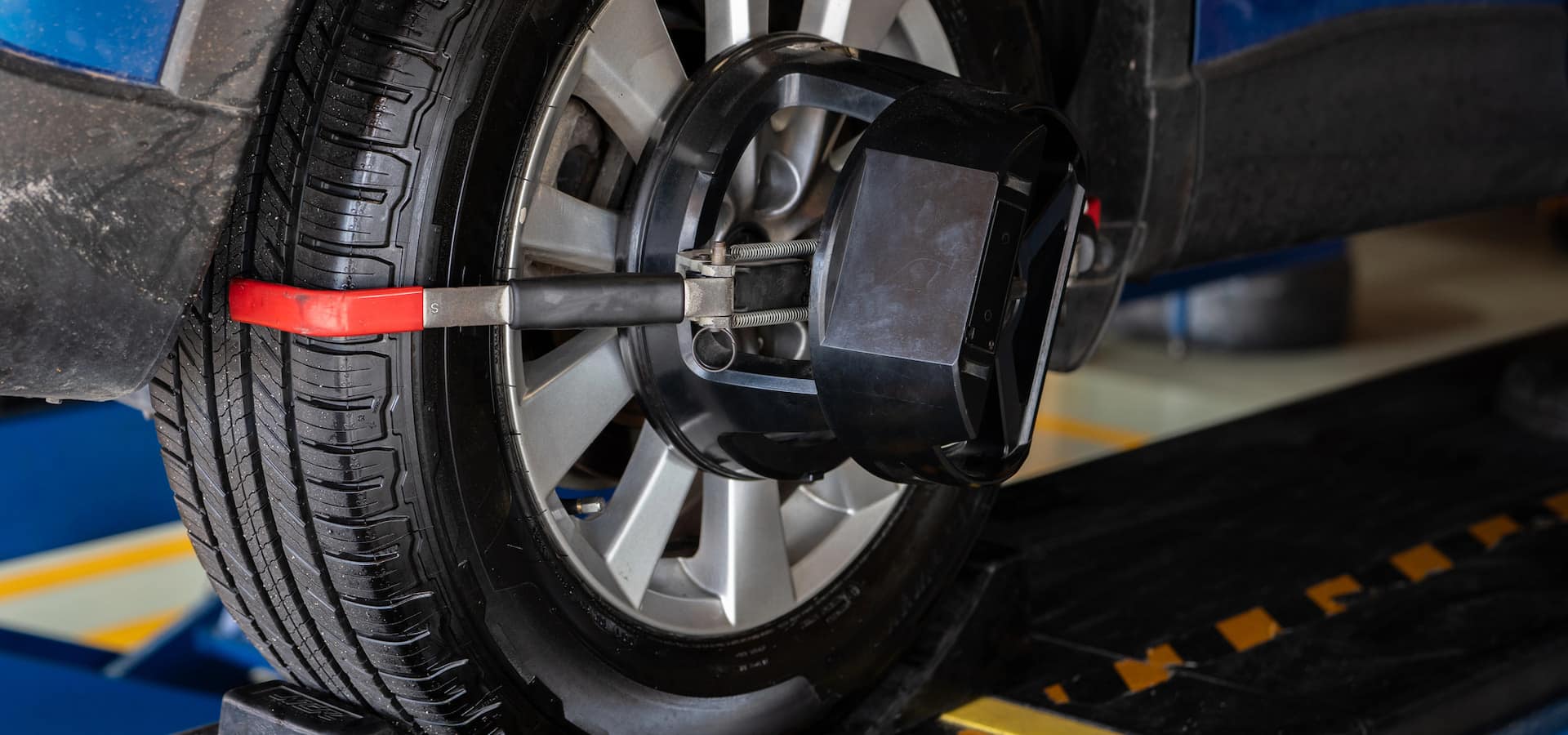
Kia Wheel Alignment at Elevation Auto Repair
Getting a Kia alignment wrong costs you a set of tires and a car that wanders across the highway. Newer Kia platforms are tighter and less forgiving than the models from a decade ago, and a rushed alignment on the wrong specs shows up fast as feathered tread and a crooked steering wheel.
Wheel alignment sets the angles at which your tires meet the road – camber, caster, and toe – so the vehicle tracks straight and wears evenly. On a Kia, the details matter more than a quick-lube setup handles well.
- The unibody Sportage (QL and NQ5), Sorento (MQ4), and Telluride ride on multi-link rear suspensions where rear toe and camber must be set, not ignored.
- Vehicles with Lane Keep Assist and Forward Collision Avoidance often need a front camera calibration after any steering-angle-affecting work, a step generic shops skip.
- Kia publishes specific torque values for lower control arm and subframe fasteners – over-torquing an eccentric bolt distorts the reading.
Here's what you can expect when you bring your Kia to us:
- Alignment set to Kia's factory specs, verified against a printed before-and-after readout.
- A steering angle sensor reset and ADAS calibration check when your model calls for it.
- Honest reporting – if a worn bushing or tie rod is the real cause, we show you before we adjust anything.
- A road test to confirm the wheel sits straight and the car tracks true.
Symptoms – How to Know You Need This Service
Alignment problems build slowly, so watch for these signs while you drive your Kia:
- The car pulls to one side on a flat, straight road even with hands relaxed on the wheel.
- Your steering wheel sits off-center when driving straight ahead.
- You feel a steady vibration through the wheel that gets worse with speed.
- Tires show uneven or feathered wear – inner edges scrubbed on a Sorento or Sportage often point to rear toe issues.
- You hear a faint squealing or scrubbing from the front tires during slow turns.
- The steering feels loose, wandery, or requires constant small corrections.
- A Lane Keep Assist or steering warning appears after hitting a pothole or curb.
Schedule soon if you notice a mild pull or off-center wheel. Stop driving and call us if the steering feels loose and disconnected, or if a hard impact was followed by a sudden pull – that can signal a bent component rather than a simple adjustment.
Common Wheel Alignment Issues on Kia Vehicles
Getting alignment wrong on a modern Kia costs more than uneven tires – it throws off the steering angle sensor, lane-keep calibration, and stability control baseline. Kia's mix of front-drive economy platforms and newer torque-vectoring AWD setups each carry their own alignment quirks, and the fix starts with knowing where each one drifts.
- Rear camber and toe drift on 2011-2016 Optima (TF) and Sorento (XM): These mid-size platforms are sensitive to rear trailing-arm bushing wear, which pulls rear toe out of spec and chews the inside shoulder of the rear tires long before the fronts wear.
- Front toe wander on 2010-2020 Forte and Soul: Denver's pothole-heavy spring thaw regularly knocks these lighter front struts and tie rod ends off setting, showing up as a subtle pull and feathered edges on the front tires.
- Telluride and Sorento (2020+) with AWD and lane-keep: After suspension work, the steering angle sensor must be re-zeroed. Skip it and the driver gets a wandering lane-centering feel plus a crooked wheel dead ahead.
- Sportage (QL/NQ5) lower control arm bushing wear: Common on higher-mileage examples, softened bushings let caster and camber shift under braking, producing an off-center pull.
- EV6 and Niro EV added weight: Battery mass loads the suspension differently, so factory alignment ranges matter – guessed specs lead to premature tire cupping.
- Post-collision or curb-strike Rio and K5: Bent tie rods and struts that "look fine" but read out of range on the rack.
Which Kia Models We See for Wheel Alignment
We align nearly every Kia on Denver roads. These are the platforms we handle most often:
- Sportage – SL, QL, and current NQ5 generations, including the Hybrid and PHEV variants that carry extra weight on the front axle.
- Sorento – UM and MQ4 platforms; the MQ4 X-Line trims sit higher and have their own spec set.
- Telluride – all model years; its multi-link rear needs full four-wheel alignment, not a front-only shortcut.
- Optima and K5 – JF Optima and the DL3 K5, including GT variants with sportier suspension tuning.
- Forte – YD and BD generations, common for edge-wear complaints.
- Soul – PS and SK3 platforms.
- Stinger – the CK rear-drive/AWD platform; performance geometry and staggered setups get extra attention here.
- EV6 – on the E-GMP platform, where regen braking and battery weight make correct rear alignment especially important for tire life.
- Carnival (KA4) and Seltos (SP2).
We cover the full lineup, from base front-drive trims to AWD and hybrid variants. If you drive an older Rondo or Sedona and aren't sure we have current specs, ask when you book – we'll confirm before you come in rather than guess.
Causes & Risks – What Happens if Ignored
Most Kia alignment problems trace back to a few predictable sources: Colorado's rough roads and curb impacts, worn suspension bushings on higher-mileage cars, and skipped recalibration after suspension or steering work. Add winter freeze-thaw cycles and the alignment on daily-driven Kias slides out of spec faster than owners expect.
A slight pull or off-center wheel feels minor at first. Left alone, it compounds into worn parts and a much bigger bill.
- Ignoring inside-edge rear wear on an Optima or Sorento for a few months typically ruins an otherwise healthy set of tires before the tread wear ever shows on the outer edge.
- Driving on worn control arm bushings lets the arm shift under load, which accelerates ball joint and outer tie rod wear – turning a simple alignment into a suspension parts job.
- Skipping steering angle sensor recalibration on lane-keep-equipped Telluride and Sportage models leaves ADAS working from bad data, so the safety system fights the driver.
- Uneven tire wear reduces grip on wet and snowy Denver roads, lengthening stopping distances.
- A hard pull masks a bent tie rod or strut that grows into a stability and handling problem.
Catching it early keeps the repair on the alignment rack instead of the parts counter.
Safety Impact – Why Wheel Alignment Matters
Alignment isn't just tire wear on a modern Kia – the numbers feed directly into the systems that keep the car pointed straight in an emergency.
- Electronic stability control and traction control reference the steering angle sensor; a bad alignment plus an uncalibrated sensor can delay or misfire those interventions.
- Lane-keep assist and lane-centering on Telluride, Sportage, and K5 pull the car toward the wrong reference when alignment and sensor zero don't match.
- Braking stability suffers when camber and toe are off, causing pull under hard stops.
- Tire grip drops as edges wear, cutting into ABS and cornering performance on snow.
Know the difference between "schedule soon" and "stop now":
- Schedule soon: slow drift, slightly crooked steering wheel, gradual edge wear.
- Stop driving now: sudden strong pull, steering that feels loose or vague, a clunk over bumps, or a lane-keep warning that appeared after an impact.
If a known suspension or steering fault goes unaddressed and contributes to a crash, that gap can complicate an insurance claim – documented, correct repairs protect you.
How Kia Wheel Alignment Actually Works
A Kia alignment sets three angles – camber, caster, and toe – so the tires meet the road squarely and the car tracks straight. On older Kias that's largely mechanical, but newer models tie those geometry settings to electronic steering and driver-assist systems, which changes how the job has to be done.
Our technicians measure all four wheels on the rack, adjust to Kia's factory ranges for the specific trim and drivetrain, then complete the electronic steps the platform requires.
- Steering angle sensor reset: Required on most 2015+ Kias after alignment or steering work, done with OEM-level scan software rather than a generic reset.
- ADAS calibration: Lane-keep and forward cameras on Telluride, Sportage, and K5 need recalibration so they trust the corrected geometry.
- Trim-specific specs: AWD, EV, and hybrid models carry different ride heights and alignment targets than base gas versions – we use the correct one, not a generic
A sloppy alignment on a Kia costs more than a set of tires – it feeds back into steering feel, pulls the vehicle under braking, and on newer models it throws off the driver-assist calibration that expects the wheels to point exactly where the software thinks they do. Getting it right the first time protects your Telluride, Sportage, Forte, or Soul from premature wear and keeps the safety systems honest.
How We Diagnose Wheel Alignment Issues on Kia
Alignment problems rarely show up alone, so we start by separating a true angle issue from worn suspension parts and tire defects.
- Road test first – we note pull direction, off-center steering wheel, and any wander common on the K5 and Sportage after curb strikes or pothole hits.
- Lift and inspect – checking tie rod ends, lower control arm bushings, and rear trailing-arm mounts, which soften on higher-mileage Optima and Sorento platforms.
- Tire and pressure read – feathering or inner-edge wear points straight to toe or camber problems.
- Rack the vehicle on our alignment system and measure camber, caster, toe, and thrust angle against Kia's factory specs for that chassis and trim.
- Scan with Kia-capable equipment (GDS/KDS-level diagnostics) to pull steering angle sensor data and confirm whether a Forward Collision-Avoidance camera or radar recalibration is required after adjustment.
The scan reveals what a tape measure can't – a steering angle sensor that reads off-center, or ADAS modules flagging calibration faults. Those readings, combined with the physical measurements, let us build a clear repair plan and an itemized quote before any wrench turns, so you approve the work knowing exactly what's driving the numbers.
Wheel Alignment on Kia: Repair vs. Replacement
Most alignments are an adjustment job, not a parts job – but worn components change that math.
- Genuine repair (adjust only): toe and camber back into spec on a Kia with tight suspension joints, plus a steering angle reset. Common after seasonal tire swaps or minor curb contact on a Soul or Forte.
- Partial replacement: a single worn outer tie rod end or a torn control-arm bushing on a Sorento or Sportage – replace that part, keep the rest of the assembly, then align.
- Full replacement: cascading wear where a lower control arm has both failed bushings and a loose ball joint, or a bent knuckle from impact damage. When the repair cost on scattered parts approaches a complete arm assembly, the assembly is the smarter, safer call.
Adjustment cannot fix worn parts – forcing toe into spec over a sloppy tie rod just masks the problem until it drifts again. We show you the play we find on the rack, explain which components are still serviceable, and let you choose the path. The goal is an alignment that holds, not the biggest invoice.
How to Make Your Kia Wheel Alignment Last Longer
Good habits keep your alignment inside spec far longer than the settings alone would suggest.
- Ease off harsh impacts – Denver potholes and curb strikes knock camber and toe out fast, especially on lower-profile K5 and Stinger setups.
- Rotate tires on Kia's recommended interval and keep pressures at the door-jamb spec to spread wear evenly.
- Watch for early signs – a steering wheel that sits crooked, a new pull, or a subtle vibration all warrant a look before tire wear sets in.
- Use OEM-grade parts and keep software current – on ADAS-equipped Kias, an outdated steering or camera module can leave the system fighting a correct alignment.
- Follow Kia's suspension inspection intervals so worn bushings get caught before they pull other parts out of position.
Safe DIY includes checking tire pressures, eyeballing tread wear, and listening for new clunks. Leave the measurements, adjustments, and any steering angle or ADAS recalibration to the shop – those touch safety-critical systems and need proper equipment. Bring it in when something feels off, and we'll keep your Kia tracking straight and your tires lasting.
What to Expect When You Bring Your Kia In
A sloppy alignment on a Kia costs you more than crooked steering – it chews through the inner edges of your tires and can throw off the steering angle sensor calibration that models like the Forte, Sportage, and Sorento rely on for lane-keep and stability control. Here is how a visit moves along.
- Drop-off or appointment – Schedule ahead or drop the keys in the after-hours box. Pull personal items and toll transponders from the dash; we log anything left inside.
- Initial inspection – We put the Kia on the rack and check tie rods, ball joints, control arm bushings, and strut mounts before touching the alignment heads, since worn parts make specs impossible to hold.
- Written estimate – You get a clear breakdown of what the alignment needs and any worn steering or suspension parts we found, with photos so nothing is a mystery.
- During the work – We text or call before adding anything to the job. No surprise line items.
- Pickup walkthrough – We show you the before and after alignment readout and explain what we corrected.
Shuttle and loaner options help you keep your day moving. Every alignment finishes with a road test and a scan-tool re-check of the steering angle sensor. If the wheel feels off after you leave, bring it back and we make it right.
Why Choose Elevation Auto Repair for Kia Wheel Alignment
Kia platforms have their own alignment personalities. The rear camber and toe on the Optima and later Sorento (UM/MQ4) are adjustable in ways many shops overlook, and a proper setup on the Telluride requires resetting the steering angle sensor after any suspension work – a step generic chain shops skip.
We stay current on Kia service bulletins covering pull complaints, memory steering, and clock-spring or SAS calibration updates, so we address the software side and the mechanical side together instead of just cranking the tie rods.
- Brand-specific specs – We align to Kia factory camber, caster, and thrust-angle values, not a one-size-fits-all preset.
- SAS and ADAS awareness – Post-alignment scan-tool checks confirm the steering angle sensor and driver-assist systems read correctly.
- End-to-end ownership – Same team diagnoses worn bushings and ball joints, replaces them, and verifies the alignment holds on a road test.
You get one Denver shop handling everything from the inspection to the final readout, with straight answers and no repairs your Kia does not need.
Our Kia Services
- Air Conditioning AC Repair
- Battery Repair Replacement
- Brake Repair & Brake Fluid Change
- Check Engine Light Diagnostics
- Clutch Repair & Replacement
- Coolant Leak Repair
- Cooling System Repair
- Drive Shaft Repair
- Engine Repair
- Exhaust & Catalytic Converter Repair
- Head Gasket Repair & Replacement
- Oil Change
- Oil Leak Repair
- Scheduled Service Maintenance
- Steering Repair
- Suspension Repair
- Cambelt Timing Belt Replacement
- Transmission Repair
- Tune Up