
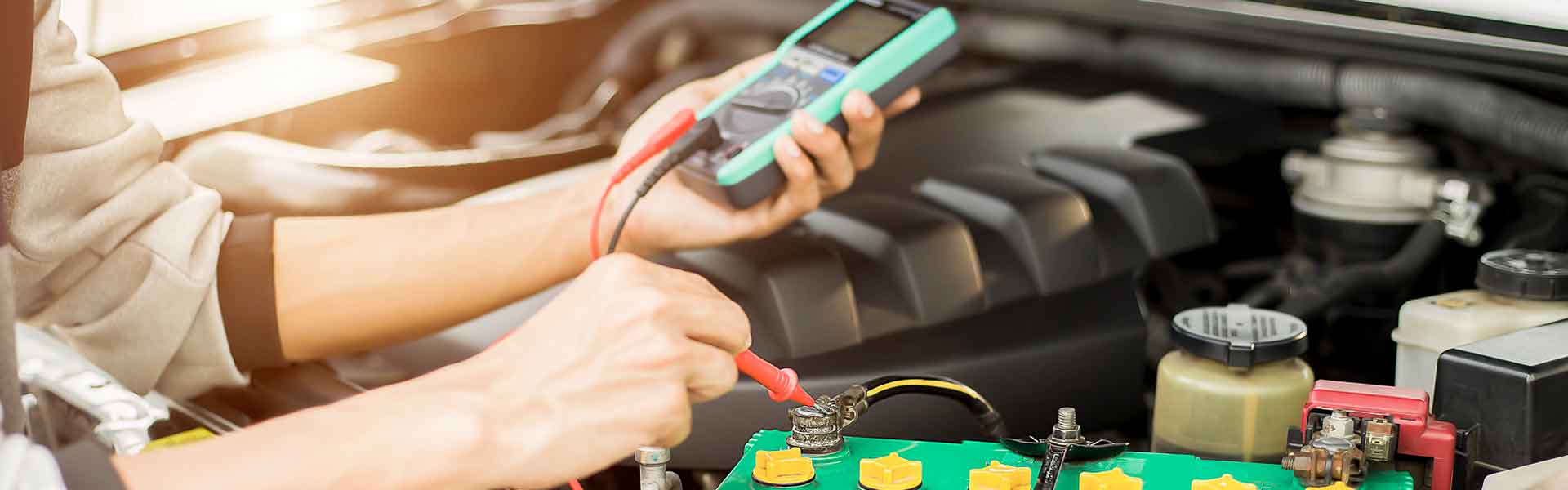
Kia Battery Repair Replacement at Elevation Auto Repair
Your Kia cranks slow one cold Denver morning, then a week later it won't start at the grocery store. That pattern rarely means "just throw in a new battery" on a modern Kia.
Battery replacement on today's Kia lineup is a system job, not a swap. Models with Idle Stop and Go (ISG), like many Optima, Sorento, Sportage, and Telluride trims, use an AGM battery paired with a Battery Management System and an external Battery Sensor (IBS) on the negative terminal. Install the wrong chemistry or skip the registration step, and the alternator overcharges or undercharges the new battery, cutting its life short.
Doing it right means matching the correct AGM group size, then resetting the battery state-of-charge learned values with Kia GDS or an equivalent scan tool so the smart charging strategy recognizes the fresh battery. We also check the IBS ground connection, a common corrosion point that throws false charging faults.
Here's what you can expect when you bring your Kia to us:
- Correct AGM or flooded battery matched to your VIN and ISG equipment
- Battery registration and charging system reset with factory-level tooling
- Load, alternator, and parasitic draw testing so we fix the real cause
- Clean, protected terminals and a verified IBS sensor connection
Symptoms – How to Know You Need This Service
Kia charging and battery trouble usually shows itself in small ways before you get stranded. Watch for these signs:
- Slow, labored cranking – you may notice the starter dragging, especially on cold mornings
- ISG stops working – the Auto Stop feature quits shutting the engine off at lights, often the first clue on Sorento and Sportage
- Battery or charging warning light on the dash – schedule soon so we can test the alternator and sensor
- Flickering headlights or dimming interior lights at idle
- Electrical gremlins – erratic infotainment resets, power window hesitation, or door chimes acting up
- A clicking sound with no start, or dash lights that fade when you turn the key – stop relying on the car and have it towed in
- Swollen battery case or a rotten-egg smell near the battery – stop driving immediately, that's a venting or overheating battery
- Frequent need for jump starts, even after a fresh charge
A single jump start followed by a stall usually points to a weak battery or a charging fault. If you smell sulfur or see a bulging case, don't keep driving – those conditions can damage wiring and connectors.
Common Battery Repair Replacement Issues on Kia Vehicles
You turn the key on a cold Denver morning and hear that slow, dragging crank – then nothing but dash lights and a chime. Kia batteries have a few predictable ways of failing, and the platform details matter more than most owners expect.
- Parasitic drain on 2015-2020 Sorento and Sportage: Faulty door modules, aftermarket accessories, or a hung infotainment head unit keep drawing current after shutdown, killing an otherwise healthy battery overnight.
- AGM battery mismatch on Kia models with ISG (Idle Stop & Go): Optima Hybrid, Niro, and stop/start-equipped trims use absorbed glass mat batteries. Dropping in a standard flooded battery causes premature failure and stop/start faults.
- Corroded negative terminal and IBS sensor issues: Many 2016+ Kias run a battery sensor on the negative post. Corrosion or a disturbed sensor throws charging-related warnings and prevents proper state-of-charge readings.
- Weak batteries on 2011-2016 Optima and Sorento with heavy electronics: Power seats, memory modules, and telematics load the system heavily during short trips, so the battery never fully recharges in Denver stop-and-go driving.
- 12V auxiliary battery failure on Niro/Optima Hybrid and EV6: These vehicles depend on a low-voltage battery to boot the high-voltage system. A tired 12V leaves you with a car that won't "power on" even with a full traction pack.
- Alternator overcharging masking a bad battery: A failing voltage regulator boils electrolyte, shortening battery life and creating repeat no-start complaints.
Which Kia Models We See for Battery Repair Replacement
We service the full modern Kia range, including the ISG-equipped models that need battery registration. Find your car below:
- Telluride (2020–present) – 3.8L Lambda V6, AGM battery with BMS; registration required
- Sorento (2016–present, UM and MQ4) – gas, turbo, and hybrid variants; hybrid models use a separate 12V auxiliary battery
- Sportage (2017–present, QL and NQ5) – ISG-equipped trims need AGM and a reset
- Optima / K5 (2016–present) – 2.4L and 1.6T/2.5T; many carry Idle Stop and Go
- Soul (2014–present) – frequent flooded-to-AGM confusion, we verify the correct spec
- Forte (2014–present) – common daily driver with straightforward but registration-sensitive systems
- Sedona / Carnival – V6 minivans with high accessory loads that stress batteries
- Seltos, Niro, and Stinger – including Niro hybrid 12V auxiliary battery service
Hybrid and plug-in models have a high-voltage traction battery that's separate from this service – here we handle the 12V system that starts and powers accessories. For EV6 high-voltage pack diagnostics we'll point you in the right direction. Every replacement includes the software step so your new battery lasts, keeping your Kia dependable through Colorado winters and long past the install.
Causes & Risks – What Happens if Ignored
Colorado's climate is hard on batteries. Cold snaps thicken oil and raise cranking demand, while summer heat accelerates internal plate corrosion. Add short commutes that never fully recharge the battery, and failure comes faster than the sticker date suggests.
The frustrating part is that a weak Kia battery rarely fails cleanly. It limps along, and drivers write off the slow crank until the car strands them.
- Ignoring a slow crank for a few weeks often leads to a full no-start, usually in the worst possible spot.
- A chronically undercharged battery forces the alternator to work harder, which can shorten alternator and diode life.
- Corrosion left on the IBS sensor and terminals spreads into the harness, turning a simple battery swap into wiring repair.
- On ISG-equipped Kias, a marginal battery disables stop/start and can trigger charging system warnings that mimic bigger faults.
- Repeated deep discharges permanently damage AGM and hybrid 12V batteries, so waiting turns a straightforward replacement into a towed vehicle.
Catching it early keeps the fix to the battery itself – and keeps you off the shoulder of I-25.
Safety Impact – Why Battery Repair Replacement Matters
A modern Kia leans on stable 12V power for far more than starting. When voltage sags, safety systems get unpredictable.
- Electronic stability control and ABS can drop offline or throw faults during low-voltage events.
- Electric power steering may reduce assist, making the wheel heavy at low speeds.
- Airbag and restraint modules flag warnings when supply voltage is out of range.
- Electronic parking brake and shift-by-wire systems on newer Kias behave erratically on a weak battery.
Stop driving now if you notice: multiple warning lights flickering together, power steering cutting out, or the car losing dash power at idle.
Schedule soon if you notice: slow cranking, stop/start no longer working, or a battery warning that clears after a drive.
There's also a liability angle – if a known charging or battery fault contributes to a stalled vehicle in traffic, that's a risk worth closing out before it becomes an incident. We handle it right the first time so your safety systems stay dependable.
How Kia Battery Repair Replacement Actually Works
On paper, replacing a battery sounds simple. On a modern Kia, the electrical system expects to be told about the new battery so charging strategy stays correct. Skip that step and the smart alternator may under-charge a fresh battery, cutting its life short.
Kia's charging system uses an Intelligent Battery Sensor on the negative terminal to monitor state of charge and temperature, feeding that data to the ECM. Replacing the battery without registering it – or fitting the wrong chemistry – leaves the system running an old, mismatched charging profile.
- Battery registration: Many 2016+ Kias need the new battery logged with OEM-level software (Kia GDS/KDS) so the charging system adapts.
- Correct chemistry and group size: AGM stays AGM for ISG and hybrid models – no substituting a flooded battery.
- IBS sensor handling: The negative-post sensor is cleaned, reseated, and verified rather than disturbed and ignored.
- Reset and relearn: Idle relearn and clearing charging faults confirm the system reads full state of charge.
- Load and charging test: We verify alternator output and terminal integrity so the new battery isn't set up to fail again.
That's the difference between a parts swap and a repair built for long-term reliability. Our Denver technicians use the
How We Diagnose Battery Repair Replacement Issues on Kia
Your Kia cranks slower than usual on cold Denver mornings, or the dash lights flicker when you start it. Those are early warnings that the battery and its supporting system need a real look. We start there and work outward to find the actual cause.
- Full load and state-of-charge test – We measure cranking amps against the battery's CCA rating and confirm true state of health, not just voltage at rest.
- Charging system scan – Using a Kia-capable scan tool (GDS-style diagnostics), we read the alternator/IBS (Intelligent Battery Sensor) data on models like the Optima, Sorento, and Telluride to catch charging faults and reset the battery management values after replacement.
- Parasitic draw test – We check for drains from aftermarket accessories, a stuck module, or a failing infotainment head unit that keeps the network awake – a known culprit on some Soul and Sportage builds.
- Visual and physical inspection – Corroded terminals, swollen cases, loose hold-downs, and frayed ground straps get checked by hand.
- Road test – We verify charging voltage under real load with lights, A/C, and defrost running.
Once we know whether the fault is the battery, the alternator, a cable, or a parasitic draw, we translate the findings into a clear repair plan and an upfront quote – no guesswork, no unnecessary parts.
Battery Repair Replacement on Kia: Repair vs. Replacement
Not every battery complaint means buying a new battery. We match the fix to what your Kia actually needs.
- Genuine repair – When the battery tests healthy but terminals are corroded, a hold-down is loose, or a ground strap is degraded, cleaning and tightening restores reliable starting. On many Kia models, resetting the IBS after minor service prevents false charging codes.
- Partial replacement – Sometimes the battery is fine but a corroded positive cable or a failing alternator is the real issue. We replace the worn component and keep the rest of the system intact.
- Full replacement – When the battery fails a load test, shows a swollen case, or is past its service life, a new OEM-spec battery is the right call. Kia's AGM-equipped models (common on Telluride, Sorento, and stop/start-equipped trims) require a matching AGM battery and a proper battery registration – installing a standard flooded unit shortens life and triggers charging faults.
We walk you through the test results and your options so you understand why a repair or replacement makes sense – never defaulting to the most expensive path.
How to Make Your Kia Battery Repair Replacement Last Longer
A fresh battery lasts far longer when the whole system stays healthy. A few habits make a real difference through Colorado's temperature swings.
- Drive habits – Take longer drives regularly so the alternator fully recharges. Short trips in cold weather leave the battery undercharged and shorten its life.
- Reduce standby drain – Fully close doors and the hatch, and avoid leaving accessories or USB devices plugged in overnight, which keeps the network awake.
- Watch and listen – Slow cranking, dimming lights, or a battery warning on the cluster are early signals worth acting on.
- Keep terminals clean – A quick visual check for white corrosion is safe to do yourself; wipe and tighten as needed.
Brand-specific care matters too. Use an OEM-spec AGM battery on stop/start-equipped Kias, keep BMS and charging software current with Kia service updates, and follow the recommended service intervals so the IBS reads the battery correctly.
DIY the easy stuff – terminal cleaning and visual checks. Leave battery registration, AGM installation, alternator work, and parasitic-draw diagnosis to our technicians so the charging system is set up right for long-term reliability.
What to Expect When You Bring Your Kia In
You turn the key on your Optima or Sorento and the dash flickers, the start-stop system throws a fit, or you hear that slow crank on a cold Denver morning. Modern Kia electrical systems are picky – a weak battery can trigger everything from BMS warnings to erratic infotainment behavior. Here's how a visit flows:
- Drop-off or scheduled appointment – tell us the symptoms you've noticed: parasitic drain, repeated jump-starts, or a battery light on the cluster.
- Initial inspection – we load-test the battery, check charging output, inspect terminals and grounds, and scan for stored codes on Kia platforms that use an Intelligent Battery Sensor.
- Written estimate – you get a clear breakdown before any work begins, including whether a simple replacement or deeper electrical repair is needed.
- Work and updates – we keep you informed by call or text as we confirm the fix.
- Pickup walkthrough – we explain what was done and show you the verified results.
Shuttle and loaner options help you keep your day moving, and after-hours pickup is available when your schedule runs long. Leave personal items in the vehicle – we work around them and secure your car. Before it goes back to you, we perform a road test and a scan-tool re-check to confirm charging voltage and that the battery management system relearned properly. If anything feels off afterward, bring it back and we'll recheck it.
Why Choose Elevation Auto Repair for Kia Battery Repair Replacement
Swapping a battery on a newer Kia isn't always plug-and-play. Many models with the IBS ground sensor and start-stop function require a battery registration or reset so the charging system knows a fresh battery is installed – skip that step and you'll see premature failure or false warnings.
- Familiarity with Kia TSBs and software updates that address parasitic drain complaints on models like the Sorento, Sportage, Telluride, and Soul.
- Correct battery registration and BMS reset using proper scan tools, not just a wrench and a new battery.
- Root-cause diagnosis of drains tied to modules, aftermarket accessories, or aging alternators – so you're not back in a month.
We own the job from the first load test to the final verification, and we won't sell you a replacement when the real issue is a bad ground or a stuck relay. As your Denver dealership alternative, we handle everything under one roof and focus on long-term reliability – a battery that starts strong through every season, not just the day you drive out.
Our Kia Services
- Air Conditioning AC Repair
- Brake Repair & Brake Fluid Change
- Check Engine Light Diagnostics
- Clutch Repair & Replacement
- Coolant Leak Repair
- Cooling System Repair
- Drive Shaft Repair
- Engine Repair
- Exhaust & Catalytic Converter Repair
- Head Gasket Repair & Replacement
- Oil Change
- Oil Leak Repair
- Scheduled Service Maintenance
- Steering Repair
- Suspension Repair
- Cambelt Timing Belt Replacement
- Transmission Repair
- Tune Up
- Wheel Alignment