Ram Cooling System Repair at Elevation Auto Repair
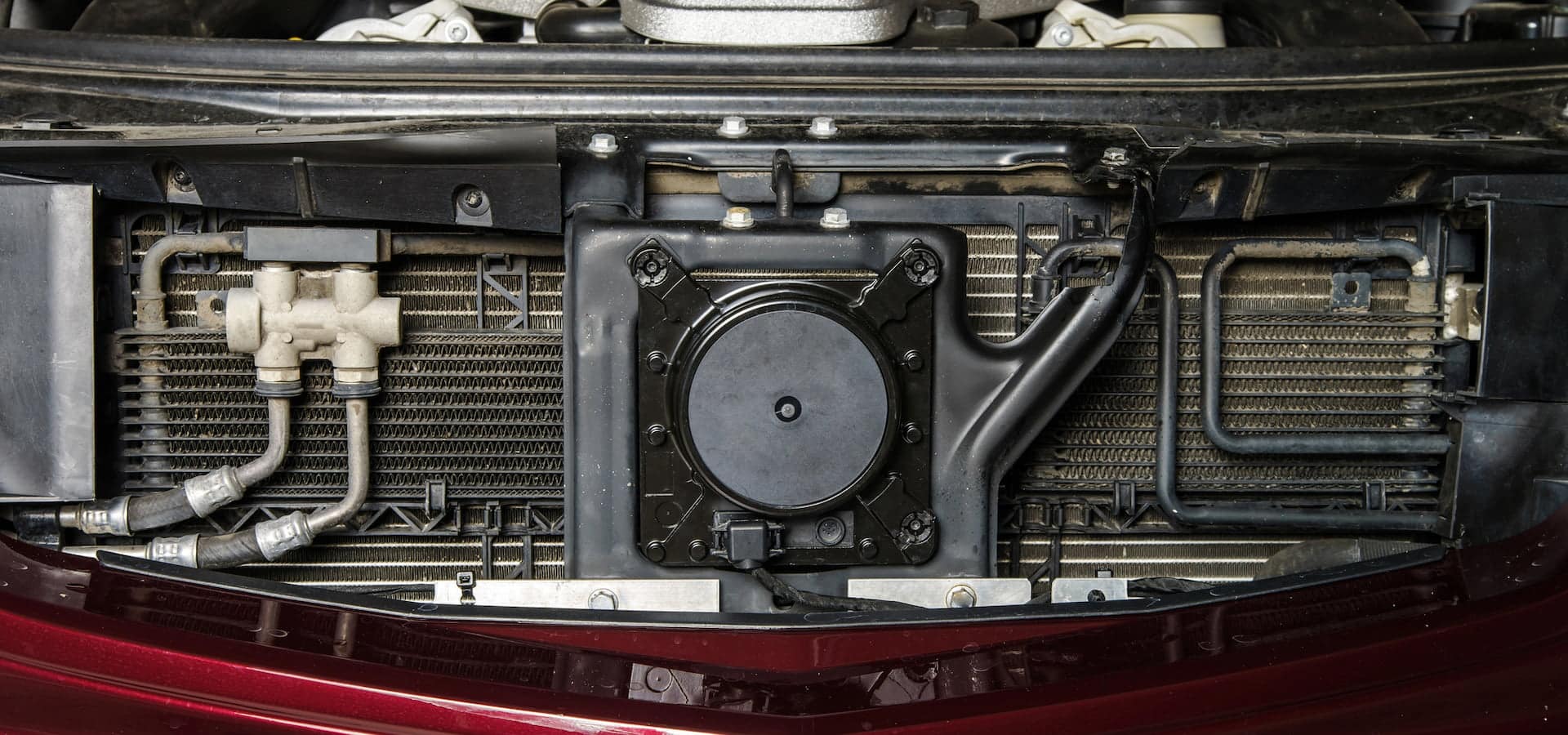
Ram trucks pull, tow, and idle in ways that punish a cooling system, and the diesel and Hemi platforms both have quirks a general shop tends to miss. Cooling system repair covers the radiator, water pump, thermostat housing, hoses, coolant reservoir, and the electronics that manage temperature under load – and on a Ram, that work rewards attention to detail.
Doing it right means more than swapping a part. The 6.7L Cummins runs an EGR-integrated cooling circuit that traps air pockets if you skip a proper vacuum fill, and the 5.7L/6.4L Hemi platforms rely on a plastic thermostat housing that warps and weeps if over-torqued. We use the correct OAT-based MOPAR coolant spec, follow factory bleed procedures, and pull live data to confirm the fan clutch and coolant temp sensor respond the way they should.
Here's what you can expect when your Ram comes in for cooling work:
- Honest diagnostics with a clear explanation of what's failing and why
- Correct MOPAR-spec coolant and proper vacuum-fill bleeding
- Transparent pricing before any parts are ordered
- A pressure and thermal test to confirm the repair holds under load
Symptoms – How to Know You Need This Service
Cooling problems on a Ram usually show themselves before a full failure, if you know what to watch for. From the driver's seat, you may notice:
- Temperature gauge climbing during towing, grades, or stop-and-go traffic – stop driving if it reaches the red zone
- Sweet coolant smell or steam from under the hood, often from a weeping thermostat housing on Hemi engines
- Orange or pink puddles under the front of the truck after parking
- Low coolant warning or a reservoir that keeps dropping between fill-ups
- Whining or grinding from a failing water pump bearing
- Heater blowing cold at idle – a sign of trapped air or low coolant
- Cooling fan running constantly or a roaring fan clutch that won't disengage
- White exhaust smoke or coolant loss with no visible leak – a possible EGR cooler failure on the 6.7L Cummins
Overheating, heavy steam, or coolant mixing into the oil means pull over and shut down – continuing to drive risks a warped head or cracked block. A slow drip or an intermittent low-coolant light is safe to schedule soon, but don't let it linger.
Common Cooling System Repair Issues on Ram Vehicles
Cooling problems on Ram trucks follow predictable patterns depending on engine and generation. Here are the ones we see most often:
- Radiator plastic end-tank cracks (2009-2018 4th-gen 1500): The crimped plastic-to-aluminum seam splits with heat cycling, leaking coolant at the tank seam rather than the core itself.
- Water pump weep-hole failures on 5.7L HEMI: The mechanical pump bearing and seal wear, seeping from the weep hole and often taking out the pump pulley bearing if driven on too long.
- Cummins 6.7L EGR cooler and coolant crossover leaks: The diesel's EGR cooler and thermostat housing are common seepage points, sometimes mistaken for external hose leaks.
- Thermostat housing and coolant temperature sensor leaks: Plastic housings on HEMI applications warp and crack, throwing overheating codes and P0128 (coolant below regulating temp) when the thermostat sticks open.
- Radiator fan clutch and electric fan module failures: Viscous fan clutches on diesels and PWM electric fans on gas trucks fail gradually, causing high-temp spikes only under load or towing.
- Degraded HOAT coolant and heater core restriction: Mopar's orange HOAT coolant left past its service life turns acidic, corroding the water pump impeller and clogging heater cores.
Which Ram Models We See for Cooling System Repair
We handle cooling work across the modern Ram lineup and most of the earlier Dodge-badged trucks. Find your platform below:
- Ram 1500 (DS, 2009–2018 and DT, 2019–present) – 5.7L Hemi thermostat housing leaks and radiator failures are the usual visitors; the eTorque mild-hybrid variants add cooling for the battery and BSG
- Ram 2500/3500 Heavy Duty (2013–present) – 6.4L Hemi gas trucks and 6.7L Cummins diesels; the Cummins EGR cooler and coolant hose routing need diesel-specific attention
- Ram 1500 Classic (2019–2024) – the carryover DS body sold alongside the DT, sharing the same Hemi cooling quirks
- Older Dodge Ram (2002–2008, third-gen) – 5.7L Hemi and 5.9L/6.7L Cummins; plastic radiator end tanks are a common failure point on these
- TRX (2021–2024) – the 6.2L supercharged Hemi runs a dedicated intercooler circuit that needs its own bleed and inspection
Cummins diesel cooling work differs noticeably from the gas trucks – the EGR and turbo circuits, coolant filtration, and fill procedures all demand a different approach, and we treat them accordingly. If you have a 1994–2001 second-gen Ram, reach out first so we can confirm parts availability before you make the trip.
Ram trucks run hard – towing, hauling, idling in Denver traffic, and climbing into the mountains where thin air makes cooling systems work overtime. The HEMI V8s and the 6.7L Cummins turbo diesel each stress their cooling components in different ways, and the newer 5th-gen (DT) trucks add electronic controls that generic shops often skip. That combination is exactly why Ram cooling systems deserve a technician who knows the platform.
Causes & Risks – What Happens if Ignored
Most Ram cooling failures trace back to heat cycling, age, and Colorado driving. Long grades toward the foothills, heavy trailer loads, and extended idling all push coolant temps higher than a commuter car ever sees. Old HOAT coolant and brittle plastic components do the rest.
A small seep rarely stays small on these trucks. Ignoring a weeping water pump on a 5.7L HEMI for a few weeks often lets the bearing fail completely, which can throw the belt and disable the charging and power steering systems at once.
- Minor radiator seam seep becomes a full end-tank rupture and roadside overheat.
- Sticking thermostat leads to repeated overheating that warps HEMI cylinder heads and blows the head gasket.
- Low coolant on a Cummins can crack the EGR cooler further and let coolant into the intake, an expensive diesel repair.
- Failing fan clutch under towing loads spikes temps until the transmission cooler is overwhelmed, cooking the trans fluid.
- Neglected acidic coolant corrodes the water pump and heater core, turning a fluid service into multiple part replacements.
The pattern is consistent: a modest repair caught early stays modest, while a delayed one pulls in head gaskets, transmissions, or diesel emissions hardware.
Safety Impact – Why Cooling System Repair Matters
Overheating on a Ram does more than strand you. When the engine goes into thermal protection or the serpentine belt drops after a water pump seizes, several safety systems lose support at the same time.
- Power steering assist can drop suddenly if a belt fails, making the truck hard to turn at low speed.
- Brake booster vacuum and overall braking confidence suffer once the engine stalls from overheating.
- Stability control, ABS, and traction control may throw warnings and reduce function when the engine enters limp mode.
- Windshield defrost fails with a clogged or leaking heater core, cutting visibility in cold Denver mornings.
Stop driving now if you see: steam from under the hood, a temp gauge in the red, a coolant warning light, or a sudden loss of steering assist.
Schedule soon if you notice: sweet coolant smell, small puddles, temps climbing only under load, or a heater that has gone lukewarm.
A documented, unaddressed overheat that leads to an incident can also complicate warranty and liability claims – another reason to have leaks logged and repaired promptly.
How Ram Cooling System Repair Actually Works
A Ram's cooling system circulates HOAT coolant through the block and heads, past the thermostat, and into the radiator where airflow – from the electric or clutched fan and vehicle motion – sheds the heat. On modern trucks, the PCM watches coolant temp sensors and commands fan speed electronically rather than relying purely on mechanical control.
What sets Ram work apart is the mix of gas and diesel platforms plus the electronics layered on the 5th-gen DT trucks. Refilling isn't just top-and-go – air pockets in a HEMI or Cummins need proper bleeding, and specs matter.
- Correct Mopar HOAT coolant – mixing incompatible coolant types accelerates corrosion.
- Proper fill and bleed procedure to clear air pockets that cause false overheating.
- Torque sequences on plastic thermostat and pump housings
Ram trucks run hard by design, and their cooling systems reflect that. Whether you're driving a 5.7L HEMI-powered 1500, a 6.4L HEMI-equipped 2500/3500, or a 6.7L Cummins turbo diesel, the demands of towing, hauling, and Colorado grades put steady stress on the radiator, water pump, and thermostat housing. That's why Ram cooling repairs deserve a technician who knows the platform's specific weak points rather than a one-size-fits-all approach.
How We Diagnose Cooling System Repair Issues on Ram
A leak or a hot gauge can point in several directions on a Ram. We work through a structured process so the root cause is confirmed before any parts get ordered.
- Scan the modules – We pull codes with a scan tool capable of reading Ram's PCM and body modules, watching live data for coolant temperature, thermostat commanded state, and cooling fan operation. On HEMI trucks this exposes stuck thermostats and electric fan clutch faults; on 6.7L Cummins trucks it surfaces EGR cooler and coolant temp sensor concerns.
- Pressure test the system – A cooling system pressure test reveals slow leaks at the plastic radiator end tanks, degraded upper/lower hoses, and weeping water pump weep holes common on higher-mileage HEMIs.
- Inspect visually – We check for pink residue on the timing cover area, coolant staining at the thermostat housing (a known plastic-housing failure point), and radiator fin condition.
- Verify the water pump – Bearing play and shaft movement are checked by hand.
- Road test – We drive the truck under load to confirm temperature behavior on grades, watching for fan engagement and heat soak.
Once we've confirmed the failure, you get a clear written repair plan with transparent pricing – no surprises, no guessing.
Cooling System Repair on Ram: Repair vs. Replacement
Not every cooling concern calls for a full teardown. We match the fix to the actual condition of the parts.
- Genuine repair – A single failed clamp, a leaking hose, or a low coolant level from a loose fitting. Flushing contaminated coolant and refilling with the correct HOAT (OAT for later diesels) formulation often restores a system that's otherwise sound.
- Partial replacement – Replacing just the thermostat and its plastic housing on a 5.7L HEMI when the radiator and pump test fine, or swapping a leaking upper radiator hose without disturbing the rest of the assembly.
- Full replacement – When wear cascades: a plastic-tank radiator that's cracked alongside a weeping water pump, or a 6.7L Cummins with a failed EGR cooler contaminating coolant. When the labor to reach a buried part means you're already most of the way to replacing neighboring components, replacing together makes sense.
We lay out each option with its trade-offs and let you decide – we don't default to the priciest route.
How to Make Your Ram Cooling System Repair Last Longer
Good habits keep a repaired Ram cooling system healthy well past the fix.
- Driving habits – Let the engine warm before heavy throttle, downshift on long descents instead of riding heat into the system, and watch your temperature gauge closely when towing at Colorado altitude where thinner air reduces cooling efficiency.
- Owner checks you can do safely – Look at the overflow reservoir level when the engine is cold, scan for pink puddles under the truck, and listen for the fan cycling normally. Note any coolant smell or temperature creep.
- Brand-specific care – Use Mopar-spec coolant matched to your model year (HOAT for most gas HEMIs, the correct OAT formula for Cummins diesels) – mixing types causes gelling and corrosion. Follow Ram's published coolant flush intervals and keep PCM software current so fan and thermostat strategies run as intended.
Topping off cold coolant and visual checks are fine for owners. Leave pressure testing, thermostat housing work, and anything involving a hot or pressurized system to the shop – it's a burn and reliability risk done wrong. Bring it in and we'll handle it right.
Ram trucks put their cooling systems through a hard life – towing loads up Colorado grades, idling on job sites, and cycling through big temperature swings that stress every joint and seal. The 5.7L HEMI, the 6.7L Cummins turbo diesel, and the 3.6L Pentastar each have their own cooling quirks, from the HEMI's plastic thermostat housings that crack and weep to the Cummins EGR cooler and radiator concerns on 2013-2018 trucks. Getting these repairs right takes someone who knows the platform, not a generic coolant flush.
What to Expect When You Bring Your Ram In
Every Ram that rolls in for cooling work follows the same clear path so you always know where things stand.
- Drop-off or appointment – Schedule ahead or drop by; ask about our shuttle or loaner options so you stay mobile while we work.
- Initial inspection – We pressure-test the system, inspect the radiator, water pump, thermostat housing, hoses, and check for coolant intrusion or oil contamination on Cummins EGR-related failures.
- Written estimate – You get a plain-language breakdown of what we found, which parts need replacing, and transparent pricing before any wrench turns.
- Communication during the work – We call or text with updates and won't add repairs without your approval. Remove valuables beforehand; anything left is secured.
- Pickup walkthrough – We show you the replaced parts, explain what was done, and offer after-hours pickup when your schedule is tight.
Before your Ram leaves, we road-test it under load and re-scan for stored temperature or thermostat codes to confirm the fix held. If anything feels off afterward, bring it back – we stand behind the diagnosis and the repair.
Why Choose Elevation Auto Repair for Ram Cooling System Repair
Cooling repairs on a Ram go sideways when a shop guesses instead of diagnosing. We approach the whole system methodically and lean on Ram-specific knowledge that generic shops skip.
- Platform-specific expertise – We know HEMI thermostat housing failures, Pentastar water pump weep points, and the Cummins radiator and EGR cooler issues on 2013-2018 trucks.
- TSB and software awareness – We check for applicable Ram service bulletins and cooling-fan or temperature-related software updates instead of throwing parts at symptoms.
- Correct fill and bleed – We use the specified OAT coolant and proper bleed procedure so you don't end up with air pockets and false overheating.
We own the job start to finish – diagnosis, repair, and post-repair verification all happen under one roof, so nothing gets lost between hands. You'll get straight answers, honest pricing, and a truck that runs cool whether you're commuting or towing.
Our Ram Services
- Air Conditioning AC Repair
- Battery Repair Replacement
- Brake Repair & Brake Fluid Change
- Check Engine Light Diagnostics
- Clutch Repair & Replacement
- Coolant Leak Repair
- Drive Shaft Repair
- Engine Repair
- Exhaust & Catalytic Converter Repair
- Head Gasket Repair & Replacement
- Oil Change
- Oil Leak Repair
- Scheduled Service Maintenance
- Steering Repair
- Suspension Repair
- Cambelt Timing Belt Replacement
- Transmission Repair
- Tune Up
- Wheel Alignment